Celibacy and Masturbation: Can Self-Pleasure Be Part of a Celibate Journey?

In a world that constantly talks about sex, relationships, and connection with others, we rarely talk about something quieter but just as meaningful: our relationship with our own body.

For some people, celibacy is a religious choice, For others, it’s a period of healing, reflection, or simply a break from the emotional complexity of relationships.

But one question often sits quietly underneath the surface:

If you’re practicing celibacy, is masturbation still okay?

It’s a question that doesn’t always have a clear answer. Some people believe celibacy should include abstaining from all sexual activity, including self-pleasure. Others believe masturbation can actually be a healthy part of understanding and respecting our bodies.

For me, the conversation around this topic feels very personal.

There have been long stretches of time in my life where I’ve chosen celibacy. Sometimes it came from heartbreak, sometimes from exhaustion with dating, and sometimes simply from the desire to focus on myself, and my own healing journey.

During those times, I noticed something interesting.

Even while stepping away from intimacy with others, my body didn’t stop being alive and sometimes, masturbation became a surprisingly grounding experience.

Rediscovering the Body When You’re Alone

One thing that celibacy can do is shift your attention inward. When you’re not thinking about someone else’s touch, expectations, or desires, you begin to notice your own body differently. For me, masturbation during celibacy has sometimes felt less like sexual indulgence and more like a form of self-connection.

There’s a strange kind of peace in knowing that your body belongs entirely to you.

No pressure.

No performance.

No wondering what someone else wants or expects.

Just you.

And sometimes, that simple experience can bring unexpected comfort.

There have been mornings where the day felt heavy, where getting out of bed felt like a challenge. In those moments, something as simple as self-pleasure gave me a little spark of energy, a reminder that my body is still capable of joy, that life isn’t always so depressing!! Let’s call it the ultimate self validation hey!

It’s not always about sexuality, Sometimes it’s about feeling alive again, sometimes its just about the Ooooooh and Aaaaah!

The Biology of Masturbation and the Brain

From a biological perspective, masturbation isn’t just psychological, it’s neurological. When the body experiences sexual arousal or orgasm, the brain releases several important chemicals:

Dopamine – associated with pleasure and reward

Oxytocin – often called the bonding hormone

Endorphins – natural pain and stress relievers

Prolactin – linked with relaxation after orgasm

These chemicals affect our mood, stress levels, and overall well-being.

This is one reason why masturbation can sometimes feel like a natural mood booster. The body responds with a chemical cascade that can reduce tension and create a sense of calm.

Some studies even suggest that sexual release may help with:

  • Stress reduction
  • Better sleep
  • Improved mood
  • Relief from physical tension

In this sense, masturbation isn’t necessarily separate from overall health. It’s part of the body’s natural reward system. However like many things tied to dopamine and pleasure, balance matters.

When Masturbation Becomes Habit Rather Than Choice

While masturbation can be healthy, it’s also possible for it to become automatic rather than intentional. Modern technology has changed the way we experience sexual stimulation. Endless access to digital content can overstimulate the brain’s reward system, leading to patterns where pleasure becomes more about dopamine hits than genuine connection with the body.

This is one of the reasons some people choose complete abstinence during celibacy.

Taking a break from sexual stimulation can allow the brain’s reward pathways to reset. People sometimes report feeling clearer, more focused, or more emotionally grounded during periods of abstinence.

But this doesn’t necessarily mean masturbation itself is unhealthy. The key difference often lies in how we approach it.

Is it a conscious experience of self-connection?

Or a quick escape from boredom, loneliness, or stress?

Those motivations can lead to very different outcomes.

The Spiritual Perspective on Sexual Energy

Beyond biology and psychology, many spiritual traditions have explored sexuality and self-pleasure for thousands of years. In some traditions, sexual energy is viewed as one of the most powerful forces within the human body. Certain schools of Taoism and yoga teach that sexual energy can be transformed into creative or spiritual energy. Practices related to celibacy sometimes encourage people to conserve this energy rather than release it.

From this perspective, abstaining from masturbation is believed to strengthen discipline, mental clarity, and vitality.

However, other spiritual traditions take a very different view.

Some tantric teachings emphasise conscious awareness of the body, suggesting that sexuality, including self-pleasure, can be part of spiritual exploration if approached with mindfulness and respect. Rather than something to suppress, sexual energy becomes something to observe, understand, and honor. In that sense, masturbation could be seen not as indulgence, but as a way of cultivating presence within the body. The truth is that spirituality rarely offers a single answer. Instead, it invites us to explore our relationship with our own energy and intention.

Celibacy as a Relationship With Yourself

One of the most surprising things about celibacy is that it can teach you a lot about yourself. Without the distraction of romantic or sexual relationships,

You start to notice patterns.

You notice how you seek comfort.

You notice how you cope with loneliness.

You notice how you treat your own body.

For many people, celibacy becomes less about denying desire and more about building a healthier relationship with themselves. That relationship might include masturbation, or it might not. What matters is the intention behind the choice. If self-pleasure comes from curiosity, appreciation, and self-love, it can feel empowering. However, if it becomes a way of avoiding emotions or constantly chasing stimulation, it may be worth stepping back and reflecting.

The Power of Self-Ownership

One of the things I’ve come to appreciate most during celibate periods is the simple idea that my body belongs to me.

In relationships, we sometimes forget that. We become aware of another person’s desires, expectations, and needs. Even healthy relationships involve a kind of shared physical space.

Celibacy creates a different dynamic.

It reminds you that your body isn’t something that exists for someone else’s pleasure.

It exists for you.

That awareness can make masturbation feel less like a taboo subject and more like a quiet act of self-ownership. It’s a reminder that you don’t need someone else to validate your physical existence.

Sometimes your own touch is enough.

Finding a Personal Balance

So should someone masturbate during celibacy?

The honest answer is that there isn’t a universal rule. For some people, abstaining completely from sexual stimulation helps them feel focused and emotionally grounded. For others, occasional self-pleasure feels natural and healthy.

The important thing is to remain aware of your motivations and how your choices affect your well-being.

You might ask yourself questions like:

  • Does this make me feel connected to my body or disconnected from it?
  • Am I doing this consciously or out of habit?
  • Does this support my emotional healing or distract from it?
  • Does this align with why I chose celibacy in the first place?

These questions can help guide a relationship with sexuality that feels authentic rather than imposed.

Celibacy Isn’t About Denying Pleasure

One of the biggest misconceptions about celibacy is that it’s about repression, But for many people, it’s actually about clarity.

Stepping away from sexual relationships can create space to understand our desires more deeply. It allows us to notice where pleasure comes from, what intimacy means to us, and how we relate to our own bodies. In that sense, celibacy isn’t the absence of sexuality. It’s a chance to experience sexuality in a more conscious way.

Sometimes that includes self-pleasure.

Sometimes it means abstaining completely.

Both paths can lead to growth if they’re chosen intentionally.

Final Thoughts: Listening to Your Body

If there’s one thing celibacy has taught me, it’s that our bodies have their own quiet wisdom.

We often try to fit our lives into rules about what we should or shouldn’t do, yet sexuality rarely works that way.

Sometimes the healthiest thing we can do is simply listen.

Listen to our emotions.

Listen to our energy levels.

Listen to how our body responds.

For me, there have been moments during celibacy when masturbation brought a small spark of joy on an otherwise depressing day A reminder that my body still holds warmth, curiosity, and life and there have been other moments where abstaining felt more aligned with the kind of clarity I was seeking. For instance now, abstaining since my last serious relationship has been soul saving, just knowing, I will enjoy intimacy when I meet my person and both experiences taught me something valuable.

Celibacy isn’t about shutting down desire, It’s about becoming aware of it.

And sometimes that awareness begins with the simplest realisation of all:

Your body is yours.

How you choose to care for it, explore it, or honor it is a deeply personal journey.

When two different people come together and learn to love one another…. ‘The Soul Mate Connection’

One of the most beautiful things about relationships is how two completely different people can come together, two individuals with their own interests, personalities, histories, and ways of seeing the world, and slowly begin to grow alongside one another.

At the beginning, you are separate worlds. Different routines, different habits, different comforts. One might love football, the other reality television. One might wake up early and love quiet mornings, while the other thrives at night. In the early stages, these differences can feel noticeable, sometimes even amusing.

But when a connection is real, something subtle and beautiful begins to happen.

Without even realising it, your worlds start to overlap.

You might find yourself sitting beside her watching ‘Love is Blind’, even though you never thought you would Or you might find yourself asking about the football score because it matters to him, and somehow that makes it matter to you too. What once felt like their interest slowly becomes something you share.

Not because you are changing who you are, but because love naturally invites you into each other’s worlds. You start to walk together on a path, a journey of alignment.

This is where the beauty of a true bond lies. Real connection doesn’t erase individuality. Instead, it gently weaves two lives together while still allowing each person to remain fully themselves.

Over time, the shift becomes deeper than shared hobbies or interests.

Their joys begin to feel like your joys.

Their worries begin to feel like your worries.

Their dreams start to intertwine with your own.

Their desires become yours, and yours become theirs. Not in a way that feels forced or sacrificial, but in a way that feels completely natural. Almost effortless.

And this is often when couples begin to say something that sounds strange to anyone outside the relationship:

“We’re basically the same person….”There are not many people who can look at the other and say this.. and that’s when you know you’ve found your person.

Of course, no two people are truly identical. You still carry your own thoughts, experiences, and individuality, however the connection becomes so deep that your emotional rhythms start to align. You begin to understand each other without needing to explain everything. Sometimes a look is enough. A silence can speak volumes.

It begins to feel like you are moving through life with someone who understands you on a level that very few people ever will.

The Feeling of a Soulmate

A true soulmate often doesn’t feel like fireworks. It feels like recognition, it feels like an intensity that overwhelms, engulfs you and blows your mind.

Like meeting someone your soul already understands.

You may notice that your values align naturally. Conversations flow effortlessly. Time together, calls together, feel peaceful rather than draining. Even when you disagree, there is still respect, still care, still a desire to understand each other rather than win.

You start to feel a quiet certainty.

Not the anxious kind of love that leaves you questioning everything, but the calm kind that settles in your chest and says: this feels right, this is my person, we’re basically the same person.

When you meet someone like this, life begins to align in unexpected ways. Your goals start to complement each other. Your emotional worlds feel compatible. You find yourselves growing together instead of pulling in opposite directions.

And that’s when many people say something that captures the depth of that connection:

“We’re the same person.”

Not because you are identical, but because your souls move in the same direction.

When everything aligns, your values, your intentions, your willingness to grow, the connection feels natural rather than forced. Being together doesn’t feel like hard work. It feels like partnership.

Like you are walking the same path…

And when you meet that person, something inside you recognises it. The noise quietens. The confusion disappears.

You simply feel… home…

When Trauma Tries to Protect Us

But there is another side to deep connection that many people don’t talk about.

Sometimes when we meet someone who truly sees us, who truly connects with us, it can feel overwhelming, to much, the boats rocking and it can cause incredible confusion and anxiety.

Not because the connection is wrong — but because it is powerful…

For many people, past experiences, heartbreak, or emotional wounds create protective patterns. We learn ways to cope with pain: shutting down, pulling away, overthinking, creating distance, or convincing ourselves that something is wrong when things actually feel right, but our physiological states tries to overwhelm us and force the pressure on ourselves, that we start to question everything..

Trauma often teaches us to protect ourselves.

But sometimes those protections can appear right when something beautiful is forming.

If someone is used to shutting down when emotions feel intense, they might withdraw from the very connection they’ve always wanted. If someone is used to expecting abandonment, they may start searching for problems that don’t actually exist.

And before they realise it, fear begins to interfere with something that could have been incredibly special.

This is why self-awareness matters so deeply in love….

When you recognise your patterns, when you understand how your past experiences might influence your reactions, you give yourself the power to respond differently.

Instead of shutting down, you pause.

Instead of running, you communicate.

Instead of assuming the worst, you choose curiosity.

Meeting someone who truly aligns with you can feel intense, scary and stir unwanted anxiety and pressures. It can stir emotions you’re not used to feeling. It can make you vulnerable in ways that feel unfamiliar.

But vulnerability is often the doorway to real connection.

Protecting Something That Matters

When you realise you have something special with someone, it’s important to nurture it.

That doesn’t mean the relationship will be perfect. Every connection will have moments of uncertainty, overwhelm, or misunderstanding. But what makes a soulmate connection so powerfu is the willingness to work through those moments together, however apprehensive and fearful you are

Instead of letting fear take control, you choose honesty.

Instead of letting overwhelm create distance, you talk about it.

Instead of pushing someone away when things feel intense, you lean into understanding what you’re feeling and why.

Real love is not just about finding the right person, it’s also about being emotionally aware enough to protect the connection once you find it.

Sometimes that means slowing down.

Sometimes it means communicating your fears.

Sometimes it means learning new ways to handle emotions you once avoided.

But when two people are willing to grow, the connection becomes stronger rather than fragile.

When You Know

When you truly meet your person, interests aside, emotions aside, even past trauma aside… something deeper connects.

Two different people.

Two different lives.

Yet somehow, everything aligns.

Your lives begin to weave together naturally. Your worlds blend. Your hearts recognise something familiar in each other.

And in those quiet moments — when you look at them and feel peace instead of doubt — you may find yourself saying something that captures it perfectly:

“We’re the same person.”

Not because you’ve lost yourselves, but because you’ve found someone whose soul walks beside yours, a heavenly feeling of your person walking alongside you, like the Universe and God have brought you both together..

And when that happens, when everything inside you says this is my person, when love feels calm rather than confusing, when being with them feels as natural as breathing…

You realise something powerful.

You’re home…

You have your person…

When Love Has Nowhere to Go. What happens when you fall for an Avoidant

There is a particular kind of heartbreak that doesn’t explode, it dissolves.

No dramatic betrayal, no obvious cruelty. no moment you can point to and say, “That’s when everything broke.”

Just love, slowly, quietly, with nowhere to land.

Loving someone with an avoidant attachment style often feels like pouring warmth into a room with no walls. Nothing visibly rejects you, nothing violently pushes you away and yet, somehow, everything disappears.

Not because the love wasn’t real.

Simply because it could not be received.

When Everything Feels Aligned

It often begins with something that feels rare, connection that feels effortless, conversations that stretch late into the night, laughter that feels easy, natural, unforced. Moments of closeness that feel deeply mutual. There is chemistry, there is emotional resonance. There is, at least for a time, a sense of alignment, the most beautiful alignment.

You don’t feel like you’re forcing something.

You don’t feel like you’re chasing.

It feels like something unfolding, a beautiful foundation being built with two human beings falling for each other.. and this is what makes it so confusing later, because nothing about the beginning feels incompatible. In fact, it often feels unusually right, perfectly right, and most of the time it is right…or at least could of been..

However, attachment dynamics don’t always reveal themselves at the start, because avoidant individuals can connect, in the beginning.

They can feel deeply.

They can even fall in love.

What they struggle with is not feeling, but staying.

Love vs. Fear: A Different Internal Reality

For the person who loves, closeness feels like safety, yet for the avoidant, closeness often feels like danger.

This isn’t a metaphor. It’s neurological. It’s sadly fact, and a fact even the avoidant themselves isn’t aware of.

Research in attachment theory shows that individuals with avoidant attachment styles frequently experience intimacy as a threat to autonomy. Emotional closeness activates the same stress responses that others might associate with loss of control, engulfment, or vulnerability.

Where one person feels warmth, the other may feel:

  • Pressure
  • Anxiety
  • A loss of space
  • A subtle sense of being trapped
  • A rising need to pull away
  • A feeling that the situation, relationship or partner isn’t right for them.

Nothing externally catastrophic needs to happen, no huge row… simply their body and mind, starts to reek havoc, slowly but surely, and they start to believe that they’re feeling this because the relationship or partner is wrong, they physically feel a build of anxiety, which leads to rumination, over thinking and panic, and the feeling of feeling overwhelmed, must be somebody else’s fault, because they don’t understand this is their own mental health, and any level of accountability means, it’s their fault, this over riding sense of anxiety, sickness, sleepless nights, lead to them saying ‘this isn’t right’… but please note, you could be a 10/10partner, but their mind will convince them you’re not right, and this is their own fear.

The relationship itself becomes the trigger, not because the love is wrong, but because the deeper the love and intimacy activates deeply wired protective strategies formed long before the relationship began. This is why most avoidants can only survive in relationships that are surface or fantasy based only.

The Tragedy of Misaligned Meanings

This is where the quiet sadness lives.

Two people experiencing the same relationship, but inhabiting entirely different emotional realities.

The loving partner experiences:

  • Growing closeness
  • Deepening attachment
  • Emotional investment
  • Hope
  • A desire for more connection
  • Love
  • Safety

The avoidant partner experiences:

  • Increasing discomfort because the feeling of love = anxiety
  • A need for distance to avoid accountability, and to feel safe
  • Emotional overwhelm, to the point it leads to both mental and physiological break down
  • A sense of losing independence, not being heard
  • Fear disguised as detachment

The same moments that feel like bonding to one person who has emotional capacity and maturity, but may feel like suffocation to the other.

No one is intentionally cruel, no one is consciously sabotaging.

And yet, damage happens anyway, because one of the parties didn’t realise what they we’re feeling was love…

When Love Becomes Something to Escape

As intimacy deepens, the avoidant nervous system often shifts into protection mode.

Common patterns begin to appear:

  • Emotional withdrawal
  • Subtle distancing
  • Reduced communication
  • Increased focus on flaws
  • Sudden doubts about compatibility
  • A vague sense that “something feels off”

Psychologists sometimes call this deactivation, the unconscious process by which avoidant individuals reduce attachment intensity when closeness becomes uncomfortable.

Love doesn’t disappear, access to it does.

To the loving partner, it feels like confusion:

“We were so close — what changed?”

To the avoidant partner, it feels like necessity:

“I just need space.”

The Ache of Unspent Love

For the one who loves, this is where grief becomes complicated, Because the love is still there, still alive, still willing. still reaching.

But with nowhere to go.

Love needs reception, Love needs reciprocity, Love needs emotional availability.

Without those, love doesn’t vanish, it lingers.

As longing, as rumination, as the painful question: “If it felt so real, why couldn’t it survive?”. There is a particular sorrow in loving someone who could not fully accept what you offered. Not because you were too much, but because they could not stay open.

The Avoidant’s Invisible Sadness

Yet there is another side to this story that often goes unseen, Avoidant individuals are not emotionless. They are not incapable of love. They are not immune to loss. Their pain simply looks different.

Avoidant attachment is rooted in early experiences where emotional needs were discouraged, ignored, or inconsistently met. Over time, self-reliance becomes safety, Vulnerability becomes risk, Distance becomes regulation.

Many avoidant individuals genuinely care, but experience closeness as dys-regulating. The push-pull dynamic is not calculated; it is protective.

And after withdrawal, they often feel:

  • Relief mixed with guilt
  • Confusion about their own reactions
  • Lingering affection they struggle to express
  • A familiar return to emotional isolation

The tragedy is not that they do not feel, The tragedy is that their fear consistently outruns their capacity for connection. The sad tragedy lies in, this will be their life, unless they learn, invest in therapy, and start to realise, kindness and empathy for others they cause paid to is key… a simple Sorry…

Why the Pattern Repeats

One of the most painful realisations for the loving partner is this:

Love alone cannot heal attachment wounds. Avoidant patterns are not situational quirks. They are deeply ingrained strategies for emotional survival.

Without conscious self-awareness and intentional work, the cycle often repeats:

  1. Connection
  2. Growing closeness
  3. Rising discomfort
  4. Withdrawal
  5. Distance
  6. Reset
  7. Repeat

Not because the partners are wrong, but because the underlying system remains unchanged.

The Cruel Irony of Compatibility

Perhaps the saddest truth of all, You can be deeply compatible with someone, and still be unable to build a stable relationship.

Shared values, Shared humour, Shared affection, Shared dreams, shared chemistry, intense attraction….

All of it can exist.

But if one nervous system experiences love as safety, and the other experiences love as threat, alignment at the surface cannot overcome misalignment at the core, until the avoidant does the serious work needed on themselves.

When Love Isn’t Wasted – Just Unreceived

It is tempting to call this wasted love, but love is never truly wasted.

Love given sincerely is evidence of capacity, not failure.

The ability to love deeply, openly, vulnerably is not something that diminishes because it was not reciprocated. It remains a reflection of emotional strength, a person with emotional maturity but mostly, capacity, you understand the real meaning of love…

The heartbreak lies not in loving the wrong person, but in loving someone who could not remain present inside the love you shared.

A Sadness Without Villains

This kind of story rarely has villains.

Just two people:

One reaching for closeness.

One retreating toward safety.

Both shaped by histories they did not choose.

Both experiencing pain in ways the other struggles to understand.

And love…..caught between longing and fear… it’s there.. it exists…

With nowhere to go.

The Men of 2025: How my year of Dating Hell, and Hard-Learnt Lessons, can help you spot Red Flags!

What the hell happened!!??

Sex, fantasy, consistency — and why modern dating keeps breaking women

After a long period of celibacy, I met my ex-boyfriend — let’s call him The Lion. We don’t need his real name.

The Lion, The narcissist.

In fact The grandiose narcissist.

He was very handsome, Beautiful, actually. Perfect white teeth. A full head of hair, (two hair transplants because one wasn’t enough). He was sexy, but not my usual type. I normally go for taller, lean, athletic men with no tattoos. He was huge. Six foot tall, probably six foot wide. Muscly. Strong. Dominant.

He wasn’t my type — and yet something about him completely undid me.

I found him intensely attractive, in a way I hadn’t experienced before. Maybe because he wasn’t my normal type. Who knows. But the sex between us was off the scale. Raw. Animalistic. Lust-driven. Some of the best sex I’ve ever had.

We couldn’t get enough of each other. Sexy weekends away. Him telling me how to dress. The gifts, ( And for anyone who knows me, Im not normally into this) The energy. The chemistry. The obsession.

I almost felt like his doll — something he couldn’t put down, and that, I think, is where most of the attraction came from.

And that’s all it was.

Sex.

There was no substance. No emotional safety. No real love. Just intensity masquerading as connection. My therapist later told me clearly: the “connection” existed because I had been celibate, and my body and mind craved attention.

The first three or four months felt incredible.

Then everything shifted.

The final two months were hell.

I dropped from 9st 4 to 7st 10, living in pure survival mode.

He became verbally abusive — at first subtly, then relentlessly. Comments about my body. My teeth. My weight. My scars. Criticism disguised as jokes or “help.” Tiny cuts, over and over again.

This was a man who knew my history with an eating disorder and body dysmorphia. All the “I want to know everything about you” had been a ploy — to gather ammunition.

I treated him like a king.

He treated me like something and someone he owned…

He’d say things like, “Why do you have this effect on me? I just can’t give you up.”

As if I was the problem. As if I was doing something to him.

Once, sitting in my car, he pulled me onto his lap and said,

“Kerry, you do this to me. I’m not sure I want this, but you have this way of winning me back.”

I hadn’t done anything wrong.

Then he hugged me and said,

“I’m scared I could become abusive towards you — you’re too soft and nurturing.”

Let that sink in.

I’ve been told before that I have a presence, that I make people feel seen. With him, that became a weapon. He leaned into my kindness while resenting me for it.

The worst moment came on a drug-fuelled Ibiza trip. Pink cocaine from 7am to midnight. Then the comedown.

For twelve hours — hotel, airport, plane — he broke me down.

Told me I was a bad person. Needed therapy. Needed to change my career. Needed to look different. This was Loudly, Publicly, to the point people noticed.

Every time I looked away, he physically lifted my chin and told me I wasn’t listening.

I hadn’t done a single thing wrong.

At one point a stranger followed me into an airport toilet and said,

“This is not okay. I’m worried about you, as this is dangerous’

And I still made excuses for him.

That’s how deep it was, and I knew I was hours away from the safety of my own home..

After that, he love-bombed me, Promises. Romance. Safety. Then after one trip, I fell seriously unwell, to the point I was hospitalised for 8 days — He then broke off with me saying ‘I didn’t sign up for this’ – Meaning his Girl in hospital and being super unwell, then nothing. Coldness. Disinterest. Silence.

And that’s when I finally saw it.

This was just sex.

And no sex — no matter how good — is worth fear.

He did wonders to my body sexually I thought at the time, and then I realised, No, I made that happen, I had gone so long without sex that I think anyone could of made that happen.

What he did to my head nearly destroyed me.

He tried to break me.

And I very nearly let him.

Reflection: The Narcissist

This wasn’t love. It was trauma bonding. Intensity without safety. Power without care. He fed on devotion, then punished me for giving it.

Narcissists don’t want partners — they want mirrors, supply, and control.

Lessons Learned: If You Meet a Narcissist

  • Intensity is not intimacy
  • Amazing sex does not cancel abuse
  • If he uses your vulnerabilities against you, leave
  • If your body is deteriorating, your nervous system is screaming
  • Love never requires survival mode

Airport Guy: When Kindness Still Isn’t Compatibility

A few days after splitting with my Ex, I flew abroad with my little boy.

I was still fragile. Still healing. Still very much in recovery mode — physically and emotionally.

At the airport, a man stared at me so intensely it actually made me blush — and I am not easily flustered. I mean, his neck nearly broke turning to look back at me. Later, delayed on my flight, I opened a dating app.

And there he was.

We matched. Of course we did.

Airport Guy.

He was kind, sweet, down to earth, handsome — and back to my usual type: dark, tall, athletic. After everything I’d been through, he felt… safe. Gentle. Normal.

We talked for weeks. He was attentive and consistent with messaging. There was warmth there, ease, laughter. But as time went on, I realised something was missing. There was no real depth. No emotional intelligence. No stimulation that made me feel mentally alive.

Still, I agreed to a date.

And actually, we had a ball.

It was last minute, impulsive, a “fuck it” moment. The evening was easy and fun, and before it ended, we’d already agreed to a second date.

On the second date, he went all out. He booked Louie’s in Manchester and really made an effort. That night, he stayed over. We cuddled, talked, laughed, but lying there, I found myself thinking something that surprised me.

I really fancied him – but I didn’t want sex with him.

Not in that way.

There was attraction, but no pull. No hunger. No emotional spark that made me want to cross that line. And I can’t fake that, nor should I.

We ended up seeing each other six times over several weeks. I kept hoping something would ignite. I wanted it to. He was good company, however instead of things deepening, cracks started to show.

He moaned constantly about the two-hour distance.

He lacked curiosity and depth.

When life got hard, he disappeared into drug-fuelled benders.

One night, he rang me 37 times, completely off his head, telling me he’d fallen for me — but his mind was a mess, I was too far away, and I was “too good for him.”

That sentence told me everything I needed to know.

I don’t do drugs. I won’t tolerate them in a partner, especially after what I’d just survived and while he was genuinely lovely, he was also lost, unhealed, and not self-aware enough to know it — without playing the victim role.

I wasn’t the woman who could save him.

And in truth, I also wasn’t ready to progress intimacy with anyone. You can’t force a spark. It’s either there or it isn’t. And without it, nothing meaningful grows.

So I ended it.

Not because he was bad — but because nice isn’t enough.

Reflection: The “Good on Paper” Man

Airport Guy represents a difficult truth: not every connection that feels safe is right. After abuse, kindness can feel like chemistry — but they are not the same thing.

He wasn’t cruel. He wasn’t manipulative. He was simply unhealed. And unhealed people often look for partners to steady them, soothe them, or anchor them through chaos.

That isn’t partnership — it’s emotional dependency in waiting.

Lessons Learned: When the Man Is Kind but Not Ready

  • Safety alone does not equal compatibility
  • Attraction without depth leads nowhere
  • You cannot build intimacy with someone who avoids their own pain
  • Substance abuse is not a “phase” — it’s a coping mechanism
  • It’s okay to walk away from someone good because you need something right

Choosing yourself doesn’t always mean leaving bad men.

Sometimes it means leaving good men who aren’t capable of meeting you where you are.

The Mistake Guy: When Your Body Knows Before You Do

Then came The Mistake.

We matched on Hinge — and as anyone who’s been on dating apps knows, even getting off them and exchanging numbers takes effort. This man had recently moved back to the UK from Dubai, Ex-soldier. Worked on high-end military contracts, Father of three.

On paper, he sounded solid.

He was intelligent, direct, keen to align. We shared beliefs around supporting the military — but beyond that, there wasn’t much emotional alignment. I felt he tried to force more alignments than there were, and I wasn’t sure if I was attracted to him, beyond recognising that he was tall, dark, and handsome.

Still, as always, he was the only person I was speaking to.

He was persistent, offered date after date and even though he lived four hours away, he kept pushing to see me.

At the time, I’d been off work and unwell so on week three of chatting, he badgered me for a date and offered to drive to my city. With hesitation — and, if I’m honest, feeling a little guilt-tripped — I agreed.

On one condition: I would drive myself.

Within minutes of me saying yes, he told me he’d booked a hotel (for himself), chosen the restaurant, and planned the evening. Later, I discovered he’d lied about part of this, but at the time, I put it down to enthusiasm.

When we met, I was late and had misunderstood the bar he’d suggested, so I went straight to the restaurant. Standing at the bar waiting, I suddenly felt someone come up behind me and pick me up and squeeze me.

Anyone who knows me knows I have strong boundaries — and I hate being picked up unexpectedly.

I froze.

I told myself to calm down. He’s just excited to see you.

At dinner, he commented that he didn’t like sitting opposite me. I replied that I was comfortable where I was. When I went to the bathroom and came back, he’d moved to my side of the booth. I felt cornered. I slid back into my seat, forcing him to stand up, and angled my body so I wasn’t fully facing him.

He put his arm around me and went in to kiss me.

I pecked him — more out of politeness and shock than desire.

I think he felt my energy change, because suddenly he pulled back and shifted tone. For the next few hours, he was a perfect gentleman. I relaxed. I enjoyed the date.

And that’s where I made the mistake.

I ignored my intuition — the tight chest, the internal warning — because nothing “bad” had happened yet, and I put it down to my own over-thinking.

What followed was something I won’t detail publicly, but it was enough to teach me a lesson I will never forget.

He is well and truly blocked and I hope our paths never cross again.

Reflection: This Is What Happens When You Override Your Gut

Nothing dramatic has to happen for something to be wrong. Women are taught to override discomfort to avoid appearing rude, dramatic, or ungrateful.

Predatory or unsafe men rely on that conditioning.

Your body recognised danger long before your mind caught up.

Lessons Learned: What Women Need to Hear About “The Mistake”

  • Discomfort is information, not anxiety
  • You don’t need proof to leave a situation
  • Being polite has put women in danger for generations
  • A man who ignores physical boundaries early will ignore bigger ones later
  • If your intuition whispers, listen — if it screams, run

Ignoring your gut doesn’t make you open-minded.

It makes you vulnerable.

Mr Avoidant: The Fantasist Who Never Intended to Stay

Then there was Mr Avoidant — someone I’d known briefly before, who had actually helped and advised me after The Mistake.

At first, he seemed different.

Attentive, Caring. Emotionally available. He listened. Asked questions. Showed understanding. I told him early on that I’d sworn to celibacy — that my body needed to belong to me again.

He said he respected it.

He talked about the future, About long-term plans, About a relationship. Even about going to Auschwitz together — somewhere I’ve always wanted to go but this was from the off and straight away I recognised the feeling immediately: love bombing.

I’ve learned something important about myself — I attract fantasists. Men who talk. Men who imagine. Men who build futures with words rather than actions.

Men who want the idea of me.

One night, we kissed. Just a kiss. A cuddle. No intimacy. During that moment, he said, “You’re dangerous.” I asked what he meant. He brushed it off — but I knew exactly what he meant.

After that night, the shift was immediate.

Avoidance. Excuses. Distance. Mixed signals.

Too ill to see me with a supposed chest infection — yet somehow well enough to win a padel tournament. Constant viewing of my Instagram stories within minutes of posting. Suddenly posting stories himself, despite never doing so before.

WhatsApp messages sent — then deleted before I could read them.

It felt unhinged.

I don’t do games.

There is a short window with me. Once I feel self-protection kick in, the switch goes off — and that’s not self-sabotage. That’s self-preservation.

The following week, I went back on dating apps.

And there he was, Back on them too.

You don’t get access to me while shopping for someone else. You don’t get my emotional energy while keeping your options open.

Reflection: Fantasists Want Access, Not Responsibility

Avoidant men love connection — until it requires consistency. They crave intimacy but panic when it becomes real.

They want you close enough to soothe them, but far enough that they don’t have to commit.

Lessons Learned: How to Spot an Avoidant Early

  • Words without follow-through are a red flag
  • If he’s still on dating apps, you’re not chosen
  • Mixed signals are the signal
  • Consistency is emotional maturity
  • If he disappears after intimacy (even emotional), believe the pattern

A man who wants you doesn’t confuse you.

He makes space. He makes plans. He shows up.

The Red Flags I Will Never Ignore Again

(And Neither Should You)

These aren’t dramatic.

They aren’t always obvious.

Most of them appear early — and we talk ourselves out of them.

Early Behavioural Red Flags

  • Intensity too soon — fair enough if its a month in, but i’m talking week 1 week 2.
  • Boundary testing on first or early dates (touching, closeness, pressure)
  • Discomfort in your body that you rationalise away
  • Inconsistent communication disguised as “busy” or “overwhelmed”
  • Charm paired with entitlement

Emotional & Psychological Red Flags

  • Making their feelings your responsibility
  • Subtle criticism framed as jokes, concern, or “help”
  • Playing victim while avoiding accountability
  • Blaming stress, substances, or mental health for harmful behaviour
  • Turning your empathy into a weapon

Consistency & Availability Red Flags

  • Talking about commitment without backing it up with action
  • Keeping you in conversation but vague about seeing you
  • Still active on dating apps while claiming interest
  • Hot–cold behaviour after intimacy (even emotional intimacy)
  • Making you feel anxious instead of grounded

Lifestyle & Coping Red Flags

  • Using drugs or alcohol to escape discomfort
  • Chaotic lives with no evidence of self-work
  • Expecting you to stabilise or rescue them
  • Treating therapy, growth, or accountability as optional

The Biggest Red Flag of All

  • You feel smaller, quieter, or less yourself around him
  • You start editing your needs to keep the peace
  • Your nervous system is on edge more than it’s at rest

Love does not feel like walking on eggshells.

Connection does not cost your health.

Desire does not require self-betrayal.

What 2025 Really Taught Me

It would be easy to frame 2025 as a year where I simply met the wrong men.

But that would let me off too lightly.

The truth is, I chose them.

Not consciously. Not maliciously. But through patterns I hadn’t fully interrupted yet.

The narcissist wanted power.

Airport Guy wanted comfort.

The Mistake wanted access.

The Avoidant wanted fantasy.

Different men — same outcome.

And while each of them was responsible for their behaviour, I have to be honest about my part in letting them close.

My Accountability

I didn’t attract these men because I’m weak.

I attracted them because I am open, emotionally literate, warm, and capable of holding space. I listen deeply. I give generously. I see people for who they could be — not just who they are in front of me.

That’s not a flaw.

But here’s where my responsibility lies:

I stayed too long in potential.

I rationalised early discomfort.

I confused intensity, kindness, or familiarity with readiness.

I allowed words to carry more weight than actions.

I also entered dating while still healing — believing I was strong enough to spot danger, without fully respecting how vulnerable that season made me.

That vulnerability didn’t make me stupid.

But it did lower my tolerance for red flags.

The Pattern I Finally Saw

Each of these men was offering something that looked like connection — but none of them were offering consistency.

And consistency is the only thing that makes love safe.

They talked.

They imagined.

They promised.

They performed.

But when it came to showing up — emotionally, practically, predictably — they disappeared, destabilised, or turned harmful.

What I learned is this:

If a man cannot meet you in reality, he will meet you in fantasy — and fantasy always collapses, its unsustainable!

We need to spot Green Flags!

The Green Flags of Real Love

(The Signs You Can Trust and Build With)

These are the behaviours and qualities that signal safety, consistency, and emotional availability. They’re not flashy or dramatic, they’re grounded in reality.

Early Behavioural Green Flags

  • Respects your boundaries — physical, emotional, and temporal
  • Doesn’t rush intimacy — values connection over convenience
  • Takes your discomfort seriously — validates it instead of brushing it off
  • Consistent communication — not overbearing, not disappearing

Emotional & Psychological Green Flags

  • Owns their emotions and mistakes — doesn’t blame you for their problems
  • Shows empathy without expectation — can see your perspective without needing to fix it
  • Encourages your growth — celebrates your strengths and supports your goals
  • Balances give-and-take — emotional labor isn’t one-sided

Consistency & Availability Green Flags

  • Follows through on plans — action matches words
  • Prioritizes quality time with you — without making excuses or distractions
  • Shows a genuine interest in getting to know you as a person
  • Keeps commitments — from simple promises to long-term discussions

Lifestyle & Coping Green Flags

  • Manages stress in healthy ways — doesn’t turn to substances to escape reality
  • Engages in self-work — therapy, reflection, or intentional growth
  • Seeks partnership, not rescue — wants a relationship of equals, not a project
  • Communicates openly — expresses needs and feelings honestly

The Biggest Green Flag of All

  • You feel fully yourself — at ease, grounded, excited, and safe
  • You can voice your needs without fear
  • You don’t feel anxious just being near him
  • You see a future and it feels like a shared love story…but you can still keep each other grounded without fear of love bombing.

Love should feel like a homecoming, not a battle.

Safety, respect, a man who is self aware and consistency are far sexier than drama, intensity, or unpredictability.

What I Want Other Women to Take From This

This isn’t about becoming colder, harder, or closed.

It’s about becoming clear.

  • Attraction without safety is not chemistry — it’s your nervous system reacting
  • Kindness without emotional capacity is not partnership
  • Words without follow-through are not hope — they are placeholders
  • If your body is in distress, your intuition already knows the truth

And most importantly:

You are not “too much” for wanting consistency.

You are not demanding for wanting clarity.

You are not difficult for expecting follow-through.

Those are the bare minimum requirements for love.

Where I Am Now

I no longer chase intensity, reassurance, or potential.

I look for:

  • Actions
  • Effort
  • Emotional regulation
  • Consistency over time

And if those things aren’t present, I don’t negotiate with myself anymore.

This isn’t bitterness.

It’s self-respect.

2025 didn’t break me.

It taught me how to stop abandoning myself.

And that lesson will change everything that comes next.
What Would Happen If We Walked Away From Dating Apps in 2026?

Dating apps promised connection. Instead, they’ve left many of us anxious, disposable, and lonelier than ever.

My mum doesn’t believe me when I tell her that the only real way people meet these days is through dating apps. She’s from a different generation, one where people met through friends, work, chance encounters, or simple introductions. You met someone, you liked them, and you tried to make it work.

Today, dating feels nothing like that… it’s even hard to imagine, life was that simple, once!!

In 2026, dating apps dominate modern romance, yet, more people than ever feel emotionally burnt out, disconnected, and deeply unsure about love. So I keep asking myself the same question:

What would actually happen if we all made a conscious decision to walk away from dating apps?

Dating Apps and the Rise of Modern Dating Anxiety

There’s no denying it, dating apps have rewired how we connect.

Psychologically, they operate on the same reward systems as gambling: dopamine hits, intermittent validation, endless novelty. You swipe, you match, you wait. You check notifications. You compare. You question your worth.

Research over the last few years has consistently linked dating apps to:

  • Increased anxiety and stress
  • Lower self-esteem
  • Addictive usage patterns
  • Emotional burnout

So much so that users have attempted to sue dating apps, claiming the platforms are deliberately designed to encourage compulsive behaviour, emotional dependence, and prolonged singlehood rather than healthy relationships.

And honestly? I believe it, I have seen it with my own eyes, and my eyes are so tired of it..

Recently, I deleted Tinder and Bumble completely, I barely used Raya and have now set it to friends only. I thought everything was gone — until I realised I still had Hinge on my work phone. I hadn’t checked it in weeks.

There were 236 notifications.

And I didn’t feel excited. I didn’t feel curious.

I felt sick.

I didn’t even want to open it. I just wanted my pictures offline. I didn’t want to exist digitally anymore. That, in itself, says everything about what dating apps do to us. As soon as I clicked onto it, to delete, the universe spoke, on a dark reminder of why I want to be offline, lay before me on my screen, It was like I was being told… yes delete, delete, delete, because bad people lurk here…

The Illusion of Endless Choice

Dating apps sell the idea that more choice equals better outcomes, however psychologically, the opposite is often true.

Too much choice leads to:

  • Paralysis
  • Dissatisfaction
  • Constant comparison
  • A belief that something “better” is always out there

We find a diamond and still keep fucking digging anyway… why???

People become disposable, A face, A profile, A moment of interest, then… replaced. Not because something is wrong — but because the swipe never ends. It’s so cruel, not just to others but to ourselves..

We’ve become fickle and the apps reward it.

The Scariest Part of Online Dating: The 3–4 Week Pattern

This is the part nobody wants to admit — because once you see it, you can’t unsee it.

You meet someone, You talk every day, The connection feels consistent, Warm and Promising.

Then you hit week three or week four.

And something changes.

Replies slow down, Effort drops, the tone shifts. Suddenly they’re busy. Work is stressful. Life is overwhelming. They’ve got so much on.

The good mornings , the good nights disappear. The curiosity fades.

And you’re left asking:

Why does it always seem to end here? Why do people stop trying at the exact same point?

Dating apps encourage people to fantasise rather than commit, its all words and no action, To chase excitement without responsibility. To invest emotionally just enough, until someone else catches their eye.

Because someone always does.

A girl drops into their DMs. A new face swipes right. And before you know it, the excuses begin:

“I didn’t get a chance to reply.”

“I’ve been exhausted.”

“I’ve just been really busy.”

It’s not that they suddenly became busy.

It’s that their attention moved elsewhere… and it hurts…

When You Have a Good Heart, This Hurts More

This pattern cuts deeper when you’re someone who leads with sincerity, when your heart is pure, and you just simply hope for a glimmer of happiness in love…

When you like someone, you focus. You don’t browse. You don’t keep your options open “just in case.” Once you’ve met someone, you don’t feel the need to even look at an app.

So when things fade — again — it makes you question everything:

Who do I get close to?

Who do I trust?

When is it safe to let my barriers down?

As a woman, I sometimes wish I could be colder, more guarded, less emotionally available. Like friends of mine who can detach easily and give nothing away, and play the complete bitch, and they get treated like absolute royalty..

But I can’t help who I am.

And that softness — in a swipe culture — feels like a liability…

The Emotional Cost of Subtle Withdrawal

What makes this even harder is how quiet the withdrawal is.

If you’re intuitive, you feel it instantly. You notice the shift before it’s acknowledged. The delayed replies. The lack of effort. The energy change.

So when it happens again, it’s not just disappointment — it’s exhaustion.

It makes you not want to date at all. Not because you don’t want love, but because you’re tired of walking the same emotional loop with different faces.

Sometimes, you wish the internet didn’t exist, because people used to learn how to love. They worked through boredom. They chose each other. They didn’t disappear when novelty wore off.

Now, instead of asking “Can I grow with this person?”

People ask “Who else is out there?”

And that question alone destroys connection.

This is why celibacy is so key, because we can give part of our souls, but at least our body can remain untouched and we can hold onto some dignity. The real sadness these days, is how a lot of women, do give their bodies up too early, too freely, and the men take take take.. so you’ve given everything and feel left with nothing, and it hits you twice as hard.

Are Dating Apps Really How Most People Meet?

Despite how dominant apps feel, the data tells a different story.

While dating app usage has skyrocketed over the last decade, most long-term relationships still don’t start online. Even now, the majority of couples meet through:

  • Friends
  • Work
  • Social circles
  • Shared interests
  • Real-world environments

Apps feel unavoidable, but they aren’t the only way. They’ve just become the loudest.

What If We Walked Away From Dating Apps in 2026?

If we collectively stepped back, even temporarily, something interesting might happen.

  • Effort would return — because access wouldn’t be endless
  • Presence would matter more than performance
  • People would have to communicate instead of disappearing
  • Traditions would slowly reinstall themselves

When temptation isn’t constantly in your pocket, you’re more likely to lean into what’s in front of you.

And maybe — just maybe — if we stepped away from apps once we met someone, we’d actually try. We’d communicate. We’d work through discomfort instead of escaping it.

Choosing Depth in a World Addicted to Dopamine

As I step into 2026, I don’t have all the answers when it comes to love. I don’t know where life will take me romantically. What I do know is that I’m no longer willing to participate in something that leaves me feeling anxious, disposable, or disconnected from myself. I have hopes, I have dreams, I have affection, right now even desire, and I know where my heart points… but still trying to remain the ever optimist, and hope somewhere in this big wide world, a good man who aligns still exists.. somewhere.. maybe an ocean away… but there will be that man in the world, who brings calm, brings smiles, and brings a genuine love…

Right now, I’m single and you know what I’m okay with that… because I know my worth and what I deserve… and what’s more so If I feel the tone change, trust me, I will switch off quicker than any guy saying ‘Sorry Ive had a busy day’ – FU and FU …

So until a man asks me to be his girlfriend, his girl, until there is clarity, intention, and consistency — I choose to remain exactly where I am. Open-hearted, hopeful, but no longer available for half-effort, fantasy, or emotional breadcrumbs, darling, you we’re great for the 3 week Disney story, now I have shit to do, but yes, I use the word hopeful… you just never know, what’s around the corner!

Sadly Dating apps have trained us to believe that being alone is something to fix quickly, rather than something to sit with consciously. They’ve taught us that love is abundant but shallow, that connection is instant but disposable, and that if something feels hard, there’s always another option waiting.

But real love has never worked like that.

Love requires patience. It requires discomfort. It requires staying, even when the novelty fades and perhaps that’s why so many people feel lost now: not because love no longer exists, but because we’ve forgotten how to nurture it.

We’re living in a time where people want the feeling of connection without the responsibility of maintaining it. Where intimacy is mistaken for attention. Where consistency feels rare, and emotional safety feels almost radical.

And yet — despite all of this — I don’t believe love is gone.

I believe it’s quieter now. Slower. Less performative. I believe it exists in real conversations, in shared experiences, in moments that aren’t filtered or curated for an audience. I believe it grows when temptation isn’t constantly whispering in your pocket, telling you someone else might be better.

Maybe walking away from dating apps isn’t about rejecting modern dating entirely. Maybe it’s about reclaiming our nervous systems. Relearning how to be present. Choosing depth over dopamine.

Because when you remove endless choice, what’s left is intention.

When you remove constant comparison, what’s left is appreciation.

And when you remove distraction, what’s left is the possibility of something real.

So perhaps the question isn’t “How do we find love in 2026?”

But rather:

“How do we protect it when it shows up?”

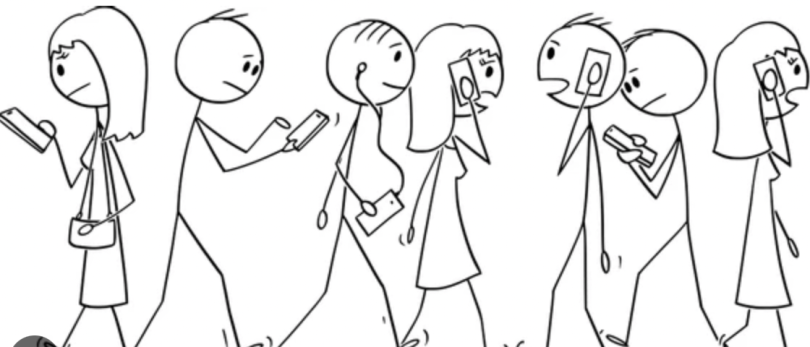
And maybe — just maybe — the answer starts with putting the phone down, stepping back into the world, and allowing connection to unfold the way it always did… slowly, imperfectly, and humanly. Maybe the olden day love is still out there, maybe we just need to allow our eyes to glance further than our phone screens, and maybe we should just cherish the connections we do make.. making our own Hollywood ending…

You never know, maybe love is already in your life.. and you’ll find it when the distractions cease…

Crossing Into 2026: Choosing Love Over Distraction, Depth Over Drift

There is something sacred about crossing into a new year.

It isn’t just a change of numbers, it’s a psychological threshold. A pause, A moment where we are invited to ask ourselves not what happened, but what matters now.

As we step into 2026, the question isn’t simply What do I want this year? It’s not about setting resolutions that fade out in February, its about realising just how special love is, and learning to recognise how beautiful it can me.

It’s Who do I want to be and how do I want to love?

Because a new year isn’t meant to be dreaded. It’s meant to be welcomed, with intention, courage, and hope.

A New Year Is a Reset, Not a Carryover

One of the most powerful things about a new year is that it gives us permission to put the past to bed.

The disappointments, The heartbreaks, The almosts and what-ifs.

They don’t disappear, but they no longer get to drive the car.

Psychologists often talk about the “fresh start effect”, the idea that temporal landmarks (like a new year) increase motivation for meaningful change. We are more likely to recommit to our values when we feel we are beginning again. 2026 offers that doorway.

This is the year to say:

I’m not dragging old negativity into a new season.

The Question We Avoid: Are We Actually Choosing Love?

We live in a time of endless options, but shrinking commitment.

Dating apps promise abundance, yet study after study shows that choice overload leads to dissatisfaction, not fulfillment. When we believe something better, something easier, is always one swipe away, we stop tending to what’s right in front of us.

And that’s where love quietly slips through our fingers.

What if, instead of asking “Is there someone better? Something easier?”, we asked:

  • Is there potential here?
  • Does this have legs?
  • Could this grow into something meaningful if I actually stayed present?
  • What would happen if I offered consistency to this?

Love is rarely lightning every day. More often, it’s a slow burn that deepens with care, fondness and admiration.

If You’re Looking for Love in 2026

If you are single, this year doesn’t need to be about chasing love harder, it can be about meeting it differently. Do we need to stay on the swipe conveyor belt… because just one swipe can potentially change the course and direction of our whole lives… that one swipe..

Research consistently shows that long-term relationship satisfaction is less about instant chemistry and more about shared values, emotional safety, and mutual effort.

So when you meet someone:

  • Don’t rush to judge them against a fantasy.
  • Don’t treat them as disposable, they’re a human being!!
  • Don’t assume connection must feel explosive to be real, its about alignment, shared values and making each other smile.

What if this person is also looking for love, not entertainment, not validation, not distraction—but something real?

What if this meeting is a blessing? Trying doesn’t mean settling. Trying means honoring possibility.

So many of us are lost on the love journey right now, the phrase ‘I’m not ready’, has long become get out of jail free card. People run from love, and want it, however feel love is a prison, a commitment too far.. problem is, so many people will reach middle to old age, lonely, unloved and actually with more issues than they started with…

If You Already Have Love – This Is Where the Work Begins

If you’re already in a relationship, 2026 can be revolutionary, not by adding something new, but by seeing what you already have with new eyes.

Ask yourself:

  • When was the last time I truly cherished my partner?
  • When did I last remember who they were when we first fell in love?
  • Have I been loving them—or just coexisting?

Long-term studies on marriage and partnership show that relationships don’t fail from lack of love, they fail from lack of attention, consistency and communication.

So what would it look like to start again?

  • To date your partner again.
  • To speak to them with curiosity, not assumption.
  • To remember the laughter, the tenderness, the shared dreams.

Love grows where it is noticed.

The Courage of the Next Step

A new year is also a mirror.

If you’ve been together for years, ask the honest questions:

  • Why haven’t we taken the next step?
  • What fear is holding us back?
  • Are we avoiding commitment—or avoiding growth?

Commitment doesn’t trap love—it anchors it.

Moving in together.

Getting engaged.

Building a shared future.

Making a plan.

These aren’t obligations—they’re declarations:

I choose you. Not just today, but going forward the future… my life.

Becoming Better So Love Can Become Better

Healthy love requires healthy individuals.

Multiple longitudinal studies show that personal growth, emotional regulation, and self-awareness are directly linked to relationship satisfaction. Love doesn’t ask us to be perfect—but it does ask us to be responsible.

2026 is the year to:

  • Heal what you’ve been carrying.
  • Communicate instead of withdrawing.
  • Choose kindness over defensiveness.
  • Grow not just for love—but through it.

Why This Matters More Than Ever

Swipe culture trains us to consume people instead of connect with them. The data is sobering: despite more dating access than any generation before, rates of loneliness, anxiety, and relational burnout continue to rise, especially among younger adults.

A future built on disposability leads to emptiness.

A future built on intention leads to fulfillment.

A Happy 2026 Is a Chosen One

Happiness isn’t found by accident.

Love isn’t sustained by chance.

A joyful 2026 comes from deciding:

  • To stop running.
  • To stop comparing.
  • To stop assuming something better is elsewhere.

And to start believing:

What I build with care can become extraordinary.

This year isn’t about perfection.

It’s about presence.

It’s about choosing depth over distraction.

Love over fear.

Commitment over convenience.

Let 2026 be the year we stop drifting—and start developing.

Because love, when we nurture it, doesn’t just survive.

It thrives. 💫

Why Modern Dating Hurts So Much: Attachment, Rejection, and Healing in Today’s Post-COVID World

Modern dating is changing us. Not just how we meet partners, but how we relate to ourselves, our self-worth, our boundaries, our hope for connection. Something in today’s dating culture is making us forget who we are, what we deserve, and how to love ourselves first.

I’ve been watching, not just in my life, but in conversations, in friends’ stories, in what feels like the general pulse of modern love, and I’ve realised there’s something dark and quiet happening inside us. There’s something about today’s post-COVID dating world that’s not just reshaping the way we date, but the way we see ourselves. and I think it’s worth calling it out and us taking time to visit this…

Today’s post-COVID dating world is fast, unpredictable, and constantly in motion. Apps give us swipe-based access to hundreds of faces we never would have met 20 years ago. On paper, it looks like endless choice. In reality, it often produces:

  • emotional burnout
  • attachment anxiety
  • confusion and insecurity
  • fear of intimacy
  • fear of rejection

We’re wired for love – but we’re living in a culture that prioritises availability over authenticity and options over depth.

We’re wired for connection – but the environment keeps pulling us away

As human beings, our biology and psychology are designed for connection, belonging, intimacy. From the moment we were born, being seen, held, accepted mattered. Security, attachment, we evolved to crave these things because they helped us survive and thrive.

But fast forward to now, apps, social media, endless options, midnight messages, “situationships,” and ghosting. On paper, we have more “freedom” and “choice” than ever. But in practice, many of us are more isolated, more anxious, more starved for real connection.

We’ve built a dating culture that normalises disposability and emotional detachment, a culture where it’s normal to treat intimacy like a transaction, and then wonder why we feel hollow.

So when someone shows even a gesture of interest, a kind smile, a compliment,  a deep chat, even just attention, our nervous system reacts like it’s light. We crave that light. We lean into that possibility of warmth the way a plant leans toward the sun. It’s instinct, it awakens us, we WANT the light!

The biology of intimacy – why “casual” doesn’t stay casual

We tell ourselves we’re fine with casual. However our biology often thinks differently. Intimacy, emotional or physical – releases chemicals: hormones like oxytocin, bound up with bonding and trust; neurotransmitters like dopamine, tied with reward, pleasure, anticipation. Touch, warmth, closeness – they make us feel safe, seen, wanted.

Human beings aren’t built for disposability. Physically, emotionally, chemically:

  • Oxytocin (bonding + connection hormone)
  • Dopamine (reward + longing chemical)
  • Vasopressin (attachment + pair-bonding hormone)

These aren’t psychological myths — they’re biology. Intimacy signals to the brain:

Once those signals hit us, we begin to tether, Not necessarily consciously, but deep in our limbic system: “This person made me feel something real.” Maybe for a night, Maybe for a conversation. But real enough.

When that tether is formed, the weight of rejection doesn’t just feel like a lost relationship – it feels like a disruption of safety, of attachment, of self-value.

That’s why sometimes, after the “casual thing,” heartbreak doesn’t feel casual at all. It feels raw, visceral, heavy, because we attached, and tried to convince ourselves “We just wanted fun”. 

Attachment styles, vulnerability and the modern dating trap

Part of the struggle lies in our variation in attachment styles. Some of us find comfort in closeness; some recoil at it; some oscillate between the two. Roughly a third to two-fifths of adults show some kind of insecure attachment style (anxious, avoidant or disorganised). Among those, some lean toward anxious attachment – craving closeness and validation, but haunted by fear of abandonment or rejection.

In a dating environment rife with uncertainty (ghosting, mixed signals, hot-and-cold behaviour, ambiguous “situationships”), anxious people get caught in a loop:

  • They seek validation: “If I can just get this person to like me – text me, stay with me – I’ll feel safe.”
  • They become available, open, emotionally generous, seeking connection.
  • But availability sometimes gets misinterpreted as access, not value.
  • They stay, hoping for stability or love; but often meet inconsistency, indifference, or rejection.
  • Their own emotional need is dismissed, ignored, or undercut – and they’re left feeling replaceable.

That leaves a deeper wound than just being single. It chips away at self-worth. It consumes us. We try to convince ourselves we have the power, but we don’t! We don’t at all, but our conscious mind will do anything to convince us, ‘We’re ok!’ 

The paradox of “availability” vs “value” in modern dating

Here’s the painful paradox I keep seeing and not only that, what I have experienced myself:

  • If a person (often a woman) is warm, available, open to love – they are ready for connection. They offer emotional honesty, clarity, possibility.
  • Yet, sometimes the people who are genuinely looking for that kind of connection don’t recognise its value. They expect something easier: fun, convenience, less emotional labour.
  • On the other hand, a person who seems harder to get – more aloof, more “mysterious,” more reserved – can sometimes be perceived as more desirable simply because there’s a sense of challenge, of scarcity, of chase.

Sociologically and psychologically, it’s a glaring mismatch between what we need (authentic connection, emotional honesty, mutual respect) and what gets rewarded (scarcity, challenge, detachment).

It’s not about “blame” – it’s about recognising that the marketplace of modern dating values the wrong things and for those who come to it with softness, vulnerability, readiness for love –  it’s often the hardest place to find what they genuinely seek.

Rejection: more than just “loss” it’s an identity fracture

When we get rejected, when someone disappears, or treats us like we were never a priority, it doesn’t just sting. It shakes something deeper. I myself have struggled over the years with this, even trying with various therapists to understand the root cause of it all, and I know the answers now, however for most of my life, I was left feeling unwanted, unloved and rejected..

  • Validation-based self-worth: If a lot of our self-esteem depends on “being wanted,” then rejection becomes proof of inadequacy, unworthiness, or invisibility.
  • Attachment rupture: Because our nervous system may have already started to bond, rejection doesn’t feel like a story that ends , it feels like a safe place collapsing, and our whole world is crumbling
  • Internalising blame: We tend to whisper (or shout) to ourselves: “I’m too much / not enough / unlovable.” And instead of seeing that the system is what’s broken, we turn the mirror on ourselves.

In today’s environment, rejection isn’t just a breakup. It’s often felt like a personal failure.

What are we really chasing and what’s missing?

Maybe what we’re seeking is not another person. Maybe we’re seeking:

  • To be seen, to feel that someone understands us beyond the surface.
  • To be valued, to believe that who we are, what we bring, matters.
  • To be safe , emotionally, physically, mentally.
  • To belong,  to connect, to share, to build.

What so many of us discover and sometimes too late, is that these things likely begin with self. If we don’t see ourselves as worthy, safe, valuable, and whole … then no external validation can truly fill that void.

And what gets missing in that chase is often self-respect, self-compassion, self-understanding.

Healing isn’t about “not wanting love” – it’s about redefining where love starts

We can’t necessarily change the system. We can’t rename apps. We can’t make society stop valuing challenge over emotional availability. But we can start changing ourselves. We can build a different inner story. One grounded not in external validation, but internal integrity.

Here’s a rough “healing script” I’m writing for myself , maybe you, or anyone reading this, might relate too:

  1. Recognise my own worth – independent of attention. I am worthy whether someone texts me or not. I am love; I don’t need someone else to confirm it.
  2. Slow down intimacy – emotional and physical. Intimacy doesn’t have to be fast. I give my body, my heart the time to read: “Is this person safe? Do I feel respected?” before I lean in. Of course as any sexual being, of course I crave intimacy, but after my celibacy journey I realised, what I have holds value to me.
  3. Cultivate inner validation, with self-care, self-love, self-respect. I get to look in the mirror and say: “You matter. You deserve respect. You don’t need to chase love – you need to walk towards it.”
  4. Seek emotional clarity – not just physical. I value people who show up with words and actions that match. I’m not afraid to ask: “What do you want? Why are you here?”!!! Don’t be afraid to as that! Sleeping with someone will not suddenly make them fall in love with you! Trust me im pretty confident in the bedroom, but it doesn’t cast them under some love spell!
  5. Set boundaries – protect my time, energy, heart. I will not compromise my self-respect just to feel desired or accepted. I will leave what feels like convenience rather than connection.
  • Find belonging in my community and self-worth in purpose. Real love, trust, and belonging may come from friendships, passions, creativity – not just romantic pursuit.
  • Hold space for growth, patience, and self-compassion. Healing takes time. I might stumble, I might be impatient. I choose to believe that I and the people who deserve me, are worth waiting for.

Conclusion: Relearning love from the inside out

This isn’t a manifesto against dating, sex, or modern love. I still believe in love. I still believe in connection. I still believe in the power of human closeness.

What we’re really fighting against,  what we need to heal from, is the dissonance between what our hearts and bodies crave, and what this fast-moving world offers.

We’re not broken for wanting love, or for wanting closeness. We’re human. We’re wired for bonding, for care, for tenderness.

But maybe the first step is to stop chasing love as a drug. Maybe the first step is to reclaim love from within, to remind ourselves that we are already whole, already worthy, already enough. To remind ourselves its all just chemical reactions… 

Maybe then, when we do open ourselves to another person, it won’t be out of desperation, longing, or validation-hunger, but out of a surplus of self-love.

Because the love we truly deserve isn’t transactional. It’s not earned by being “easy to get” or “hard to win.” It’s simply a reflection, of how much we respect ourselves, believe in ourselves, and hold ourselves worthy of loyalty, kindness, and care.

Maybe, if enough of us do that , change the way we love ourselves first,  we begin to change the way we let others love us.

Why men say all the right things, then disappear after intimacy: The Psychology behind mixed signals..

If you’ve ever found yourself wondering why someone could look you in the eyes, promise connection, talk about a future with you, make you feel chosen… only to vanish after sex, you’re not alone. In today’s dating world, this is one of the most common and painful experiences many women face. We hear all the right words, we feel the emotional spark, we start to trust what’s being built… and then suddenly, the warmth turns cold.

This blog explores why this happens, what’s really going on psychologically, emotionally, and behaviourally and most importantly, why this isn’t a reflection of your worth. If you’ve been ghosted, future-faked, or emotionally led on, I want you to feel seen, validated, and empowered by the end of this. It’s shitty but it happens, and we can’t help it when the anxiety sets in, finally you thought you’d met a good’un, only for them to turn out like everyone else!

The Good morning and sweet dreams texts vanish, the X at the end of messages vanish, the ‘We’ve got this’ is a long distance memory and the ‘next date’ talk dries up dryer than the Sahara. There is a real sadness to this, and its something I have studied deeply, yet I still don’t have the answers, I still cannot understand why people treat the other party like this, because its painful and hurtful, and however strong you are as a person, it can still be crushing, facing the reality, that they ‘Just aren’t into you’ – Wow now that reminds me of one of my first blogs! (Anyone remember)!

Why Do Some Men Say All the Right Things… Then disappear?

There’s a specific kind of heartbreak that doesn’t just hurt, it leaves you confused, doubting yourself, and second-guessing everything that felt real. One minute he’s saying, “I can’t wait to spend more time with you,” “We’re going to get through this together,” and “I see something with us.” The next minute? He’s cold, distant, silent, or suddenly dealing with problems that never existed before.

But here’s the part most women never get told: this pattern has nothing to do with your value. It has everything to do with his lack of integrity, emotional maturity, and capacity for real intimacy.. FACT!

Some people use Words as Tools, not Promises

There are men who treat words like currency, something they spend to get what they want in the moment. They say whatever will create closeness, comfort, and trust, without thinking about the emotional consequences.

They’re not necessarily masterminds or villains; they’re emotionally immature.

To them, phrases like:

  • “I’m really into you.”
  • “I can’t wait to see where this goes.”
  • “We could be great together.”

…are more about creating a vibe than establishing a genuine intention. Meanwhile, you take those words seriously, because you meant yours.

Sex and intimacy triggers Vulnerability, and Avoidant men panic

For emotionally unavailable or avoidant men, sex is the moment when everything suddenly feels “real.” This is when he realises he might need to follow through. He might need to show up. He might need to actually invest.

Instead of communicating like an adult, he withdraws.

He blames stress, work, family problems, mental health, anything that lets him exit the situation while saving face. These “problems” usually appear out of nowhere because they’re not genuine issues, they’re escape routes. They’re his reason to go cold, his reason to run away.

They want the Fantasy, not the responsibility

This is a big one.

Some men genuinely love the idea of connection.

They love the chase.

They love the emotional intensity.

They love feeling wanted.

But when it’s time to turn that fantasy into something real, consistency, communication, accountability, they freeze. They don’t want a relationship; they want a moment and when the moment is over, so is their effort.

Their Disappearance is not a Reflection of You

This part matters:

Just because someone wasn’t able to follow through doesn’t mean you weren’t enough. It means they weren’t capable.

A man who is ready, emotionally aware, and genuinely interested won’t go cold after intimacy. He won’t future-fake. He won’t treat closeness as a performance and then retreat as soon as the spotlight fades. His behavior says nothing about your desirability, beauty, value, or lovability.

It only reveals his emotional limits.

The Hard Truth: Some men chase the high, not the Connection

There are men who treat dating like a dopamine sport. The chase is intoxicating. The validation is addictive. The thrill keeps them engaged, but only until the novelty wears off.

Once the excitement shifts into something deeper and more vulnerable, they disconnect. Not because you changed, but because the game did, the hormones feel different, and they are not self aware or knowledgeable to realise, they’re playing on hormones.

It’s not Just “Rump and Dump” … It’s Emotional Dishonesty

The sexual part is only half the issue. The deeper betrayal is the emotional deception. He didn’t just use your body, he used your mind, your trust, your vulnerability, your openness. He convinced himself you were what he wanted, but then he knew he doesn’t know what he truly wants in life anyway!

And that kind of behaviour isn’t about sex; it’s about character.

Rump and dump is a term I got told this year, by my ex. ‘You’re not a Rump and Dump girl Kerry’ – I was like WTF!!! However my ex did mean this as a compliment, but for someone like him, the term almost felt immature and unintelligent, so it shocked me! I mean I’m glad I wasn’t lol, but what an awful expression.

It literally mean, fuck her and fuck her off!! Beautiful hey!!!!

The expression of ‘Rump and Dump’, ‘Pump and Dump’ is actually used by fraudsters – How apt – Given that situation!

What you felt was real, What he showed was his insecurities.

Your emotions were genuine, Your intentions were sincere, Your connection felt real because you were real. His disappearance wasn’t proof that you misread the situation, it was proof that he misrepresented himself. He isn’t capable of handling a woman like you.

You see with some men, avoidance isn’t about them being the enemy, its about their insecurities, it can also mean, they think they aren’t worthy of you, that you’ll get bored of them, that you’ll hurt them. Enter the over thinkers, those who have a real shot of happiness with you, but talk theirselves out of it, thinking you’re not into them, and this is so sad, because 9/10 times you are, you really are. However they would rather put up walls and talk theirselves out of what amazing relationships they could have, (and often need) , due to the fear of not being good enough.

So….

If you’ve ever been left wondering why someone could be so warm, so convincing, so emotionally intimate one moment, and then so distant the next, please hear this: You did nothing wrong. You weren’t “too much,” you weren’t naive, and you weren’t imagining things.

You were dealing with someone who lacked the depth, honesty, emotional availability and maybe sadly confidence, required for real connection.

This experience doesn’t define your future, it clarifies your standards… AGAIN!

It doesn’t diminish your value, it exposes THEIR limitations And it doesn’t mean love won’t find you, it means you’re learning to recognise who’s truly capable of offering it.

You deserve consistency, You deserve sincerity, You deserve someone who doesn’t disappear when things get real, but grows deeper into them with you, and however much you internalise this, and feel the rejection badly, think, your value, and your worth has not been diminished because of this, it’s yet, sadly another fucking learning curve! (Do they ever cease)

So hold your head high, and say my fave saying ‘Shit happens’ –

Why Dating Feels Hard in 2025: Romance, Apps & Real Connection

Modern dating feels harder than ever. From dating apps to emotional disconnect, here’s why relationships feel complicated in 2025 , and why real romance isn’t dead.

How Do We Meet People These Days , and Can We Still Find Something Real?

There was a time when meeting someone happened almost by accident. You’d bump into someone in the supermarket, catch a stranger’s eye in a coffee shop, (we all know this happens to me all the time lol) or be introduced through a friend, and romance seemed to unfold naturally. Our grandparents didn’t have dating apps, social media or an endless stream of profiles. If they found someone attractive, they simply had to talk to them or the moment would pass forever and sometimes I do wonder whether that made them braver. Not necessarily more confident, just more present in real life because they didn’t have another option.

These days, even if you see someone across a cafe whom you’re drawn to, you probably look away, second-guess yourself, or assume they’re unavailable. I’m the girl on a night out, who gets called ‘stuck up’ because I wear an engagement ring, when I’m single, and refuses to talk to anyone, and so be it, if people want to knock me for that, but I have this deep rooted personal issue, of not wanting to give people the wrong idea, and then when someone is attractive I’m too bloody shy to chat anyway, so apps have been for me the only way to truly meet someone.

Modern dating culture has conditioned us to believe that real-life connection is unusual, almost surprising, when not so long ago it was the most natural way people met. It’s not that our confidence has disappeared; it’s that the world around us has changed. Our social circles have become smaller, our work-life routines more insular, and the unspoken rule now is that if you’re single, you should be on a dating app.

In 2025, dating apps have become the dominant way to meet people. You match, chat, hope, and repeat. And while dating apps open doors, they also create complications. There’s choice overload, emotional burnout, lack of effort, and this strange feeling that everything has become disposable. Even though a large percentage of newly married couples meet online now, and around a third of adults have used apps, not all of them feel that deeper sense of connection or relationship satisfaction. In fact, some research suggests that couples who meet offline tend to feel more stable and more connected long term. So while apps give us access to more people, they don’t necessarily make it easier to find something meaningful.

What feels hardest in modern dating is how quickly things shift when two people start to genuinely like each other. You can meet someone amazing, feel a spark, be open and honest about how you feel, and suddenly the other person goes cold. It’s a pattern so many of us recognise now, and it hurts. Honesty, which should bring people closer, often seems to push one person away, And in 2025, people are terrified of being seen as “too keen,” “love bombing,” or “moving too fast,” so they hold their feelings back and hope the other person will magically intuit how they feel, and it all falls to shit! Sorry to be blunt but it does, ‘He’s not into me’ is what I think, and then as soon as I call it off, he’s like, ‘I really like you’ – TOO Late, i’ve checked out!

There are psychological and biological layers to this. When we meet someone who excites us, our bodies release dopamine and adrenaline the “new attraction” chemicals. It feels intense, addictive, hopeful. But after a few weeks, those chemicals naturally settle. If the connection doesn’t develop into deeper bonding — the oxytocin stage — the initial rush fades. Many women tend to become more emotionally invested during that bonding period, while some men may start feeling pressure, uncertainty or emotional withdrawal. It isn’t universal, but it helps explain why one person leans in while the other pulls back, and even the emotionally stable, can still be like this, I have seen men and women so incredibly self aware, not understand the biology of this period.

Then there’s the lifestyle side of modern dating. So many people say they want a relationship, yet their behaviour shows something different. They want the companionship, but not the compromise. They want closeness, but not change. We’ve normalised this idea of “this is my life — if you want me, you fit into it,” making relationships feel like something that must not disrupt personal freedom. The result? Many people like the idea of love far more than they like the reality of having to make space for it. Everyone these days is like “I love my own space”, “I enjoy my own company” – Great, good for you, but are you realising a real relationship that won’t fail = Adaptations, effort and change!

This is especially painful when you’re a giver. I know this personally. I’m a selfless person by nature — I care, I give, I show up for others emotionally and physically and because of that, people often take me for granted. I’ve experienced it in dating, friendships and even family. People get used to you being the one who understands, who adjusts, who nurtures, who comforts, who puts in the extra effort and they begin to rely on it without ever matching it. Takers are often drawn to givers because givers make their lives easier and givers, hoping for reciprocity, often hold on longer than they should. It’s a hard, painful imbalance that has become more visible in today’s dating world. I mean we are not going back to the Giraffe and Lion story, you don’t have to be a narcissist to feed off others…

It also ties into something else: fear of losing freedom. Modern dating has created a culture where people want emotional security without sacrificing independence. They want someone, but they don’t want to change anything about their life to accommodate that someone. They want connection, but not commitment that requires effort, and unless two people are equally ready to show up emotionally and practically, dating becomes an exhausting game of mismatched expectations.

But even with all of this, the apps, the fear, the disposability, the emotional imbalance, I do still believe romance exists. Not in a grand, cinematic way, but in the quiet, steady ways two people show up for each other. There are people who want to go above and beyond emotionally. People who want to care deeply, build a partnership, prioritise each other, and make their partner feel chosen and valued. These people are absolutely out there, even if they get overshadowed by the noise of modern dating apps, they could very well sat on dating apps, and they could be sat there with an inbox full, but waiting for someone like you, to show up!

The truth is, being on your own isn’t a failure. If anything, it’s where your strength grows. Being single gives you space to understand who you are, what you want, what you deserve, and what your boundaries are. Your independence becomes an asset, not a barrier. When you stand strong in yourself, you choose better. You stop tolerating less than you deserve. You recognise taking behaviour sooner. And you attract people who value your strength instead of draining it. You need to look in the mirror and love who looks back a you, love that person, and realise they need nurturing above anyone and all else. I make this a priority of mine, I look in the mirror or I take a selfie, and tell myself, Kerry you are worth more.. so do the same and never stop.

So yes, dating apps might be the main way to meet someone in 2025, and spontaneous real-life encounters might be rarer, however that doesn’t mean real love has disappeared. It means we approach dating with more awareness, more intention, and more self-worth. It means we stay open, but grounded. Hopeful, but realistic and it means we believe that the right person, whether found on an app, in a coffee shop, or through a friend, will match our effort, not take advantage of it. They will make space for us, not ask us to shrink. They will honour our giving nature, not drain it.

Romance is still alive. Good people do still exist. And no matter how complicated modern dating becomes, it’s always worth giving someone a chance when they show you they’re ready to show up too.

If we don’t keep taking chances , how will we ever know…

Why it feels like there is a shadow hanging over being a woman – Why are we treated like second class citizens.

A raw, honest exploration of why women around the world are still objectified, mistreated, silenced, and left to pick up the pieces. This blog post uncovers the social, psychological, and emotional forces behind entitlement, abuse, and violence. It offers a path toward healing, dignity and empowerment.

There’s a truth many of us carry, often silently, from early on, our bodies, our boundaries, our heartbreaks, and our dignity are under threat. Somewhere in how society functions we are taught ( or shown) that women are less than, or at risk of being treated as “available”, “used”, “taken from”. Why does this happen, why does it persist, and what does it leave in us? I was told this year by someone I was in a relationship with ‘No Kerry, Men will always be 51% and some 49%’ , Needless to say the relationship never worked out, but why in 2025 do we still face these issues!

From a young age many girls sense they are being looked at as a body, as something to be gazed upon, evaluated. Being beautiful becomes one of the strongest currencies. This isn’t just about one person’s fantasy, it’s built into social norms, media, family roles, expectations.

When women are objectified, their full humanity is diminished, they become “things to be consumed”, not equal human beings with agency. In many societies women are still paid less, expected to do more unpaid care, to fit into roles that sideline them.

Objectification and “second-class” status are deeply entwined, if you’re not free to say “no”, if your voice isn’t listened to, if your body is seen as someone else’s territory — then you’re treated as less than.

Why some men act as though they can “take” from women

There are many layers here. One is cultural: in many places men are raised with entitlement, that their desires matter more, that women exist in part to serve those desires, you only have to spend 5 minutes reading the ‘Are we dating the same guy’ groups, to see, that your situation, my situation is not just a one off! Another is psychological: research shows that among men who commit rape and assault, violent dominance, lack of empathy, peer culture and misogynistic beliefs all play a role. For example:

  • Studies of rapists who are in prison, found some view rape as “having sex without the person’s will … the one being raped doesn’t enjoy its pleasure, it’s the rapist that enjoy the pleasure.”  
  • The concept of “rape culture” captures how: victim-blaming, sexual objectification, trivialisation of assault, denial of harm, become socially normalised. 
    Society gives some men the message: your masculinity is proven by conquest, by insensitivity, by ignoring “no”. When these ideas dominate, then touching, luring, assaulting!! Some men see it not as the violation it is, but as “just what I do”.
    Another piece is power: in many sexual assaults, the issue is control, not sex. The assault is a way to dominate, humiliate, silence. That dynamic sits under many of the statistics and stories we hear.

I mean what world do we live in, but we can’t bury our heads girls… we can’t! This is factual and sadly so so close to home for so many of us!

What the numbers tell us

Some crucial, devastating statistics to ground the pain:

  • Globally, nearly 1 in 3 women have been subjected to physical and/or sexual violence in their lifetime (by a partner or non-partner).  
  • In 2023, around 51,100 women and girls worldwide were killed by intimate partners or other family members.  
  • Violence isn’t just “out there”, these are mothers, daughters, friends, women we know or might know.
    These numbers are not remote. They show how the structures around us allow, and often fail to stop, the repeated violation of women’s rights, safety, dignity.

What this does to a woman—emotionally, mentally

It fucks us up for life… Fact!! Let’s not sugar coat this!!! To feel used, to feel like someone else decided your body’s value, your heart’s value, it hurts deeply. It can lead to:

  • Shame and self-doubt (“Why did I stay? Why did I go back? What’s wrong with me?”)
  • Emotional exhaustion: being “always on guard”, managing others’ needs, protecting yourself.
  • Loss of trust: in men, in relationships, sometimes in your own judgement.
  • Anger, grief, sometimes numbness. You might carry the belief you owe something, even when you don’t and that belief itself is born of the messages you’ve internalised.
  • Loneliness: because the society around you may minimise your pain, blame you, dismiss you.
    When a man comes and uses a woman, emotionally, physically, sexually and leaves without apology or regard, the hurt is real. It’s a violation of more than the body: it’s a violation of dignity, our self worth and our love for ourselves!! Men will never ever understand just how hard us women work just to gain that slight bit of self love, and they think nothing of taking it for their own selfish gain!!

Why women sometimes continue to stay with partners…

You asked: “Why as women do we feel we owe men something? Why do we go on in relationships or have consensual sex when the dynamic is bad?” It happens and wow, more than we dare to even think. A few psychological/social threads:

  • Social conditioning: From a young age many women are taught to please, to care, to nurture. The idea of “relationship” often comes with the unspoken cost: your needs are secondary.
  • Hope and love: You may see the potential in someone. You hope the person will change. You invest emotionally. That doesn’t make you foolish, it makes you human.
  • Fear of loss: The sense of “better the bad I know than the unknown” can hold you in place. The belief “maybe this is what I deserve” comes from internalised shame.
  • Power imbalance: If someone has made you feel low, if they’ve conditioned you to believe you’re unworthy, then leaving them or saying “No more” can feel impossible.
  • Trauma bond: After violation, there can be a confusing attachment, especially if kindness or apologies occasionally surface, or if you’ve internalised blame.
    None of this is easy to untangle. The fault lies not in you having feelings or wanting love. The fault lies in the system and in the person who treated you as less.

Why does this persist? Why do men think this behaviour is acceptable?

It’s not “just one reason”, it’s a mix of culture, power, upbringing, individual psychology, structural inequality. Some contributing factors:

  • Patriarchal norms: Societies where men hold economic, political, sexual dominance make it easier for entitlement and abuse to flourish.
  • Gender stereotypes: “Real men” don’t cry, they dominate; “good women” are submissive. These expectations crush humanity.
  • Normalisation of violence: In some contexts assault becomes hidden, ignored, written off. Victims are blamed. Rapists are not held fully accountable.
  • Lack of empathy: Some men (and people) may never truly perceive another’s “no” as valid, or believe their own desire must be fulfilled regardless. Research among rapists showed a mindset of “it’s his pleasure; she didn’t matter”.  
  • Peer dynamics: Some men act for social status, to impress friends, under the idea “boys will be boys”. Rape culture theories emphasise how society tolerates or downplays sexual violence.  
  • Institutional failure: When the justice system, the police, the culture protect abusers or minimise the victim’s voice.. behaviour doesn’t get curbed.
    In short: because the system and culture allow it. And until those change, the behaviour persists.

The implications for us women

When these dynamics are allowed to run rampant, the effects ripple:

  • Self-worth diminishes: Constantly being looked at as someone else’s “use” diminishes the idea you are whole and complete in yourself.
  • Emotional trauma: Assault, objectification, betrayal, abandonment, they can cause PTSD, depression, anxiety, trust issues.
  • Social and economic consequences: Women who survive violence may struggle with employment, health, relationships, support.
  • Generational trauma: The patterns get passed down. If a girl sees a mother being treated roughly, or internalises the idea that a woman must accept less, change becomes harder.
  • Relationship choices: You may end up choosing less, settling, staying in harmful dynamics because the alternative seems scarier than the known hurt.
  • Intersectional suffering: If you are a woman of colour, LGBTQ+, disabled, migrant or from a marginalised group you can face even more layers of objectification, invisibility and abuse.
    These are not just “individual problems”. They are societal problems. When half (or more) of humanity is treated as less, we all lose.

This isn’t just one place, one culture, one story, it’s a sadness that circles around the world. Around the world women are killed, assaulted, silenced, shamed. The number of daily femicides, the prevalence of rape, the under-reporting of violence, these are global. The more I go down a rabbit hole, trying to understand, trying to understand a perpetrators mind, im saddened, sat here in disbelief, how men think they can do what they do…

The sadness is multilayered, grief for what was taken, anger at the perpetrators, frustration at the silence, shame for having believed you were at fault. The sadness for the world that this still happens, that women still have to fear, still have to defend, still have to pick up the pieces.

But let me bring in a different note, true hope…

You are not just a victim. You are not just the piece left behind. Though you’ve been wounded, you can heal. Though you’ve been treated as less, you are whole. You are and I to, a survivor, a strong independent being, reclaiming yourself.. I look in the mirror daily, and I’m like ‘Kerry, Shit happens, but you got this’.

Recognising the problem is the first step. Naming it: objectification, entitlement, violence, misogyny. Then: reclaiming boundaries, your voice, your story. Surrounding yourself with people who honour you, who love you, who you can trust. Undoing the internalised beliefs you were “less than”.

Change also happens collectively, when women speak, when men listen and change, when institutions refuse to protect abusers, when culture shifts to value consent, respect, equality.

It’s your right, not an ask, to be safe, to be respected, to have your body and heart treated with dignity. And the world must change so that isn’t a radical statement, but a foundational one.

Men all around the world, refuse to accept accountability for the word NO, they victim blame.. they think it’s their right to take… my answer is NO!!

NO Means NO

No means no.

Asleep means no.

Unconscious means no.

Not sure means no.

Silence means no.

Men must accept accountability for ignoring the word NO.

And women must stop carrying the shame that never belonged to us

If you’re feeling that you were used, overlooked, treated as disposable, you deserved so much more.

If you’re still in pain from a man who left without apology, who touched you without regard, who made you doubt yourself, your feelings are valid. The shame is not yours. It’s theirs!

If you stayed, or stayed trying, or believed again, know this: that doesn’t make you weak, just because you may have consented once, doesn’t mean the time you said NO, or couldn’t say no, any different. It makes you human. It makes you someone who hoped, someone who wanted to love. Someone who deserves peace.

You don’t owe him anything. You owe you. Your healing, your future, your freedom.

And though you may still feel lost, you are not alone. The sadness is there, yes, but so is the possibility of transformation. The possibility of reclaiming your story. The possibility of being seen, heard, valued.

For every woman who has ever been used, hurt, abandoned or silenced:

You are not broken.

You are not less.

You are not the aftermath of what he did.

You can reclaim yourself.

Your voice.

Your boundaries.

Your identity.

Your future.

Healing starts when you name the truth.

When you recognise you deserved more.

When you surround yourself with people who honour your heart.

Your safety and dignity are not privileges.

They are rights.

And the world must change to reflect that.

A Final Message to Any Woman Reading This

If someone used you and walked away, you deserved so much more.

If he hurt you and didn’t apologise, the shame is not yours — it’s his.

If you stayed, hoped, forgave, tried again, you were loving. Not weak.

Even if you once consented, that does not erase the times you said no or the times you couldn’t say it.

You don’t owe him anything.

You owe you.

Your healing.

Your peace.

Your future.

And even if you feel lost right now, you are not alone.

The sadness is real, but so is the possibility of transformation, the possibility of reclaiming your story.

Be you, feel you… Love Kerry x

Feel free to reach out to me for transformational coaching support… transformwithkerry@gmail.com