I’ve Finally Popped My Dating Cherry

If you’ve followed me for any length of time, you’ll probably know something about me already.

I don’t really date, well I haven’t… not since splitting with my Child father.

That probably sounds ridiculous coming from someone who spends so much time talking and writing about relationships, attachment styles and modern dating, but it’s true.

Throughout my adult life I’ve tended to meet one person, spend weeks talking to them, build an emotional connection, and before I know it, we’re either in a relationship… or I’m left wondering what happened… which has happened really only the last few years, which I do attribute to the whole Dating scene in general these days.

I’ve always been an “all my eggs in one basket” kind of woman.

Until now.

This week, something changed.

Quite unexpectedly, a last minute change of plans led me to a date in Leeds this week, with someone I’d only just matched to, and it was actually really lovely.

It was lovely.

There is no long term future because he’s moving to Dubai, but that’s almost irrelevant. Sometimes people come into your life simply to remind you what healthy interaction feels like.

He was funny, Confident, Direct, No games, No mixed messages, No trying to decode whether he was interested.

No disappearing for several days only to reappear with a vague excuse.

Just… straightforward.

And do you know what surprised me most?

It made me realise what I’m actually attracted to, the kind of man I need..

It’s Not Just About Looks

Anyone who knows me well laughs that I clearly have “a type.”

In fact, my best friend joked yesterday that all my exes look like clones of one another. “Did this one look like a clone too?” she asked, and they really do.

Not quite.

But what attracted me wasn’t actually just his appearance. It was his communication. His confidence, His ability to say exactly what he meant.

It dawned on me that I don’t just find confidence attractive. I find clarity attractive. There’s something incredibly reassuring about someone whose actions match their words.

Someone who isn’t afraid to communicate.

Someone who doesn’t leave you wondering.

Someone who doesn’t make you work out whether they’re interested.

That’s attractive, that’s what creates chemistry.. uncertainty does not equal chemistry.

The Difference Between Online and Real Life

One thing I’ve also realised recently is how easy it is to create assumptions about someone online.

You can read someone’s LinkedIn posts, See polished Instagram captions, follow someones whatssap status, read articulate dating profiles, Watch their videos and naturally you begin building an impression of them, but social media isn’t conversation. The sense of humour and depth people put out to their nearest and dearest, isn’t for new people to presume or judge on, but maybe we give too much of ourselves to people who don’t deserve it, people who haven’t earned that priviledge just yet . I don’t think people do not necessarily judge on purpose, however people form a perception and fill in their own gaps, without giving the person they’ve never met a true opportunity.

Also there are so many people who communicate brilliantly online because they have time to think, edit and even use AI tools to polish what they want to say.

Then you meet them in person…

…and it’s completely different.

Sometimes the confidence disappears.

Sometimes the conversation struggles to flow.

Sometimes the emotional intelligence you imagined simply isn’t there.

It reminded me that chemistry isn’t something you can predict through a phone screen.

I’ve Always Put All My Eggs in One Basket

This has probably been my biggest dating pattern, Meet one person, Focus solely on them, Invest emotionally, Stop noticing everyone else, Build hope, Build expectations.

Wait.

And wait some more.

Looking back now, I can see why.

Psychologists often describe this as an investment strategy. Once we begin emotionally investing in someone, our brain naturally starts filtering out alternatives. People with anxious attachment tendencies, or simply those who value commitment highly, often focus deeply on one connection because exclusivity feels emotionally safer than spreading attention across multiple people.

Research has also shown that once people imagine a future with someone, they’re more likely to overlook incompatibilities and continue investing, even when the relationship isn’t progressing.

I can definitely recognise myself in that.

This Week Felt Different

For the first time, I found myself chatting to more than one person, Not because I’m playing games, Not because I’m collecting options, Not because I enjoy endless messaging.

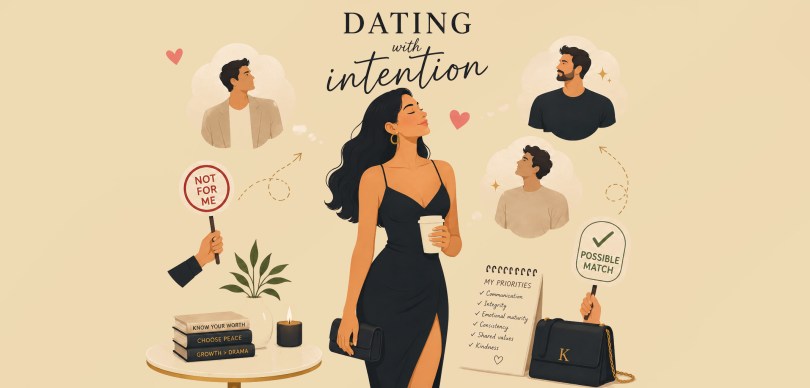
Quite the opposite, I just know I’m dating with intention. There’s a huge difference, I’m getting to know people, Having conversations. Seeing whether there’s compatibility.

Allowing people the opportunity to show me who they are before emotionally investing everything into one person.

And honestly?

It’s been refreshing, but wow hard work. I’m struggling to chat, but know I have to, and it’s not going too bad.  I’ve realised how much emotional pressure I’d unknowingly placed on previous situations. When you only have one person in your mind, every message matters.

Every delay matters.

Every cancelled plan matters.

Everything feels amplified.

Now?

I’m simply enjoying getting to know people.

There’s far less pressure.

Far less overthinking, Far more curiosity.

Learning From My Last Situation

I’d spent around eight weeks chatting to someone recently. We never actually met. Looking back, there was a clear imbalance. Not necessarily because either of us were bad people. Simply because our communication styles were completely different.

Would we have been compatible in person?

I’ll never know, and that’s okay. Sometimes people aren’t chapters.

They’re lessons.

Rather than feeling disappointed, I found myself naturally friend zoning that situation before deciding to start dating properly, I tried to hold off and felt I gave it my all and showed the full me, understanding, patience, kindness and a part of me that I only show those super close, however I realise, maybe I shouldn’t have shown up like that, when you’ve never met someone they can’t ever know or see the real you.

Moving on wasn’t about replacing anyone.

It was about recognising that if something isn’t moving forwards, it’s okay to keep living your life, and coincidently the night I was going on a date, was the night our communication ceased.

Dating With Intention Isn’t The Same As Dating Casually

I think this is where people sometimes get confused. Dating multiple people doesn’t automatically mean sleeping with multiple people.

Those are two completely different things. For me, dating simply means meeting people.

Having conversations, on the phone (Yep the last situation weirdly spent 8 weeks texting and not one call – Yes I should of read the signs).

Going for Walks, Laughing, Learning. Seeing whether there’s compatibility.

I’m actually clearer now than I’ve ever been.

I don’t want casual sex, I have never felt the need for casual sex, because a few hours of madness, can leave you feeling awful the next few days..

Perosnally for me, I don’t need validation. I’m not looking for excitement for the sake of excitement. 

I’m looking for my person.

The next person I’m intimate with will be someone with whom I’m building something meaningful.

That’s my choice and it feels incredibly peaceful.

A Little Excitement

Last night I caught up with an old flame, We’ve both already agreed it’s not a date, and as he picked me up, he’d brought me a coffee for the journey, laughing at the fact he knows I hate coffee dates. 

It’s simply two people catching up. I felt super comfortable, no pressure, no expectations.

Just two people seeing whether they enjoy each other’s company.

And honestly? I loved wearing a pretty dress, linking arms and walking around the Docks was so pretty, Being myself, with someone who knew me, and although it was essentially just friends catching up, we flirted and it felt nice.

For the first time in a very long time right now, dating doesn’t feel scary.

It feels exciting, its crazy to think I’ve only had half a dozen dates the last few years, but right now, I feel comfy at just the chatting stage and maybe there maybe one or two more dates to pencil, but hey no rush. 

Maybe This Is What Healthy Dating Actually Looks Like

Perhaps I’ve finally realised something important. Dating isn’t about desperately hoping every person becomes “the one.”

It’s about allowing enough space for the right person to reveal themselves, to meet in person, and not judge too early. It’s about curiosity instead of pressure.

Connection instead of obsession.

Intentionality instead of urgency.

I’m still dating for a relationship.

That hasn’t changed.

But I’m no longer dating from scarcity. I’m dating from abundance.

There’s a huge difference.

So yes…

I’ve finally popped my dating cherry.

Not because I’ve suddenly become someone who dates endlessly, I can’t suddenly just change who I am, but because, for the first time, I’m allowing myself to enjoy the process rather than trying to rush towards the destination.

Wish me luck.

I have a feeling this chapter might be a good one… and I thought I would add in a few interesting Dating facts..

• Surveys consistently find that many users of dating apps talk to multiple people at once before becoming exclusive. This isn’t necessarily because they’re less serious, but because it helps them avoid becoming emotionally invested before compatibility has been established.

• As Relationship therapists, we often recommend delaying heavy emotional investment until you’ve spent time together in person. Messaging can create a false sense of intimacy because our brains naturally fill in the gaps with assumptions.

• Studies on modern dating suggest that clear, consistent communication is one of the strongest predictors of relationship satisfaction. It’s often less about saying the “right” things and more about reliability, honesty and emotional availability.

• People who date with intention typically report focusing on shared values, emotional maturity and consistency over initial chemistry alone. While attraction matters, long-term compatibility is built through communication, trust and aligned life goals rather than butterflies alone.

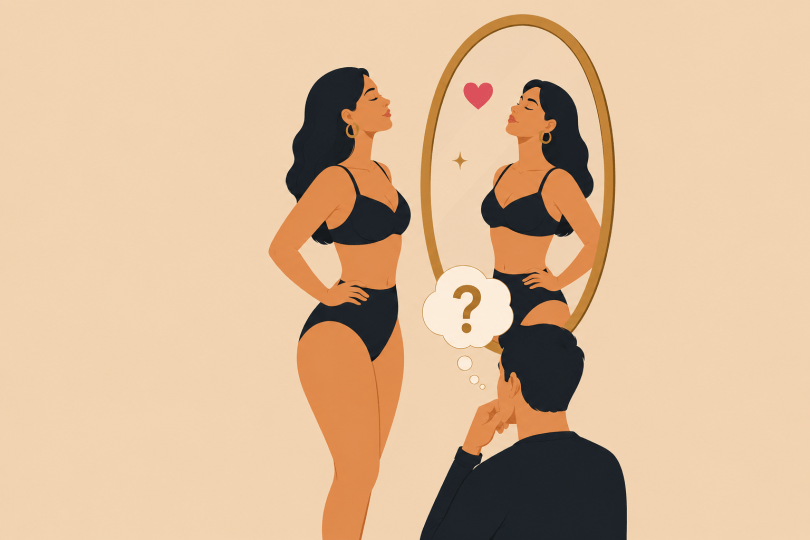
Why Are Some Men Intimidated by Sexually Confident Women?

Through My Own Lens

Relationships, intimacy and confidence are deeply personal, and no two people experience them in exactly the same way. As I’ve grown older, I’ve found myself reflecting on how my own relationship with sex, confidence and femininity has evolved. Along the way, I’ve noticed certain patterns through my own experiences and through conversations with therapy clients. This isn’t about speaking for all men or all women. It’s simply an honest reflection of what I’ve observed, what I’ve lived, and the questions I’ve found myself asking.

Perhaps you’ll recognise some of it. Perhaps your experiences have been completely different. Either way, I hope it encourages a conversation about intimacy, confidence and the way we connect with one another.

For years I saw myself as quite submissive.

I like being feminine. I enjoy looking after myself, my child and my home. In a relationship I naturally fall into a softer role, and in the bedroom I always assumed I was more submissive too, it always felt natural.

But something has changed in that as I have got older.

Not because I became more dominant, god no, not because I suddenly became someone different. I think simply became more comfortable in my own skin.

The way I experience intimacy in my forties is completely different to how I experienced it in my twenties and thirties. Back then, like many women, there was always a little voice in my head.

Do I look okay?

Should I move like this?

Am I attractive enough?

Looking back, I wasn’t fully present. I think many women have sex while carrying insecurities into the room with them. Sometimes we’re performing without even realising it. We become so focused on pleasing someone else that we forget intimacy should also be something we experience for ourselves. As I’ve healed, grown, lost weight, become healthier and far more accepting of my own body, something shifted.

I don’t hide anymore, I don’t overthink, I feel completely at home in my own skin.

Ironically, that’s when I started noticing something unexpected.

Some men seemed incredibly drawn to that confidence, Others seemed… intimidated by it.

Is Sexual Confidence Intimidating?

The answer isn’t yes or no.

It’s that confidence can expose insecurity.

Psychologists have long recognised that confidence in any area of life can sometimes trigger comparison in others. Rather than feeling inspired, some people feel inadequate. Intimacy is no different.

Sexual confidence isn’t about having countless partners.

It isn’t about being loud, outrageous or adventurous for the sake of it.

For me, it’s the opposite.

It’s about being emotionally present.

It’s about knowing what you enjoy, communicating honestly and allowing yourself to experience intimacy without shame.

Research consistently shows that women with greater body appreciation tend to report higher sexual satisfaction, greater communication with partners and lower levels of sexual anxiety. In other words, when we’re comfortable in ourselves, intimacy often becomes deeper rather than more performative.

“You’re Different”

One conversation has always stayed with me.

Last year I was in a committed relationship. Initially everything was wonderful. If I’m honest, it was probably the best sexual connection I’d ever experienced.

One evening we were lying in bed and he turned to me and said,

“You’re different to other women.”

I’ll admit, I braced myself for criticism, (he was the king of narcissism). 

Instead he said,

“I’ve been with a lot of women, but you’re different because you have sex for yourself as well as the other person. Most women don’t.”

That sentence has stayed with me ever since. At the time I didn’t fully understand what he meant. Looking back, I think he recognised something I’d never consciously thought about.

I wasn’t performing. I wasn’t worrying. I wasn’t trying to be someone.

I was simply present, Passionate, Connected.

To me, passion isn’t something reserved for the bedroom.

It’s how I approach life, I’m passionate about my work, About helping people, About healing, About relationships, About being alive.

Perhaps intimacy simply reflects that part of me. I think as with everything in life, I give it my all. 

Does Sexual Maturity Change as We Get Older?

One question I’ve found myself coming back to is whether women and men sometimes experience sexual maturity differently as they get older.

I can only speak from my own experience, but for me, confidence didn’t come from having more sex. It came from knowing myself better.

In my twenties and early thirties, I was far more aware of how I looked, whether I was “doing it right” and whether I was attractive enough. As I’ve got older, all of that has faded into the background. Today, intimacy feels less about performance and much more about presence. I know my body, I’m comfortable communicating, and I allow myself to enjoy the experience just as much as the person I’m with.

When I speak to other women, and to many of my coaching clients, I hear similar stories. Confidence often seems to grow as self-consciousness begins to fall away.

For many men, however, middle age can bring a different set of experiences. Careers become more demanding, family life becomes busier, stress increases, and for some, natural changes in sexual function can start to appear. UK research suggests that concerns about sexual health and performance become more common as men get older, even though many continue to value intimacy and want fulfilling sex lives.

I also can’t ignore something I’ve noticed through countless conversations with people over the years. I’ve spoken to middle-aged men who tell me they haven’t had sex with their partner for weeks, months or sometimes even longer. Equally, I’ve spoken to women who feel emotionally disconnected or who have simply stopped prioritising intimacy. It reminds me that this isn’t a “men’s issue” or a “women’s issue.” Long-term relationships can sometimes drift into companionship, routine and responsibility, leaving very little space for passion unless both people actively protect it.

That makes me wonder whether some couples can find themselves moving in opposite directions. Just as many women are becoming more accepting of themselves and more confident sexually, some men may be carrying pressures they’ve never had before. Not because they’ve become less masculine or less desirable, but because life changes us all.

Perhaps that’s why confidence can sometimes feel confronting.

Not because confident women are “too much”, but because genuine intimacy asks both people to be vulnerable.

I also find myself wondering whether this plays a small part in why some middle-aged men are drawn to younger women. Not because younger women are somehow better, and certainly not because all men seek younger partners, but because relationships where both people are still discovering themselves may sometimes feel less exposing than being with someone who already knows exactly who she is.

It’s simply a thought rather than a conclusion, but I think it’s an interesting question to ask.

Can Confidence Trigger Insecurity?

I’ve worked with enough people now to know I’m not alone in noticing this. Many women I’ve spoken to have shared similar experiences. Sometimes a sexually confident woman challenges expectations.

Some men have become used to being the one who leads, reassures or teaches. When they meet a woman who already knows herself and is comfortable expressing what she enjoys, it can shift the dynamic.

That doesn’t make those men weak. It simply means confidence requires confidence in return. Secure men often welcome openness because it creates honesty and better communication.

Less secure men may start questioning themselves.

Am I good enough? Has she experienced better? Can I satisfy her?

Those thoughts don’t always get spoken aloud, but they can quietly change the atmosphere within a relationship.

Sex Gets Better With Emotional Safety

One thing I’ve realised is that great sex isn’t really about technique. Anybody can have sex, come on you know how true that is… 

But genuine intimacy is different.

The best experiences happen when two people feel emotionally safe enough to stop performing altogether.

When there’s trust, laughter, curiosity, communication, acceptance, and when two people show the fuck up for each other.. they show each other, “I’m here, I’m yours, and I’m not going to fuck this up by playing games”!

That’s where connection lives.

Why I Don’t Date Casually

People are often surprised when I tell them that since the end of my long term relationship with my sons Dad,  I’ve only been sexually intimate in my personal life, with a couple of people over the last four years. Yes I have dated a few, but I have a way with men, where I don’t feel the need to show them who I am through sex. My personal world I guess can be so different, from perhaps any alter ego, I can play or come across as. 

For me, confidence hasn’t led to sleeping with more people. It’s actually had the opposite effect. I’ve become far more selective.

I don’t feel the need to give my body away simply because dating apps make casual intimacy feel normal, I mean what do I gain from that? Apart from making myself feel shit! Where is the reward for me? What a visit to the clinic, because men don’t want to wear protection? No THANKS!

I’ve reached a point where I value connection far more than attention.

Maybe that’s age, Maybe it’s healing, Maybe it’s simply knowing my own worth.

Either way, I no longer believe sex should be something we do because we’re lonely, bored or afraid someone else might come along. I’d rather wait for someone who genuinely values intimacy than collect experiences that leave me feeling empty.

It gives me such insight into the world, having this view, I know porn stars who have sex for money, but the sex they have on film, is not the sex they have with a partner. Many of them are choosing celibacy in their own life,  and you may sit there, not understanding that, but porn stars and sex workers, often become two people, and separate work and private life completely. The person they portray can be a million miles from the person they truly are. 

Are We Really Having Better Sex?

Dating apps have changed modern relationships. They’ve created endless choice, endless comparison and often a conveyor belt approach to dating.

But one question keeps coming back to me.

Are people actually having better sex because they have more opportunities? Or are they simply having more of it?

When I speak to people in long term relationships, it’s surprisingly common to hear things like, “We haven’t had sex for weeks”. Others describe intimacy that feels routine rather than exciting.

The statistics reflect this. Large surveys suggest that sexual frequency tends to decline in many long term relationships over time, and satisfaction depends far more on communication, emotional closeness and relationship quality than on how often couples have sex.

Perhaps the real issue isn’t how much sex we’re having.

It’s how connected we are while we’re having it.

Confidence Isn’t the Enemy

A sexually confident woman isn’t trying to compete.

She isn’t trying to dominate.

She isn’t trying to prove anything.

She’s simply comfortable enough to experience intimacy without apology.

The right man won’t feel threatened by that.

He’ll feel invited into something honest.

Because confidence isn’t about perfection.

It’s about authenticity.

And perhaps that’s the most attractive quality of all.

Trust Me, I Want To… So Why Can’t I?

Surviving the past is one thing. Learning to believe you’re safe enough to love again is something else entirely.

There is a question I hear more than almost any other.

“I want a relationship. I really do. So why, every time someone gets close, do I panic?”

It’s one of the cruellest contradictions trauma leaves behind. Your heart wants connection, Your nervous system wants escape.

One is dreaming about Sunday mornings, shared coffees and someone who feels like home. The other is quietly checking where the exits are.

If you’ve ever found yourself pulling away from someone you genuinely liked, overthinking a text message until it became a twelve episode psychological thriller, or feeling strangely calmer with someone emotionally unavailable than with someone consistently kind, you’re not losing your mind.

You’re experiencing what happens when survival becomes stronger than intention. Trauma doesn’t just change what happened to us, it changes what we expect to happen next.

And that’s a very different thing.

For many people, trust isn’t simply about believing another person won’t cheat or lie. Trust is something much deeper. It is the feeling that if you allow someone close enough to matter, your world won’t collapse if they leave.

That changes everything.

Because suddenly relationships stop being about romance and become about survival.Trauma has a habit of turning up on first dates uninvited. It sits quietly between the bread basket and the drinks menu, whispering things like,“Don’t get too comfortable.” Or, “They’re going to leave eventually.” 

Or my personal favourite, “This is going suspiciously well…”

Dating apps certainly don’t help, I think we all know my view on those… 

Sometimes they feel less like places to find love and more like interviewing strangers for a job nobody seems qualified for.

“Tell me about yourself.”

“I enjoy travelling.”

“So does literally everyone.”

“I love dogs.”

“Congratulations. You’re human.”

We laugh because it’s true, we like the same song, and suddenly, we start fucking thinking we’ve met our soul mate. 

But underneath the humour sits something much heavier.

Many people aren’t simply trying to find a partner.They’re trying to answer a question their nervous system has been asking for years.

Am I finally safe?

The Invisible Suitcase

Imagine every relationship you’ve ever experienced has packed something into an invisible suitcase.

Parents.

Teachers.

Partners.

Friends.

Bullies.

The person who promised forever before disappearing without explanation.

The person who made you feel invisible.

The person who loved you beautifully.

The person who taught you that love came with conditions.

By the time we meet someone new, we rarely arrive carrying just ourselves.

We arrive carrying memories, expectations, beliefs and survival strategies.

Some of those are wonderful, Others are incredibly heavy.

If you’ve experienced childhood abuse, neglect, domestic abuse, coercive control, betrayal or significant emotional trauma, your suitcase may contain something else entirely.

Hypervigilance, Self doubt, People pleasing.

The belief that love has to be earned, The expectation that happiness never lasts, not because they’re true.

Because once upon a time, they kept you safe.

One of the biggest misunderstandings about trauma is that people think it’s purely about memory.

It isn’t.

As trauma psychiatrist Bessel van der Kolk explains, trauma is carried not only in our thoughts, but in our bodies. Even long after danger has passed, our nervous system may continue responding as though the threat is still present.

That’s why someone can logically know they’re safe while simultaneously feeling terrified, and consequently avoidance can happen.

Their body hasn’t received the memo.

When Your Smoke Alarm Becomes Overprotective

Imagine installing the world’s most sensitive smoke alarm.  It doesn’t just go off when there’s a fire. It screams because someone made toast or lit a candle or looked vaguely enthusiastic near the kitchen.

Ridiculous?

Perhaps.

Unless you’re a nervous system.

Trauma often creates an alarm system that becomes brilliantly efficient at spotting possible danger. The difficulty is that it becomes equally brilliant at spotting danger where there isn’t any.

A delayed text message, A slightly different tone of voice, Someone asking for space, A cancelled plan.

To another person, these are everyday experiences.

To a traumatised nervous system, they can feel like the opening scenes of abandonment. Your brain isn’t trying to ruin your relationships. It’s trying to prevent history repeating itself. That’s a very important distinction.

Trauma doesn’t mean you’re broken. It means your brain adapted to survive. Once that clicks, something extraordinary begins to happen.

Instead of asking, “What’s wrong with me?”

You begin asking,

“What happened that taught my brain this was necessary?”

That single question replaces shame with curiosity.

And curiosity is where healing begins.

Why Safety Matters More Than Trust

People often say trauma survivors have trust issues. I’d gently challenge that, because many survivors don’t actually struggle to trust. Quite often, they trust words, Potential, Hope, Promises, Future plans.

The version of someone they believe could exist if everything worked out.

Sometimes they trust far too easily.

The real difficulty isn’t trusting other people. It’s trusting themselves to leave when someone’s behaviour consistently tells them they should.

That feels very different.

Because if childhood taught you that love required endurance…

If previous relationships taught you that chaos was normal…

If your self-worth became tangled up in proving your value…

Walking away doesn’t necessarily feel empowering.. It feels terrifying.

Sometimes staying feels safer simply because it’s familiar, Not because it’s healthy. One of the saddest realities of trauma is that our definition of “normal” can become completely distorted. Healthy can feel unfamiliar.

And unfamiliar often feels unsafe.

Which brings us to one of the greatest ironies in relationships.

Healthy relationships can initially feel boring when your nervous system has been trained to expect chaos. Not because they’re lacking passion but because they’re lacking panic.

Those are two very different experiences.

Attachment: Our First Blueprint For Love

Long before we downloaded dating apps or debated whether replying after seventeen minutes looked too keen, our brains had already started forming expectations about relationships.

Psychologist John Bowlby proposed that our earliest relationships with caregivers become internal blueprints for how we understand connection.

Later, Mary Ainsworth’s research showed that children develop different attachment styles depending on how consistently safe, responsive and emotionally available their caregivers are.

This isn’t about blaming parents.

Life is rarely that simple.

Parents have histories, Stress, Mental health struggles and trauma of their own.

Most were doing the best they could with what they had. However our nervous systems don’t record intentions.

They record experiences.

If your emotional needs were generally met, your brain learned that relationships are safe places to return to.

If care was inconsistent, unpredictable or frightening, your brain learned something very different.

Love became uncertain.

Conditional.

Something that might disappear without warning.

Those lessons don’t stay in childhood. They quietly climb into adult relationships too.

When Love Feels Like An Exam You Keep Failing

People with anxious attachment are often described as “needy.”

I dislike that word.

Most aren’t asking for too much. They’re asking for reassurance because somewhere along the line reassurance became unpredictable.

If love was inconsistent growing up, uncertainty can feel unbearable.

Texts become evidence.

Silence becomes danger.

Distance becomes rejection.

Their nervous system isn’t saying,

“I need constant attention.”

It’s saying,

“Please don’t disappear.”

That’s a very human response when you’ve experienced emotional inconsistency. In todays society, people are so distracted, that sometimes they forget to deliver the basics of consistency, and this delivers as ‘Low Level’ – Deep down we’re all searching for that “Good Morning” or “Good night” message, but people become to preoccupied, and when the basics are asked of them, become overwhelmed, and presume their other half as we said ‘needy’, when deep down, equal effort, can keep both partners settled and content.

Then we have avoidant attachment.

This is perhaps one of the most misunderstood attachment styles of all. Avoidant people are often portrayed as cold or commitment phobic villains who simply don’t care.

Reality is usually much more compassionate. Many learned very early that depending on other people wasn’t safe. Maybe emotions were dismissed. Maybe vulnerability wasn’t welcomed. Maybe independence became survival.

So rather than clinging when relationships become emotionally intense, they unconsciously create distance.

Not because connection doesn’t matter, Because it matters so much that losing it feels unbearable.

Different survival strategy, Same frightened nervous system underneath.

Neither style is “better.”

Neither makes someone bad.

Both are adaptations.

Both deserve compassion.

And both can heal… but taking the time to recognise and truly see the patterns in their behaviours 

The Body Keeps The Score… Even On Date Night

One of the biggest breakthroughs in trauma research has been recognising that healing isn’t simply about changing our thoughts.

It’s also about calming our bodies.

Psychiatrist Judith Herman described recovery as moving through stages of safety, remembrance and reconnection.

Notice the order.

Safety comes first.

Not forgiveness.

Not dating.

Not positive thinking.

Safety.

Because without safety, the nervous system cannot fully relax.

This is why two people can hear exactly the same sentence.

One hears,

“Can we talk later?”

The other hears,

“They’re about to leave me.”

Same words.

Entirely different nervous system.

Our brains constantly predict what comes next based on previous experience. If previous experience included fear, criticism or abandonment, today’s relationships often become filtered through yesterday’s pain.

That doesn’t mean those fears are silly, it means they once served a purpose.

Healing isn’t about pretending those alarm bells don’t exist.

It’s about teaching the nervous system that they don’t need to ring every single time someone gets close and that takes patience.

Not perfection.

It also takes self-compassion, something many trauma survivors generously give everyone else while quietly forgetting themselves.

Perhaps that’s the first place healing really begins, Not with finding the perfect relationship but with becoming the safest relationship you’ve ever had with yourself.

One of the greatest gifts we can give ourselves is learning to pause before reacting. Not because our feelings are wrong.

But because our feelings aren’t always describing the present. Sometimes they’re describing the past.

That distinction can transform relationships.

When Every “Maybe” Feels Like “No”

If you’ve ever spent an entire evening analysing a full stop at the end of a text message, welcome to the wonderfully exhausting world of rejection sensitivity.

Someone replies a little later than usual, Your brain writes a novel. They seem quieter after work.

Your mind has already planned the break up, divided the furniture and chosen your post heartbreak playlist.

Sound familiar?

For many trauma survivors, rejection isn’t simply disappointing.

It feels dangerous.

Psychologist Gabor Maté has written extensively about how our need for attachment is one of our deepest human drives. As children, maintaining connection with our caregivers is essential for survival. If those relationships are inconsistent, frightening or emotionally unavailable, our brains learn to monitor them constantly.

That hyperawareness doesn’t magically disappear when we become adults.

It simply changes clothes.

Instead of scanning our parents’ moods, we scan our partner’s texts. Instead of wondering whether we’ll be comforted, we wonder whether they’ll reply.

The behaviour changes.

The survival strategy doesn’t.

Understanding this isn’t about excusing unhealthy behaviour.

It’s about recognising that behind many reactions is a frightened nervous system trying desperately to prevent old wounds from opening again.

Chemistry Isn’t Always Compatibility

Here’s something that often surprises people.

The strongest spark isn’t necessarily the healthiest relationship.

We’ve all heard someone say,

“I’ve never felt chemistry like this before.”

Sometimes that’s wonderful. Sometimes it’s your nervous system recognising something familiar and familiar doesn’t always mean safe.

If chaos was normal growing up, calm can initially feel unsettling.

Predictability can feel flat.

Kindness can feel suspicious.

Consistency can almost seem… boring.

Not because healthy love lacks depth.

Because your nervous system has been trained to associate emotional intensity with connection.

The butterflies might not always be butterflies.

Sometimes they’re simply adrenaline. Sometimes they’re uncertainty. Sometimes they’re your smoke alarm shouting,

“This feels familiar!”

Unfortunately, it doesn’t always specify whether familiar is healthy or harmful.

One coaching question I often encourage people to sit with is this:

Do I actually like this person, or do I simply like being chosen?

It’s an uncomfortable question.

But an important one.

Because validation can sometimes disguise itself as love.

Another worth reflecting on is:

Am I chasing love, or am I chasing rescue?

If we’re honest, many of us have spent years hoping another person would finally heal wounds that were never theirs to carry.

Love can support healing.

It cannot replace it and perhaps the hardest question of all:

Would I still choose this relationship if I wasn’t afraid of being alone?

Sit with that one.

Don’t rush it.

The answer often tells you everything you need to know.

When Anxiety Borrows Intuition’s Clothes

People often tell me,

“I knew something was wrong. I just ignored my intuition.”

Sometimes that’s true. Sometimes it isn’t.

One of the most important parts of healing is learning the difference between intuition and anxiety, because they feel remarkably similar until you know what you’re looking for.

Intuition tends to arrive quietly.

It doesn’t usually shout.

It doesn’t catastrophise.

It doesn’t demand an immediate decision.

It simply knows.

Anxiety is much louder.

It searches for evidence.

It creates endless what ifs.

It desperately wants certainty in situations where certainty simply doesn’t exist.

As I often say,

Sometimes it’s anxiety carrying a fake Louis Vuitton pretending to be intuition.

It makes me smile every time because it’s surprisingly accurate.

Anxiety can become an exceptional actor.

The challenge is learning not to hand it the lead role in every relationship.

Instead of asking, “How do I stop feeling anxious?” Try asking, “What evidence do I actually have today?”

Bring yourself back to facts, not fears, because trauma predicts.

Healing observes.

Learning To Feel Safe With Intimacy

People often assume survivors struggle because they can’t love. In reality, many struggle because their nervous system has never truly believed love is safe.

There’s a huge difference. Love requires vulnerability. Vulnerability requires safety and safety isn’t created by words.

It’s created through repeated experience.

Someone saying, “You can trust me,” means very little.

Someone consistently showing up, respecting your boundaries, repairing conflict, apologising when they’re wrong and remaining emotionally available…

That’s what teaches the nervous system something new. This is especially true when it comes to sex and intimacy. For some people, physical closeness feels natural. For others, it can activate memories they didn’t even realise their body was holding.

For some survivors of sexual abuse, the greatest challenge isn’t having sex. It’s staying emotionally present during it.

Many describe learning, often from a very young age, to mentally disconnect from what was happening as a way of surviving. Dissociation isn’t a choice. It’s an extraordinary protective response that allows the mind to distance itself from overwhelming experiences when there is no other escape.

The difficulty is that our nervous system doesn’t always recognise when the danger has passed. Years later, during consensual, loving intimacy, that same survival strategy can quietly reappear. Someone may find themselves physically present but emotionally absent, almost as though they’re watching the moment rather than truly living it. It can feel as if they slip into another version of themselves, one created to survive rather than to connect.

Ironically, the safest relationships can sometimes feel the most emotionally exposing. Not because the survivor doesn’t want intimacy, but because they do. Being fully seen by someone you genuinely care about requires a level of vulnerability that a traumatised nervous system may never have learned was safe. Remaining present, allowing yourself to be emotionally and physically connected, can take enormous courage.

This is one reason why some survivors find casual sex or sex work unexpectedly easier than deeply intimate sex. It isn’t necessarily about desire or commitment. Emotional investment changes the experience entirely. When there is little emotional attachment, the nervous system may feel less at risk. But when love enters the equation, so too can the fear of being truly vulnerable.

Many survivors also describe experiencing intimacy in two very different ways. There can be sex that feels emotionally disconnected, where the body is present but the heart and mind remains protected. Then there is deeply connected intimacy, where emotional closeness and physical closeness exist together. The contrast between those experiences can feel profound, and confusing, until we understand that both are shaped by the nervous system’s attempt to keep us safe.

There is nothing shameful about these responses. They are not signs that someone is incapable of love or healthy intimacy. They are evidence of a brain and body that adapted in remarkable ways to survive circumstances no one should ever have had to endure and, like so many survival strategies, with safety, patience and the right support, they can begin to soften.

Trauma isn’t only remembered consciously.

Sometimes the body remembers long before the mind catches up.

That can leave survivors feeling confused.

“Why did I suddenly panic?”

“Why do I freeze?”

“Why do I shut down when nothing bad is happening?”

Again, there is a reason.

Fight, Flight, Freeze, Fawn.

These aren’t personality flaws. They’re survival responses.

Fight protects through confrontation. Flight protects through escape. Freeze protects by becoming still. Fawn protects through pleasing others, often by ignoring our own needs.

Every one of these responses once served a purpose. Healing isn’t about judging them. Healing isn’t about becoming someone different.

It’s about recognising the survival strategies that no longer serve you. When we understand that, shame begins to loosen its grip.

Grieving The Future That Never Happened

One of the most painful parts of heartbreak isn’t always losing the person.

It’s losing the future you imagined with them. The Sunday mornings. The holidays. The family Christmases. The conversations that never happened. The version of life you had quietly built in your mind. Sometimes we aren’t grieving reality. We’re grieving possibility.

That’s why endings can feel so confusing.

We tell ourselves,

“I miss them.”

Sometimes what we actually miss is who we hoped they would become.

There’s a profound difference. That doesn’t make your grief any less real. If anything, it explains why it hurts so much. You’re mourning dreams as well as memories. Allow yourself to grieve both.

Just don’t confuse potential with evidence.

Hope is beautiful, but healthy relationships are built on patterns, not promises.

What Healing Actually Looks Like

Healing is often portrayed as a dramatic breakthrough.

One life changing moment, One perfect therapy session, One inspirational quote.

The truth is usually much quieter.

Healing is replying honestly instead of pretending you’re fine.

It’s recognising a red flag before explaining it away.

It’s choosing peace over unpredictability.

It’s noticing your body becoming anxious and offering yourself compassion instead of criticism.

It’s learning to apologise without believing you’re fundamentally unlovable.

It’s discovering that boundaries aren’t walls.

They’re doors with locks.

The right people knock…They don’t force their way in.

Healing is slowly teaching your nervous system that not everyone who gets close is going to hurt you. That lesson isn’t learned through thinking.

It’s learned through experience.

One safe conversation.

One respectful disagreement.

One healthy relationship.

One repaired rupture.

Over and over again.

Until your body finally believes what your mind has been trying to tell it.

Forgiveness Isn’t A Deadline

Let’s talk about forgiveness, because I think we’ve complicated it far more than necessary.

Forgiveness is deeply personal, It isn’t a competition, It isn’t proof of healing and it certainly isn’t something anybody else gets to demand from you.

Some people find freedom through forgiveness, Others find freedom through acceptance. Some never forgive at all, yet still build beautiful, peaceful lives.

All are valid.

Healing doesn’t require pretending something didn’t hurt. Nor does it require reconciling with people who continue to harm you.

Sometimes forgiveness is simply releasing the hope that the past could have been different.

Sometimes it’s choosing not to carry someone else’s behaviour into every future relationship.

And sometimes it’s quietly saying,

“What happened mattered. It changed me. But it doesn’t get to define the rest of my life.”

That, to me, is extraordinary courage.

From Surviving To Living

If you’ve recognised yourself anywhere in these words, I hope you take one thing away.

There is nothing wrong with you.

Your nervous system has spent years doing exactly what it was designed to do.

Protect you.

The difficulty is that protection and connection don’t always speak the same language.

One says,“Stay back.” The other whispers,“Come closer.”

Healing is learning to let those two parts of yourself have a conversation instead of a battle.It’s understanding that your smoke alarm doesn’t need to sound every time someone walks into the room.

It’s unpacking that invisible suitcase, one belief at a time, and asking,

“Do I still need to carry this?”

Sometimes the answer will be yes, Sometimes it will be no.

Both are okay, because healing isn’t linear.

You’ll have days where you feel calm, secure and hopeful.

You’ll have other days where an unanswered message convinces you the world is ending.

Progress isn’t never becoming triggered again.

Progress is recognising the trigger sooner, responding with greater kindness and returning to yourself more quickly.

That’s growth…Real growth.

You are not too much….You are not difficult to love.

You are not destined to repeat every painful chapter you’ve lived through.

The fact you’re reading this tells me something important…A part of you already believes life can be different.

Hold on to that part.

Feed it.

Protect it.

Because the opposite of trauma isn’t perfection.

It’s safety.

It’s connection.

It’s waking up one day and realising that love no longer feels like something you have to earn. It simply feels like somewhere you belong. Perhaps that’s what healing really is.

Not forgetting the past.

Not pretending it never happened.

But gently teaching your mind, your body and your heart that the danger has passed.

That the alarm can finally grow quieter.

That the person you’ve spent your whole life trying to become…

Was never broken in the first place.

Just brilliantly adapted.

And now, finally, free to do something far more beautiful than survive.

To Live and Love

The Context we Meet in: Why we judge women by circumstance instead of Character

There is a scene in Pretty Woman that has stayed with me for years.

Edward, played by Richard Gere, looks at Vivian and says, “I’ve never treated you like a prostitute.”

Her response is immediate.

“You just did.”

For a long time, I watched that scene and thought it was simply about a man saying the wrong thing. As I have grown older, spent more time listening to people’s stories and worked with women from all walks of life, I have come to realise that the scene is about something much bigger than a wealthy businessman falling in love with an escort. It is about judgement. It is about the labels we place on people. Most importantly, it is about how often women are judged by the circumstances in which they are found rather than the character they possess.

What strikes me most about that exchange is that Vivian never asks the obvious question. Why is she carrying the burden of judgement when Edward was equally involved? He may have been the wealthy businessman and she may have been the escort, but both of them participated in the same encounter. Without Edward, there is no transaction. Without his choices, there is no story. Yet somehow society finds it easier to judge Vivian than it does Edward. He is seen as successful. She is seen as shameful. He is allowed complexity. She is reduced to a label, she could be incredibly successful in her own right, but it’s always the man casting judgement, without the understanding.

That scene has always felt like a reflection of something much bigger that still exists today. Women continue to be judged differently for the very same situations that men willingly participate in. The details may have changed. Dating apps have replaced chance meetings in bars. Social media has transformed how people connect. Entire industries have emerged that did not exist twenty years ago. Yet the underlying double standard remains surprisingly familiar.

A woman can meet a man on Tinder, spend an evening talking, laughing and building what she believes is a genuine connection, sleep with him, and then discover she has been quietly disqualified from relationship status because she slept with him too quickly. The irony is extraordinary. He was there too. He made the same decision. He participated in exactly the same experience. Yet somehow he walks away feeling entitled to judge her for behaviour he willingly took part in himself.

What fascinates me is that many women do not think this way. They are often looking at the bigger picture. They are wondering whether there is chemistry, whether there is potential, whether this person could become a meaningful part of their life. Of course there are exceptions. Both men and women can be manipulative. Both men and women can seek validation. Both men and women can be dishonest. This is not about pretending one gender is innocent and the other is guilty. Human beings are complicated. What interests me is the imbalance in how judgement is applied. Society still seems far more comfortable attaching shame to women than it does to men.

One of the most interesting questions in modern dating is why some men automatically assume that a woman on Hinge is more suitable for a relationship than a woman they meet in a lap dancing club or who perhaps has worked as an escort. Why? What evidence do they actually have? Have they spent time understanding her values? Do they know how she treats people? Do they know whether she is loyal, emotionally available, trustworthy or kind? Usually the answer is no. What they are really judging is not the woman herself. They are judging the story attached to her, and the crazy thing is from my day to day life, I actually hear that ‘BodyCount’ can often reign higher in the women they perceive as ‘Marriage material’.

The woman on Hinge is viewed as someone searching for love. The woman in the club is viewed as someone selling fantasy. One is placed into a socially approved category. The other is placed into a socially disapproved category. Yet neither label tells us very much. The woman in the club may have stronger boundaries than anyone the man has ever met. She may have spent years single because she refuses to settle for relationships that do not meet her standards. She may be fiercely loyal once she commits to someone. She may have had fewer sexual partners than many of the women being praised as relationship material. Meanwhile, the woman on Hinge may be dating multiple people, have no interest in commitment and be seeking validation rather than connection. Or the opposite may be true. The point is that nobody knows.

Character cannot be determined by profession. It cannot be determined by appearance. It cannot be determined by where somebody happened to meet you. Yet people continue to make assumptions every single day based on these things. They judge a book by its cover and then convince themselves they know the entire story.

What I have learned over the years is that public image and private reality are often worlds apart. We live in a culture where people carefully curate how they are perceived. Dating profiles are curated. Social media accounts are curated. Influencer brands are curated. Even ordinary people curate versions of themselves for public consumption. We look at photographs, captions and carefully selected moments and convince ourselves we know somebody. The truth is that we rarely do.

There are women with enormous social media followings who are admired by millions. There are reality television personalities, influencers and public figures who have built highly successful brands around their image. Some have found ways to monetise their beauty, fame and desirability in ways previous generations could never have imagined, and behind closed doors are being sent out on secret Whatssap groups for £10k for the night. Personally, I do not see anything wrong with that. If somebody has built an audience, worked hard to create opportunities and found a way to capitalise on their success, then fair play to them. What interests me is not what they do. What interests me is how society responds to them depending on what information is publicly available.

The same man who judges a woman working openly within the adult industry may spend years admiring, following and fantasising about a public figure whose private life he knows nothing about. The difference is not necessarily morality. The difference is visibility. One woman is judged because people know. The other escapes judgement because people do not. Yet both may be making similar choices in private. This is why assumptions are so dangerous. They are built on incomplete information and presented as certainty.

Another aspect of this conversation that deserves far more compassion is the reality that some women carry experiences most people know nothing about. Some women working within parts of the adult industry have histories of childhood sexual abuse, rape, domestic violence, coercive relationships or profound emotional neglect. Of course this is not true of everyone and it would be wrong to make assumptions. Every woman’s story is different. Yet it is important to recognise that for some women, their relationship with their body, sexuality and sense of control has been shaped by experiences that occurred long before anyone met them. I work with one lady in the industry, who was date raped, and is simply too scared to date, and maybe she’s lost her way a little, but who are we to sit and judge.

What often frustrates me is how quickly people jump to judgement without any curiosity about what might have brought someone to where they are today. We see a profession and assume we understand a person. We see a choice and assume we know the story behind it. Yet human beings are rarely that simple. For some women, stepping into a space where they choose the terms, set the boundaries and decide what access people have to them can feel very different from experiences where control was taken away. What outsiders may perceive as exploitation, another person may experience as autonomy. Whether people agree with those choices or not is almost irrelevant. The point is that we cannot understand someone’s life by reducing them to a label.

Perhaps that is another reason I find judgement so problematic. It leaves no room for complexity. It leaves no room for empathy. It leaves no room for the possibility that the person standing in front of us has survived things we cannot imagine. We do not know their history. We do not know their struggles. We do not know what they have overcome to become the person they are today. Yet society is often quick to condemn women for the choices they make while showing very little interest in understanding the experiences that shaped those choices in the first place.

As the film draws to a close, something interesting happens. Edward finally understands what he could not see at the beginning. The issue was never Vivian’s profession. It was never the circumstances in which they met. It was never the label he had attached to her. The real obstacle was his inability to look beyond those things. Only when he lets go of his assumptions is he able to see the woman standing in front of him.

If we return back to the film ‘Pretty woman’ in one of the most iconic scenes in the film, Edward arrives with flowers and climbs the fire escape despite his fear of heights. He becomes the knight in shining armour Vivian once dreamed about as a little girl. Of course, we live in a different world now. Most women are not waiting to be rescued. Women build careers, raise families, buy their own flowers and save themselves every single day. The fantasy was never really about being rescued anyway. The fantasy was about being chosen. Being valued. Being seen… finally the little girl who had led such a traumatic and sad life, was seen.

Perhaps that is what so many people are searching for beneath all the noise of modern dating. Not perfection, Not status, Not somebody who ticks every box on paper. Just somebody willing to look beyond the stereotypes, beyond the assumptions and beyond the story attached to how they met.

Because love does not arrive wrapped in social approval. It does not ask whether someone was met through friends, on a dating app, in a club, at work or during the most unexpected chapter of their life. Love only asks whether two people are willing to know each other honestly.

And perhaps that is the real lesson hidden inside Pretty Woman. The greatest relationships are not built by people who meet in the perfect circumstances…. They are built by people brave enough to see beyond them….

Maybe the real question is not where are the women worth loving. Maybe the real question is where are the men willing to put down their judgement long enough to recognise them.

Because the most beautiful love stories have never been about how two people met.

They have always been about what happened when they decided to truly see one another.

2026 – The year Choosing Me: The Moment I Stopped Waiting to Be Chosen

There’s a truth I’ve had to learn the long way round:

Sometimes you have to experience the wrong people to finally understand your worth.

Not in a cliché way and not in a “everything happens for a reason” way, but in a very real, very lived way, where each connection leaves a mark, teaches you something, and slowly pulls you back to yourself.

I’ve loved different kinds of men.

Last year I met the one who felt electric at the start, passionate, intense, everything turned up to 100. The sex was something else, I mean girls, there is good and then there is WILD! Insane until it wasn’t. Until the warmth turned into walking on eggshells. The subtle put-downs. The control disguised as care. The disappearing acts followed by apologies that reset everything… until the cycle began again and I lost myself in that, not just emotionally, but physically too. So swept up in the sex, attention, gifts and love-bombing, I suddenly realised after watch him down pink cocaine for two weeks, that this was not the kind of man who should be in mine or my Childs life.

Then came along a good man, Kind-hearted, Safe, I thought. Someone I let myself open up to in a way I hadn’t in a good few years. We built something slowly, calls, messages, shared moments across distance, it felt so familiar… And then… he shut down.

No warning. No gradual fade. Just a switch.

One minute, he was planning a weekend with me, so excited I was in his country. The next, it was “this feels like pressure, I should respect my boundary, I can’t do long distance”, That kind of emotional whiplash does something to you. It doesn’t just hurt, it changes how you see people. How you trust. How you show up. I’m so glad I didn’t have sex with him, because in all honesty seeing his insecurities at play with avoidance, makes me feel there would have been disappointment. I think it felt familiar, because it threw me back into the summer of 2023, another situation, the calls, messages, consistency, deep intimacy on all levels except sex.

and somewhere underneath all of that, there’s been another truth sitting quietly in my life:

There is someone I love… who didn’t choose me, and it was after the experience with my Californian guy, I realised, it simply reminded me of that! The heartbreak of 2023, where I wasn’t chosen, but had fallen anyway..

For a long time, I told myself it was limerence, Infatuation. Something I’d grow out of, however time has a way of clarifying things, not erasing them and the truth is some feelings don’t fade just because they’re inconvenient, they simply get avoided.

But here’s what I’ve realised:

Someone not choosing you doesn’t make them “the one.” It makes them unavailable.

The Pattern I Couldn’t Ignore

There’s something else I started to notice.

Men would leave… choose someone else… build lives with other women.

Then years later, they’d come back, Telling me I was always the one, That they see me now, That they made the wrong choice. It happened last summer. I had a call, with an ex asking to meet me, I was seeing the narcissist at the time, and I declined, but he pushed and pushed, so I agreed ten mins in a public place only. I showed up, and was met with, basically I was the one perfect for them, I was the one they loved, I was the one aligned, I was so shocked, but its not the first time this has happened.

But by then, it’s too late, Because love isn’t just about recognition, It’s about timing. It’s about courage. It’s about choosing.

And I deserve to be chosen in real time, not in hindsight.

I appreciate if things don’t work out with someone else they chose, and then try and rekindle, but I will never be the other woman, whilst you keep someone there incase I say NO, and I did say NO!

The Misunderstanding of Who I Am

I think part of my story is this:

People think they know me when they first meet me, I get judged all the time. They see confidence, Strength, Independence.
They assume I’m “a lot.”, That I’ll be hard to handle. People see the Kerry now before them, not the Kerry I was for all of my life, they see the girl with the lips, the tan, the hair, taking images and posing, and they see me in a certain way, because that’s what their ind interprets.

But the truth?

In a relationship, I’m soft, I’m calm, I’m loyal, I’m simple in what I want.

A quiet life.
A genuine connection.
A partner to build with, not perform for.

And it’s only later, when they’ve already chosen someone else, that they realise actually she’s the opposite to who she comes across as, But I’m not waiting around to be understood after the fact anymore. Judgement is on them, Darlings, not me!

What I See Clearly Now

I see the half-effort.

The “let’s plan something” followed by inconsistency.
The words that don’t match actions.
The low-level energy that expects access to me.

And I’m done with it, yep over it! You will remain in the archived, because quite frankly, I cannot be arsed seeing your face!

Because here’s the truth:

There is no attraction without consistency.
There is no connection without effort.
And there is no future where I am not fully chosen.

What I Actually Want

It’s not complicated.

I want someone grounded, Calm, Emotionally available.
Someone who values routine, health, stability. Someone who has kids already, maybe similar age to my child, so we can just enjoy watching the kids grow, rather than the stress and worry of having another! I love my life now to start all over again with a new baby. Someone who wants to build a life, not escape into one.

A home.
A partnership.
A quiet, real kind of love, that will last

Not the loud, chaotic kind that burns fast and leaves damage behind.

Just… a good man…

Here’s Where Everything Changed

At some point over the last 8-9 months, something shifted in me. In that time, I dated a narcissist, was sexually assaulted by someone I went on a date with, and then I met the ultimate avoidant. This was all meant to happen, and I don’t say that to minimise it, I say it not through bitterness or coldness, but

Clarity.

I realised I’ve spent so much time pouring into other people, trying to understand them, support them, love them, hold space for them…And not enough time choosing myself. Too much time not filling up my own cup.

So now?

I’m not chasing.
I’m not convincing.
I’m not waiting to be picked.

You either show me, consistently, clearly, and show that you choose me…
or you don’t get access to me at all.
..

There is no in-between anymore my body, my mind, my heart. No, you are not welcome!

It’s taken 42 years to reach this point, and I realise, I’m worth something, and it’s a deep routed find, and wow, my eyes are open.

For Any Woman Reading This

If you’ve ever felt like the one they come back to… but never the one they choose first…

If you’ve ever been “almost” loved properly…

If you’ve ever questioned your worth because someone couldn’t meet you where you are…

This is your reminder:

You are not too much.
You are not misunderstood.
You are not “almost.”

You are just no longer available for half-hearted love, and please hold your value high, hold it for someone who offers consistency, but offers to show up to! Not just a lunchtime meet in costa! Because the coffee dates are devaluing romance!!

However the true message stands, the moment you truly choose yourself, set your boundaries and recognise your value matters, is the moment the shift will happen!

Celibacy and Masturbation: Can Self-Pleasure Be Part of a Celibate Journey?

In a world that constantly talks about sex, relationships, and connection with others, we rarely talk about something quieter but just as meaningful: our relationship with our own body.

For some people, celibacy is a religious choice, For others, it’s a period of healing, reflection, or simply a break from the emotional complexity of relationships.

But one question often sits quietly underneath the surface:

If you’re practicing celibacy, is masturbation still okay?

It’s a question that doesn’t always have a clear answer. Some people believe celibacy should include abstaining from all sexual activity, including self-pleasure. Others believe masturbation can actually be a healthy part of understanding and respecting our bodies.

For me, the conversation around this topic feels very personal.

There have been long stretches of time in my life where I’ve chosen celibacy. Sometimes it came from heartbreak, sometimes from exhaustion with dating, and sometimes simply from the desire to focus on myself, and my own healing journey.

During those times, I noticed something interesting.

Even while stepping away from intimacy with others, my body didn’t stop being alive and sometimes, masturbation became a surprisingly grounding experience.

Rediscovering the Body When You’re Alone

One thing that celibacy can do is shift your attention inward. When you’re not thinking about someone else’s touch, expectations, or desires, you begin to notice your own body differently. For me, masturbation during celibacy has sometimes felt less like sexual indulgence and more like a form of self-connection.

There’s a strange kind of peace in knowing that your body belongs entirely to you.

No pressure.

No performance.

No wondering what someone else wants or expects.

Just you.

And sometimes, that simple experience can bring unexpected comfort.

There have been mornings where the day felt heavy, where getting out of bed felt like a challenge. In those moments, something as simple as self-pleasure gave me a little spark of energy, a reminder that my body is still capable of joy, that life isn’t always so depressing!! Let’s call it the ultimate self validation hey!

It’s not always about sexuality, Sometimes it’s about feeling alive again, sometimes its just about the Ooooooh and Aaaaah!

The Biology of Masturbation and the Brain

From a biological perspective, masturbation isn’t just psychological, it’s neurological. When the body experiences sexual arousal or orgasm, the brain releases several important chemicals:

Dopamine – associated with pleasure and reward

Oxytocin – often called the bonding hormone

Endorphins – natural pain and stress relievers

Prolactin – linked with relaxation after orgasm

These chemicals affect our mood, stress levels, and overall well-being.

This is one reason why masturbation can sometimes feel like a natural mood booster. The body responds with a chemical cascade that can reduce tension and create a sense of calm.

Some studies even suggest that sexual release may help with:

  • Stress reduction
  • Better sleep
  • Improved mood
  • Relief from physical tension

In this sense, masturbation isn’t necessarily separate from overall health. It’s part of the body’s natural reward system. However like many things tied to dopamine and pleasure, balance matters.

When Masturbation Becomes Habit Rather Than Choice

While masturbation can be healthy, it’s also possible for it to become automatic rather than intentional. Modern technology has changed the way we experience sexual stimulation. Endless access to digital content can overstimulate the brain’s reward system, leading to patterns where pleasure becomes more about dopamine hits than genuine connection with the body.

This is one of the reasons some people choose complete abstinence during celibacy.

Taking a break from sexual stimulation can allow the brain’s reward pathways to reset. People sometimes report feeling clearer, more focused, or more emotionally grounded during periods of abstinence.

But this doesn’t necessarily mean masturbation itself is unhealthy. The key difference often lies in how we approach it.

Is it a conscious experience of self-connection?

Or a quick escape from boredom, loneliness, or stress?

Those motivations can lead to very different outcomes.

The Spiritual Perspective on Sexual Energy

Beyond biology and psychology, many spiritual traditions have explored sexuality and self-pleasure for thousands of years. In some traditions, sexual energy is viewed as one of the most powerful forces within the human body. Certain schools of Taoism and yoga teach that sexual energy can be transformed into creative or spiritual energy. Practices related to celibacy sometimes encourage people to conserve this energy rather than release it.

From this perspective, abstaining from masturbation is believed to strengthen discipline, mental clarity, and vitality.

However, other spiritual traditions take a very different view.

Some tantric teachings emphasise conscious awareness of the body, suggesting that sexuality, including self-pleasure, can be part of spiritual exploration if approached with mindfulness and respect. Rather than something to suppress, sexual energy becomes something to observe, understand, and honor. In that sense, masturbation could be seen not as indulgence, but as a way of cultivating presence within the body. The truth is that spirituality rarely offers a single answer. Instead, it invites us to explore our relationship with our own energy and intention.

Celibacy as a Relationship With Yourself

One of the most surprising things about celibacy is that it can teach you a lot about yourself. Without the distraction of romantic or sexual relationships,

You start to notice patterns.

You notice how you seek comfort.

You notice how you cope with loneliness.

You notice how you treat your own body.

For many people, celibacy becomes less about denying desire and more about building a healthier relationship with themselves. That relationship might include masturbation, or it might not. What matters is the intention behind the choice. If self-pleasure comes from curiosity, appreciation, and self-love, it can feel empowering. However, if it becomes a way of avoiding emotions or constantly chasing stimulation, it may be worth stepping back and reflecting.

The Power of Self-Ownership

One of the things I’ve come to appreciate most during celibate periods is the simple idea that my body belongs to me.

In relationships, we sometimes forget that. We become aware of another person’s desires, expectations, and needs. Even healthy relationships involve a kind of shared physical space.

Celibacy creates a different dynamic.

It reminds you that your body isn’t something that exists for someone else’s pleasure.

It exists for you.

That awareness can make masturbation feel less like a taboo subject and more like a quiet act of self-ownership. It’s a reminder that you don’t need someone else to validate your physical existence.

Sometimes your own touch is enough.

Finding a Personal Balance

So should someone masturbate during celibacy?

The honest answer is that there isn’t a universal rule. For some people, abstaining completely from sexual stimulation helps them feel focused and emotionally grounded. For others, occasional self-pleasure feels natural and healthy.

The important thing is to remain aware of your motivations and how your choices affect your well-being.

You might ask yourself questions like:

  • Does this make me feel connected to my body or disconnected from it?
  • Am I doing this consciously or out of habit?
  • Does this support my emotional healing or distract from it?
  • Does this align with why I chose celibacy in the first place?

These questions can help guide a relationship with sexuality that feels authentic rather than imposed.

Celibacy Isn’t About Denying Pleasure

One of the biggest misconceptions about celibacy is that it’s about repression, But for many people, it’s actually about clarity.

Stepping away from sexual relationships can create space to understand our desires more deeply. It allows us to notice where pleasure comes from, what intimacy means to us, and how we relate to our own bodies. In that sense, celibacy isn’t the absence of sexuality. It’s a chance to experience sexuality in a more conscious way.

Sometimes that includes self-pleasure.

Sometimes it means abstaining completely.

Both paths can lead to growth if they’re chosen intentionally.

Final Thoughts: Listening to Your Body

If there’s one thing celibacy has taught me, it’s that our bodies have their own quiet wisdom.

We often try to fit our lives into rules about what we should or shouldn’t do, yet sexuality rarely works that way.

Sometimes the healthiest thing we can do is simply listen.

Listen to our emotions.

Listen to our energy levels.

Listen to how our body responds.

For me, there have been moments during celibacy when masturbation brought a small spark of joy on an otherwise depressing day A reminder that my body still holds warmth, curiosity, and life and there have been other moments where abstaining felt more aligned with the kind of clarity I was seeking. For instance now, abstaining since my last serious relationship has been soul saving, just knowing, I will enjoy intimacy when I meet my person and both experiences taught me something valuable.

Celibacy isn’t about shutting down desire, It’s about becoming aware of it.

And sometimes that awareness begins with the simplest realisation of all:

Your body is yours.

How you choose to care for it, explore it, or honor it is a deeply personal journey.