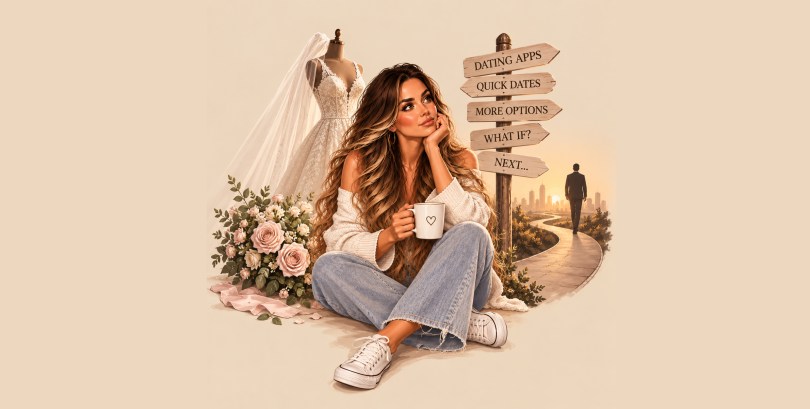
I’ve Finally Popped My Dating Cherry

If you’ve followed me for any length of time, you’ll probably know something about me already.

I don’t really date, well I haven’t… not since splitting with my Child father.

That probably sounds ridiculous coming from someone who spends so much time talking and writing about relationships, attachment styles and modern dating, but it’s true.

Throughout my adult life I’ve tended to meet one person, spend weeks talking to them, build an emotional connection, and before I know it, we’re either in a relationship… or I’m left wondering what happened… which has happened really only the last few years, which I do attribute to the whole Dating scene in general these days.

I’ve always been an “all my eggs in one basket” kind of woman.

Until now.

This week, something changed.

Quite unexpectedly, a last minute change of plans led me to a date in Leeds this week, with someone I’d only just matched to, and it was actually really lovely.

It was lovely.

There is no long term future because he’s moving to Dubai, but that’s almost irrelevant. Sometimes people come into your life simply to remind you what healthy interaction feels like.

He was funny, Confident, Direct, No games, No mixed messages, No trying to decode whether he was interested.

No disappearing for several days only to reappear with a vague excuse.

Just… straightforward.

And do you know what surprised me most?

It made me realise what I’m actually attracted to, the kind of man I need..

It’s Not Just About Looks

Anyone who knows me well laughs that I clearly have “a type.”

In fact, my best friend joked yesterday that all my exes look like clones of one another. “Did this one look like a clone too?” she asked, and they really do.

Not quite.

But what attracted me wasn’t actually just his appearance. It was his communication. His confidence, His ability to say exactly what he meant.

It dawned on me that I don’t just find confidence attractive. I find clarity attractive. There’s something incredibly reassuring about someone whose actions match their words.

Someone who isn’t afraid to communicate.

Someone who doesn’t leave you wondering.

Someone who doesn’t make you work out whether they’re interested.

That’s attractive, that’s what creates chemistry.. uncertainty does not equal chemistry.

The Difference Between Online and Real Life

One thing I’ve also realised recently is how easy it is to create assumptions about someone online.

You can read someone’s LinkedIn posts, See polished Instagram captions, follow someones whatssap status, read articulate dating profiles, Watch their videos and naturally you begin building an impression of them, but social media isn’t conversation. The sense of humour and depth people put out to their nearest and dearest, isn’t for new people to presume or judge on, but maybe we give too much of ourselves to people who don’t deserve it, people who haven’t earned that priviledge just yet . I don’t think people do not necessarily judge on purpose, however people form a perception and fill in their own gaps, without giving the person they’ve never met a true opportunity.

Also there are so many people who communicate brilliantly online because they have time to think, edit and even use AI tools to polish what they want to say.

Then you meet them in person…

…and it’s completely different.

Sometimes the confidence disappears.

Sometimes the conversation struggles to flow.

Sometimes the emotional intelligence you imagined simply isn’t there.

It reminded me that chemistry isn’t something you can predict through a phone screen.

I’ve Always Put All My Eggs in One Basket

This has probably been my biggest dating pattern, Meet one person, Focus solely on them, Invest emotionally, Stop noticing everyone else, Build hope, Build expectations.

Wait.

And wait some more.

Looking back now, I can see why.

Psychologists often describe this as an investment strategy. Once we begin emotionally investing in someone, our brain naturally starts filtering out alternatives. People with anxious attachment tendencies, or simply those who value commitment highly, often focus deeply on one connection because exclusivity feels emotionally safer than spreading attention across multiple people.

Research has also shown that once people imagine a future with someone, they’re more likely to overlook incompatibilities and continue investing, even when the relationship isn’t progressing.

I can definitely recognise myself in that.

This Week Felt Different

For the first time, I found myself chatting to more than one person, Not because I’m playing games, Not because I’m collecting options, Not because I enjoy endless messaging.

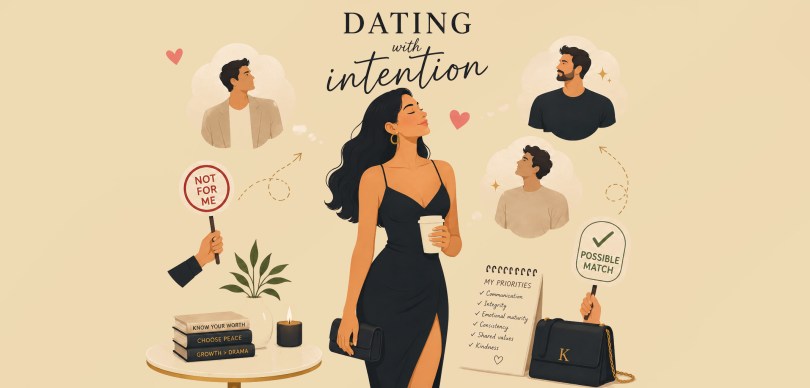
Quite the opposite, I just know I’m dating with intention. There’s a huge difference, I’m getting to know people, Having conversations. Seeing whether there’s compatibility.

Allowing people the opportunity to show me who they are before emotionally investing everything into one person.

And honestly?

It’s been refreshing, but wow hard work. I’m struggling to chat, but know I have to, and it’s not going too bad.  I’ve realised how much emotional pressure I’d unknowingly placed on previous situations. When you only have one person in your mind, every message matters.

Every delay matters.

Every cancelled plan matters.

Everything feels amplified.

Now?

I’m simply enjoying getting to know people.

There’s far less pressure.

Far less overthinking, Far more curiosity.

Learning From My Last Situation

I’d spent around eight weeks chatting to someone recently. We never actually met. Looking back, there was a clear imbalance. Not necessarily because either of us were bad people. Simply because our communication styles were completely different.

Would we have been compatible in person?

I’ll never know, and that’s okay. Sometimes people aren’t chapters.

They’re lessons.

Rather than feeling disappointed, I found myself naturally friend zoning that situation before deciding to start dating properly, I tried to hold off and felt I gave it my all and showed the full me, understanding, patience, kindness and a part of me that I only show those super close, however I realise, maybe I shouldn’t have shown up like that, when you’ve never met someone they can’t ever know or see the real you.

Moving on wasn’t about replacing anyone.

It was about recognising that if something isn’t moving forwards, it’s okay to keep living your life, and coincidently the night I was going on a date, was the night our communication ceased.

Dating With Intention Isn’t The Same As Dating Casually

I think this is where people sometimes get confused. Dating multiple people doesn’t automatically mean sleeping with multiple people.

Those are two completely different things. For me, dating simply means meeting people.

Having conversations, on the phone (Yep the last situation weirdly spent 8 weeks texting and not one call – Yes I should of read the signs).

Going for Walks, Laughing, Learning. Seeing whether there’s compatibility.

I’m actually clearer now than I’ve ever been.

I don’t want casual sex, I have never felt the need for casual sex, because a few hours of madness, can leave you feeling awful the next few days..

Perosnally for me, I don’t need validation. I’m not looking for excitement for the sake of excitement. 

I’m looking for my person.

The next person I’m intimate with will be someone with whom I’m building something meaningful.

That’s my choice and it feels incredibly peaceful.

A Little Excitement

Last night I caught up with an old flame, We’ve both already agreed it’s not a date, and as he picked me up, he’d brought me a coffee for the journey, laughing at the fact he knows I hate coffee dates. 

It’s simply two people catching up. I felt super comfortable, no pressure, no expectations.

Just two people seeing whether they enjoy each other’s company.

And honestly? I loved wearing a pretty dress, linking arms and walking around the Docks was so pretty, Being myself, with someone who knew me, and although it was essentially just friends catching up, we flirted and it felt nice.

For the first time in a very long time right now, dating doesn’t feel scary.

It feels exciting, its crazy to think I’ve only had half a dozen dates the last few years, but right now, I feel comfy at just the chatting stage and maybe there maybe one or two more dates to pencil, but hey no rush. 

Maybe This Is What Healthy Dating Actually Looks Like

Perhaps I’ve finally realised something important. Dating isn’t about desperately hoping every person becomes “the one.”

It’s about allowing enough space for the right person to reveal themselves, to meet in person, and not judge too early. It’s about curiosity instead of pressure.

Connection instead of obsession.

Intentionality instead of urgency.

I’m still dating for a relationship.

That hasn’t changed.

But I’m no longer dating from scarcity. I’m dating from abundance.

There’s a huge difference.

So yes…

I’ve finally popped my dating cherry.

Not because I’ve suddenly become someone who dates endlessly, I can’t suddenly just change who I am, but because, for the first time, I’m allowing myself to enjoy the process rather than trying to rush towards the destination.

Wish me luck.

I have a feeling this chapter might be a good one… and I thought I would add in a few interesting Dating facts..

• Surveys consistently find that many users of dating apps talk to multiple people at once before becoming exclusive. This isn’t necessarily because they’re less serious, but because it helps them avoid becoming emotionally invested before compatibility has been established.

• As Relationship therapists, we often recommend delaying heavy emotional investment until you’ve spent time together in person. Messaging can create a false sense of intimacy because our brains naturally fill in the gaps with assumptions.

• Studies on modern dating suggest that clear, consistent communication is one of the strongest predictors of relationship satisfaction. It’s often less about saying the “right” things and more about reliability, honesty and emotional availability.

• People who date with intention typically report focusing on shared values, emotional maturity and consistency over initial chemistry alone. While attraction matters, long-term compatibility is built through communication, trust and aligned life goals rather than butterflies alone.

Why Are Some Men Intimidated by Sexually Confident Women?

Through My Own Lens

Relationships, intimacy and confidence are deeply personal, and no two people experience them in exactly the same way. As I’ve grown older, I’ve found myself reflecting on how my own relationship with sex, confidence and femininity has evolved. Along the way, I’ve noticed certain patterns through my own experiences and through conversations with therapy clients. This isn’t about speaking for all men or all women. It’s simply an honest reflection of what I’ve observed, what I’ve lived, and the questions I’ve found myself asking.

Perhaps you’ll recognise some of it. Perhaps your experiences have been completely different. Either way, I hope it encourages a conversation about intimacy, confidence and the way we connect with one another.

For years I saw myself as quite submissive.

I like being feminine. I enjoy looking after myself, my child and my home. In a relationship I naturally fall into a softer role, and in the bedroom I always assumed I was more submissive too, it always felt natural.

But something has changed in that as I have got older.

Not because I became more dominant, god no, not because I suddenly became someone different. I think simply became more comfortable in my own skin.

The way I experience intimacy in my forties is completely different to how I experienced it in my twenties and thirties. Back then, like many women, there was always a little voice in my head.

Do I look okay?

Should I move like this?

Am I attractive enough?

Looking back, I wasn’t fully present. I think many women have sex while carrying insecurities into the room with them. Sometimes we’re performing without even realising it. We become so focused on pleasing someone else that we forget intimacy should also be something we experience for ourselves. As I’ve healed, grown, lost weight, become healthier and far more accepting of my own body, something shifted.

I don’t hide anymore, I don’t overthink, I feel completely at home in my own skin.

Ironically, that’s when I started noticing something unexpected.

Some men seemed incredibly drawn to that confidence, Others seemed… intimidated by it.

Is Sexual Confidence Intimidating?

The answer isn’t yes or no.

It’s that confidence can expose insecurity.

Psychologists have long recognised that confidence in any area of life can sometimes trigger comparison in others. Rather than feeling inspired, some people feel inadequate. Intimacy is no different.

Sexual confidence isn’t about having countless partners.

It isn’t about being loud, outrageous or adventurous for the sake of it.

For me, it’s the opposite.

It’s about being emotionally present.

It’s about knowing what you enjoy, communicating honestly and allowing yourself to experience intimacy without shame.

Research consistently shows that women with greater body appreciation tend to report higher sexual satisfaction, greater communication with partners and lower levels of sexual anxiety. In other words, when we’re comfortable in ourselves, intimacy often becomes deeper rather than more performative.

“You’re Different”

One conversation has always stayed with me.

Last year I was in a committed relationship. Initially everything was wonderful. If I’m honest, it was probably the best sexual connection I’d ever experienced.

One evening we were lying in bed and he turned to me and said,

“You’re different to other women.”

I’ll admit, I braced myself for criticism, (he was the king of narcissism). 

Instead he said,

“I’ve been with a lot of women, but you’re different because you have sex for yourself as well as the other person. Most women don’t.”

That sentence has stayed with me ever since. At the time I didn’t fully understand what he meant. Looking back, I think he recognised something I’d never consciously thought about.

I wasn’t performing. I wasn’t worrying. I wasn’t trying to be someone.

I was simply present, Passionate, Connected.

To me, passion isn’t something reserved for the bedroom.

It’s how I approach life, I’m passionate about my work, About helping people, About healing, About relationships, About being alive.

Perhaps intimacy simply reflects that part of me. I think as with everything in life, I give it my all. 

Does Sexual Maturity Change as We Get Older?

One question I’ve found myself coming back to is whether women and men sometimes experience sexual maturity differently as they get older.

I can only speak from my own experience, but for me, confidence didn’t come from having more sex. It came from knowing myself better.

In my twenties and early thirties, I was far more aware of how I looked, whether I was “doing it right” and whether I was attractive enough. As I’ve got older, all of that has faded into the background. Today, intimacy feels less about performance and much more about presence. I know my body, I’m comfortable communicating, and I allow myself to enjoy the experience just as much as the person I’m with.

When I speak to other women, and to many of my coaching clients, I hear similar stories. Confidence often seems to grow as self-consciousness begins to fall away.

For many men, however, middle age can bring a different set of experiences. Careers become more demanding, family life becomes busier, stress increases, and for some, natural changes in sexual function can start to appear. UK research suggests that concerns about sexual health and performance become more common as men get older, even though many continue to value intimacy and want fulfilling sex lives.

I also can’t ignore something I’ve noticed through countless conversations with people over the years. I’ve spoken to middle-aged men who tell me they haven’t had sex with their partner for weeks, months or sometimes even longer. Equally, I’ve spoken to women who feel emotionally disconnected or who have simply stopped prioritising intimacy. It reminds me that this isn’t a “men’s issue” or a “women’s issue.” Long-term relationships can sometimes drift into companionship, routine and responsibility, leaving very little space for passion unless both people actively protect it.

That makes me wonder whether some couples can find themselves moving in opposite directions. Just as many women are becoming more accepting of themselves and more confident sexually, some men may be carrying pressures they’ve never had before. Not because they’ve become less masculine or less desirable, but because life changes us all.

Perhaps that’s why confidence can sometimes feel confronting.

Not because confident women are “too much”, but because genuine intimacy asks both people to be vulnerable.

I also find myself wondering whether this plays a small part in why some middle-aged men are drawn to younger women. Not because younger women are somehow better, and certainly not because all men seek younger partners, but because relationships where both people are still discovering themselves may sometimes feel less exposing than being with someone who already knows exactly who she is.

It’s simply a thought rather than a conclusion, but I think it’s an interesting question to ask.

Can Confidence Trigger Insecurity?

I’ve worked with enough people now to know I’m not alone in noticing this. Many women I’ve spoken to have shared similar experiences. Sometimes a sexually confident woman challenges expectations.

Some men have become used to being the one who leads, reassures or teaches. When they meet a woman who already knows herself and is comfortable expressing what she enjoys, it can shift the dynamic.

That doesn’t make those men weak. It simply means confidence requires confidence in return. Secure men often welcome openness because it creates honesty and better communication.

Less secure men may start questioning themselves.

Am I good enough? Has she experienced better? Can I satisfy her?

Those thoughts don’t always get spoken aloud, but they can quietly change the atmosphere within a relationship.

Sex Gets Better With Emotional Safety

One thing I’ve realised is that great sex isn’t really about technique. Anybody can have sex, come on you know how true that is… 

But genuine intimacy is different.

The best experiences happen when two people feel emotionally safe enough to stop performing altogether.

When there’s trust, laughter, curiosity, communication, acceptance, and when two people show the fuck up for each other.. they show each other, “I’m here, I’m yours, and I’m not going to fuck this up by playing games”!

That’s where connection lives.

Why I Don’t Date Casually

People are often surprised when I tell them that since the end of my long term relationship with my sons Dad,  I’ve only been sexually intimate in my personal life, with a couple of people over the last four years. Yes I have dated a few, but I have a way with men, where I don’t feel the need to show them who I am through sex. My personal world I guess can be so different, from perhaps any alter ego, I can play or come across as. 

For me, confidence hasn’t led to sleeping with more people. It’s actually had the opposite effect. I’ve become far more selective.

I don’t feel the need to give my body away simply because dating apps make casual intimacy feel normal, I mean what do I gain from that? Apart from making myself feel shit! Where is the reward for me? What a visit to the clinic, because men don’t want to wear protection? No THANKS!

I’ve reached a point where I value connection far more than attention.

Maybe that’s age, Maybe it’s healing, Maybe it’s simply knowing my own worth.

Either way, I no longer believe sex should be something we do because we’re lonely, bored or afraid someone else might come along. I’d rather wait for someone who genuinely values intimacy than collect experiences that leave me feeling empty.

It gives me such insight into the world, having this view, I know porn stars who have sex for money, but the sex they have on film, is not the sex they have with a partner. Many of them are choosing celibacy in their own life,  and you may sit there, not understanding that, but porn stars and sex workers, often become two people, and separate work and private life completely. The person they portray can be a million miles from the person they truly are. 

Are We Really Having Better Sex?

Dating apps have changed modern relationships. They’ve created endless choice, endless comparison and often a conveyor belt approach to dating.

But one question keeps coming back to me.

Are people actually having better sex because they have more opportunities? Or are they simply having more of it?

When I speak to people in long term relationships, it’s surprisingly common to hear things like, “We haven’t had sex for weeks”. Others describe intimacy that feels routine rather than exciting.

The statistics reflect this. Large surveys suggest that sexual frequency tends to decline in many long term relationships over time, and satisfaction depends far more on communication, emotional closeness and relationship quality than on how often couples have sex.

Perhaps the real issue isn’t how much sex we’re having.

It’s how connected we are while we’re having it.

Confidence Isn’t the Enemy

A sexually confident woman isn’t trying to compete.

She isn’t trying to dominate.

She isn’t trying to prove anything.

She’s simply comfortable enough to experience intimacy without apology.

The right man won’t feel threatened by that.

He’ll feel invited into something honest.

Because confidence isn’t about perfection.

It’s about authenticity.

And perhaps that’s the most attractive quality of all.

The Missing Ingredient: Are We So Busy Living That We’ve Forgotten to Love?

I feel like, in today’s day and age, we’re forgetting our age.

We’re forgetting how quickly time passes us by.

We’re spending so many years trying to cling on to our youth. Desperate to be seen. Desperate to be validated. Desperate to keep our options open. Desperate to have variety when it comes to sex. Desperate not to settle down too soon, commit too quickly, or somehow miss out on something better that might be waiting around the corner.

But in doing all of that, I wonder if we’re actually missing one of the most crucial ingredients of a genuinely happy life.

Love.

Meaningless hookups don’t make a happy life.

Yes, they might leave you feeling happy for a night. Maybe even for 24 hours. There’s excitement. There’s attraction. There’s validation. There’s that temporary high of being wanted.

But then what? 

Who do you call when something incredible happens?

Who hugs you when you’ve achieved something you’ve worked years for?

Who knows the tiny details of your life that wouldn’t mean anything to anybody else?

Who do you turn to and say, “Fuck it. Should we just go on holiday?”

Who do you build the memories with?

I seldom talk about myself personally in my blogs. As a coach and trainee therapist, I’m conscious of boundaries and how much of myself I bring into the work that I do, but on this occasion, I thought, why not… because recently I’ve started to realise something that actually brings me a great deal of sadness.

Some of the best years of my life, I’m spending alone.

We all look towards the future and think, I don’t want to grow old and be lonely.

But what if we’re looking too far ahead?

What if some of us are spending the best years of our lives alone right now?I’m in my 40s. I feel good in myself. I’ve done an enormous amount of healing, I’ve worked on myself, body and mind, I’ve built a life. I’m raising my child, I’m studying, I’m working,I’m travelling. I’m achieving things I’m proud of. Yet, sometimes, I look around at my friends who are in relationships.

They’re off to Italy. Mykonos. America. Australia.

They’re seeing the world. they’re going for date nights, they’re having weekends away. they’re building a collection of memories that belong to the two of them.

And then there’s me…. 

Going on my solo trips, Travelling with my child, waiting to see who can get childcare and plan that once a year night out…

And don’t misunderstand me, I absolutely love travelling with my child. Those memories are some of the most precious memories of my life. 

I have friends. I have family. I have a child I adore, I mean I’m not always sitting at home with nobody in my life… lol, But sometimes I sit there and think:

I’d love some romance in my life.

I’d love somebody to share all of this with.

I thought, last year, that maybe I’d found that.

It wasn’t meant to be.

If I’m completely honest, it felt like 50% of the relationship was love bombing and the final three months were spent with me acting as a personal therapist. The push pull dynamic, never knowing where you stand is Toxic, and not for my own attachment style at all..

Wrong person… Wrong relationship. 

Perhaps even the wrong relationships can teach us something about what we actually want. I remember being in Ibiza once and going on a date with a gorgeous Portuguese guy called Francisco. We had such a good date.He took me for a beautiful dinner. We went for drinks. We talked.

And at one point, he looked at me and said:

“Kerry, do you get lonely?” as we talked about what it’s like to be single..

And I said no.

Because I’m not lonely… Not in the traditional sense of the word, more so in an empty bed kind of way! As a mother, I have my child. I have friends. I have family. I have people I love and people who love me.

But there’s a particular kind of connection I miss.

I miss my person.

Recently, I completed another year of study. I got the message congratulating me on passing and in that moment, I missed having somebody there to congratulate me.

Someone to give me a hug.

Someone to ask how I felt.

Someone who understood how much work had gone into getting there.

And equally, I miss being that person for somebody else.

I miss praising someone.

I miss making somebody feel good.

I miss having someone walk through the door and being genuinely excited to hear about their day.

I miss having somebody say:

“Fuck it. Should we just go on holiday?”

Or:

“Should we go out tonight?”

I miss the spontaneity that comes from having somebody to do life with.

And recently I’ve realised something.

Life is just passing by.

We’re such slaves to work. Slaves to money. Slaves to our schedules. Slaves to this idea that we need to have everything sorted before we’re allowed to make room for love.

We tell ourselves:

I’m too busy.

I’ve got too much going on.

I haven’t got the capacity for a relationship.

Maybe when work calms down.

Maybe when the children are older.

Maybe when I’ve healed a little bit more.

Maybe when I’ve achieved this.

Maybe when I’ve sorted that.

But when exactly is life going to become completely uncomplicated?

Probably never.. and I think I’ve been guilty of this too.

Sometimes I push people away because I tell myself I’m not ready.

I tell myself I don’t have the time or capacity for a relationship because I’m so busy with work, but maybe they just haven’t been the right people.

Because there’s an important distinction here.

I don’t need anybody, but I would like somebody.

There’s a huge difference.

But I also wonder whether some of us have become a little too good at not needing anybody.

We celebrate independence. We celebrate the person who has been hurt, picked themselves back up, built their own life and learnt how to stand completely on their own two feet and rightly so.

However, psychologically, there’s something interesting that can happen when you’ve spent a long time having to rely on yourself. Independence can become more than a strength. It can become protection.

You become so accustomed to solving your own problems that asking for help feels uncomfortable. So used to carrying everything yourself that letting somebody carry something for you feels almost unnatural. So capable of regulating your own life that allowing another person into it starts to feel like a disruption rather than an addition and perhaps that’s where hyper-independence can creep in.

There’s a difference between I can do this alone and I must do this alone.

There’s a difference between choosing independence and being so afraid of depending on another human being that you never allow yourself to experience interdependence, the healthy middle ground where two capable people choose to lean on each other without losing themselves.

I think that’s something I’ve had to question within myself.

Am I genuinely too busy for a relationship?

Or have I become so accustomed to doing everything myself that I’ve convinced myself there simply isn’t room for another person?

Because maybe the goal was never to need nobody.

Maybe the goal was to know that I could survive alone, while still allowing myself to admit that life might be nicer shared.

I don’t want somebody because I can’t survive alone. I’ve already proved that I can. I don’t need someone to rescue me. I don’t need somebody to financially support me. I don’t need somebody to give me an identity.

I’ve built my own life.

But being capable of doing life alone doesn’t necessarily mean I want to do all of it alone. I want somebody who matches my energy.

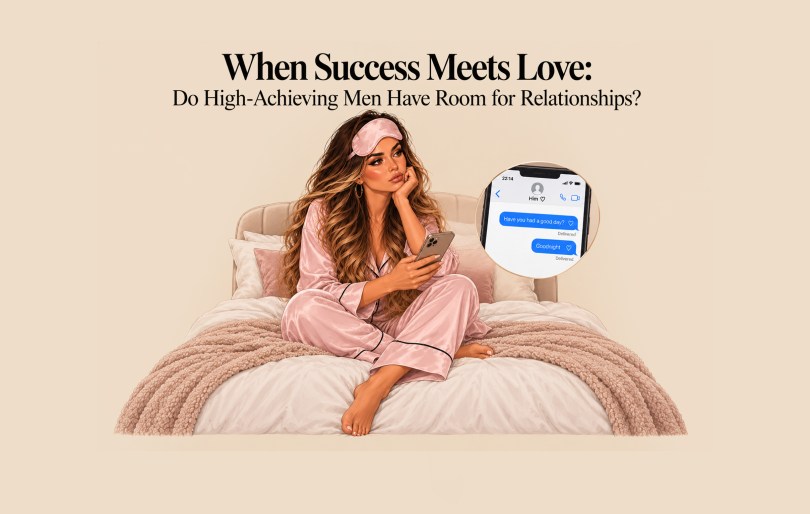
I want somebody who asks me how I am in the morning.

“Good morning, baby. How did you sleep?”

Someone who checks in during the day.

“How’s your day going?”

Someone who says goodnight.

“Goodnight, darling.”

It doesn’t have to be constant communication. We’re adults. We’re busy. We have jobs. Children. Responsibilities.

However, I miss those little moments of knowing that somewhere in the world, somebody is thinking about you.

That ten-minute phone call at night:

“I just thought I’d ring you. I miss your voice.”

That’s what I miss.

That person checking in.

That person to share it all with.

Although, I have female best friends whom I’m incredibly grateful for, I miss having a best friend who is also my partner.

Someone who’s your lover, your teammate, your safe place and the person you laugh with over something nobody else would find remotely funny.

When I became single and left my child’s father, I left because I needed to find myself, I needed to find happiness, I needed to heal. I needed to grow and spread my wings like a butterfly.

I had been in an unhappy relationship, but I was also very unhealed and very unhappy within myself at the time.

So I left, I found myself, I built a different life and somewhere in the back of my mind, I think I always assumed I’d meet somebody.

When I met someone in 2025, I remember thinking:

Yeah. I’m ready for this.

Sadly, he wasn’t the right person.

I chose wrong.

However that doesn’t mean wanting the relationship was wrong.

Lately, I’ve had the strangest feeling, I can’t even properly comprehend it. I almost feel like maybe there’s a relationship around the corner. Of course I’ve chatted to people. I’ve been on a couple of dates over the past couple of years, but recently I’ve found myself looking at the people in my life and wondering:

Have I already met him?

Is it somebody I’ve never had a relationship with before?

Could it be somebody from my past?

For me, it’s rarely going to be somebody old because I don’t particularly like looking backwards, an ex is an ex for a reason….

Or is he somebody I haven’t met yet?

I genuinely don’t know.

I just have this weird gut feeling I’ve had for the last few weeks that maybe there is somebody out there for me.

Perhaps the bigger realisation is this:

Maybe I have to make myself available for him.

Not available in the sense of downloading every dating app and desperately searching for a relationship.

Emotionally available.

Making space.

Stop telling myself I’m too busy.

Stop telling myself I’ve got too much stress.

Stop telling myself I’ve got too much pressure.

Maybe if I let the right person in, some of that stress wouldn’t feel quite so heavy. Maybe life isn’t supposed to be something we carry entirely by ourselves.

So what are we doing as human beings?

Why do we push away good things because we tell ourselves we haven’t got time for them? the irony is we’re right.

We haven’t got time.

Just perhaps not in the way we think.

We haven’t got unlimited time.

We’re spending it every single day.

We’re just not always spending it on the things that will matter when we look back.

I look at my own life and think:

I’m always working.

I’m studying.

I’ve got my child.

Where exactly am I supposed to fit a relationship into all of this?

But then I think about last year, I had fewer staff, I was arguably even busier.

Yet somehow I fitted a relationship in perfectly.

It worked, It worked around childcare, It worked around work.

We gave each other time.

Sometimes it was simply a couple of nights a week being in his arms and it was nice.

Again, wrong person.

Perhaps that relationship taught me something important. When the cards are actually on the table and a relationship is genuinely on offer, I can make space for it.

Maybe I do want a relationship…. Actually, I know I do.

Because I don’t want to spend the best years of my life, in my prime, creating all these incredible memories and have nobody beside me who remembers them too.

I don’t want to meet somebody in my 50s and say:

“Do you remember when I did this?”

“Do you remember when I went there?”

And then realise: No. Of course they don’t.

Because they weren’t there.

Sometimes I look at older couples who’ve spent decades together. They’re old, they’re grey, life has slowed down, yet they have this enormous invisible library between them.

A lifetime of memories.

“Do you remember that holiday?”

“Do you remember when the children were little?”

“Do you remember that ridiculous restaurant?”

“Do you remember when we got completely lost?”

“Do you remember when we couldn’t stop laughing?”

Their bodies have aged, their lives have changed, but they have decades of remember whens. I’ve come to realise something I genuinely didn’t think I’d ever say.

I’m not just ready for love.

I’m ready for somebody to share my life with.

I’m ready to build memories with somebody.

I’m ready to grow alongside somebody.

I’m ready to create a family life together.

I’m ready for a partner.

..and believe me, I’m quite stubborn. It’s taken me a while to admit that.

Because our culture celebrates independence—and rightly so.

We tell people:

You don’t need anyone.

Learn to love yourself.

Be happy alone.

Don’t settle.

Know your worth.

And all of those things are important.

But I wonder whether somewhere along the way we’ve taken a healthy message and pushed it too far. We’ve started confusing independence with emotional isolation. We’ve started treating needing connection as weakness. We’ve become so frightened of appearing needy that sometimes we’re afraid to admit we have needs at all. We tell ourselves that the second somebody doesn’t meet every expectation, we should cut them off.

That there’s always another option.

Another swipe.

Another person.

Another date.

Another body.

We’ve created endless choice while somehow becoming increasingly disconnected and I wonder whether modern dating has inadvertently taught us to approach human beings like products.

We scroll. We swipe. We compare.

Too short.

Too tall.

Too available.

Not available enough.

Too keen.

Not keen enough.

Wrong job.

Wrong location.

Wrong shoes.

Next.

Of course, having standards is important. Boundaries are important. Compatibility matters enormously, but the paradox of having so much choice is that sometimes, instead of making us more certain, it can make us less satisfied with whatever we choose.

There’s always the lingering possibility that somebody better might be one swipe away and relationships don’t work particularly well when we’re constantly looking over somebody’s shoulder to see who else has just walked into the room.

I also wonder if we’ve created something of an avoidant dating culture.

Not because everyone is avoidantly attached, that would be far too simplistic, but because many of the behaviours modern dating normalises can look remarkably similar to emotional avoidance.

Keeping things casual, Keeping your options open, Not defining the relationship. Pulling away when things become emotionally intense. Ghosting rather than having an uncomfortable conversation.

Moving on to somebody new rather than working through vulnerability with the person standing in front of you.

We call it freedom.

Sometimes it is.

But sometimes, I wonder if what we’re actually doing is becoming incredibly skilled at avoiding attachment, because real intimacy isn’t found in endlessly meeting new people. It’s built when you stay long enough for somebody to actually know you. Not the version of you on the first date. Not your best photographs. Not your funny stories. Not the version who is effortlessly cool and definitely doesn’t care whether they text back.

You.

And perhaps that’s the uncomfortable thing about love. At some point, you have to stop browsing.

You have to choose.

And then you have to allow yourself to be chosen too.

Maybe that’s why some of us are still single.

Not because there’s nobody good enough out there, Not because we’re broken, Not because love isn’t meant for us, but because somewhere along the way, we became so good at protecting our peace that we forgot love requires us to open the door occasionally.

Of course, boundaries matter, Mine certainly do. If somebody consistently doesn’t give me attention, effort or emotional availability, I will walk away.

I don’t need to chase anybody.

There’s a difference between having boundaries and building walls. There’s a difference between recognising the wrong person and never giving the right person enough room to get close and perhaps that’s the question some of us need to ask ourselves:

Are we genuinely unavailable because life is too busy, or are we using busyness to protect ourselves from being vulnerable again?

Because love does require vulnerability. It requires making room. It requires allowing another human being to matter to you and yes, that means they could hurt you.

But they could also love you. They could also make an ordinary Tuesday feel like something worth remembering. They could be the person sitting beside you decades from now saying:

“Do you remember when…?”

So I asked myself a very simple question.

What do I actually want?

Do I want money? Not particularly.

As long as I have enough to pay my bills and live my life, I’m happy.

Do I want a healthy, happy child? More than anything in the world.

Do I want love? Yes.

Do I want happy memories? Yes.

Do I want a lifetime of togetherness? Yes.

I do.

Maybe that’s the ingredient we’re missing.

Not another achievement, Not another pay rise, Not another follower. Not another person finding us attractive. Not another meaningless hookup. Not another opportunity to prove we don’t need anybody.

Maybe it’s simply having somebody beside you who makes you feel glad you’re alive.

Someone to witness your life.

Someone whose life you get to witness too.

Someone to celebrate with.

Someone to comfort.

Someone to travel with.

Someone to laugh with.

Someone to come home to.

Someone who remembers.

Because one day, if we’re lucky, we’ll all grow old and perhaps the question isn’t only:

Who will be there when I’m old?

Maybe the question we should be asking ourselves now is:

Who do I want to build the memories with that we’ll talk about when we get there?

I don’t need somebody to complete my life.

My life is already full.

But I’ve finally realised… I’d quite like somebody to share it with.

Maybe I’ve spent long enough telling myself I’m too busy for love, because the truth is, life isn’t waiting for any of us to become less busy.

It’s happening now and I don’t want to miss it….

Trust Me, I Want To… So Why Can’t I?

Surviving the past is one thing. Learning to believe you’re safe enough to love again is something else entirely.

There is a question I hear more than almost any other.

“I want a relationship. I really do. So why, every time someone gets close, do I panic?”

It’s one of the cruellest contradictions trauma leaves behind. Your heart wants connection, Your nervous system wants escape.

One is dreaming about Sunday mornings, shared coffees and someone who feels like home. The other is quietly checking where the exits are.

If you’ve ever found yourself pulling away from someone you genuinely liked, overthinking a text message until it became a twelve episode psychological thriller, or feeling strangely calmer with someone emotionally unavailable than with someone consistently kind, you’re not losing your mind.

You’re experiencing what happens when survival becomes stronger than intention. Trauma doesn’t just change what happened to us, it changes what we expect to happen next.

And that’s a very different thing.

For many people, trust isn’t simply about believing another person won’t cheat or lie. Trust is something much deeper. It is the feeling that if you allow someone close enough to matter, your world won’t collapse if they leave.

That changes everything.

Because suddenly relationships stop being about romance and become about survival.Trauma has a habit of turning up on first dates uninvited. It sits quietly between the bread basket and the drinks menu, whispering things like,“Don’t get too comfortable.” Or, “They’re going to leave eventually.” 

Or my personal favourite, “This is going suspiciously well…”

Dating apps certainly don’t help, I think we all know my view on those… 

Sometimes they feel less like places to find love and more like interviewing strangers for a job nobody seems qualified for.

“Tell me about yourself.”

“I enjoy travelling.”

“So does literally everyone.”

“I love dogs.”

“Congratulations. You’re human.”

We laugh because it’s true, we like the same song, and suddenly, we start fucking thinking we’ve met our soul mate. 

But underneath the humour sits something much heavier.

Many people aren’t simply trying to find a partner.They’re trying to answer a question their nervous system has been asking for years.

Am I finally safe?

The Invisible Suitcase

Imagine every relationship you’ve ever experienced has packed something into an invisible suitcase.

Parents.

Teachers.

Partners.

Friends.

Bullies.

The person who promised forever before disappearing without explanation.

The person who made you feel invisible.

The person who loved you beautifully.

The person who taught you that love came with conditions.

By the time we meet someone new, we rarely arrive carrying just ourselves.

We arrive carrying memories, expectations, beliefs and survival strategies.

Some of those are wonderful, Others are incredibly heavy.

If you’ve experienced childhood abuse, neglect, domestic abuse, coercive control, betrayal or significant emotional trauma, your suitcase may contain something else entirely.

Hypervigilance, Self doubt, People pleasing.

The belief that love has to be earned, The expectation that happiness never lasts, not because they’re true.

Because once upon a time, they kept you safe.

One of the biggest misunderstandings about trauma is that people think it’s purely about memory.

It isn’t.

As trauma psychiatrist Bessel van der Kolk explains, trauma is carried not only in our thoughts, but in our bodies. Even long after danger has passed, our nervous system may continue responding as though the threat is still present.

That’s why someone can logically know they’re safe while simultaneously feeling terrified, and consequently avoidance can happen.

Their body hasn’t received the memo.

When Your Smoke Alarm Becomes Overprotective

Imagine installing the world’s most sensitive smoke alarm.  It doesn’t just go off when there’s a fire. It screams because someone made toast or lit a candle or looked vaguely enthusiastic near the kitchen.

Ridiculous?

Perhaps.

Unless you’re a nervous system.

Trauma often creates an alarm system that becomes brilliantly efficient at spotting possible danger. The difficulty is that it becomes equally brilliant at spotting danger where there isn’t any.

A delayed text message, A slightly different tone of voice, Someone asking for space, A cancelled plan.

To another person, these are everyday experiences.

To a traumatised nervous system, they can feel like the opening scenes of abandonment. Your brain isn’t trying to ruin your relationships. It’s trying to prevent history repeating itself. That’s a very important distinction.

Trauma doesn’t mean you’re broken. It means your brain adapted to survive. Once that clicks, something extraordinary begins to happen.

Instead of asking, “What’s wrong with me?”

You begin asking,

“What happened that taught my brain this was necessary?”

That single question replaces shame with curiosity.

And curiosity is where healing begins.

Why Safety Matters More Than Trust

People often say trauma survivors have trust issues. I’d gently challenge that, because many survivors don’t actually struggle to trust. Quite often, they trust words, Potential, Hope, Promises, Future plans.

The version of someone they believe could exist if everything worked out.

Sometimes they trust far too easily.

The real difficulty isn’t trusting other people. It’s trusting themselves to leave when someone’s behaviour consistently tells them they should.

That feels very different.

Because if childhood taught you that love required endurance…

If previous relationships taught you that chaos was normal…

If your self-worth became tangled up in proving your value…

Walking away doesn’t necessarily feel empowering.. It feels terrifying.

Sometimes staying feels safer simply because it’s familiar, Not because it’s healthy. One of the saddest realities of trauma is that our definition of “normal” can become completely distorted. Healthy can feel unfamiliar.

And unfamiliar often feels unsafe.

Which brings us to one of the greatest ironies in relationships.

Healthy relationships can initially feel boring when your nervous system has been trained to expect chaos. Not because they’re lacking passion but because they’re lacking panic.

Those are two very different experiences.

Attachment: Our First Blueprint For Love

Long before we downloaded dating apps or debated whether replying after seventeen minutes looked too keen, our brains had already started forming expectations about relationships.

Psychologist John Bowlby proposed that our earliest relationships with caregivers become internal blueprints for how we understand connection.

Later, Mary Ainsworth’s research showed that children develop different attachment styles depending on how consistently safe, responsive and emotionally available their caregivers are.

This isn’t about blaming parents.

Life is rarely that simple.

Parents have histories, Stress, Mental health struggles and trauma of their own.

Most were doing the best they could with what they had. However our nervous systems don’t record intentions.

They record experiences.

If your emotional needs were generally met, your brain learned that relationships are safe places to return to.

If care was inconsistent, unpredictable or frightening, your brain learned something very different.

Love became uncertain.

Conditional.

Something that might disappear without warning.

Those lessons don’t stay in childhood. They quietly climb into adult relationships too.

When Love Feels Like An Exam You Keep Failing

People with anxious attachment are often described as “needy.”

I dislike that word.

Most aren’t asking for too much. They’re asking for reassurance because somewhere along the line reassurance became unpredictable.

If love was inconsistent growing up, uncertainty can feel unbearable.

Texts become evidence.

Silence becomes danger.

Distance becomes rejection.

Their nervous system isn’t saying,

“I need constant attention.”

It’s saying,

“Please don’t disappear.”

That’s a very human response when you’ve experienced emotional inconsistency. In todays society, people are so distracted, that sometimes they forget to deliver the basics of consistency, and this delivers as ‘Low Level’ – Deep down we’re all searching for that “Good Morning” or “Good night” message, but people become to preoccupied, and when the basics are asked of them, become overwhelmed, and presume their other half as we said ‘needy’, when deep down, equal effort, can keep both partners settled and content.

Then we have avoidant attachment.

This is perhaps one of the most misunderstood attachment styles of all. Avoidant people are often portrayed as cold or commitment phobic villains who simply don’t care.

Reality is usually much more compassionate. Many learned very early that depending on other people wasn’t safe. Maybe emotions were dismissed. Maybe vulnerability wasn’t welcomed. Maybe independence became survival.

So rather than clinging when relationships become emotionally intense, they unconsciously create distance.

Not because connection doesn’t matter, Because it matters so much that losing it feels unbearable.

Different survival strategy, Same frightened nervous system underneath.

Neither style is “better.”

Neither makes someone bad.

Both are adaptations.

Both deserve compassion.

And both can heal… but taking the time to recognise and truly see the patterns in their behaviours 

The Body Keeps The Score… Even On Date Night

One of the biggest breakthroughs in trauma research has been recognising that healing isn’t simply about changing our thoughts.

It’s also about calming our bodies.

Psychiatrist Judith Herman described recovery as moving through stages of safety, remembrance and reconnection.

Notice the order.

Safety comes first.

Not forgiveness.

Not dating.

Not positive thinking.

Safety.

Because without safety, the nervous system cannot fully relax.

This is why two people can hear exactly the same sentence.

One hears,

“Can we talk later?”

The other hears,

“They’re about to leave me.”

Same words.

Entirely different nervous system.

Our brains constantly predict what comes next based on previous experience. If previous experience included fear, criticism or abandonment, today’s relationships often become filtered through yesterday’s pain.

That doesn’t mean those fears are silly, it means they once served a purpose.

Healing isn’t about pretending those alarm bells don’t exist.

It’s about teaching the nervous system that they don’t need to ring every single time someone gets close and that takes patience.

Not perfection.

It also takes self-compassion, something many trauma survivors generously give everyone else while quietly forgetting themselves.

Perhaps that’s the first place healing really begins, Not with finding the perfect relationship but with becoming the safest relationship you’ve ever had with yourself.

One of the greatest gifts we can give ourselves is learning to pause before reacting. Not because our feelings are wrong.

But because our feelings aren’t always describing the present. Sometimes they’re describing the past.

That distinction can transform relationships.

When Every “Maybe” Feels Like “No”

If you’ve ever spent an entire evening analysing a full stop at the end of a text message, welcome to the wonderfully exhausting world of rejection sensitivity.

Someone replies a little later than usual, Your brain writes a novel. They seem quieter after work.

Your mind has already planned the break up, divided the furniture and chosen your post heartbreak playlist.

Sound familiar?

For many trauma survivors, rejection isn’t simply disappointing.

It feels dangerous.

Psychologist Gabor Maté has written extensively about how our need for attachment is one of our deepest human drives. As children, maintaining connection with our caregivers is essential for survival. If those relationships are inconsistent, frightening or emotionally unavailable, our brains learn to monitor them constantly.

That hyperawareness doesn’t magically disappear when we become adults.

It simply changes clothes.

Instead of scanning our parents’ moods, we scan our partner’s texts. Instead of wondering whether we’ll be comforted, we wonder whether they’ll reply.

The behaviour changes.

The survival strategy doesn’t.

Understanding this isn’t about excusing unhealthy behaviour.

It’s about recognising that behind many reactions is a frightened nervous system trying desperately to prevent old wounds from opening again.

Chemistry Isn’t Always Compatibility

Here’s something that often surprises people.

The strongest spark isn’t necessarily the healthiest relationship.

We’ve all heard someone say,

“I’ve never felt chemistry like this before.”

Sometimes that’s wonderful. Sometimes it’s your nervous system recognising something familiar and familiar doesn’t always mean safe.

If chaos was normal growing up, calm can initially feel unsettling.

Predictability can feel flat.

Kindness can feel suspicious.

Consistency can almost seem… boring.

Not because healthy love lacks depth.

Because your nervous system has been trained to associate emotional intensity with connection.

The butterflies might not always be butterflies.

Sometimes they’re simply adrenaline. Sometimes they’re uncertainty. Sometimes they’re your smoke alarm shouting,

“This feels familiar!”

Unfortunately, it doesn’t always specify whether familiar is healthy or harmful.

One coaching question I often encourage people to sit with is this:

Do I actually like this person, or do I simply like being chosen?

It’s an uncomfortable question.

But an important one.

Because validation can sometimes disguise itself as love.

Another worth reflecting on is:

Am I chasing love, or am I chasing rescue?

If we’re honest, many of us have spent years hoping another person would finally heal wounds that were never theirs to carry.

Love can support healing.

It cannot replace it and perhaps the hardest question of all:

Would I still choose this relationship if I wasn’t afraid of being alone?

Sit with that one.

Don’t rush it.

The answer often tells you everything you need to know.

When Anxiety Borrows Intuition’s Clothes

People often tell me,

“I knew something was wrong. I just ignored my intuition.”

Sometimes that’s true. Sometimes it isn’t.

One of the most important parts of healing is learning the difference between intuition and anxiety, because they feel remarkably similar until you know what you’re looking for.

Intuition tends to arrive quietly.

It doesn’t usually shout.

It doesn’t catastrophise.

It doesn’t demand an immediate decision.

It simply knows.

Anxiety is much louder.

It searches for evidence.

It creates endless what ifs.

It desperately wants certainty in situations where certainty simply doesn’t exist.

As I often say,

Sometimes it’s anxiety carrying a fake Louis Vuitton pretending to be intuition.

It makes me smile every time because it’s surprisingly accurate.

Anxiety can become an exceptional actor.

The challenge is learning not to hand it the lead role in every relationship.

Instead of asking, “How do I stop feeling anxious?” Try asking, “What evidence do I actually have today?”

Bring yourself back to facts, not fears, because trauma predicts.

Healing observes.

Learning To Feel Safe With Intimacy

People often assume survivors struggle because they can’t love. In reality, many struggle because their nervous system has never truly believed love is safe.

There’s a huge difference. Love requires vulnerability. Vulnerability requires safety and safety isn’t created by words.

It’s created through repeated experience.

Someone saying, “You can trust me,” means very little.

Someone consistently showing up, respecting your boundaries, repairing conflict, apologising when they’re wrong and remaining emotionally available…

That’s what teaches the nervous system something new. This is especially true when it comes to sex and intimacy. For some people, physical closeness feels natural. For others, it can activate memories they didn’t even realise their body was holding.

For some survivors of sexual abuse, the greatest challenge isn’t having sex. It’s staying emotionally present during it.

Many describe learning, often from a very young age, to mentally disconnect from what was happening as a way of surviving. Dissociation isn’t a choice. It’s an extraordinary protective response that allows the mind to distance itself from overwhelming experiences when there is no other escape.

The difficulty is that our nervous system doesn’t always recognise when the danger has passed. Years later, during consensual, loving intimacy, that same survival strategy can quietly reappear. Someone may find themselves physically present but emotionally absent, almost as though they’re watching the moment rather than truly living it. It can feel as if they slip into another version of themselves, one created to survive rather than to connect.

Ironically, the safest relationships can sometimes feel the most emotionally exposing. Not because the survivor doesn’t want intimacy, but because they do. Being fully seen by someone you genuinely care about requires a level of vulnerability that a traumatised nervous system may never have learned was safe. Remaining present, allowing yourself to be emotionally and physically connected, can take enormous courage.

This is one reason why some survivors find casual sex or sex work unexpectedly easier than deeply intimate sex. It isn’t necessarily about desire or commitment. Emotional investment changes the experience entirely. When there is little emotional attachment, the nervous system may feel less at risk. But when love enters the equation, so too can the fear of being truly vulnerable.

Many survivors also describe experiencing intimacy in two very different ways. There can be sex that feels emotionally disconnected, where the body is present but the heart and mind remains protected. Then there is deeply connected intimacy, where emotional closeness and physical closeness exist together. The contrast between those experiences can feel profound, and confusing, until we understand that both are shaped by the nervous system’s attempt to keep us safe.

There is nothing shameful about these responses. They are not signs that someone is incapable of love or healthy intimacy. They are evidence of a brain and body that adapted in remarkable ways to survive circumstances no one should ever have had to endure and, like so many survival strategies, with safety, patience and the right support, they can begin to soften.

Trauma isn’t only remembered consciously.

Sometimes the body remembers long before the mind catches up.

That can leave survivors feeling confused.

“Why did I suddenly panic?”

“Why do I freeze?”

“Why do I shut down when nothing bad is happening?”

Again, there is a reason.

Fight, Flight, Freeze, Fawn.

These aren’t personality flaws. They’re survival responses.

Fight protects through confrontation. Flight protects through escape. Freeze protects by becoming still. Fawn protects through pleasing others, often by ignoring our own needs.

Every one of these responses once served a purpose. Healing isn’t about judging them. Healing isn’t about becoming someone different.

It’s about recognising the survival strategies that no longer serve you. When we understand that, shame begins to loosen its grip.

Grieving The Future That Never Happened

One of the most painful parts of heartbreak isn’t always losing the person.

It’s losing the future you imagined with them. The Sunday mornings. The holidays. The family Christmases. The conversations that never happened. The version of life you had quietly built in your mind. Sometimes we aren’t grieving reality. We’re grieving possibility.

That’s why endings can feel so confusing.

We tell ourselves,

“I miss them.”

Sometimes what we actually miss is who we hoped they would become.

There’s a profound difference. That doesn’t make your grief any less real. If anything, it explains why it hurts so much. You’re mourning dreams as well as memories. Allow yourself to grieve both.

Just don’t confuse potential with evidence.

Hope is beautiful, but healthy relationships are built on patterns, not promises.

What Healing Actually Looks Like

Healing is often portrayed as a dramatic breakthrough.

One life changing moment, One perfect therapy session, One inspirational quote.

The truth is usually much quieter.

Healing is replying honestly instead of pretending you’re fine.

It’s recognising a red flag before explaining it away.

It’s choosing peace over unpredictability.

It’s noticing your body becoming anxious and offering yourself compassion instead of criticism.

It’s learning to apologise without believing you’re fundamentally unlovable.

It’s discovering that boundaries aren’t walls.

They’re doors with locks.

The right people knock…They don’t force their way in.

Healing is slowly teaching your nervous system that not everyone who gets close is going to hurt you. That lesson isn’t learned through thinking.

It’s learned through experience.

One safe conversation.

One respectful disagreement.

One healthy relationship.

One repaired rupture.

Over and over again.

Until your body finally believes what your mind has been trying to tell it.

Forgiveness Isn’t A Deadline

Let’s talk about forgiveness, because I think we’ve complicated it far more than necessary.

Forgiveness is deeply personal, It isn’t a competition, It isn’t proof of healing and it certainly isn’t something anybody else gets to demand from you.

Some people find freedom through forgiveness, Others find freedom through acceptance. Some never forgive at all, yet still build beautiful, peaceful lives.

All are valid.

Healing doesn’t require pretending something didn’t hurt. Nor does it require reconciling with people who continue to harm you.

Sometimes forgiveness is simply releasing the hope that the past could have been different.

Sometimes it’s choosing not to carry someone else’s behaviour into every future relationship.

And sometimes it’s quietly saying,

“What happened mattered. It changed me. But it doesn’t get to define the rest of my life.”

That, to me, is extraordinary courage.

From Surviving To Living

If you’ve recognised yourself anywhere in these words, I hope you take one thing away.

There is nothing wrong with you.

Your nervous system has spent years doing exactly what it was designed to do.

Protect you.

The difficulty is that protection and connection don’t always speak the same language.

One says,“Stay back.” The other whispers,“Come closer.”

Healing is learning to let those two parts of yourself have a conversation instead of a battle.It’s understanding that your smoke alarm doesn’t need to sound every time someone walks into the room.

It’s unpacking that invisible suitcase, one belief at a time, and asking,

“Do I still need to carry this?”

Sometimes the answer will be yes, Sometimes it will be no.

Both are okay, because healing isn’t linear.

You’ll have days where you feel calm, secure and hopeful.

You’ll have other days where an unanswered message convinces you the world is ending.

Progress isn’t never becoming triggered again.

Progress is recognising the trigger sooner, responding with greater kindness and returning to yourself more quickly.

That’s growth…Real growth.

You are not too much….You are not difficult to love.

You are not destined to repeat every painful chapter you’ve lived through.

The fact you’re reading this tells me something important…A part of you already believes life can be different.

Hold on to that part.

Feed it.

Protect it.

Because the opposite of trauma isn’t perfection.

It’s safety.

It’s connection.

It’s waking up one day and realising that love no longer feels like something you have to earn. It simply feels like somewhere you belong. Perhaps that’s what healing really is.

Not forgetting the past.

Not pretending it never happened.

But gently teaching your mind, your body and your heart that the danger has passed.

That the alarm can finally grow quieter.

That the person you’ve spent your whole life trying to become…

Was never broken in the first place.

Just brilliantly adapted.

And now, finally, free to do something far more beautiful than survive.

To Live and Love

The Context we Meet in: Why we judge women by circumstance instead of Character

There is a scene in Pretty Woman that has stayed with me for years.

Edward, played by Richard Gere, looks at Vivian and says, “I’ve never treated you like a prostitute.”

Her response is immediate.

“You just did.”

For a long time, I watched that scene and thought it was simply about a man saying the wrong thing. As I have grown older, spent more time listening to people’s stories and worked with women from all walks of life, I have come to realise that the scene is about something much bigger than a wealthy businessman falling in love with an escort. It is about judgement. It is about the labels we place on people. Most importantly, it is about how often women are judged by the circumstances in which they are found rather than the character they possess.

What strikes me most about that exchange is that Vivian never asks the obvious question. Why is she carrying the burden of judgement when Edward was equally involved? He may have been the wealthy businessman and she may have been the escort, but both of them participated in the same encounter. Without Edward, there is no transaction. Without his choices, there is no story. Yet somehow society finds it easier to judge Vivian than it does Edward. He is seen as successful. She is seen as shameful. He is allowed complexity. She is reduced to a label, she could be incredibly successful in her own right, but it’s always the man casting judgement, without the understanding.

That scene has always felt like a reflection of something much bigger that still exists today. Women continue to be judged differently for the very same situations that men willingly participate in. The details may have changed. Dating apps have replaced chance meetings in bars. Social media has transformed how people connect. Entire industries have emerged that did not exist twenty years ago. Yet the underlying double standard remains surprisingly familiar.

A woman can meet a man on Tinder, spend an evening talking, laughing and building what she believes is a genuine connection, sleep with him, and then discover she has been quietly disqualified from relationship status because she slept with him too quickly. The irony is extraordinary. He was there too. He made the same decision. He participated in exactly the same experience. Yet somehow he walks away feeling entitled to judge her for behaviour he willingly took part in himself.

What fascinates me is that many women do not think this way. They are often looking at the bigger picture. They are wondering whether there is chemistry, whether there is potential, whether this person could become a meaningful part of their life. Of course there are exceptions. Both men and women can be manipulative. Both men and women can seek validation. Both men and women can be dishonest. This is not about pretending one gender is innocent and the other is guilty. Human beings are complicated. What interests me is the imbalance in how judgement is applied. Society still seems far more comfortable attaching shame to women than it does to men.

One of the most interesting questions in modern dating is why some men automatically assume that a woman on Hinge is more suitable for a relationship than a woman they meet in a lap dancing club or who perhaps has worked as an escort. Why? What evidence do they actually have? Have they spent time understanding her values? Do they know how she treats people? Do they know whether she is loyal, emotionally available, trustworthy or kind? Usually the answer is no. What they are really judging is not the woman herself. They are judging the story attached to her, and the crazy thing is from my day to day life, I actually hear that ‘BodyCount’ can often reign higher in the women they perceive as ‘Marriage material’.

The woman on Hinge is viewed as someone searching for love. The woman in the club is viewed as someone selling fantasy. One is placed into a socially approved category. The other is placed into a socially disapproved category. Yet neither label tells us very much. The woman in the club may have stronger boundaries than anyone the man has ever met. She may have spent years single because she refuses to settle for relationships that do not meet her standards. She may be fiercely loyal once she commits to someone. She may have had fewer sexual partners than many of the women being praised as relationship material. Meanwhile, the woman on Hinge may be dating multiple people, have no interest in commitment and be seeking validation rather than connection. Or the opposite may be true. The point is that nobody knows.

Character cannot be determined by profession. It cannot be determined by appearance. It cannot be determined by where somebody happened to meet you. Yet people continue to make assumptions every single day based on these things. They judge a book by its cover and then convince themselves they know the entire story.

What I have learned over the years is that public image and private reality are often worlds apart. We live in a culture where people carefully curate how they are perceived. Dating profiles are curated. Social media accounts are curated. Influencer brands are curated. Even ordinary people curate versions of themselves for public consumption. We look at photographs, captions and carefully selected moments and convince ourselves we know somebody. The truth is that we rarely do.

There are women with enormous social media followings who are admired by millions. There are reality television personalities, influencers and public figures who have built highly successful brands around their image. Some have found ways to monetise their beauty, fame and desirability in ways previous generations could never have imagined, and behind closed doors are being sent out on secret Whatssap groups for £10k for the night. Personally, I do not see anything wrong with that. If somebody has built an audience, worked hard to create opportunities and found a way to capitalise on their success, then fair play to them. What interests me is not what they do. What interests me is how society responds to them depending on what information is publicly available.

The same man who judges a woman working openly within the adult industry may spend years admiring, following and fantasising about a public figure whose private life he knows nothing about. The difference is not necessarily morality. The difference is visibility. One woman is judged because people know. The other escapes judgement because people do not. Yet both may be making similar choices in private. This is why assumptions are so dangerous. They are built on incomplete information and presented as certainty.

Another aspect of this conversation that deserves far more compassion is the reality that some women carry experiences most people know nothing about. Some women working within parts of the adult industry have histories of childhood sexual abuse, rape, domestic violence, coercive relationships or profound emotional neglect. Of course this is not true of everyone and it would be wrong to make assumptions. Every woman’s story is different. Yet it is important to recognise that for some women, their relationship with their body, sexuality and sense of control has been shaped by experiences that occurred long before anyone met them. I work with one lady in the industry, who was date raped, and is simply too scared to date, and maybe she’s lost her way a little, but who are we to sit and judge.

What often frustrates me is how quickly people jump to judgement without any curiosity about what might have brought someone to where they are today. We see a profession and assume we understand a person. We see a choice and assume we know the story behind it. Yet human beings are rarely that simple. For some women, stepping into a space where they choose the terms, set the boundaries and decide what access people have to them can feel very different from experiences where control was taken away. What outsiders may perceive as exploitation, another person may experience as autonomy. Whether people agree with those choices or not is almost irrelevant. The point is that we cannot understand someone’s life by reducing them to a label.

Perhaps that is another reason I find judgement so problematic. It leaves no room for complexity. It leaves no room for empathy. It leaves no room for the possibility that the person standing in front of us has survived things we cannot imagine. We do not know their history. We do not know their struggles. We do not know what they have overcome to become the person they are today. Yet society is often quick to condemn women for the choices they make while showing very little interest in understanding the experiences that shaped those choices in the first place.

As the film draws to a close, something interesting happens. Edward finally understands what he could not see at the beginning. The issue was never Vivian’s profession. It was never the circumstances in which they met. It was never the label he had attached to her. The real obstacle was his inability to look beyond those things. Only when he lets go of his assumptions is he able to see the woman standing in front of him.

If we return back to the film ‘Pretty woman’ in one of the most iconic scenes in the film, Edward arrives with flowers and climbs the fire escape despite his fear of heights. He becomes the knight in shining armour Vivian once dreamed about as a little girl. Of course, we live in a different world now. Most women are not waiting to be rescued. Women build careers, raise families, buy their own flowers and save themselves every single day. The fantasy was never really about being rescued anyway. The fantasy was about being chosen. Being valued. Being seen… finally the little girl who had led such a traumatic and sad life, was seen.

Perhaps that is what so many people are searching for beneath all the noise of modern dating. Not perfection, Not status, Not somebody who ticks every box on paper. Just somebody willing to look beyond the stereotypes, beyond the assumptions and beyond the story attached to how they met.

Because love does not arrive wrapped in social approval. It does not ask whether someone was met through friends, on a dating app, in a club, at work or during the most unexpected chapter of their life. Love only asks whether two people are willing to know each other honestly.

And perhaps that is the real lesson hidden inside Pretty Woman. The greatest relationships are not built by people who meet in the perfect circumstances…. They are built by people brave enough to see beyond them….

Maybe the real question is not where are the women worth loving. Maybe the real question is where are the men willing to put down their judgement long enough to recognise them.

Because the most beautiful love stories have never been about how two people met.

They have always been about what happened when they decided to truly see one another.

2026 – The year Choosing Me: The Moment I Stopped Waiting to Be Chosen

There’s a truth I’ve had to learn the long way round:

Sometimes you have to experience the wrong people to finally understand your worth.

Not in a cliché way and not in a “everything happens for a reason” way, but in a very real, very lived way, where each connection leaves a mark, teaches you something, and slowly pulls you back to yourself.

I’ve loved different kinds of men.

Last year I met the one who felt electric at the start, passionate, intense, everything turned up to 100. The sex was something else, I mean girls, there is good and then there is WILD! Insane until it wasn’t. Until the warmth turned into walking on eggshells. The subtle put-downs. The control disguised as care. The disappearing acts followed by apologies that reset everything… until the cycle began again and I lost myself in that, not just emotionally, but physically too. So swept up in the sex, attention, gifts and love-bombing, I suddenly realised after watch him down pink cocaine for two weeks, that this was not the kind of man who should be in mine or my Childs life.

Then came along a good man, Kind-hearted, Safe, I thought. Someone I let myself open up to in a way I hadn’t in a good few years. We built something slowly, calls, messages, shared moments across distance, it felt so familiar… And then… he shut down.

No warning. No gradual fade. Just a switch.

One minute, he was planning a weekend with me, so excited I was in his country. The next, it was “this feels like pressure, I should respect my boundary, I can’t do long distance”, That kind of emotional whiplash does something to you. It doesn’t just hurt, it changes how you see people. How you trust. How you show up. I’m so glad I didn’t have sex with him, because in all honesty seeing his insecurities at play with avoidance, makes me feel there would have been disappointment. I think it felt familiar, because it threw me back into the summer of 2023, another situation, the calls, messages, consistency, deep intimacy on all levels except sex.

and somewhere underneath all of that, there’s been another truth sitting quietly in my life:

There is someone I love… who didn’t choose me, and it was after the experience with my Californian guy, I realised, it simply reminded me of that! The heartbreak of 2023, where I wasn’t chosen, but had fallen anyway..

For a long time, I told myself it was limerence, Infatuation. Something I’d grow out of, however time has a way of clarifying things, not erasing them and the truth is some feelings don’t fade just because they’re inconvenient, they simply get avoided.

But here’s what I’ve realised:

Someone not choosing you doesn’t make them “the one.” It makes them unavailable.

The Pattern I Couldn’t Ignore

There’s something else I started to notice.

Men would leave… choose someone else… build lives with other women.

Then years later, they’d come back, Telling me I was always the one, That they see me now, That they made the wrong choice. It happened last summer. I had a call, with an ex asking to meet me, I was seeing the narcissist at the time, and I declined, but he pushed and pushed, so I agreed ten mins in a public place only. I showed up, and was met with, basically I was the one perfect for them, I was the one they loved, I was the one aligned, I was so shocked, but its not the first time this has happened.

But by then, it’s too late, Because love isn’t just about recognition, It’s about timing. It’s about courage. It’s about choosing.

And I deserve to be chosen in real time, not in hindsight.

I appreciate if things don’t work out with someone else they chose, and then try and rekindle, but I will never be the other woman, whilst you keep someone there incase I say NO, and I did say NO!

The Misunderstanding of Who I Am

I think part of my story is this:

People think they know me when they first meet me, I get judged all the time. They see confidence, Strength, Independence.
They assume I’m “a lot.”, That I’ll be hard to handle. People see the Kerry now before them, not the Kerry I was for all of my life, they see the girl with the lips, the tan, the hair, taking images and posing, and they see me in a certain way, because that’s what their ind interprets.

But the truth?

In a relationship, I’m soft, I’m calm, I’m loyal, I’m simple in what I want.

A quiet life.
A genuine connection.
A partner to build with, not perform for.

And it’s only later, when they’ve already chosen someone else, that they realise actually she’s the opposite to who she comes across as, But I’m not waiting around to be understood after the fact anymore. Judgement is on them, Darlings, not me!

What I See Clearly Now

I see the half-effort.

The “let’s plan something” followed by inconsistency.
The words that don’t match actions.
The low-level energy that expects access to me.

And I’m done with it, yep over it! You will remain in the archived, because quite frankly, I cannot be arsed seeing your face!

Because here’s the truth:

There is no attraction without consistency.
There is no connection without effort.
And there is no future where I am not fully chosen.

What I Actually Want

It’s not complicated.

I want someone grounded, Calm, Emotionally available.
Someone who values routine, health, stability. Someone who has kids already, maybe similar age to my child, so we can just enjoy watching the kids grow, rather than the stress and worry of having another! I love my life now to start all over again with a new baby. Someone who wants to build a life, not escape into one.

A home.
A partnership.
A quiet, real kind of love, that will last

Not the loud, chaotic kind that burns fast and leaves damage behind.

Just… a good man…

Here’s Where Everything Changed

At some point over the last 8-9 months, something shifted in me. In that time, I dated a narcissist, was sexually assaulted by someone I went on a date with, and then I met the ultimate avoidant. This was all meant to happen, and I don’t say that to minimise it, I say it not through bitterness or coldness, but

Clarity.

I realised I’ve spent so much time pouring into other people, trying to understand them, support them, love them, hold space for them…And not enough time choosing myself. Too much time not filling up my own cup.

So now?

I’m not chasing.
I’m not convincing.
I’m not waiting to be picked.

You either show me, consistently, clearly, and show that you choose me…
or you don’t get access to me at all.
..

There is no in-between anymore my body, my mind, my heart. No, you are not welcome!

It’s taken 42 years to reach this point, and I realise, I’m worth something, and it’s a deep routed find, and wow, my eyes are open.

For Any Woman Reading This

If you’ve ever felt like the one they come back to… but never the one they choose first…

If you’ve ever been “almost” loved properly…

If you’ve ever questioned your worth because someone couldn’t meet you where you are…

This is your reminder:

You are not too much.
You are not misunderstood.
You are not “almost.”

You are just no longer available for half-hearted love, and please hold your value high, hold it for someone who offers consistency, but offers to show up to! Not just a lunchtime meet in costa! Because the coffee dates are devaluing romance!!

However the true message stands, the moment you truly choose yourself, set your boundaries and recognise your value matters, is the moment the shift will happen!

Title: The “Minus 3, Plus 3” Dating Rule: Why Staying Within Your Age Range Leads to Better Relationships

In a world where dating apps expand your options endlessly and social media blurs generational lines, it’s easy to believe that age is “just a number.” However in reality, age often reflects something deeper, life stage, emotional maturity, priorities, and shared experiences. That’s where the “minus 3, plus 3” dating rule comes in.

This rule is simple: date people within three years younger or older than you. While it may sound restrictive at first, it’s actually a powerful guideline for building healthier, more compatible relationships.

Let’s break down why this approach works and why straying too far outside your age range can lead to frustration, imbalance, or emotional disconnect.. and can we just be clear? Just because a person can appear younger, crave to be younger and believe in their own heads they are younger… they are not! Remember that!

What Is the Minus 3, Plus 3 Rule?

The minus 3, plus 3 rule suggests that your ideal dating pool lies within a six-year window—three years younger to three years older than you.

For example:

  • If you’re 30, your ideal range would be 27–33
  • If you’re 25, your ideal range would be 22–28

This isn’t about limiting your options, it’s about increasing your chances of finding someone aligned with you.

Why Age Range Matters More Than We Think

Age isn’t just about numbers; it’s about timing.

People within a similar age bracket are more likely to:

  • Be in comparable life stages
  • Share cultural references and experiences
  • Have aligned priorities (career, relationships, family goals)
  • Match in emotional development

When these elements align, relationships feel more natural and less forced.

The Reality of Dating Outside Your Age Range

Many people who date significantly older or younger partners report similar patterns:

1. Dating Much Older: The “Parental Dynamic”
You may find yourself with someone who feels more like a mentor or even a parental figure—than a partner. This can create:

  • Power imbalances
  • Differences in lifestyle pace
  • Misaligned expectations about the future

Instead of growing together, one person often leads while the other follows.

2. Dating Much Younger: The “Emotional Gap”
On the flip side, dating someone significantly younger can come with its own challenges:

  • Emotional immaturity
  • Different communication styles
  • A focus on validation, attention, or social status

You may feel like you’ve outgrown behaviors they’re still navigating.

The Science Behind Age Compatibility

Research consistently shows that couples with smaller age gaps tend to have stronger, longer-lasting relationships.

  • A study from Emory University found that couples with a 1-year age difference had a 3% chance of divorce, while those with a 5-year gap saw that risk jump to 18%, and 10-year gaps increased it to 39%.
  • Relationship satisfaction tends to decline as age gaps widen, largely due to differences in priorities and life timing.

While exceptions exist, the trend is clear: similar ages often mean similar expectations and that’s key for stability.

Shared Life Stages = Stronger Connection

Being in the same life stage makes a huge difference in how a relationship functions.

Think about:

  • Career growth vs. career stability
  • Wanting to go out vs. preferring quiet nights
  • Building a future vs. figuring yourself out

When both people are navigating similar phases, there’s less friction and more understanding.

Emotional Maturity Isn’t Just About Age, But It’s Linked

While emotional maturity varies from person to person, age often plays a role in shaping it.

Within a close age range:

  • Communication styles are more aligned
  • Conflict resolution tends to be healthier
  • Expectations around commitment are clearer

When there’s a large gap, one partner may feel like they’re “carrying” the emotional weight of the relationship.

The Social and Cultural Factor

Shared references matter more than we realise.

From music and trends to technology and social norms, people in the same age group often:

  • Understand each other’s humour
  • Share similar formative experiences
  • Relate to each other’s perspectives more easily

These small connections build a strong foundation over time.

When You Ignore the Rule: What Often Happens

Stepping outside the minus 3, plus 3 range doesn’t always fail, but it often introduces avoidable challenges.

You might encounter:

  • Misaligned goals (settling down vs. still exploring)
  • Differences in emotional availability
  • Conflicting views on lifestyle and priorities

Over time, these gaps can become harder to bridge.

Why the Rule Supports Dating Success

The minus 3, plus 3 rule isn’t about limiting love, it’s about increasing compatibility.

It helps you:

  • Avoid mismatched expectations
  • Build relationships on equal footing
  • Create deeper emotional connection
  • Reduce long-term conflict

Ultimately, it sets you up for a partnership where both people grow together—not apart.

Final Thoughts

Dating within your age range doesn’t guarantee success, but it significantly improves your odds.

When you choose someone close to your age, you’re more likely to find:

  • Shared values
  • Similar life direction
  • Emotional alignment

And those are the foundations of a relationship that actually lasts, however from my own. experiences of dating outside this bracket, esp older men, they can’t stand the thought of getting older, so will mirror you, your interests and play the young at heart card! However darling, chasing validation on Instagram, doesn’t mean you aren’t nearly hitting 50! Beware of the mirror men hey!

If your past experiences have shown you the extremes, partners who feel too far ahead or too far behind, the minus 3, plus 3 rule offers a grounded, realistic approach to finding balance.

Because at the end of the day, the goal isn’t just attraction, it’s compatibility, stability, and mutual growth, and deep down security. An older man chasing a much younger woman, shows insecurity and vulnerability on their behalf, most of the time leading to discard, cheating and avoidance. It’s a boost to their ego, and deep down now, if I had to choose to date out of that bracket, it would be younger.. younger men aren’t chasing youth… (Yet)!!!

However do not let this post put you off, many successful relationships still work, but then there are some men who are just rare and at whatever age hold the capacity to love.

When two different people come together and learn to love one another…. ‘The Soul Mate Connection’

One of the most beautiful things about relationships is how two completely different people can come together, two individuals with their own interests, personalities, histories, and ways of seeing the world, and slowly begin to grow alongside one another.

At the beginning, you are separate worlds. Different routines, different habits, different comforts. One might love football, the other reality television. One might wake up early and love quiet mornings, while the other thrives at night. In the early stages, these differences can feel noticeable, sometimes even amusing.

But when a connection is real, something subtle and beautiful begins to happen.

Without even realising it, your worlds start to overlap.

You might find yourself sitting beside her watching ‘Love is Blind’, even though you never thought you would Or you might find yourself asking about the football score because it matters to him, and somehow that makes it matter to you too. What once felt like their interest slowly becomes something you share.

Not because you are changing who you are, but because love naturally invites you into each other’s worlds. You start to walk together on a path, a journey of alignment.

This is where the beauty of a true bond lies. Real connection doesn’t erase individuality. Instead, it gently weaves two lives together while still allowing each person to remain fully themselves.

Over time, the shift becomes deeper than shared hobbies or interests.

Their joys begin to feel like your joys.

Their worries begin to feel like your worries.

Their dreams start to intertwine with your own.

Their desires become yours, and yours become theirs. Not in a way that feels forced or sacrificial, but in a way that feels completely natural. Almost effortless.

And this is often when couples begin to say something that sounds strange to anyone outside the relationship:

“We’re basically the same person….”There are not many people who can look at the other and say this.. and that’s when you know you’ve found your person.

Of course, no two people are truly identical. You still carry your own thoughts, experiences, and individuality, however the connection becomes so deep that your emotional rhythms start to align. You begin to understand each other without needing to explain everything. Sometimes a look is enough. A silence can speak volumes.

It begins to feel like you are moving through life with someone who understands you on a level that very few people ever will.

The Feeling of a Soulmate

A true soulmate often doesn’t feel like fireworks. It feels like recognition, it feels like an intensity that overwhelms, engulfs you and blows your mind.

Like meeting someone your soul already understands.

You may notice that your values align naturally. Conversations flow effortlessly. Time together, calls together, feel peaceful rather than draining. Even when you disagree, there is still respect, still care, still a desire to understand each other rather than win.

You start to feel a quiet certainty.

Not the anxious kind of love that leaves you questioning everything, but the calm kind that settles in your chest and says: this feels right, this is my person, we’re basically the same person.

When you meet someone like this, life begins to align in unexpected ways. Your goals start to complement each other. Your emotional worlds feel compatible. You find yourselves growing together instead of pulling in opposite directions.

And that’s when many people say something that captures the depth of that connection:

“We’re the same person.”

Not because you are identical, but because your souls move in the same direction.

When everything aligns, your values, your intentions, your willingness to grow, the connection feels natural rather than forced. Being together doesn’t feel like hard work. It feels like partnership.

Like you are walking the same path…

And when you meet that person, something inside you recognises it. The noise quietens. The confusion disappears.

You simply feel… home…

When Trauma Tries to Protect Us

But there is another side to deep connection that many people don’t talk about.

Sometimes when we meet someone who truly sees us, who truly connects with us, it can feel overwhelming, to much, the boats rocking and it can cause incredible confusion and anxiety.

Not because the connection is wrong — but because it is powerful…

For many people, past experiences, heartbreak, or emotional wounds create protective patterns. We learn ways to cope with pain: shutting down, pulling away, overthinking, creating distance, or convincing ourselves that something is wrong when things actually feel right, but our physiological states tries to overwhelm us and force the pressure on ourselves, that we start to question everything..

Trauma often teaches us to protect ourselves.

But sometimes those protections can appear right when something beautiful is forming.

If someone is used to shutting down when emotions feel intense, they might withdraw from the very connection they’ve always wanted. If someone is used to expecting abandonment, they may start searching for problems that don’t actually exist.

And before they realise it, fear begins to interfere with something that could have been incredibly special.

This is why self-awareness matters so deeply in love….

When you recognise your patterns, when you understand how your past experiences might influence your reactions, you give yourself the power to respond differently.

Instead of shutting down, you pause.

Instead of running, you communicate.

Instead of assuming the worst, you choose curiosity.

Meeting someone who truly aligns with you can feel intense, scary and stir unwanted anxiety and pressures. It can stir emotions you’re not used to feeling. It can make you vulnerable in ways that feel unfamiliar.

But vulnerability is often the doorway to real connection.

Protecting Something That Matters

When you realise you have something special with someone, it’s important to nurture it.

That doesn’t mean the relationship will be perfect. Every connection will have moments of uncertainty, overwhelm, or misunderstanding. But what makes a soulmate connection so powerfu is the willingness to work through those moments together, however apprehensive and fearful you are

Instead of letting fear take control, you choose honesty.

Instead of letting overwhelm create distance, you talk about it.

Instead of pushing someone away when things feel intense, you lean into understanding what you’re feeling and why.

Real love is not just about finding the right person, it’s also about being emotionally aware enough to protect the connection once you find it.

Sometimes that means slowing down.

Sometimes it means communicating your fears.

Sometimes it means learning new ways to handle emotions you once avoided.

But when two people are willing to grow, the connection becomes stronger rather than fragile.

When You Know

When you truly meet your person, interests aside, emotions aside, even past trauma aside… something deeper connects.

Two different people.

Two different lives.

Yet somehow, everything aligns.

Your lives begin to weave together naturally. Your worlds blend. Your hearts recognise something familiar in each other.

And in those quiet moments — when you look at them and feel peace instead of doubt — you may find yourself saying something that captures it perfectly:

“We’re the same person.”

Not because you’ve lost yourselves, but because you’ve found someone whose soul walks beside yours, a heavenly feeling of your person walking alongside you, like the Universe and God have brought you both together..

And when that happens, when everything inside you says this is my person, when love feels calm rather than confusing, when being with them feels as natural as breathing…

You realise something powerful.

You’re home…

You have your person…

When Love Has Nowhere to Go. What happens when you fall for an Avoidant

There is a particular kind of heartbreak that doesn’t explode, it dissolves.

No dramatic betrayal, no obvious cruelty. no moment you can point to and say, “That’s when everything broke.”

Just love, slowly, quietly, with nowhere to land.

Loving someone with an avoidant attachment style often feels like pouring warmth into a room with no walls. Nothing visibly rejects you, nothing violently pushes you away and yet, somehow, everything disappears.

Not because the love wasn’t real.

Simply because it could not be received.

When Everything Feels Aligned

It often begins with something that feels rare, connection that feels effortless, conversations that stretch late into the night, laughter that feels easy, natural, unforced. Moments of closeness that feel deeply mutual. There is chemistry, there is emotional resonance. There is, at least for a time, a sense of alignment, the most beautiful alignment.

You don’t feel like you’re forcing something.

You don’t feel like you’re chasing.

It feels like something unfolding, a beautiful foundation being built with two human beings falling for each other.. and this is what makes it so confusing later, because nothing about the beginning feels incompatible. In fact, it often feels unusually right, perfectly right, and most of the time it is right…or at least could of been..

However, attachment dynamics don’t always reveal themselves at the start, because avoidant individuals can connect, in the beginning.

They can feel deeply.

They can even fall in love.

What they struggle with is not feeling, but staying.

Love vs. Fear: A Different Internal Reality

For the person who loves, closeness feels like safety, yet for the avoidant, closeness often feels like danger.

This isn’t a metaphor. It’s neurological. It’s sadly fact, and a fact even the avoidant themselves isn’t aware of.

Research in attachment theory shows that individuals with avoidant attachment styles frequently experience intimacy as a threat to autonomy. Emotional closeness activates the same stress responses that others might associate with loss of control, engulfment, or vulnerability.

Where one person feels warmth, the other may feel:

  • Pressure
  • Anxiety
  • A loss of space
  • A subtle sense of being trapped
  • A rising need to pull away
  • A feeling that the situation, relationship or partner isn’t right for them.

Nothing externally catastrophic needs to happen, no huge row… simply their body and mind, starts to reek havoc, slowly but surely, and they start to believe that they’re feeling this because the relationship or partner is wrong, they physically feel a build of anxiety, which leads to rumination, over thinking and panic, and the feeling of feeling overwhelmed, must be somebody else’s fault, because they don’t understand this is their own mental health, and any level of accountability means, it’s their fault, this over riding sense of anxiety, sickness, sleepless nights, lead to them saying ‘this isn’t right’… but please note, you could be a 10/10partner, but their mind will convince them you’re not right, and this is their own fear.

The relationship itself becomes the trigger, not because the love is wrong, but because the deeper the love and intimacy activates deeply wired protective strategies formed long before the relationship began. This is why most avoidants can only survive in relationships that are surface or fantasy based only.

The Tragedy of Misaligned Meanings

This is where the quiet sadness lives.

Two people experiencing the same relationship, but inhabiting entirely different emotional realities.

The loving partner experiences:

  • Growing closeness
  • Deepening attachment
  • Emotional investment
  • Hope
  • A desire for more connection
  • Love
  • Safety

The avoidant partner experiences:

  • Increasing discomfort because the feeling of love = anxiety
  • A need for distance to avoid accountability, and to feel safe
  • Emotional overwhelm, to the point it leads to both mental and physiological break down
  • A sense of losing independence, not being heard
  • Fear disguised as detachment

The same moments that feel like bonding to one person who has emotional capacity and maturity, but may feel like suffocation to the other.

No one is intentionally cruel, no one is consciously sabotaging.

And yet, damage happens anyway, because one of the parties didn’t realise what they we’re feeling was love…

When Love Becomes Something to Escape

As intimacy deepens, the avoidant nervous system often shifts into protection mode.

Common patterns begin to appear:

  • Emotional withdrawal
  • Subtle distancing
  • Reduced communication
  • Increased focus on flaws
  • Sudden doubts about compatibility
  • A vague sense that “something feels off”

Psychologists sometimes call this deactivation, the unconscious process by which avoidant individuals reduce attachment intensity when closeness becomes uncomfortable.

Love doesn’t disappear, access to it does.

To the loving partner, it feels like confusion:

“We were so close — what changed?”

To the avoidant partner, it feels like necessity:

“I just need space.”

The Ache of Unspent Love

For the one who loves, this is where grief becomes complicated, Because the love is still there, still alive, still willing. still reaching.

But with nowhere to go.

Love needs reception, Love needs reciprocity, Love needs emotional availability.

Without those, love doesn’t vanish, it lingers.

As longing, as rumination, as the painful question: “If it felt so real, why couldn’t it survive?”. There is a particular sorrow in loving someone who could not fully accept what you offered. Not because you were too much, but because they could not stay open.

The Avoidant’s Invisible Sadness

Yet there is another side to this story that often goes unseen, Avoidant individuals are not emotionless. They are not incapable of love. They are not immune to loss. Their pain simply looks different.

Avoidant attachment is rooted in early experiences where emotional needs were discouraged, ignored, or inconsistently met. Over time, self-reliance becomes safety, Vulnerability becomes risk, Distance becomes regulation.

Many avoidant individuals genuinely care, but experience closeness as dys-regulating. The push-pull dynamic is not calculated; it is protective.

And after withdrawal, they often feel:

  • Relief mixed with guilt
  • Confusion about their own reactions
  • Lingering affection they struggle to express
  • A familiar return to emotional isolation

The tragedy is not that they do not feel, The tragedy is that their fear consistently outruns their capacity for connection. The sad tragedy lies in, this will be their life, unless they learn, invest in therapy, and start to realise, kindness and empathy for others they cause paid to is key… a simple Sorry…

Why the Pattern Repeats

One of the most painful realisations for the loving partner is this:

Love alone cannot heal attachment wounds. Avoidant patterns are not situational quirks. They are deeply ingrained strategies for emotional survival.

Without conscious self-awareness and intentional work, the cycle often repeats:

  1. Connection
  2. Growing closeness
  3. Rising discomfort
  4. Withdrawal
  5. Distance
  6. Reset
  7. Repeat

Not because the partners are wrong, but because the underlying system remains unchanged.

The Cruel Irony of Compatibility

Perhaps the saddest truth of all, You can be deeply compatible with someone, and still be unable to build a stable relationship.

Shared values, Shared humour, Shared affection, Shared dreams, shared chemistry, intense attraction….

All of it can exist.

But if one nervous system experiences love as safety, and the other experiences love as threat, alignment at the surface cannot overcome misalignment at the core, until the avoidant does the serious work needed on themselves.

When Love Isn’t Wasted – Just Unreceived

It is tempting to call this wasted love, but love is never truly wasted.

Love given sincerely is evidence of capacity, not failure.

The ability to love deeply, openly, vulnerably is not something that diminishes because it was not reciprocated. It remains a reflection of emotional strength, a person with emotional maturity but mostly, capacity, you understand the real meaning of love…

The heartbreak lies not in loving the wrong person, but in loving someone who could not remain present inside the love you shared.

A Sadness Without Villains

This kind of story rarely has villains.

Just two people:

One reaching for closeness.

One retreating toward safety.

Both shaped by histories they did not choose.

Both experiencing pain in ways the other struggles to understand.

And love…..caught between longing and fear… it’s there.. it exists…

With nowhere to go.

Survival Mode in Relationships: When Emotional Abandonment Pushes the Body Into Crisis

How avoidant and narcissistic relationship patterns trigger fight-or-flight, hormonal disruption, and physical collapse, especially in women

There is a kind of stress that doesn’t stay in the mind.

It moves into the body.

It shuts down appetite.

It steals sleep.

It disrupts hormones.

It turns love into a medical emergency.

For me, stress from romantic relationships affects my body more than anything else in my life, Not work, Not money, Not external pressure. Love, or more accurately, emotional instability disguised as love, is what pushes my body into survival mode.

And once I’m there, I can’t simply “calm down.”

My body is panicking.

What Survival Mode Really Is (Fight, Flight, and Freeze)

Survival mode is not a metaphor. It is a physiological nervous system response that occurs when safety is threatened.

In relationships with avoidant partners or narcissistic partners, the body does not experience emotional inconsistency as inconvenience, it experiences it as danger.

Hot-and-cold behaviour.

Sudden withdrawal.

Love-bombing followed by emotional abandonment.

Connection offered, then removed.

The nervous system responds by activating the sympathetic response, fight, flight, or freeze. This response is meant for short-term danger. In emotionally unstable relationships, the threat is ongoing.

So the body stays switched on.

The Avoidant Attachment Cycle — Step by Step in the Body

Avoidant attachment is often unconscious. But its impact on the other person’s nervous system is very real.

1. Connection Phase: “This Feels Safe”

What the avoidant does

  • Emotional intimacy
  • Deep conversations
  • Strong sense of alignment
  • Feeling chosen and secure
  • A perfect mirror to you, which helps secure a sense of bond

What happens in your body

  • Oxytocin increases (bonding hormone)
  • Dopamine rises (hope and reward)
  • Nervous system softens
  • Appetite and sleep may stabilise

Your body begins to wire this person as safety.

2. Deactivation Phase: Emotional Withdrawal

What the avoidant does

  • Becomes distant
  • Reduces communication
  • Feels “overwhelmed”
  • Shuts down emotionally

What you begin to feel

  • Unease
  • Tight chest
  • Anxiety
  • A sense that something is wrong

Physiological response

  • Cortisol begins to rise
  • Vagus nerve regulation drops
  • Fight-or-flight activates

Your body senses danger before your mind understands it.

3. Push–Pull Dynamics and Intermittent Reinforcement

What the avoidant does- Sometimes , may I add, however most are too weak to return and do not have the emotional bandwidth

  • Returns briefly
  • Reassures you
  • Withdraws again

What you feel

  • Relief followed by panic
  • Hypervigilance
  • Emotional preoccupation

What happens in the body

  • Cortisol remains elevated
  • Adrenal system overstimulated
  • Digestion suppressed → appetite loss
  • Sleep disrupted

This is where survival mode becomes chronic.

4. Sudden Breakup or Emotional Disappearance

What the avoidant does

  • Ends the relationship abruptly
  • Avoids closure
  • Emotionally shuts the door
  • Blocks you everywhere

What happens to you

  • Shock
  • Disbelief
  • Inability to eat
  • Inability to sleep
  • Inability to just function with day to day life

Physiology

  • Cortisol spikes
  • Melatonin suppressed
  • Blood pressure may drop
  • Immune system weakens

This is often the point people say:

“I don’t recognise myself anymore.”

The Narcissistic Relationship Cycle — And Why It Damages the Body

Narcissistic relationship patterns are different because the instability is often manipulative rather than avoidant.

1. Love-Bombing and Idealisation

What they do

  • Intense attention
  • Excessive affection
  • Fast emotional bonding

Body response

  • Dopamine surge
  • Oxytocin surge
  • Rapid attachment

The body bonds before trust has time to develop.

2. Devaluation and Emotional Withholding

What they do

  • Withdraw affection
  • Criticise or invalidate
  • Create emotional insecurity

What you feel

  • Anxiety
  • Self-doubt
  • Trying harder to regain safety

Physical impact

  • Cortisol rises
  • Appetite shuts down
  • Gut function slows
  • Weight loss begins

3. Discard, Return, Repeat

What they do

  • End the relationship
  • Return
  • End it again

Each cycle re-activates the trauma response.

The body never fully resets.

During one such relationship, my weight fell from nine stone (around 57 kg) to seven stone ten (around 49–50 kg). I couldn’t eat. I couldn’t sleep. My periods became severe and prolonged, leading to hospitalisation.

This was not just emotional distress. It was physiological breakdown caused by chronic stress.

Blocking: The Nervous System Impact of Sudden Disappearance

Blocking is not neutral.

Blocking is digital abandonment.

Psychological and Neurological Impact

Research shows that social rejection activates the same brain regions as physical pain. Blocking removes:

  • Access
  • Repair
  • Explanation

The brain interprets this as:

“You no longer exist.”

What Blocking Does to the Body

  • Sudden cortisol spike
  • Panic response
  • Obsessive thinking
  • Appetite shutdown
  • Severe insomnia

For bonded individuals, blocking can:

  • Disrupt menstrual cycles
  • Lower blood pressure
  • Trigger medical symptoms
  • Psychologically impact their whole future

There is no nervous system regulation without closure.

Why Emotional Stress Affects Women’s Bodies So Deeply

Chronic relational stress disrupts the HPA axis (hypothalamic-pituitary-adrenal axis), which governs stress hormones.

This impacts:

  • Cortisol regulation
  • Progesterone production
  • Oestrogen balance
  • Ovulation and menstrual cycles

This is why emotional stress can cause:

  • Heavy or prolonged periods
  • Hormonal imbalance
  • Faintness or low blood pressure
  • Hospital admissions

Women don’t just experience stress psychologically.

We carry it physically.

The Core Truth About Survival Mode in Love

Avoidant partners regulate by leaving, a selfish act for their own self preservation and to maintain their narrative ‘As the good guy’ – Which sadly to you and to an outsider not in their orbit, is actually anything but.

Narcissistic partners regulate by controlling, they can’t control someone who starts to remember their own self worth, and who starts to call them out…

The person left behind regulates by breaking down internally.

They close the door, and your body absorbs the impact.

Grounding: Gently Returning the Body to Safety

If you are in survival mode, your body is not betraying you.

It is protecting you.

Healing does not come from forcing yourself to move on. It comes from restoring safety slowly:

  • Eating what you can, when you can
  • Sleeping without self-judgment
  • Reducing exposure to emotional chaos
  • Choosing calm over intensity

Your nervous system does not need answers.

It needs consistency, gentleness, and time.

My little tip…

This blog is written from my own lived experience.

I share my story, including weight loss, hormonal disruption, hospital admissions, and the physical effects of emotional abandonment, not for sympathy, but for validation. To them you may not matter, but the key thing is, you should matter to you. They tried to rob you of dignity, clarity, and validation… but you have to remember, stop investing all that into them, and protect yourself… I mean we literally have no hope right now when it comes to dating, do we girls? Because everyone left who isn’t taken has that much trauma they become Avoidants or Narcissists, however remember, our own trauma can simply be making us anxious attachments… we need to stop the cycle!

Too many women are told they are “too sensitive” when their bodies react to relational stress. In reality, these reactions are often normal nervous system responses to instability and loss of safety.

If this resonates with you, please know:

You are not broken.

Your body has been fighting for you.