Why Are Some Men Intimidated by Sexually Confident Women?

Through My Own Lens

Relationships, intimacy and confidence are deeply personal, and no two people experience them in exactly the same way. As I’ve grown older, I’ve found myself reflecting on how my own relationship with sex, confidence and femininity has evolved. Along the way, I’ve noticed certain patterns through my own experiences and through conversations with therapy clients. This isn’t about speaking for all men or all women. It’s simply an honest reflection of what I’ve observed, what I’ve lived, and the questions I’ve found myself asking.

Perhaps you’ll recognise some of it. Perhaps your experiences have been completely different. Either way, I hope it encourages a conversation about intimacy, confidence and the way we connect with one another.

For years I saw myself as quite submissive.

I like being feminine. I enjoy looking after myself, my child and my home. In a relationship I naturally fall into a softer role, and in the bedroom I always assumed I was more submissive too, it always felt natural.

But something has changed in that as I have got older.

Not because I became more dominant, god no, not because I suddenly became someone different. I think simply became more comfortable in my own skin.

The way I experience intimacy in my forties is completely different to how I experienced it in my twenties and thirties. Back then, like many women, there was always a little voice in my head.

Do I look okay?

Should I move like this?

Am I attractive enough?

Looking back, I wasn’t fully present. I think many women have sex while carrying insecurities into the room with them. Sometimes we’re performing without even realising it. We become so focused on pleasing someone else that we forget intimacy should also be something we experience for ourselves. As I’ve healed, grown, lost weight, become healthier and far more accepting of my own body, something shifted.

I don’t hide anymore, I don’t overthink, I feel completely at home in my own skin.

Ironically, that’s when I started noticing something unexpected.

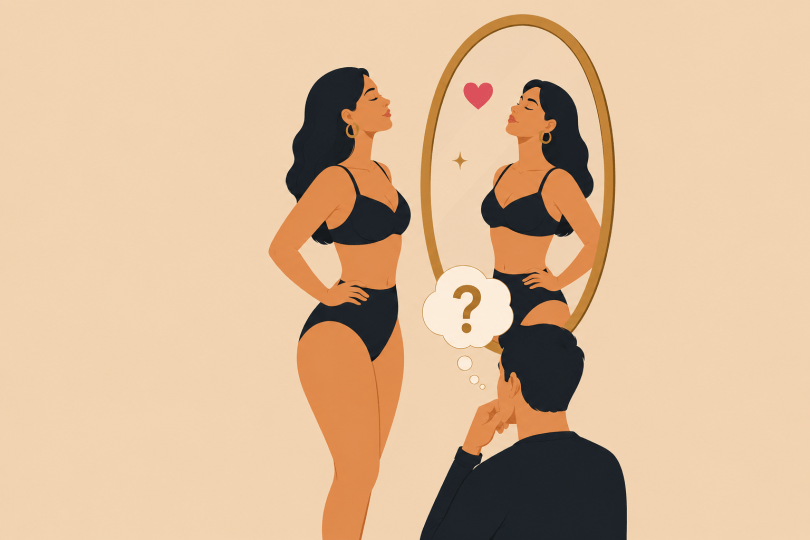
Some men seemed incredibly drawn to that confidence, Others seemed… intimidated by it.

Is Sexual Confidence Intimidating?

The answer isn’t yes or no.

It’s that confidence can expose insecurity.

Psychologists have long recognised that confidence in any area of life can sometimes trigger comparison in others. Rather than feeling inspired, some people feel inadequate. Intimacy is no different.

Sexual confidence isn’t about having countless partners.

It isn’t about being loud, outrageous or adventurous for the sake of it.

For me, it’s the opposite.

It’s about being emotionally present.

It’s about knowing what you enjoy, communicating honestly and allowing yourself to experience intimacy without shame.

Research consistently shows that women with greater body appreciation tend to report higher sexual satisfaction, greater communication with partners and lower levels of sexual anxiety. In other words, when we’re comfortable in ourselves, intimacy often becomes deeper rather than more performative.

“You’re Different”

One conversation has always stayed with me.

Last year I was in a committed relationship. Initially everything was wonderful. If I’m honest, it was probably the best sexual connection I’d ever experienced.

One evening we were lying in bed and he turned to me and said,

“You’re different to other women.”

I’ll admit, I braced myself for criticism, (he was the king of narcissism). 

Instead he said,

“I’ve been with a lot of women, but you’re different because you have sex for yourself as well as the other person. Most women don’t.”

That sentence has stayed with me ever since. At the time I didn’t fully understand what he meant. Looking back, I think he recognised something I’d never consciously thought about.

I wasn’t performing. I wasn’t worrying. I wasn’t trying to be someone.

I was simply present, Passionate, Connected.

To me, passion isn’t something reserved for the bedroom.

It’s how I approach life, I’m passionate about my work, About helping people, About healing, About relationships, About being alive.

Perhaps intimacy simply reflects that part of me. I think as with everything in life, I give it my all. 

Does Sexual Maturity Change as We Get Older?

One question I’ve found myself coming back to is whether women and men sometimes experience sexual maturity differently as they get older.

I can only speak from my own experience, but for me, confidence didn’t come from having more sex. It came from knowing myself better.

In my twenties and early thirties, I was far more aware of how I looked, whether I was “doing it right” and whether I was attractive enough. As I’ve got older, all of that has faded into the background. Today, intimacy feels less about performance and much more about presence. I know my body, I’m comfortable communicating, and I allow myself to enjoy the experience just as much as the person I’m with.

When I speak to other women, and to many of my coaching clients, I hear similar stories. Confidence often seems to grow as self-consciousness begins to fall away.

For many men, however, middle age can bring a different set of experiences. Careers become more demanding, family life becomes busier, stress increases, and for some, natural changes in sexual function can start to appear. UK research suggests that concerns about sexual health and performance become more common as men get older, even though many continue to value intimacy and want fulfilling sex lives.

I also can’t ignore something I’ve noticed through countless conversations with people over the years. I’ve spoken to middle-aged men who tell me they haven’t had sex with their partner for weeks, months or sometimes even longer. Equally, I’ve spoken to women who feel emotionally disconnected or who have simply stopped prioritising intimacy. It reminds me that this isn’t a “men’s issue” or a “women’s issue.” Long-term relationships can sometimes drift into companionship, routine and responsibility, leaving very little space for passion unless both people actively protect it.

That makes me wonder whether some couples can find themselves moving in opposite directions. Just as many women are becoming more accepting of themselves and more confident sexually, some men may be carrying pressures they’ve never had before. Not because they’ve become less masculine or less desirable, but because life changes us all.

Perhaps that’s why confidence can sometimes feel confronting.

Not because confident women are “too much”, but because genuine intimacy asks both people to be vulnerable.

I also find myself wondering whether this plays a small part in why some middle-aged men are drawn to younger women. Not because younger women are somehow better, and certainly not because all men seek younger partners, but because relationships where both people are still discovering themselves may sometimes feel less exposing than being with someone who already knows exactly who she is.

It’s simply a thought rather than a conclusion, but I think it’s an interesting question to ask.

Can Confidence Trigger Insecurity?

I’ve worked with enough people now to know I’m not alone in noticing this. Many women I’ve spoken to have shared similar experiences. Sometimes a sexually confident woman challenges expectations.

Some men have become used to being the one who leads, reassures or teaches. When they meet a woman who already knows herself and is comfortable expressing what she enjoys, it can shift the dynamic.

That doesn’t make those men weak. It simply means confidence requires confidence in return. Secure men often welcome openness because it creates honesty and better communication.

Less secure men may start questioning themselves.

Am I good enough? Has she experienced better? Can I satisfy her?

Those thoughts don’t always get spoken aloud, but they can quietly change the atmosphere within a relationship.

Sex Gets Better With Emotional Safety

One thing I’ve realised is that great sex isn’t really about technique. Anybody can have sex, come on you know how true that is… 

But genuine intimacy is different.

The best experiences happen when two people feel emotionally safe enough to stop performing altogether.

When there’s trust, laughter, curiosity, communication, acceptance, and when two people show the fuck up for each other.. they show each other, “I’m here, I’m yours, and I’m not going to fuck this up by playing games”!

That’s where connection lives.

Why I Don’t Date Casually

People are often surprised when I tell them that since the end of my long term relationship with my sons Dad,  I’ve only been sexually intimate in my personal life, with a couple of people over the last four years. Yes I have dated a few, but I have a way with men, where I don’t feel the need to show them who I am through sex. My personal world I guess can be so different, from perhaps any alter ego, I can play or come across as. 

For me, confidence hasn’t led to sleeping with more people. It’s actually had the opposite effect. I’ve become far more selective.

I don’t feel the need to give my body away simply because dating apps make casual intimacy feel normal, I mean what do I gain from that? Apart from making myself feel shit! Where is the reward for me? What a visit to the clinic, because men don’t want to wear protection? No THANKS!

I’ve reached a point where I value connection far more than attention.

Maybe that’s age, Maybe it’s healing, Maybe it’s simply knowing my own worth.

Either way, I no longer believe sex should be something we do because we’re lonely, bored or afraid someone else might come along. I’d rather wait for someone who genuinely values intimacy than collect experiences that leave me feeling empty.

It gives me such insight into the world, having this view, I know porn stars who have sex for money, but the sex they have on film, is not the sex they have with a partner. Many of them are choosing celibacy in their own life,  and you may sit there, not understanding that, but porn stars and sex workers, often become two people, and separate work and private life completely. The person they portray can be a million miles from the person they truly are. 

Are We Really Having Better Sex?

Dating apps have changed modern relationships. They’ve created endless choice, endless comparison and often a conveyor belt approach to dating.

But one question keeps coming back to me.

Are people actually having better sex because they have more opportunities? Or are they simply having more of it?

When I speak to people in long term relationships, it’s surprisingly common to hear things like, “We haven’t had sex for weeks”. Others describe intimacy that feels routine rather than exciting.

The statistics reflect this. Large surveys suggest that sexual frequency tends to decline in many long term relationships over time, and satisfaction depends far more on communication, emotional closeness and relationship quality than on how often couples have sex.

Perhaps the real issue isn’t how much sex we’re having.

It’s how connected we are while we’re having it.

Confidence Isn’t the Enemy

A sexually confident woman isn’t trying to compete.

She isn’t trying to dominate.

She isn’t trying to prove anything.

She’s simply comfortable enough to experience intimacy without apology.

The right man won’t feel threatened by that.

He’ll feel invited into something honest.

Because confidence isn’t about perfection.

It’s about authenticity.

And perhaps that’s the most attractive quality of all.

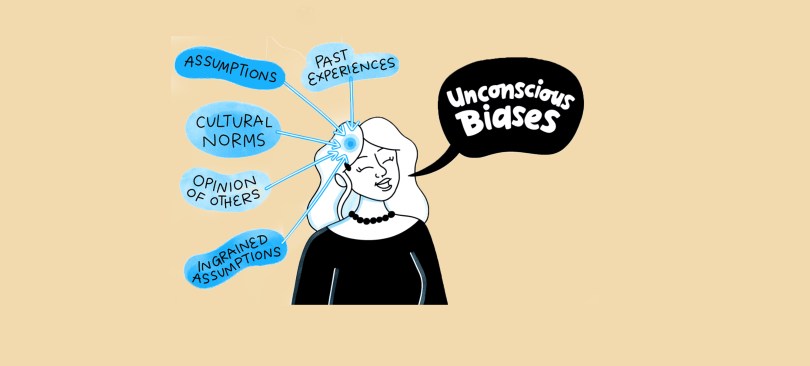
The Stories We Never Knew We Were Telling Ourselves: How Unconscious Bias Shapes Our Careers, Relationships and Happiness

“The biggest barriers in our lives are often the ones we cannot see.”

Most of us like to believe we’re open minded.

We believe we judge people fairly. We tell ourselves we make decisions based on facts, personality and experience. We assume our opinions are our own.

But what if many of our decisions are being influenced by something we’ve never consciously questioned?

This is known as unconscious bias.

Unconscious bias refers to the automatic assumptions, beliefs and mental shortcuts our brains develop over time. These patterns are influenced by childhood experiences, family, culture, education, previous relationships, social media, television and even the conversations we overhear growing up.

They help our brains process information quickly, but they can also lead us to make unfair judgements without realising we’re doing it.

The truth is, every single one of us has unconscious biases. The difference isn’t whether we have them. It’s whether we’re willing to become aware of the,.

The Brain Likes Shortcuts

Imagine meeting someone for the first time. Within seconds you’ve already noticed their appearance, clothing, body language, accent, age and confidence. Your brain has begun creating a story before they’ve even finished introducing themselves.

Sometimes those stories are accurate, however quite often they aren’t.

The human brain is designed to look for patterns because it keeps us safe. Thousands of years ago this was useful for survival. Today, those same shortcuts can influence promotions at work, dating choices, friendships and even how we treat ourselves.

A prime example lies in meeting someone who looks like an ex partner who perhaps deceived our trust, we can meet someone with a resemblance, and before we know it, we are disregarding them without realising.

Unconscious Bias at Work

Think about a typical workplace. A manager interviews two candidates with identical qualifications. One reminds them of someone they worked well with years ago.

The other has a different communication style, dresses differently or appears quieter.

Without intending to, the manager may naturally feel more comfortable with the first candidate. Neither decision feels biased.

It simply feels like instinct.

But instinct is often influenced by previous experiences rather than objective evidence.

Unconscious bias can affect who gets hired, who receives opportunities, who gets promoted and who is viewed as having leadership potential. It can also affect how feedback is given.

Confident people may be described as natural leaders.

Quiet people may be labelled disengaged.

Someone who thinks differently may be seen as difficult rather than innovative.

This is especially important when we consider neurodiversity. Many people with ADHD, autism or dyslexia communicate differently. They may process information differently, avoid eye contact, interrupt through excitement or need additional thinking time.

These differences are not character flaws.

Yet unconscious bias can lead others to misinterpret these behaviours as lack of interest, poor attitude or incompetence. When organisations become aware of unconscious bias, they often discover hidden talent that was overlooked simply because it didn’t fit traditional expectations.

It Doesn’t Stop at the Office Door.. Look at our love lives…

The same thing happens in our love lives. How often have we dismissed someone because they weren’t physically our usual type?

How often have we assumed someone wasn’t interested because they appeared quiet?

How often have we believed confidence equals emotional maturity?

Or assumed attractive people must be happier?

Perhaps you’ve met someone who looked perfect on paper. Successful career, Great appearance, Confident, Funny,

Yet emotionally unavailable.

Meanwhile someone else may have been overlooked because they were nervous on a first date, shy in conversation or didn’t immediately create fireworks. Our unconscious bias often creates a checklist of what love should look like.

Height.

Career.

Income.

Age.

Body type.

Social status.

Confidence.

Lifestyle.

But very few of those things predict whether someone will make us feel emotionally safe, respected or loved. Sometimes we reject wonderful people because they don’t match the picture we’ve created in our minds, or we are comparing them and instantly our mind tells us ‘Unsafe’.

Sometimes we chase people who repeatedly hurt us and reject those who could love us deeply, because of their jobs weight etc etc..

The Stories We Tell Ourselves

Bias isn’t only about how we judge others. It’s also about how we judge ourselves.

Many people carry beliefs they never chose.

“I’m too old.”

“I’m too much.”

“People always leave.”

“No one finds people like me attractive.”

“I’ll never be successful.”

Those thoughts often feel like facts.

But where did they come from?

A childhood experience?

An ex partner?

A teacher?

A parent?

A single painful rejection years ago?

Our brains are incredibly good at collecting evidence to support beliefs we’ve carried for years. We rarely stop to question whether those beliefs are actually true.

Why Coaching Matters

This is one of the reasons I believe coaching can be so powerful. Coaching isn’t about giving people the answers. It’s about helping them discover the questions they’ve never thought to ask.

Why do I always choose emotionally unavailable partners?

Why do I keep avoiding opportunities at work?

Why do I assume people won’t like me?

Why do I believe I’m not good enough?

Why do I keep repeating the same patterns?

Why do I shut down when someone I’m genuinely interested in comes into my orbit?

Many of the answers lie beneath conscious awareness.

A coach helps bring those hidden patterns into the light.

Not through judgement, but through curiosity.

Together you begin noticing the automatic thoughts that influence behaviour. You explore where those thoughts originated. You test whether they’re still serving you and gradually you begin replacing automatic assumptions with conscious choices.

Looking Beyond Behaviour

One of the biggest shifts coaching creates is helping people separate behaviour from identity.

Someone interrupting you may not be rude. They may simply process conversations differently. This happens a lot with Neuro Diverse people.

Someone cancelling plans may not be rejecting you. They may genuinely be overwhelmed.

Someone who seems quiet in meetings may have brilliant ideas but need more time to think.

Equally, someone who appears incredibly confident may actually be masking insecurity.

The more curious we become, the fewer assumptions we make.

Curiosity almost always creates stronger relationships than certainty.

Flawed Thinking Isn’t Failure

One of the most common things coaching uncovers is flawed thinking. Psychologists often refer to these as cognitive distortions. These include believing we know what others are thinking.

Expecting the worst outcome.

Overgeneralising from one experience.

Seeing situations in black and white.

Filtering out positive experiences while focusing only on negatives.

These thinking patterns quietly influence both our personal and professional lives.

If one relationship ended badly, we may assume every future relationship will.

If one interview went poorly, we may decide we’re not capable.

If one manager criticised us, we may stop applying for promotions altogether.

The event ends.

The belief remains.

Coaching helps challenge those beliefs before they become permanent truths.

Awareness Changes Everything

The goal isn’t perfection. No one can completely eliminate unconscious bias.

We’re human.

Our brains will always create shortcuts.

The goal is awareness. Awareness gives us choice. Instead of immediately believing every thought, we become curious. Instead of reacting automatically, we pause. Instead of assuming we know someone’s story, we ask questions.

That pause can completely change a conversation.

It can save relationships.

It can create more inclusive workplaces.

It can open doors we never realised we’d closed.

Imagine What Could Change

Imagine interviewing someone without letting first impressions dominate your decision.

Imagine going on a date with genuine curiosity rather than comparing them with every previous partner.

Imagine recognising when your inner critic is speaking instead of accepting every thought as fact.

Imagine leading a team where different ways of thinking are valued rather than judged.

Imagine choosing people based on emotional compatibility instead of a checklist.

Imagine not judging people on. decisions they’ve made for their lives, just because they don’t match up to your values.

Those small shifts have enormous consequences.

Not only for careers and relationships, but for confidence, wellbeing and happiness.

Final Thoughts

Some of the most important conversations we’ll ever have are the ones we have with ourselves.

Every assumption deserves to be questioned.

Every belief deserves to be explored.

Every pattern deserves our curiosity.

Because when we become aware of our unconscious biases, we don’t just change the way we see other people.

We change the way we see ourselves and that may be the most powerful transformation of all.

If you’ve ever found yourself repeating the same relationship patterns, doubting your own potential or wondering why certain situations keep playing out in your life, coaching offers a space to explore those patterns without judgement. Together, we can uncover the beliefs driving your decisions, challenge thinking that no longer serves you and help you make choices that are aligned with who you are today, rather than who your past taught you to be.

Sometimes, changing your life doesn’t begin with changing your circumstances.

It begins with changing the story you’ve been unconsciously telling yourself.

The Context we Meet in: Why we judge women by circumstance instead of Character

There is a scene in Pretty Woman that has stayed with me for years.

Edward, played by Richard Gere, looks at Vivian and says, “I’ve never treated you like a prostitute.”

Her response is immediate.

“You just did.”

For a long time, I watched that scene and thought it was simply about a man saying the wrong thing. As I have grown older, spent more time listening to people’s stories and worked with women from all walks of life, I have come to realise that the scene is about something much bigger than a wealthy businessman falling in love with an escort. It is about judgement. It is about the labels we place on people. Most importantly, it is about how often women are judged by the circumstances in which they are found rather than the character they possess.

What strikes me most about that exchange is that Vivian never asks the obvious question. Why is she carrying the burden of judgement when Edward was equally involved? He may have been the wealthy businessman and she may have been the escort, but both of them participated in the same encounter. Without Edward, there is no transaction. Without his choices, there is no story. Yet somehow society finds it easier to judge Vivian than it does Edward. He is seen as successful. She is seen as shameful. He is allowed complexity. She is reduced to a label, she could be incredibly successful in her own right, but it’s always the man casting judgement, without the understanding.

That scene has always felt like a reflection of something much bigger that still exists today. Women continue to be judged differently for the very same situations that men willingly participate in. The details may have changed. Dating apps have replaced chance meetings in bars. Social media has transformed how people connect. Entire industries have emerged that did not exist twenty years ago. Yet the underlying double standard remains surprisingly familiar.

A woman can meet a man on Tinder, spend an evening talking, laughing and building what she believes is a genuine connection, sleep with him, and then discover she has been quietly disqualified from relationship status because she slept with him too quickly. The irony is extraordinary. He was there too. He made the same decision. He participated in exactly the same experience. Yet somehow he walks away feeling entitled to judge her for behaviour he willingly took part in himself.

What fascinates me is that many women do not think this way. They are often looking at the bigger picture. They are wondering whether there is chemistry, whether there is potential, whether this person could become a meaningful part of their life. Of course there are exceptions. Both men and women can be manipulative. Both men and women can seek validation. Both men and women can be dishonest. This is not about pretending one gender is innocent and the other is guilty. Human beings are complicated. What interests me is the imbalance in how judgement is applied. Society still seems far more comfortable attaching shame to women than it does to men.

One of the most interesting questions in modern dating is why some men automatically assume that a woman on Hinge is more suitable for a relationship than a woman they meet in a lap dancing club or who perhaps has worked as an escort. Why? What evidence do they actually have? Have they spent time understanding her values? Do they know how she treats people? Do they know whether she is loyal, emotionally available, trustworthy or kind? Usually the answer is no. What they are really judging is not the woman herself. They are judging the story attached to her, and the crazy thing is from my day to day life, I actually hear that ‘BodyCount’ can often reign higher in the women they perceive as ‘Marriage material’.

The woman on Hinge is viewed as someone searching for love. The woman in the club is viewed as someone selling fantasy. One is placed into a socially approved category. The other is placed into a socially disapproved category. Yet neither label tells us very much. The woman in the club may have stronger boundaries than anyone the man has ever met. She may have spent years single because she refuses to settle for relationships that do not meet her standards. She may be fiercely loyal once she commits to someone. She may have had fewer sexual partners than many of the women being praised as relationship material. Meanwhile, the woman on Hinge may be dating multiple people, have no interest in commitment and be seeking validation rather than connection. Or the opposite may be true. The point is that nobody knows.

Character cannot be determined by profession. It cannot be determined by appearance. It cannot be determined by where somebody happened to meet you. Yet people continue to make assumptions every single day based on these things. They judge a book by its cover and then convince themselves they know the entire story.

What I have learned over the years is that public image and private reality are often worlds apart. We live in a culture where people carefully curate how they are perceived. Dating profiles are curated. Social media accounts are curated. Influencer brands are curated. Even ordinary people curate versions of themselves for public consumption. We look at photographs, captions and carefully selected moments and convince ourselves we know somebody. The truth is that we rarely do.

There are women with enormous social media followings who are admired by millions. There are reality television personalities, influencers and public figures who have built highly successful brands around their image. Some have found ways to monetise their beauty, fame and desirability in ways previous generations could never have imagined, and behind closed doors are being sent out on secret Whatssap groups for £10k for the night. Personally, I do not see anything wrong with that. If somebody has built an audience, worked hard to create opportunities and found a way to capitalise on their success, then fair play to them. What interests me is not what they do. What interests me is how society responds to them depending on what information is publicly available.

The same man who judges a woman working openly within the adult industry may spend years admiring, following and fantasising about a public figure whose private life he knows nothing about. The difference is not necessarily morality. The difference is visibility. One woman is judged because people know. The other escapes judgement because people do not. Yet both may be making similar choices in private. This is why assumptions are so dangerous. They are built on incomplete information and presented as certainty.

Another aspect of this conversation that deserves far more compassion is the reality that some women carry experiences most people know nothing about. Some women working within parts of the adult industry have histories of childhood sexual abuse, rape, domestic violence, coercive relationships or profound emotional neglect. Of course this is not true of everyone and it would be wrong to make assumptions. Every woman’s story is different. Yet it is important to recognise that for some women, their relationship with their body, sexuality and sense of control has been shaped by experiences that occurred long before anyone met them. I work with one lady in the industry, who was date raped, and is simply too scared to date, and maybe she’s lost her way a little, but who are we to sit and judge.

What often frustrates me is how quickly people jump to judgement without any curiosity about what might have brought someone to where they are today. We see a profession and assume we understand a person. We see a choice and assume we know the story behind it. Yet human beings are rarely that simple. For some women, stepping into a space where they choose the terms, set the boundaries and decide what access people have to them can feel very different from experiences where control was taken away. What outsiders may perceive as exploitation, another person may experience as autonomy. Whether people agree with those choices or not is almost irrelevant. The point is that we cannot understand someone’s life by reducing them to a label.

Perhaps that is another reason I find judgement so problematic. It leaves no room for complexity. It leaves no room for empathy. It leaves no room for the possibility that the person standing in front of us has survived things we cannot imagine. We do not know their history. We do not know their struggles. We do not know what they have overcome to become the person they are today. Yet society is often quick to condemn women for the choices they make while showing very little interest in understanding the experiences that shaped those choices in the first place.

As the film draws to a close, something interesting happens. Edward finally understands what he could not see at the beginning. The issue was never Vivian’s profession. It was never the circumstances in which they met. It was never the label he had attached to her. The real obstacle was his inability to look beyond those things. Only when he lets go of his assumptions is he able to see the woman standing in front of him.

If we return back to the film ‘Pretty woman’ in one of the most iconic scenes in the film, Edward arrives with flowers and climbs the fire escape despite his fear of heights. He becomes the knight in shining armour Vivian once dreamed about as a little girl. Of course, we live in a different world now. Most women are not waiting to be rescued. Women build careers, raise families, buy their own flowers and save themselves every single day. The fantasy was never really about being rescued anyway. The fantasy was about being chosen. Being valued. Being seen… finally the little girl who had led such a traumatic and sad life, was seen.

Perhaps that is what so many people are searching for beneath all the noise of modern dating. Not perfection, Not status, Not somebody who ticks every box on paper. Just somebody willing to look beyond the stereotypes, beyond the assumptions and beyond the story attached to how they met.

Because love does not arrive wrapped in social approval. It does not ask whether someone was met through friends, on a dating app, in a club, at work or during the most unexpected chapter of their life. Love only asks whether two people are willing to know each other honestly.

And perhaps that is the real lesson hidden inside Pretty Woman. The greatest relationships are not built by people who meet in the perfect circumstances…. They are built by people brave enough to see beyond them….

Maybe the real question is not where are the women worth loving. Maybe the real question is where are the men willing to put down their judgement long enough to recognise them.

Because the most beautiful love stories have never been about how two people met.

They have always been about what happened when they decided to truly see one another.

Survival Mode in Relationships: When Emotional Abandonment Pushes the Body Into Crisis

How avoidant and narcissistic relationship patterns trigger fight-or-flight, hormonal disruption, and physical collapse, especially in women

There is a kind of stress that doesn’t stay in the mind.

It moves into the body.

It shuts down appetite.

It steals sleep.

It disrupts hormones.

It turns love into a medical emergency.

For me, stress from romantic relationships affects my body more than anything else in my life, Not work, Not money, Not external pressure. Love, or more accurately, emotional instability disguised as love, is what pushes my body into survival mode.

And once I’m there, I can’t simply “calm down.”

My body is panicking.

What Survival Mode Really Is (Fight, Flight, and Freeze)

Survival mode is not a metaphor. It is a physiological nervous system response that occurs when safety is threatened.

In relationships with avoidant partners or narcissistic partners, the body does not experience emotional inconsistency as inconvenience, it experiences it as danger.

Hot-and-cold behaviour.

Sudden withdrawal.

Love-bombing followed by emotional abandonment.

Connection offered, then removed.

The nervous system responds by activating the sympathetic response, fight, flight, or freeze. This response is meant for short-term danger. In emotionally unstable relationships, the threat is ongoing.

So the body stays switched on.

The Avoidant Attachment Cycle — Step by Step in the Body

Avoidant attachment is often unconscious. But its impact on the other person’s nervous system is very real.

1. Connection Phase: “This Feels Safe”

What the avoidant does

  • Emotional intimacy
  • Deep conversations
  • Strong sense of alignment
  • Feeling chosen and secure
  • A perfect mirror to you, which helps secure a sense of bond

What happens in your body

  • Oxytocin increases (bonding hormone)
  • Dopamine rises (hope and reward)
  • Nervous system softens
  • Appetite and sleep may stabilise

Your body begins to wire this person as safety.

2. Deactivation Phase: Emotional Withdrawal

What the avoidant does

  • Becomes distant
  • Reduces communication
  • Feels “overwhelmed”
  • Shuts down emotionally

What you begin to feel

  • Unease
  • Tight chest
  • Anxiety
  • A sense that something is wrong

Physiological response

  • Cortisol begins to rise
  • Vagus nerve regulation drops
  • Fight-or-flight activates

Your body senses danger before your mind understands it.

3. Push–Pull Dynamics and Intermittent Reinforcement

What the avoidant does- Sometimes , may I add, however most are too weak to return and do not have the emotional bandwidth

  • Returns briefly
  • Reassures you
  • Withdraws again

What you feel

  • Relief followed by panic
  • Hypervigilance
  • Emotional preoccupation

What happens in the body

  • Cortisol remains elevated
  • Adrenal system overstimulated
  • Digestion suppressed → appetite loss
  • Sleep disrupted

This is where survival mode becomes chronic.

4. Sudden Breakup or Emotional Disappearance

What the avoidant does

  • Ends the relationship abruptly
  • Avoids closure
  • Emotionally shuts the door
  • Blocks you everywhere

What happens to you

  • Shock
  • Disbelief
  • Inability to eat
  • Inability to sleep
  • Inability to just function with day to day life

Physiology

  • Cortisol spikes
  • Melatonin suppressed
  • Blood pressure may drop
  • Immune system weakens

This is often the point people say:

“I don’t recognise myself anymore.”

The Narcissistic Relationship Cycle — And Why It Damages the Body

Narcissistic relationship patterns are different because the instability is often manipulative rather than avoidant.

1. Love-Bombing and Idealisation

What they do

  • Intense attention
  • Excessive affection
  • Fast emotional bonding

Body response

  • Dopamine surge
  • Oxytocin surge
  • Rapid attachment

The body bonds before trust has time to develop.

2. Devaluation and Emotional Withholding

What they do

  • Withdraw affection
  • Criticise or invalidate
  • Create emotional insecurity

What you feel

  • Anxiety
  • Self-doubt
  • Trying harder to regain safety

Physical impact

  • Cortisol rises
  • Appetite shuts down
  • Gut function slows
  • Weight loss begins

3. Discard, Return, Repeat

What they do

  • End the relationship
  • Return
  • End it again

Each cycle re-activates the trauma response.

The body never fully resets.

During one such relationship, my weight fell from nine stone (around 57 kg) to seven stone ten (around 49–50 kg). I couldn’t eat. I couldn’t sleep. My periods became severe and prolonged, leading to hospitalisation.

This was not just emotional distress. It was physiological breakdown caused by chronic stress.

Blocking: The Nervous System Impact of Sudden Disappearance

Blocking is not neutral.

Blocking is digital abandonment.

Psychological and Neurological Impact

Research shows that social rejection activates the same brain regions as physical pain. Blocking removes:

  • Access
  • Repair
  • Explanation

The brain interprets this as:

“You no longer exist.”

What Blocking Does to the Body

  • Sudden cortisol spike
  • Panic response
  • Obsessive thinking
  • Appetite shutdown
  • Severe insomnia

For bonded individuals, blocking can:

  • Disrupt menstrual cycles
  • Lower blood pressure
  • Trigger medical symptoms
  • Psychologically impact their whole future

There is no nervous system regulation without closure.

Why Emotional Stress Affects Women’s Bodies So Deeply

Chronic relational stress disrupts the HPA axis (hypothalamic-pituitary-adrenal axis), which governs stress hormones.

This impacts:

  • Cortisol regulation
  • Progesterone production
  • Oestrogen balance
  • Ovulation and menstrual cycles

This is why emotional stress can cause:

  • Heavy or prolonged periods
  • Hormonal imbalance
  • Faintness or low blood pressure
  • Hospital admissions

Women don’t just experience stress psychologically.

We carry it physically.

The Core Truth About Survival Mode in Love

Avoidant partners regulate by leaving, a selfish act for their own self preservation and to maintain their narrative ‘As the good guy’ – Which sadly to you and to an outsider not in their orbit, is actually anything but.

Narcissistic partners regulate by controlling, they can’t control someone who starts to remember their own self worth, and who starts to call them out…

The person left behind regulates by breaking down internally.

They close the door, and your body absorbs the impact.

Grounding: Gently Returning the Body to Safety

If you are in survival mode, your body is not betraying you.

It is protecting you.

Healing does not come from forcing yourself to move on. It comes from restoring safety slowly:

  • Eating what you can, when you can
  • Sleeping without self-judgment
  • Reducing exposure to emotional chaos
  • Choosing calm over intensity

Your nervous system does not need answers.

It needs consistency, gentleness, and time.

My little tip…

This blog is written from my own lived experience.

I share my story, including weight loss, hormonal disruption, hospital admissions, and the physical effects of emotional abandonment, not for sympathy, but for validation. To them you may not matter, but the key thing is, you should matter to you. They tried to rob you of dignity, clarity, and validation… but you have to remember, stop investing all that into them, and protect yourself… I mean we literally have no hope right now when it comes to dating, do we girls? Because everyone left who isn’t taken has that much trauma they become Avoidants or Narcissists, however remember, our own trauma can simply be making us anxious attachments… we need to stop the cycle!

Too many women are told they are “too sensitive” when their bodies react to relational stress. In reality, these reactions are often normal nervous system responses to instability and loss of safety.

If this resonates with you, please know:

You are not broken.

Your body has been fighting for you.

The Men of 2025: How my year of Dating Hell, and Hard-Learnt Lessons, can help you spot Red Flags!

What the hell happened!!??

Sex, fantasy, consistency — and why modern dating keeps breaking women

After a long period of celibacy, I met my ex-boyfriend — let’s call him The Lion. We don’t need his real name.

The Lion, The narcissist.

In fact The grandiose narcissist.

He was very handsome, Beautiful, actually. Perfect white teeth. A full head of hair, (two hair transplants because one wasn’t enough). He was sexy, but not my usual type. I normally go for taller, lean, athletic men with no tattoos. He was huge. Six foot tall, probably six foot wide. Muscly. Strong. Dominant.

He wasn’t my type — and yet something about him completely undid me.

I found him intensely attractive, in a way I hadn’t experienced before. Maybe because he wasn’t my normal type. Who knows. But the sex between us was off the scale. Raw. Animalistic. Lust-driven. Some of the best sex I’ve ever had.

We couldn’t get enough of each other. Sexy weekends away. Him telling me how to dress. The gifts, ( And for anyone who knows me, Im not normally into this) The energy. The chemistry. The obsession.

I almost felt like his doll — something he couldn’t put down, and that, I think, is where most of the attraction came from.

And that’s all it was.

Sex.

There was no substance. No emotional safety. No real love. Just intensity masquerading as connection. My therapist later told me clearly: the “connection” existed because I had been celibate, and my body and mind craved attention.

The first three or four months felt incredible.

Then everything shifted.

The final two months were hell.

I dropped from 9st 4 to 7st 10, living in pure survival mode.

He became verbally abusive — at first subtly, then relentlessly. Comments about my body. My teeth. My weight. My scars. Criticism disguised as jokes or “help.” Tiny cuts, over and over again.

This was a man who knew my history with an eating disorder and body dysmorphia. All the “I want to know everything about you” had been a ploy — to gather ammunition.

I treated him like a king.

He treated me like something and someone he owned…

He’d say things like, “Why do you have this effect on me? I just can’t give you up.”

As if I was the problem. As if I was doing something to him.

Once, sitting in my car, he pulled me onto his lap and said,

“Kerry, you do this to me. I’m not sure I want this, but you have this way of winning me back.”

I hadn’t done anything wrong.

Then he hugged me and said,

“I’m scared I could become abusive towards you — you’re too soft and nurturing.”

Let that sink in.

I’ve been told before that I have a presence, that I make people feel seen. With him, that became a weapon. He leaned into my kindness while resenting me for it.

The worst moment came on a drug-fuelled Ibiza trip. Pink cocaine from 7am to midnight. Then the comedown.

For twelve hours — hotel, airport, plane — he broke me down.

Told me I was a bad person. Needed therapy. Needed to change my career. Needed to look different. This was Loudly, Publicly, to the point people noticed.

Every time I looked away, he physically lifted my chin and told me I wasn’t listening.

I hadn’t done a single thing wrong.

At one point a stranger followed me into an airport toilet and said,

“This is not okay. I’m worried about you, as this is dangerous’

And I still made excuses for him.

That’s how deep it was, and I knew I was hours away from the safety of my own home..

After that, he love-bombed me, Promises. Romance. Safety. Then after one trip, I fell seriously unwell, to the point I was hospitalised for 8 days — He then broke off with me saying ‘I didn’t sign up for this’ – Meaning his Girl in hospital and being super unwell, then nothing. Coldness. Disinterest. Silence.

And that’s when I finally saw it.

This was just sex.

And no sex — no matter how good — is worth fear.

He did wonders to my body sexually I thought at the time, and then I realised, No, I made that happen, I had gone so long without sex that I think anyone could of made that happen.

What he did to my head nearly destroyed me.

He tried to break me.

And I very nearly let him.

Reflection: The Narcissist

This wasn’t love. It was trauma bonding. Intensity without safety. Power without care. He fed on devotion, then punished me for giving it.

Narcissists don’t want partners — they want mirrors, supply, and control.

Lessons Learned: If You Meet a Narcissist

  • Intensity is not intimacy
  • Amazing sex does not cancel abuse
  • If he uses your vulnerabilities against you, leave
  • If your body is deteriorating, your nervous system is screaming
  • Love never requires survival mode

Airport Guy: When Kindness Still Isn’t Compatibility

A few days after splitting with my Ex, I flew abroad with my little boy.

I was still fragile. Still healing. Still very much in recovery mode — physically and emotionally.

At the airport, a man stared at me so intensely it actually made me blush — and I am not easily flustered. I mean, his neck nearly broke turning to look back at me. Later, delayed on my flight, I opened a dating app.

And there he was.

We matched. Of course we did.

Airport Guy.

He was kind, sweet, down to earth, handsome — and back to my usual type: dark, tall, athletic. After everything I’d been through, he felt… safe. Gentle. Normal.

We talked for weeks. He was attentive and consistent with messaging. There was warmth there, ease, laughter. But as time went on, I realised something was missing. There was no real depth. No emotional intelligence. No stimulation that made me feel mentally alive.

Still, I agreed to a date.

And actually, we had a ball.

It was last minute, impulsive, a “fuck it” moment. The evening was easy and fun, and before it ended, we’d already agreed to a second date.

On the second date, he went all out. He booked Louie’s in Manchester and really made an effort. That night, he stayed over. We cuddled, talked, laughed, but lying there, I found myself thinking something that surprised me.

I really fancied him – but I didn’t want sex with him.

Not in that way.

There was attraction, but no pull. No hunger. No emotional spark that made me want to cross that line. And I can’t fake that, nor should I.

We ended up seeing each other six times over several weeks. I kept hoping something would ignite. I wanted it to. He was good company, however instead of things deepening, cracks started to show.

He moaned constantly about the two-hour distance.

He lacked curiosity and depth.

When life got hard, he disappeared into drug-fuelled benders.

One night, he rang me 37 times, completely off his head, telling me he’d fallen for me — but his mind was a mess, I was too far away, and I was “too good for him.”

That sentence told me everything I needed to know.

I don’t do drugs. I won’t tolerate them in a partner, especially after what I’d just survived and while he was genuinely lovely, he was also lost, unhealed, and not self-aware enough to know it — without playing the victim role.

I wasn’t the woman who could save him.

And in truth, I also wasn’t ready to progress intimacy with anyone. You can’t force a spark. It’s either there or it isn’t. And without it, nothing meaningful grows.

So I ended it.

Not because he was bad — but because nice isn’t enough.

Reflection: The “Good on Paper” Man

Airport Guy represents a difficult truth: not every connection that feels safe is right. After abuse, kindness can feel like chemistry — but they are not the same thing.

He wasn’t cruel. He wasn’t manipulative. He was simply unhealed. And unhealed people often look for partners to steady them, soothe them, or anchor them through chaos.

That isn’t partnership — it’s emotional dependency in waiting.

Lessons Learned: When the Man Is Kind but Not Ready

  • Safety alone does not equal compatibility
  • Attraction without depth leads nowhere
  • You cannot build intimacy with someone who avoids their own pain
  • Substance abuse is not a “phase” — it’s a coping mechanism
  • It’s okay to walk away from someone good because you need something right

Choosing yourself doesn’t always mean leaving bad men.

Sometimes it means leaving good men who aren’t capable of meeting you where you are.

The Mistake Guy: When Your Body Knows Before You Do

Then came The Mistake.

We matched on Hinge — and as anyone who’s been on dating apps knows, even getting off them and exchanging numbers takes effort. This man had recently moved back to the UK from Dubai, Ex-soldier. Worked on high-end military contracts, Father of three.

On paper, he sounded solid.

He was intelligent, direct, keen to align. We shared beliefs around supporting the military — but beyond that, there wasn’t much emotional alignment. I felt he tried to force more alignments than there were, and I wasn’t sure if I was attracted to him, beyond recognising that he was tall, dark, and handsome.

Still, as always, he was the only person I was speaking to.

He was persistent, offered date after date and even though he lived four hours away, he kept pushing to see me.

At the time, I’d been off work and unwell so on week three of chatting, he badgered me for a date and offered to drive to my city. With hesitation — and, if I’m honest, feeling a little guilt-tripped — I agreed.

On one condition: I would drive myself.

Within minutes of me saying yes, he told me he’d booked a hotel (for himself), chosen the restaurant, and planned the evening. Later, I discovered he’d lied about part of this, but at the time, I put it down to enthusiasm.

When we met, I was late and had misunderstood the bar he’d suggested, so I went straight to the restaurant. Standing at the bar waiting, I suddenly felt someone come up behind me and pick me up and squeeze me.

Anyone who knows me knows I have strong boundaries — and I hate being picked up unexpectedly.

I froze.

I told myself to calm down. He’s just excited to see you.

At dinner, he commented that he didn’t like sitting opposite me. I replied that I was comfortable where I was. When I went to the bathroom and came back, he’d moved to my side of the booth. I felt cornered. I slid back into my seat, forcing him to stand up, and angled my body so I wasn’t fully facing him.

He put his arm around me and went in to kiss me.

I pecked him — more out of politeness and shock than desire.

I think he felt my energy change, because suddenly he pulled back and shifted tone. For the next few hours, he was a perfect gentleman. I relaxed. I enjoyed the date.

And that’s where I made the mistake.

I ignored my intuition — the tight chest, the internal warning — because nothing “bad” had happened yet, and I put it down to my own over-thinking.

What followed was something I won’t detail publicly, but it was enough to teach me a lesson I will never forget.

He is well and truly blocked and I hope our paths never cross again.

Reflection: This Is What Happens When You Override Your Gut

Nothing dramatic has to happen for something to be wrong. Women are taught to override discomfort to avoid appearing rude, dramatic, or ungrateful.

Predatory or unsafe men rely on that conditioning.

Your body recognised danger long before your mind caught up.

Lessons Learned: What Women Need to Hear About “The Mistake”

  • Discomfort is information, not anxiety
  • You don’t need proof to leave a situation
  • Being polite has put women in danger for generations
  • A man who ignores physical boundaries early will ignore bigger ones later
  • If your intuition whispers, listen — if it screams, run

Ignoring your gut doesn’t make you open-minded.

It makes you vulnerable.

Mr Avoidant: The Fantasist Who Never Intended to Stay

Then there was Mr Avoidant — someone I’d known briefly before, who had actually helped and advised me after The Mistake.

At first, he seemed different.

Attentive, Caring. Emotionally available. He listened. Asked questions. Showed understanding. I told him early on that I’d sworn to celibacy — that my body needed to belong to me again.

He said he respected it.

He talked about the future, About long-term plans, About a relationship. Even about going to Auschwitz together — somewhere I’ve always wanted to go but this was from the off and straight away I recognised the feeling immediately: love bombing.

I’ve learned something important about myself — I attract fantasists. Men who talk. Men who imagine. Men who build futures with words rather than actions.

Men who want the idea of me.

One night, we kissed. Just a kiss. A cuddle. No intimacy. During that moment, he said, “You’re dangerous.” I asked what he meant. He brushed it off — but I knew exactly what he meant.

After that night, the shift was immediate.

Avoidance. Excuses. Distance. Mixed signals.

Too ill to see me with a supposed chest infection — yet somehow well enough to win a padel tournament. Constant viewing of my Instagram stories within minutes of posting. Suddenly posting stories himself, despite never doing so before.

WhatsApp messages sent — then deleted before I could read them.

It felt unhinged.

I don’t do games.

There is a short window with me. Once I feel self-protection kick in, the switch goes off — and that’s not self-sabotage. That’s self-preservation.

The following week, I went back on dating apps.

And there he was, Back on them too.

You don’t get access to me while shopping for someone else. You don’t get my emotional energy while keeping your options open.

Reflection: Fantasists Want Access, Not Responsibility

Avoidant men love connection — until it requires consistency. They crave intimacy but panic when it becomes real.

They want you close enough to soothe them, but far enough that they don’t have to commit.

Lessons Learned: How to Spot an Avoidant Early

  • Words without follow-through are a red flag
  • If he’s still on dating apps, you’re not chosen
  • Mixed signals are the signal
  • Consistency is emotional maturity
  • If he disappears after intimacy (even emotional), believe the pattern

A man who wants you doesn’t confuse you.

He makes space. He makes plans. He shows up.

The Red Flags I Will Never Ignore Again

(And Neither Should You)

These aren’t dramatic.

They aren’t always obvious.

Most of them appear early — and we talk ourselves out of them.

Early Behavioural Red Flags

  • Intensity too soon — fair enough if its a month in, but i’m talking week 1 week 2.
  • Boundary testing on first or early dates (touching, closeness, pressure)
  • Discomfort in your body that you rationalise away
  • Inconsistent communication disguised as “busy” or “overwhelmed”
  • Charm paired with entitlement

Emotional & Psychological Red Flags

  • Making their feelings your responsibility
  • Subtle criticism framed as jokes, concern, or “help”
  • Playing victim while avoiding accountability
  • Blaming stress, substances, or mental health for harmful behaviour
  • Turning your empathy into a weapon

Consistency & Availability Red Flags

  • Talking about commitment without backing it up with action
  • Keeping you in conversation but vague about seeing you
  • Still active on dating apps while claiming interest
  • Hot–cold behaviour after intimacy (even emotional intimacy)
  • Making you feel anxious instead of grounded

Lifestyle & Coping Red Flags

  • Using drugs or alcohol to escape discomfort
  • Chaotic lives with no evidence of self-work
  • Expecting you to stabilise or rescue them
  • Treating therapy, growth, or accountability as optional

The Biggest Red Flag of All

  • You feel smaller, quieter, or less yourself around him
  • You start editing your needs to keep the peace
  • Your nervous system is on edge more than it’s at rest

Love does not feel like walking on eggshells.

Connection does not cost your health.

Desire does not require self-betrayal.

What 2025 Really Taught Me

It would be easy to frame 2025 as a year where I simply met the wrong men.

But that would let me off too lightly.

The truth is, I chose them.

Not consciously. Not maliciously. But through patterns I hadn’t fully interrupted yet.

The narcissist wanted power.

Airport Guy wanted comfort.

The Mistake wanted access.

The Avoidant wanted fantasy.

Different men — same outcome.

And while each of them was responsible for their behaviour, I have to be honest about my part in letting them close.

My Accountability

I didn’t attract these men because I’m weak.

I attracted them because I am open, emotionally literate, warm, and capable of holding space. I listen deeply. I give generously. I see people for who they could be — not just who they are in front of me.

That’s not a flaw.

But here’s where my responsibility lies:

I stayed too long in potential.

I rationalised early discomfort.

I confused intensity, kindness, or familiarity with readiness.

I allowed words to carry more weight than actions.

I also entered dating while still healing — believing I was strong enough to spot danger, without fully respecting how vulnerable that season made me.

That vulnerability didn’t make me stupid.

But it did lower my tolerance for red flags.

The Pattern I Finally Saw

Each of these men was offering something that looked like connection — but none of them were offering consistency.

And consistency is the only thing that makes love safe.

They talked.

They imagined.

They promised.

They performed.

But when it came to showing up — emotionally, practically, predictably — they disappeared, destabilised, or turned harmful.

What I learned is this:

If a man cannot meet you in reality, he will meet you in fantasy — and fantasy always collapses, its unsustainable!

We need to spot Green Flags!

The Green Flags of Real Love

(The Signs You Can Trust and Build With)

These are the behaviours and qualities that signal safety, consistency, and emotional availability. They’re not flashy or dramatic, they’re grounded in reality.

Early Behavioural Green Flags

  • Respects your boundaries — physical, emotional, and temporal
  • Doesn’t rush intimacy — values connection over convenience
  • Takes your discomfort seriously — validates it instead of brushing it off
  • Consistent communication — not overbearing, not disappearing

Emotional & Psychological Green Flags

  • Owns their emotions and mistakes — doesn’t blame you for their problems
  • Shows empathy without expectation — can see your perspective without needing to fix it
  • Encourages your growth — celebrates your strengths and supports your goals
  • Balances give-and-take — emotional labor isn’t one-sided

Consistency & Availability Green Flags

  • Follows through on plans — action matches words
  • Prioritizes quality time with you — without making excuses or distractions
  • Shows a genuine interest in getting to know you as a person
  • Keeps commitments — from simple promises to long-term discussions

Lifestyle & Coping Green Flags

  • Manages stress in healthy ways — doesn’t turn to substances to escape reality
  • Engages in self-work — therapy, reflection, or intentional growth
  • Seeks partnership, not rescue — wants a relationship of equals, not a project
  • Communicates openly — expresses needs and feelings honestly

The Biggest Green Flag of All

  • You feel fully yourself — at ease, grounded, excited, and safe
  • You can voice your needs without fear
  • You don’t feel anxious just being near him
  • You see a future and it feels like a shared love story…but you can still keep each other grounded without fear of love bombing.

Love should feel like a homecoming, not a battle.

Safety, respect, a man who is self aware and consistency are far sexier than drama, intensity, or unpredictability.

What I Want Other Women to Take From This

This isn’t about becoming colder, harder, or closed.

It’s about becoming clear.

  • Attraction without safety is not chemistry — it’s your nervous system reacting
  • Kindness without emotional capacity is not partnership
  • Words without follow-through are not hope — they are placeholders
  • If your body is in distress, your intuition already knows the truth

And most importantly:

You are not “too much” for wanting consistency.

You are not demanding for wanting clarity.

You are not difficult for expecting follow-through.

Those are the bare minimum requirements for love.

Where I Am Now

I no longer chase intensity, reassurance, or potential.

I look for:

  • Actions
  • Effort
  • Emotional regulation
  • Consistency over time

And if those things aren’t present, I don’t negotiate with myself anymore.

This isn’t bitterness.

It’s self-respect.

2025 didn’t break me.

It taught me how to stop abandoning myself.

And that lesson will change everything that comes next.

To the Man Turning 40: This Isn’t a Crisis — It’s a Reckoning

(A Coach/therapist’s letter to men who feel restless, disconnected, and quietly unfulfilled)

If you’re a man approaching 40, or already there climbing up the big steep hill to the next milestone, and you feel unsettled in a way you can’t quite explain — this is for you.

Not because something has gone “wrong”, but because something has finally become clear.

Most men don’t wake up at 40 and announce, “I’m having a midlife crisis.”

What actually happens is far quieter.

You start feeling bored by things that used to distract you.

You feel irritated by routines you once accepted.

You look at your relationship, your job, your social life — and can start to feel strangely disconnected from all of it.

And the most confusing part? Nothing is obviously broken….

Why This Age Hits Men So Hard The Biological Facts!

As a coach and trainee therapist, I sit with men every week who say some version of:

“I don’t know what’s wrong. I should be happy, but I’m not.”

At 40, men reach a point where autopilot stops working.

Let’s pause and talk about something many guys never learn in school: your hormones are not static. They change over time, and that matters deeply for your energy, mood, desire, and how you experience life and relationships.

Around the age of 40, many men begin to feel changes that don’t feel random and that’s because they’re linked to very real shifts in hormone biology.

Testosterone Doesn’t Fall Off a Cliff – It Declines Gradually

Unlike what you might hear in the media, men don’t go through a sudden “male menopause” like women do. Instead, testosterone, the hormone most closely associated with male biological identity, begins to decline slowly and steadily from around your 30s onward. Research shows this decline is roughly about 1 % per year after age 30. 

To put that in perspective:

  • At 30, your testosterone is near its adult peak.
  • By 40, you’ve already experienced years of gradual decline.
  • By 50–60, the difference is more noticeable both physically and emotionally.  

This slow hormonal change is often referred to in medical literature as part of andropause or late-onset hypogonadism, though those terms can sometimes be misleading because the shift is gradual, not abrupt, and affects each man differently. 

What Testosterone Actually Does

Testosterone plays many roles in your body — far beyond libido:

  • It helps maintain muscle mass and strength.
  • It supports bone density and skeletal health.
  • It influences red blood cell production and overall energy.
  • It plays a part in mood, motivation, and emotional regulation.
  • It stimulates sexual desire and reproductive function.  

So when testosterone dips – even just a bit — it can show up in ways that feel psychological, emotional, and physical all at once.

Why You Might Not Notice at First

Because the decline is gradual, most men don’t feel a “switch flip.” Instead, you start noticing:

  • Less energy, even after decent sleep
  • Motivation that once came easily now requires effort
  • Lower drive and desire in sex and life
  • Mood shifts, more irritation, less patience
  • Reduced confidence or feeling “not quite myself”
  • Changes in body composition a bit more fat, a bit less muscle
  • A creeping sense that things aren’t as fun anymore  

These aren’t dramatic changes one day, they’re the subtle results of years of small hormonal shifts and because testosterone influences mood and motivation, these shifts can feel emotional before they feel biological.

It’s Not Just Testosterone — The Whole System Changes

The production of testosterone is governed by a feedback loop between your brain and your testes. With age, this loop becomes less efficient, meaning your body produces slightly less hormone and responds slightly differently to what it does produce. 

Plus, other hormones like growth hormone and adrenal androgens (which also affect vitality and stress response) decline over time too, so the whole hormonal landscape shifts. 

Why This Matters at 40

At 40, these hormonal shifts often intersect with life reality checks, relationship strains, career plateau, unmet goals, changing bodies, and the first real awareness of time passing.

That’s why what feels like a “crisis” often feels like:

  • low energy
  • lack of motivation
  • creeping dissatisfaction
  • longing for something more

Not because you’re weak —

but because your internal chemistry has changed, and your brain is suddenly comparing your inner experience to your outer life expectations and when your internal validation sources aren’t as strong as they once were, your brain starts searching externally, in relationships, sex, novelty, validation from others, and fantasies that feel exciting precisely because they promise a rush of feeling alive again.

Biologically, testosterone begins to fluctuate and slowly decline. This doesn’t just affect libido, it affects drive, confidence, tolerance, and motivation. What you once pushed down or ignored suddenly demands attention.

Psychologically, your brain shifts from building mode to meaning mode. You start asking:

  • Is this the life I actually chose?
  • Have I lived for myself, or for everyone else?
  • Who am I?
  • If nothing changes, is this really how I want the next 40 years to look?

This is not weakness. This is self-awareness arriving late, because no one taught you how to access it earlier.

The Life of Convenience (And Why It Feels Like a Trap)

Many men arrive at 40 realising they didn’t consciously design their life – they slid into it.

The relationship made sense.

The job was stable.

The family structure worked.

The expectations were met.

But alignment and convenience are not the same thing.

A lot of men are not unhappy because their partner is “wrong” – they’re unhappy because they were never honest about who they were or what they needed, and do start to feel everything became about convenience, and now that’s not enough..

So now you feel:

  • tied down
  • under pressure
  • emotionally muted
  • resentful without knowing why

Not because someone is controlling you, but because you’ve been people-pleasing your way through adulthood.

You learned early that being a “good man” meant not rocking the boat. Now you’re suffocating in the boat you never questioned getting into.

Validation: The Missing Piece No One Talks About

Let’s talk about validation, because this is at the core of so much male behaviour at this age. Men are rarely taught how to validate themselves.

Your worth has likely been measured by:

  • productivity
  • providing
  • being wanted
  • being chosen
  • being a team player
  • being useful
  • being successful in sports and work

By 40, many men feel invisible. At work, you’re replaceable. At home, you’re functional. In your relationship, you’re familiar.

So your nervous system starts searching for external confirmation that you still matter.

This is where validation-seeking behaviours appear.

Let’s Talk About the Relationship You’re In

If you’re around 40, there’s a good chance the relationship you’re in wasn’t chosen with full awareness, because you weren’t the man you are now when you entered it.

You might be with your first love, the person you grew up with, changed with, adapted to, without ever stopping to ask whether you still fit each other.

You might be with your second or third serious partner, a relationship formed after heartbreak, loneliness, or the fear of starting again Or you might be in a relationship that simply worked at the time, it felt safe, sensible, and stable and now feels flat, distant, or restrictive.

None of this makes you a bad man. It makes you human – and honest enough to notice change.

Why You’re Still There, Even If You’re Unhappy

Let me say this clearly, because men rarely hear it said plainly.

You’re probably not staying because you’re happy.

You’re staying because you’re afraid.

Afraid of hurting someone you care about.

Afraid of being judged.

Afraid of losing access to your children.

Afraid of starting again at 40.

Afraid that you won’t be chosen again.

But underneath all of that is a quieter fear, one most men don’t name:

The fear of being alone with yourself.

If you’ve moved from one relationship to another, or if you’ve never truly been single as an adult, the idea of being alone can feel confronting rather than freeing, and it’s not what your ‘mates’ are doing –

This relationship may be doing more than offering companionship. It may be protecting you from having to face yourself, and providing that comforting feeling of conforming.

Be Honest: Did You Choose This, or Did You Settle?

I’m not asking this to shame you.

I’m asking because clarity matters.

Settling sounds like:

  • It’s not perfect, but nothing is.
  • I should be grateful.
  • It’s easier to stay.
  • I’ve already invested so much.
  • I do love her but…
  • I often think of someone else, but I couldn’t her
  • It just works.. I guess
  • Everyone else is married off..

Choosing sounds different:

  • I can be myself here, everything aligns perfect
  • I feel emotionally and physically connected.
  • I don’t have to shrink or perform.
  • This relationship supports the man I’m becoming.

If you’re honest, you already know which one you’re doing.

Why the Thought of Being Single Feels So Heavy

Being single at 40 can feel like failure, especially in a culture that measures men by stability and continuity. However the real weight isn’t social, It’s emotional.

Being single means:

  • no distraction
  • no automatic validation
  • no role to hide behind

It forces you to ask: Who am I without this relationship?

If you’ve never learned how to self-validate, self-soothe, or sit with your own emotions, that question can feel overwhelming.

So staying feels safer than facing it.

Here’s the Truth Most Men Avoid

If you can’t imagine being single, that doesn’t mean you should stay.

It means you haven’t yet built a relationship with yourself.

Being single at 40 isn’t a failure.

For many men, it’s a developmental stage you were never encouraged to enter earlier.

It’s where you:

  • stop performing
  • rebuild self-trust
  • learn what you actually want
  • choose a partner rather than needing one

Men who never allow themselves this phase often repeat the same relationship – different person, same dynamic, because there hasn’t been growth, maybe healing, but not growth! Are you back on the couch each night? Are you secretly thinking about someone else?

Staying Isn’t Always the Noble Choice

Staying in the wrong relationship doesn’t protect anyone in the long run.

It creates:

  • quiet resentment
  • emotional withdrawal
  • sexual disconnection
  • fantasy lives outside the relationship
  • a slow erosion of self-respect

Leaving doesn’t make you selfish. Staying disconnected doesn’t make you loyal.

The real issue isn’t leaving or staying – it’s living unconsciously.

What I’d Ask You as Your Therapist

Before you ask yourself,

“Should I leave or stay?”

Ask yourself:

  • Am I here out of love, or out of fear?
  • Can I be fully honest in this relationship?
  • Do I feel more myself, or less, when I’m in it?
  • If nothing changed, could I accept this life forever?
  • Is she the one who blows my mind, and am I happy sleeping with her for the rest of my life?

You don’t need immediate answers. You do need the courage to stop avoiding the questions.

Because the most painful thing I see men do at this age

isn’t leaving a relationship – it’s staying silent and slowly disappearing inside it.

Men block away the questions, block away the doubt and try and plod on, and what the fuck for? To live a life you’ve never really wanted? To make do?? Is this all life means to you?

This is the problem – Because this is where the need for validation, can take strong hold, this is where affairs can creep in.. and suddenly your mind starts to wander..

Seeking out the answers..

Why Younger Women Suddenly start to stand out..

When a younger woman shows interest, it doesn’t just feel flattering – it feels restorative.

It says:

  • You’re still attractive.
  • You still have power.
  • You still have options.
  • You’re not past it.

This isn’t always about sex.

It’s about identity repair.

Dating apps amplify this. You lower your age. You lower the age you’re searching for. You chase the dopamine hit of being wanted rather than asking yourself what you actually want.

But here’s the part I challenge men on in coaching therapy:

If you don’t want more children, repeatedly choosing women without children, or significantly younger women, is not accidental.

It’s avoidance.

You’re outsourcing clarity to the future and hoping it won’t cost anyone.

That’s not malicious – but it is your responsibility.

You look at women, and think – “will my friends be impressed by her”, “Will she fit into my social circle”, “Will she make me feel younger” , I mean yes, yes and yes, but after the first year or two, you will realise, this isn’t enough. When your baby raising days are over, you’re sat now with a childless younger woman, and the question of “Do I really want to become a father again?” – Now do you people-please, or take the reigns and seek what you truly want.

Sex, Threesomes, and the Search for Validation

Around this age, many men suddenly start thinking about sexual exploration – threesomes, older women, young women, experimentation, novelty, fantasies they ignored earlier in life.

Let me be very clear:

This is not about being perverted, broken, or immature.

It’s about validation multiplied.

Being desired by one woman reassures you. Being desired by two feels like confirmation of masculinity, relevance, and power.

It can feel like stepping into a “boss era” — admired, wanted, envied.

But here’s the question I ask men:

“What do you think this experience would finally prove about you?”

Because sexual novelty often isn’t about pleasure – it’s about self-worth.

There is nothing wrong with curiosity. There is a risk when curiosity becomes a way to avoid looking at deeper dissatisfaction.

If your life feels flat, sex becomes the fantasy of aliveness. If your identity feels lost, desire becomes proof you still exist, so multiplying that in a ménage a trois.

Children, Regret, and the Illusion of Starting Over

Many men at 40 already have children – and for the first time in years, life is easing.

Your kids are more independent. You’re getting space back.

You can breathe.

This is why the idea of another baby creates such conflict.

A new child can symbolise youth, purpose, and renewal, that fresh feeling of a new little love in your life, but it also means losing autonomy again, and as stats prove, children 2nd time around can cause much more conflict. The woman you chose second time around, who made you feel young, alive again, suddenly becomes mum, and the circle that trapped you in the first cycle, starts all over again.

I work with men who agree to another child not because they want one, but because they don’t want to disappoint their partner or face difficult conversations – again people-pleasing!!

That isn’t selflessness.

That’s fear and fear-based choices are where resentment is born.

Men’s Mental Health at 40: What I See in the coaching Room

Men don’t usually talk about this stage — they act it out.

They:

  • withdraw emotionally
  • fantasise about escape
  • chase validation
  • avoid honesty
  • live parallel lives

Not because they’re selfish – but because no one taught them how to process change without running from it.

If you recognise yourself here, I want you to hear this:

You are not broken.

You are not failing.

You are waking up.

My Advice…

Before you change your relationship, your partner, your sex life, or your future – pause.

Ask yourself:

  • Where am I seeking validation instead of self-acceptance?
  • What have I never allowed myself to say out loud?
  • Am I avoiding discomfort, or avoiding truth?
  • If I keep living this way, who do I become?

You don’t need to implode your life.

You do need to stop abandoning yourself.

Sometimes staying and rebuilding is the bravest thing. Sometimes leaving honestly is the healthiest thing.

What matters is that you choose, consciously – instead of drifting.

What do you really want? Who do you really want? Are you happy to conform? Are you happy with you? What is missing? What brought you here…

To the Man Reading This

You’re allowed to want more than convenience.

You’re allowed to evolve.

You’re allowed to change your mind.

You’re allowed to prioritise authenticity over approval.

Turning 40 isn’t about getting your youth back.

It’s about finally becoming the man you never had space to be.

And that journey doesn’t start with validation from women, sex, or novelty — it starts with honesty.

With yourself..

(Contact me for Coaching – transformwithkerry@gmail.com)

The WhatsApp Graveyard – The Hidden sadness behind the Archived chats.

There’s a sadness attached to the WhatsApp archived box that I don’t think people talk about enough. For me, it isn’t just a folder. It isn’t a feature. It isn’t even practical….

It’s a graveyard.

A quiet cemetery of conversations that once lit up my screen, once lit up my heart, once got me all excited, and then, slowly, silently – went dark. Every time I open it, I’m reminded not just of people I’ve spoken to, but people I had hope for. People who came, touched my life for a moment, said all the right things, and then floated out just as easily.

And I ask myself:

‘Kerry how did we end up here?’ How did words that felt full of potential turn into silence? How did light turn into dimness?

What the Archived Box Means to Me

The archived box feels like the place I put people when I can’t bear to see them dwindle down my chat list. Watching someone slide further and further down, past the group chats, past the random acquaitance chats, past the family you rarely reply to, is painful. It’s a visual reminder of how long it’s been since they cared enough to speak… or since I cared enough to try again.

I don’t like putting people in the archived box. I don’t enjoy the symbolic burial of a conversation that once mattered, but sometimes keeping them in my main inbox hurts even more, because every day they drift further down, it’s like watching a candle burn out in slow motion.

So I archive them, Not because I don’t care, But because maybe… I care too much.

“Out of sight, out of mind” never really works – but it gives me a moment of peace.

Why We Put People There – Psychologically Speaking

From a psychologist point of view, the archiving someone is a coping mechanism. It’s emotional self-preservation. It’s the digital version of pushing a painful memory into a drawer so it doesn’t stab you every time you pass it.

However as you know I love to do this, let’s break it down, Here’s what’s actually happening:

We’re protecting ourselves from dopamine withdrawal

When communication drops, dopamine drops. It feels like a crash. We’re wired to attach to patterns of attention, affection, and consistency… and when that suddenly stops, the brain reads it as rejection, danger, loss, and fuck me, it starts to hurt!

Archiving becomes a way to minimise triggers. In a way it’s managing pain rejection. Even psychology textbooks say the brain processes social rejection like physical pain. Seeing their name every time we open the app hurts. Archiving puts a plaster on the bruise.

We’re grieving potential – not just a person

We call this ambiguous loss. It’s grief with no closure.

The archive holds:

  • potential relationships that never became real
  • stories that could have been beautiful
  • versions of people we hoped they were
  • versions of ourselves we were becoming

When someone pulls away, we feel powerless. Archiving gives us one small act of agency and dignity…

One small click that says: “I won’t let this hurt me every day.”

The Hope That Lives in the Archive

What makes it even sadder is that the archived box isn’t just grief – it’s hope. Every time a WhatsApp notification pops up, there’s a flicker of excitement. A tiny spark. A second of wondering if one of the voices from the archive has come back to life.

And sometimes… it’s just AliExpress… That sigh of disappointment says everything. Just seeing that (1) feels like a gamble, like Russian Roulette.. The archived box is where hope and heartbreak sit next to each other, quietly. Sad isn’t it.

So I know you’re wondering, what chats and who are in your archived Kerry.. it’s very simple

My Ex Husband (RIP), My best friend who passed 7 years ago, 4 Old business chats, Two men I fell for, and 6 men I got bored of chat with, and one who didn’t know if he was coming or going… 2017 – 2025!

When Do I Decide to Archive Someone?

For me, it’s when communication starts to hurt more than it feels good. When messages slow.When replies turn into half-hearted sentences. When 10 minute podcasts turn into ‘You ok’ … Noooo Inconsistency and emotional immaturity, does not work for me! Sorry but true!

When someone who once told you they liked you begins to backtrack internally… inventing flaws in you that don’t exist, inventing “I’ve been busy”, “I’ve got so much on” , bull shit with the excuses hun, In or OUT, it’s simple.. we don’t do bread crumbing!

That’s when I archive… NOT because I want to, but because watching the decline pains me, I see it as a Soft goodbye, a gentle retreat, it could have been.. but you fucked it mate! It’s my way of saying, I deserve more!!

Are We in Someone’s Archived Box Too?

We’ll never know for sure, but we know when communication drops. We know when someone judges us silently. We know when enthusiasm fades.

And the sad truth is:

we end up in their archive the same way they end up in ours – through silence, avoidance, miscommunication, fear, or simply choosing someone else.

The Graveyard of “Almost” Relationships

When I scroll through my archive, it feels like looking at a cemetery of could-have-beens.

People I let go, People who let me go. Opportunities that slipped away, Men who chose the wrong partner over me and now speak about feeling unloved, stay in my orbit, like I am the one that got away… No Darling, you let me get away!

I sit there thinking:

If you were that unhappy… why didn’t you see me? Why didn’t you realise I’m the opposite of everything that broke you? Why didn’t you recognise sincerity when it stood right in front of you?

They didn’t. The sad thing is by the time people realise they want you, their games and inconsistency, the communication stopping…

Me being archived… Or they being archived… It’s all just a digital tombstone for a story that might have been.

Maybe the Archive Tells Us More About Them Than About Us

In the end, people often put themselves in the archived box through:

  • mixed signals
  • fear
  • avoidance
  • emotional immaturity
  • choosing comfort over connection
  • choosing chaos over calm

And maybe that’s the real graveyard – not the WhatsApp folder, but the emotional space inside someone who never let themselves love fully. Those miss out, because out of self preservation, they talk theirselves out of real happiness, and maybe you could of helped them to find real happiness..

As much as the archive feels like a graveyard, I’m learning that I don’t have to keep visiting it like a mourner. Moving on isn’t about deleting people – it’s about understanding why the story didn’t progress and why that’s okay…

How I heal, and how I move on…

1. I Accept That Silence Is an Answer

Lack of communication is communication. Confusion is clarity.

2. I Focus on My Behaviour, Not Theirs

I can’t control why someone pulled away – but I can control how I respond.

3. I Reduce Triggers Without Punishing Myself

Archiving is a soft boundary, not a failure.

4. I Let Myself Feel the Micro-Grief

Losing potential hurts – but only for a moment, not forever.

5. I Remember That Genuine Connection Doesn’t Need Forcing

The right person won’t need convincing, won’t need chasing, just to boost their own ego, they could feel scared of the whole situation, but you know what… They still show up!

6. I Let New Conversations Start Fresh

Healing is attachment repair, not emotional replacement.

7. I Rewrite the Meaning of the Archive

It’s not a grave anymore.

It’s a record of how I’ve grown.

And that’s where the shift begins: when you stop chasing the ones who keep you guessing and start choosing the ones who make you feel safe, seen, and certain. When you realise that consistency isn’t boring – it’s calming. That genuine interest isn’t overwhelming – it’s reassuring. That real connection doesn’t spike your anxiety, their emotional chaos doesn’t throw you in fight or flight, – it steadies your nervous system, you feel at home, at peace.. You can’t wait to be in their arms again!

The moment you understand this, you reclaim your attention from the chaos and redirect it toward people who actually show up. People who don’t leave you hanging in the grey area. People who don’t make you fight for scraps of effort. People who choose you in a way you don’t have to earn.

Because the right connection won’t make you overthink – it will make you exhale.

And once you’ve felt that difference, the old patterns stop feeling tempting.

What ambition really means: Purpose, Relationships and becoming a Power Couple..

Ambition is more than chasing titles or money. It’s about growth, purpose, relationships and becoming the best version of yourself, individually and as a couple. This blog explores the psychology of ambition, why it differs for everyone, how it affects relationships, and how true ambition can build the ultimate power couple..

Ambition is often misunderstood. People assume it is about job titles, financial milestones or fame, yet the truth is far more personal. Ambition is a desire to grow, to stretch beyond who we were yesterday. For some, it burns from childhood; for others, it awakens over time through experience, opportunity or encouragement. It can feel innate or it can develop slowly, shaped by our environment and the people who influence us.

In the UK, many people value stability over striving. Research shows a nation where a large proportion are satisfied with a steady routine rather than fuelled by upward momentum, however that doesn’t make ambition rare, it simply means ambition takes different shapes. Some hearts crave peace; some crave progress; some strive for both.

Ambition is neither good nor bad on its own. It depends on what it is rooted in. When ambition grows from ego, insecurity or comparison, it becomes hollow, empty and will never lead to happiness. When it grows from purpose, meaning, kindness and a desire to contribute, it becomes powerful, it leads to freedom and peace.

What Ambition Really Means

Society often portrays ambition as a ladder to climb, a race to win or an image to uphold, however ambition can be quiet and gentle. It can be the ambition to be a loving parent, a supportive friend, a generous soul, a positive force. It can be the ambition to help others, to heal, to create, to lead with compassion. For years people have said “Kerry, I wished I had your drive and ambition” , and yes in some aspects I have succeeded, with academia, with a woman growing a business in a mans world, and my focus on self development, but my biggest ambition in life is to help others, and share wisdom and knowledge to encourage and support others.

Many people lose their grounding when ambition becomes performance. True ambition stays humble. It acknowledges gratitude for what we have while still striving for personal growth. It does not demand praise or spotlight. It simply asks: How can I become better, kinder, stronger, wiser and more impactful than I was before? I don’t say this because it resonates with me, this really is what it boils down to.

For me personally, ambition is rooted in being a good mother, a good person, a good partner and someone who lifts others. That is ambition in its purest form.

Why Some People Are Driven and Others Are Content

Not everyone feels the same pull towards growth or achievement. Some find fulfilment in routine, in stability, in a nine-to-five life where peace is the priority. Others feel restless without challenges or new goals. Personality, upbringing, environment and mindset all shape our relationship with ambition.

Those who appear unambitious may actually be deeply motivated, just in different, less outward-facing ways and there is no right or wrong, because aren’t we all just striving for happiness in the end? Those who chase achievement may be seeking meaning rather than superiority. The beauty lies in recognising that people flourish in different ways. The goal is not to judge, but to understand.

Why Ambition Can Trigger Jealousy or Misunderstanding

Ambition can make people uncomfortable. They say they want like-minded, driven people around them, yet when they encounter someone truly ambitious, admiration is often mixed with insecurity. Someone else’s growth can highlight our own fears or unfulfilled dreams. Instead of saying, “I wish I had that courage,” people sometimes say, “I don’t like what they do”, “They’re doing it wrong”, and are so quick to criticise how others push or portray theirselves.

But in reality, what they dislike is the reflection ambition holds up to them.

Learning to celebrate ambition in others , to look at someone and think, “Good for them” , is a sign of emotional maturity a sign of our own inner security. We all deserve to chase what lights us up, and to be unashamed of striving for better, however if we are quick to critique or shame others for pushing theirselves, that bitterness, is a sure sign of the un-happiness we hold inside.

Ambition in Relationships: The Foundation of a Strong Partnership

Ambition is powerful on its own, but within a relationship, it becomes transformative. The right partnership doesn’t compete with ambition – it strengthens it. An ideal couple supports each other’s drive even when their dreams differ. It is not necessary for both partners to want the same things; it is necessary that they just want each other to succeed.

Two ambitious people together can create a remarkable dynamic. They understand each other’s need for focus, passion and growth. They celebrate each other’s wins, uplift each other through challenges and inspire each other to become better. They become a team, not rivals. Something I personally revel in, as having that support drives me even more, and firing up my partner, creates something deep inside me I simply cannot explain.

My relationship this summer, started out with him loving a strong, independent successful woman, however he started to criticise my every business move, my socials, my staff choices, my working hours, and to a point, he wanted me to sell my main business and get a ‘hobby’ job, as he would support me.. WOW! No matter how successful a partner may be, I will never just take a hobby job. But deeper than this it wasn’t just about that, it was the fact, he didn’t want to push me to succeed, he wanted me to take a back seat and ‘Be a woman’ – However I can do it all! He failed to recognise.

Even when ambitions do not align, one partner chasing a creative career, the other seeking stability; one wanting expansion, the other contentment, support remains the heartbeat of a healthy relationship. A partner who says, “I may not choose your dream for myself, or the way you do it, but I support you fully,” is a partner who loves without fear or insecurity. That is partnership in its highest form.

Becoming the Ultimate Power Couple

A power couple is not defined by wealth, status or external success. A true power couple is defined by mutual respect, emotional safety, encouragement and an unshakeable belief in one another. It is two people who look at each other and think, Your dreams matter, your growth matters, your purpose matters and I am proud to stand beside you.

Becoming a power couple requires more than ambition; it requires emotional maturity. It requires celebrating each other instead of competing, communicating openly, and holding space for dreams even when they diverge. It means understanding that your partner’s journey will not always mirror your own and that their ambitions may look nothing like yours. You do not need to love their ideas; you simply need to love their passion for them. I personally don’t like putting my face to social media, and going deep into the depths of me, but to make my career go the way I need it to, I have to push that; However, would I be comfortable with a partner doing the same,…. Nope… but if that’s what they need to do, and it genuinely aligns with their business and marketing, it’s something I would need to accept.

Power couples are built when two individuals refuse to dim each other’s light. They rise together, they learn from each other. They balance each other’s strengths and weaknesses. They become a home for both ambition and vulnerability, the grow together.

When support, ambition and love intertwine, they create a bond strong enough to withstand challenges and inspiring enough to carry both people further than they could go alone.

Can Ambitious People Find Contentment?

There is a belief that ambitious people are never satisfied, forever chasing the next thing. However grounded ambition, ambition rooted in purpose and humility, does not deprive someone of peace. It simply encourages them not to settle for less than they are capable of. The most balanced ambitious people appreciate what they have while gently moving towards more meaning, more impact, more growth.

They understand that everything extra is a bonus. Not a requirement.

Ambition becomes peaceful when it is no longer tied to validation but instead tied to purpose.

So…

Ambition is not about being better than others; it is about becoming better than the person you were yesterday. It is about purpose, impact, love, humility and growth. It is about living fully and showing up for your life with intention.

In relationships, ambition becomes even more powerful. When both partners support each other wholeheartedly and treat each other’s dreams with respect, they become unstoppable. Two people driven by purpose, grounded in mutual admiration, and committed to lifting each other higher – that is a true power couple.

Ambition is not a competition, It is a journey.

The most beautiful journey is the one where you walk towards your dreams alongside someone who believes in you just as strongly as you believe in them.

If you feel ambition burning, but not sure how to dig deep and work towards achieving success, then drop me a message. Working as a transformative coach, I work with many individuals, on working towards their goal mindset, turning that glass half empty into glass half full.. and if you want to look towards releasing that ambition and leaning to support yourself or a partner more, then contact me today…

Narcissists and their constant need for admiration and love.

Are you a supplier to a narcissist? Do you feed their habit, their ego?

But can a narcissist ever be happy and in love?

Quote ‘A leopard never changes its spots’ – Maybe not but can the right woman, over time watch those spots fade, and don’t we all have an essence of Narcissist deep within?

Narcissists can love, perhaps the majority just superficial, always with one step out the door. A narcissist can make you feel you’re all they need, all they desire and they’re in love, yet you have a bad day, they hurt you, and the love rears its head very different to the kind of love we thought we were receiving. Narcissists lack empathy, nature or nurture, they have a complete inability to put anyone else needs before their own.

Narcissists need and crave attention and validation, they are most often attracted to those who can provide them with the highest grandiose of self, those who can supply their fix. Narcissists are attracted to those who are kind people and givers, the type of people who will shower them with compliments, the kind of people they see as good and pure, who will supply them with exactly what they need to feed and boost their ego., This is why we see Narcissists deliver love-bombing, claiming you’re soul mates, saying its like a dream come true, weekends away, perfect dates, gifts, compliment giving, because Narcissists love the beginning of a relationship, dreams of getting married, and the problem is even the best narcissists can’t keep up the momentum. Whether it be 6 weeks or 6 months , narcissists are very excitement and thrill driven, they feel empowered from your attention, your affection, but as time goes on, little things will start to creep in, gas lighting, insults, back handed comments, correcting you, telling you they say things with love, but then insult you. The puzzle pieces start to fit together, and you will see these triggers come from frustration, anger, and the actual dark side of their personality, and they will try and double back, because they will still require their validation, however as they start to express their true self, perhaps in time of stress, over time there will be more and more of them, so you notice this exciting person you met and fell for, actually becomes almost flat line empty soul of a person, and you don’t want to compliment them, you don’t have that same butterfly feeling, and so you stop the supply, and rather than see this as their fault, (which it is) they will blame you, they’re very naturally novelty seeking people, they love the high feeling, this is why so many of them are drug or have been drug addicts, they love those dopaminergic feelings and in their make believe fantasy its you who is at fault, you who has made this go ‘boring’ you are the problem, never them! You’ve taken the excitement away! However the truth is, they were living in fantasy dream land, caught up in their high fix, and you were the drug, however once their true character kicked in, and they start putting you down, start winding you up for a reaction and start showing instability and inconsistency, it causes a huge imbalance in the relationship. One of you will be waiting and praying for their fun side to return, hoping it was really them, whilst walking on eggshells and never knowing what is around the corner, because their frame of mind actually scares you. One minute they love you more than life, the next they’re so cold, and you never know what personality you’ll be met with, so as the supplier, your anxiety takes over and you can’t be that fun person a giving constant praise, Because your energies are depleted, So the narcissist sees you as the one who has changed, sees you as the one not compatible, you as the one who its boring, when really it’s their fucked up view on life and how they treat others which has caused all this.

As good people we will naturally enter any relationship giving praise, and status and validation, however there are ways to spot a narcissist at the very start. Do they talk of children together, a house together a life together after just a date or two? We can’t call narcissists fake, they just live a false reality, a fantasy world, where they see visions and have desires, and they will want that, but its your supply that feeds these fantasies.

Narcissists are very precarious individuals, often very fickle jumping from one idea to another, completely driven in life by their own self worth, self interest and they will tread and hurt anyone to get what they want In life. To live out the fantasy they see in their head, they are hyper-competitive and impatient demanding everything their way, in their time, and everyone following their lead, because in their head narcissists are never wrong, so its their way or the highway. Once the fantasy of you dies off, they will already be onto their next victim, because many of them need a plan B and back up plan, so they can have that constant attention.

The idea of the classic grandiose narcissist – the most recognisable form of Narcissism, is characterised by entitlement, redness, arrogance, and a constant need for touch and admiration. They tend to have a high self esteem and believe there is a hierarchy In life and they are superior to others. They are often boastful and tell you their earnings, their materials, what cars they have driven, they often inflate numbers and exaggerate their achievements and they can become combative, aggressive and take a dislike to you if their superiority is challenged. The will dominate conversations, by talking at you not with you, they will accuse you of not listening almost like you are the child and they are the parent, what they say is right, based on their facts, and everyone else opinion doesn’t matter. They will often dominate relationships , with lines such as ‘I like things traditional, the man in charge’ all the time setting seeds and foundations, to conform you to their controlling ways, remember they are childlike in wanting everything their way. They will also want you almost scared of them, so will keep you on knife edge, on your toes, so you form attachment to them, because they will want you craving them, chasing them.

Many narcissists turn to criminal acts, such as fraud, because their ego and lack of empathy enables them to work and prosper and not have any empathy for the victims they steal from. They will take and take to fund their own luxury lifestyle, and not give AF about the consequences. This is the same in love. They will want you hand holding them constantly, praising them constantly, yet when you need them they fail to show up.

Narcissists don’t need love, they don’t feel love, they feel love for theirselves and the image of what they think love is, they will dream they want the fairy tale, but unless they recognise their traits and get the right therapy, they will never ever feel happiness. They will get their fix through shopping money, women, and cars, but they will never feel or love in the traditional sense, and sadly will end up very lonely, or dying young from drug addictions and gluttony problems such as heart attack from the over use of steroids and drug misuse.

Remember the 4 D’s are a narcissist Denial, Dismissal, Devaluation and Divorce. A pattern that will never cease unless the narcissist gets real help.

Denial – Narcissists often deny responsibility for their actions, blame others, or minimize the impact of their behavior. This can manifest as a persistent lack of accountability. If you try to explain their actions have hurt you, they will suddenly recall that one time you hurt them, because they struggle to take and accept blame, remember a narcissist is new wrong in their mind.

Dismissal – They may dismiss or invalidate the feelings, opinions, or experiences of others, often downplaying their significance or importance. They will speak over you, and not let you voice your opinions and when you do, they will disagree and often say you are wrong, wasn’t listening and dismiss your opinion.

Devaluation – This involves making someone feel inadequate, worthless, or inferior, often through criticism, belittling, or public humiliation. If you’re a confident partner, they will like that about you at first, but over time they will chip away. I recently found this myself, after years of body dismorphia and an eating disorder, I had my body, my looks criticised, which is abuse, whether I had, had disorders or not, but again, they will follow the insult with ‘I say this with love, but’ – And the strange thing was, the guy wasn’t my type in the beginning, his love bombing won me over, so I could of easily given my opinions on him, but I would never be so rude to. However a real narcissist will mark you beneath them, so if you display confidence, and for instance say ‘Oh I love my legs’ – low and behold they will say something detrimental about your legs.

Divorce/Discard – In the context of relationships, this can refer to the end of the relationship, either through physical separation or emotional withdrawal. The narcissist may discard the person they were previously idealizing, often with little regard for their feeling, they won’t care how they do this, and will most likely do it over the phone, so they can state their facts, not listen to yours and run the fuck away, because again your opinion doesn’t matter, there’s does, that’s how they feel, deal with it!!!! Their lack of emotional intelligence and empathy will see them on this path of self destruction all through their lives. From one woman/ man to the next, falling in love and lust, using the innocent person, manipulating them, knocking them down so the dynamics change, then blaming the poor victim, and making an excuse to move onto the next.

Whilst there is no cure for NPD (Narcissistic personality disorder) in the sense of pure elimination, it has been found by investing in therapy, coupled with a sense of truly wanting to change, there can be dramatic improvements and they can almost go on to live normal lives, with the support of a very loving family and very patient partner. However as we have discussed this can be near impossible, because nearly all people with NPD, are in complete denial of their wrong doing, it will 99% of the time be somebody else’s fault, and you will very rarely hear them say Sorry or Thank you. They don’t feel they need to, Because in their world, YOU are beneath them, you are 49% and they are 51% they don’t view equality like a normal person, Because they have a constant need to impress others, look a certain way, act a certain way, show off a certain way. Remember they don’t care for you, they don’t care for their own children, their own mothers, they will care about theirselves only. On the surface they will proclaim all the love in the world, but when you need them, they will never show up.

Clinical research has shown, a reduction in grey matter in the brain of people with NPD, in areas of the brain like the anterior insult, which controls empathy. They had an unusual thinning of the brain in this area across all the study boards. When faced with testing and presented with tasks of social and emotional stimuli, Functional neuroimaging studies have revealed reduced activity in brain regions involved in empathy and compassion.

Research also suggests abnormalities and changes in the orbito-frontal cortex, which controls emotional intelligence and regulation and our social behaviours. Research suggests that the connections between the prefrontal cortex and the striatum n(a brain region involved in reward and motivation) may be disrupted in individuals with NPD, giving reason to hyper competitiveness, a lack of patience and a need to admired and praised. Whilst research continues into this field, we only have to look into the links between people with NPD and their high rate connection to violent crimes, they are very dangerous individuals with many prolific murderers being diagnosed with NPD. This condition is not just an instagram meme, its life changing and harmful for those caught up with a person who has NPD.

Remember a narcissist will deny they need therapy, and if they do feel they have to entertain the idea to please others, they will attend maybe one or two sessions, and rank theirselves higher at sorting their problems, than a trained Doctor, if they and very rarely do stick at it, then it can potentially work and turn their lives around, but narcissist may recognise their behaviour for a week or two then want to change, then suddenly it will be back to everyone else being a mess, to blame, at fault. So trying to get them to commit long term, when they are so fickle will be the biggest test of all.

It may be heart breaking to know and realise when the jigsaw pieces match up that you’re actually dating a narcissist, you may be like how I was so down trodden, so emotionally exhausted and feel so duped that there may be a sad sigh of relief. They are super tuned in, if they see you starting to get second thoughts, they will reel you back in, feed you a little, to keep you hanging off their carrot, then once you’re back, return back, and its like they have a bag of treats and you’re the puppy, and a tiny rewarder and there, will have your tail wagging.

Remember you are human to, and you will have your heart broken by this person, who will love you one day, and finish you the next with a whole barrage of excuses. You deserve better… always remember. You don’t need to change, its them, and if they cannot see that, then sadly you only get one life, its time to move on, as he’s probably already got his next victim lined up, so he can dispose of your attention because someone else is picking up the tab.

Look after yourselves… not them… you can’t keep supplying them, its mentally exhausting, it will leave you walking on egg shells, anxious, nervous and scared. So worried you will say the wrong thing, wear something they don’t like, or even have your own opinion. Stay safe…

Endometriosis the silent war…

So this post is a little different, its a post on where I want this blog to go, your own contributions…

Endometriosis, is the unspoken subject that , no-one really understands..

Date 18th Sept 2023 , Source,https://www.nhs.uk/conditions/endometriosis/

I mean do Doctors, educate us on Endo Belly? Do they advise us what to do, when we have a tampax in, and an overnight pad for day time use?? Do they advise us what else we can do than set 2 hour alarms each night? No… they don’t! So with sharing awareness we can look to educate each other..

I have taken the time to speak to a few of you, and share a few of your own experiences on just how Endometriosis can make you feel..

————————

—————————-

——————————

The above is just 4 of the stories I was sent, and you can feel the hurt and anger that lies behind the misunderstanding of this illness.

Endometriosis for me is on my womb, my bladder, my bowel, its inside the cavity of the womb walls (adenomyosis), its fused my left ovary to the back of my womb, its left a ridiculous amount of scar tissue, making such a mess inside, its caused fibroids/ polyps, its led to a big mass (benign) on my right ovary, and cysts, its led me to 6 miscarriages, and it leaves me flooding with a simple sneeze. I cannot thank my ex enough, and any woman reading this who has a boyfriend, I think this illness, shows you just how good of a man you have, if they can help you shower, when you’re weak, scrub the mattress when you flood, and sit with you for hours in A&E, and understand his fave sexual position, may be your most painful, a good man is fundamental with this illness, because the anger, the pain, the passing out, the flooding, and the infertility is just to hard to deal with on our own, but we do because we’re women, and any shit life throws at us, we get through it, in all our glory, because we are WOMEN!