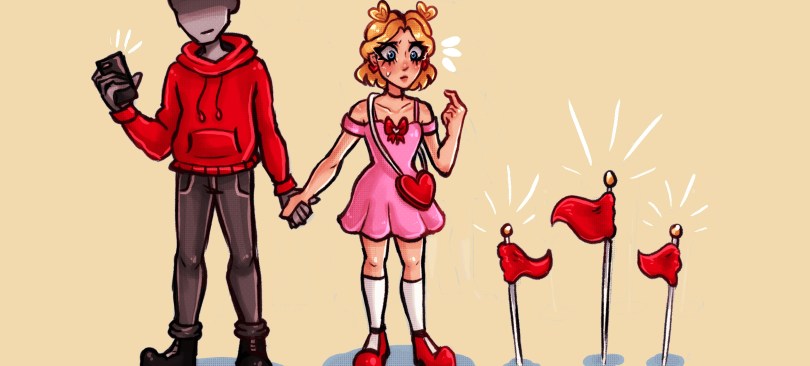
What the hell happened!!??
Sex, fantasy, consistency — and why modern dating keeps breaking women
After a long period of celibacy, I met my ex-boyfriend — let’s call him The Lion. We don’t need his real name.
The Lion, The narcissist.
In fact The grandiose narcissist.
He was very handsome, Beautiful, actually. Perfect white teeth. A full head of hair, (two hair transplants because one wasn’t enough). He was sexy, but not my usual type. I normally go for taller, lean, athletic men with no tattoos. He was huge. Six foot tall, probably six foot wide. Muscly. Strong. Dominant.
He wasn’t my type — and yet something about him completely undid me.
I found him intensely attractive, in a way I hadn’t experienced before. Maybe because he wasn’t my normal type. Who knows. But the sex between us was off the scale. Raw. Animalistic. Lust-driven. Some of the best sex I’ve ever had.
We couldn’t get enough of each other. Sexy weekends away. Him telling me how to dress. The gifts, ( And for anyone who knows me, Im not normally into this) The energy. The chemistry. The obsession.
I almost felt like his doll — something he couldn’t put down, and that, I think, is where most of the attraction came from.
And that’s all it was.
Sex.
There was no substance. No emotional safety. No real love. Just intensity masquerading as connection. My therapist later told me clearly: the “connection” existed because I had been celibate, and my body and mind craved attention.
The first three or four months felt incredible.
Then everything shifted.
The final two months were hell.
I dropped from 9st 4 to 7st 10, living in pure survival mode.
He became verbally abusive — at first subtly, then relentlessly. Comments about my body. My teeth. My weight. My scars. Criticism disguised as jokes or “help.” Tiny cuts, over and over again.
This was a man who knew my history with an eating disorder and body dysmorphia. All the “I want to know everything about you” had been a ploy — to gather ammunition.
I treated him like a king.
He treated me like something and someone he owned…
He’d say things like, “Why do you have this effect on me? I just can’t give you up.”
As if I was the problem. As if I was doing something to him.
Once, sitting in my car, he pulled me onto his lap and said,
“Kerry, you do this to me. I’m not sure I want this, but you have this way of winning me back.”
I hadn’t done anything wrong.
Then he hugged me and said,
“I’m scared I could become abusive towards you — you’re too soft and nurturing.”
Let that sink in.
I’ve been told before that I have a presence, that I make people feel seen. With him, that became a weapon. He leaned into my kindness while resenting me for it.
The worst moment came on a drug-fuelled Ibiza trip. Pink cocaine from 7am to midnight. Then the comedown.
For twelve hours — hotel, airport, plane — he broke me down.
Told me I was a bad person. Needed therapy. Needed to change my career. Needed to look different. This was Loudly, Publicly, to the point people noticed.
Every time I looked away, he physically lifted my chin and told me I wasn’t listening.
I hadn’t done a single thing wrong.
At one point a stranger followed me into an airport toilet and said,
“This is not okay. I’m worried about you, as this is dangerous’
And I still made excuses for him.
That’s how deep it was, and I knew I was hours away from the safety of my own home..
After that, he love-bombed me, Promises. Romance. Safety. Then after one trip, I fell seriously unwell, to the point I was hospitalised for 8 days — He then broke off with me saying ‘I didn’t sign up for this’ – Meaning his Girl in hospital and being super unwell, then nothing. Coldness. Disinterest. Silence.
And that’s when I finally saw it.
This was just sex.
And no sex — no matter how good — is worth fear.
He did wonders to my body sexually I thought at the time, and then I realised, No, I made that happen, I had gone so long without sex that I think anyone could of made that happen.
What he did to my head nearly destroyed me.
He tried to break me.
And I very nearly let him.
Reflection: The Narcissist
This wasn’t love. It was trauma bonding. Intensity without safety. Power without care. He fed on devotion, then punished me for giving it.
Narcissists don’t want partners — they want mirrors, supply, and control.
Lessons Learned: If You Meet a Narcissist
- Intensity is not intimacy
- Amazing sex does not cancel abuse
- If he uses your vulnerabilities against you, leave
- If your body is deteriorating, your nervous system is screaming
- Love never requires survival mode
Airport Guy: When Kindness Still Isn’t Compatibility
A few days after splitting with my Ex, I flew abroad with my little boy.
I was still fragile. Still healing. Still very much in recovery mode — physically and emotionally.
At the airport, a man stared at me so intensely it actually made me blush — and I am not easily flustered. I mean, his neck nearly broke turning to look back at me. Later, delayed on my flight, I opened a dating app.
And there he was.
We matched. Of course we did.
Airport Guy.
He was kind, sweet, down to earth, handsome — and back to my usual type: dark, tall, athletic. After everything I’d been through, he felt… safe. Gentle. Normal.
We talked for weeks. He was attentive and consistent with messaging. There was warmth there, ease, laughter. But as time went on, I realised something was missing. There was no real depth. No emotional intelligence. No stimulation that made me feel mentally alive.
Still, I agreed to a date.
And actually, we had a ball.
It was last minute, impulsive, a “fuck it” moment. The evening was easy and fun, and before it ended, we’d already agreed to a second date.
On the second date, he went all out. He booked Louie’s in Manchester and really made an effort. That night, he stayed over. We cuddled, talked, laughed, but lying there, I found myself thinking something that surprised me.
I really fancied him – but I didn’t want sex with him.
Not in that way.
There was attraction, but no pull. No hunger. No emotional spark that made me want to cross that line. And I can’t fake that, nor should I.
We ended up seeing each other six times over several weeks. I kept hoping something would ignite. I wanted it to. He was good company, however instead of things deepening, cracks started to show.
He moaned constantly about the two-hour distance.
He lacked curiosity and depth.
When life got hard, he disappeared into drug-fuelled benders.
One night, he rang me 37 times, completely off his head, telling me he’d fallen for me — but his mind was a mess, I was too far away, and I was “too good for him.”
That sentence told me everything I needed to know.
I don’t do drugs. I won’t tolerate them in a partner, especially after what I’d just survived and while he was genuinely lovely, he was also lost, unhealed, and not self-aware enough to know it — without playing the victim role.
I wasn’t the woman who could save him.
And in truth, I also wasn’t ready to progress intimacy with anyone. You can’t force a spark. It’s either there or it isn’t. And without it, nothing meaningful grows.
So I ended it.
Not because he was bad — but because nice isn’t enough.
Reflection: The “Good on Paper” Man
Airport Guy represents a difficult truth: not every connection that feels safe is right. After abuse, kindness can feel like chemistry — but they are not the same thing.
He wasn’t cruel. He wasn’t manipulative. He was simply unhealed. And unhealed people often look for partners to steady them, soothe them, or anchor them through chaos.
That isn’t partnership — it’s emotional dependency in waiting.
Lessons Learned: When the Man Is Kind but Not Ready
- Safety alone does not equal compatibility
- Attraction without depth leads nowhere
- You cannot build intimacy with someone who avoids their own pain
- Substance abuse is not a “phase” — it’s a coping mechanism
- It’s okay to walk away from someone good because you need something right
Choosing yourself doesn’t always mean leaving bad men.
Sometimes it means leaving good men who aren’t capable of meeting you where you are.
The Mistake Guy: When Your Body Knows Before You Do
Then came The Mistake.
We matched on Hinge — and as anyone who’s been on dating apps knows, even getting off them and exchanging numbers takes effort. This man had recently moved back to the UK from Dubai, Ex-soldier. Worked on high-end military contracts, Father of three.
On paper, he sounded solid.
He was intelligent, direct, keen to align. We shared beliefs around supporting the military — but beyond that, there wasn’t much emotional alignment. I felt he tried to force more alignments than there were, and I wasn’t sure if I was attracted to him, beyond recognising that he was tall, dark, and handsome.
Still, as always, he was the only person I was speaking to.
He was persistent, offered date after date and even though he lived four hours away, he kept pushing to see me.
At the time, I’d been off work and unwell so on week three of chatting, he badgered me for a date and offered to drive to my city. With hesitation — and, if I’m honest, feeling a little guilt-tripped — I agreed.
On one condition: I would drive myself.
Within minutes of me saying yes, he told me he’d booked a hotel (for himself), chosen the restaurant, and planned the evening. Later, I discovered he’d lied about part of this, but at the time, I put it down to enthusiasm.
When we met, I was late and had misunderstood the bar he’d suggested, so I went straight to the restaurant. Standing at the bar waiting, I suddenly felt someone come up behind me and pick me up and squeeze me.
Anyone who knows me knows I have strong boundaries — and I hate being picked up unexpectedly.
I froze.
I told myself to calm down. He’s just excited to see you.
At dinner, he commented that he didn’t like sitting opposite me. I replied that I was comfortable where I was. When I went to the bathroom and came back, he’d moved to my side of the booth. I felt cornered. I slid back into my seat, forcing him to stand up, and angled my body so I wasn’t fully facing him.
He put his arm around me and went in to kiss me.
I pecked him — more out of politeness and shock than desire.
I think he felt my energy change, because suddenly he pulled back and shifted tone. For the next few hours, he was a perfect gentleman. I relaxed. I enjoyed the date.
And that’s where I made the mistake.
I ignored my intuition — the tight chest, the internal warning — because nothing “bad” had happened yet, and I put it down to my own over-thinking.
What followed was something I won’t detail publicly, but it was enough to teach me a lesson I will never forget.
He is well and truly blocked and I hope our paths never cross again.
Reflection: This Is What Happens When You Override Your Gut
Nothing dramatic has to happen for something to be wrong. Women are taught to override discomfort to avoid appearing rude, dramatic, or ungrateful.
Predatory or unsafe men rely on that conditioning.
Your body recognised danger long before your mind caught up.
Lessons Learned: What Women Need to Hear About “The Mistake”
- Discomfort is information, not anxiety
- You don’t need proof to leave a situation
- Being polite has put women in danger for generations
- A man who ignores physical boundaries early will ignore bigger ones later
- If your intuition whispers, listen — if it screams, run
Ignoring your gut doesn’t make you open-minded.
It makes you vulnerable.
Mr Avoidant: The Fantasist Who Never Intended to Stay
Then there was Mr Avoidant — someone I’d known briefly before, who had actually helped and advised me after The Mistake.
At first, he seemed different.
Attentive, Caring. Emotionally available. He listened. Asked questions. Showed understanding. I told him early on that I’d sworn to celibacy — that my body needed to belong to me again.
He said he respected it.
He talked about the future, About long-term plans, About a relationship. Even about going to Auschwitz together — somewhere I’ve always wanted to go but this was from the off and straight away I recognised the feeling immediately: love bombing.
I’ve learned something important about myself — I attract fantasists. Men who talk. Men who imagine. Men who build futures with words rather than actions.
Men who want the idea of me.
One night, we kissed. Just a kiss. A cuddle. No intimacy. During that moment, he said, “You’re dangerous.” I asked what he meant. He brushed it off — but I knew exactly what he meant.
After that night, the shift was immediate.
Avoidance. Excuses. Distance. Mixed signals.
Too ill to see me with a supposed chest infection — yet somehow well enough to win a padel tournament. Constant viewing of my Instagram stories within minutes of posting. Suddenly posting stories himself, despite never doing so before.
WhatsApp messages sent — then deleted before I could read them.
It felt unhinged.
I don’t do games.
There is a short window with me. Once I feel self-protection kick in, the switch goes off — and that’s not self-sabotage. That’s self-preservation.
The following week, I went back on dating apps.
And there he was, Back on them too.
You don’t get access to me while shopping for someone else. You don’t get my emotional energy while keeping your options open.
Reflection: Fantasists Want Access, Not Responsibility
Avoidant men love connection — until it requires consistency. They crave intimacy but panic when it becomes real.
They want you close enough to soothe them, but far enough that they don’t have to commit.
Lessons Learned: How to Spot an Avoidant Early
- Words without follow-through are a red flag
- If he’s still on dating apps, you’re not chosen
- Mixed signals are the signal
- Consistency is emotional maturity
- If he disappears after intimacy (even emotional), believe the pattern
A man who wants you doesn’t confuse you.
He makes space. He makes plans. He shows up.
The Red Flags I Will Never Ignore Again
(And Neither Should You)
These aren’t dramatic.
They aren’t always obvious.
Most of them appear early — and we talk ourselves out of them.
Early Behavioural Red Flags
- Intensity too soon — fair enough if its a month in, but i’m talking week 1 week 2.
- Boundary testing on first or early dates (touching, closeness, pressure)
- Discomfort in your body that you rationalise away
- Inconsistent communication disguised as “busy” or “overwhelmed”
- Charm paired with entitlement
Emotional & Psychological Red Flags
- Making their feelings your responsibility
- Subtle criticism framed as jokes, concern, or “help”
- Playing victim while avoiding accountability
- Blaming stress, substances, or mental health for harmful behaviour
- Turning your empathy into a weapon
Consistency & Availability Red Flags
- Talking about commitment without backing it up with action
- Keeping you in conversation but vague about seeing you
- Still active on dating apps while claiming interest
- Hot–cold behaviour after intimacy (even emotional intimacy)
- Making you feel anxious instead of grounded
Lifestyle & Coping Red Flags
- Using drugs or alcohol to escape discomfort
- Chaotic lives with no evidence of self-work
- Expecting you to stabilise or rescue them
- Treating therapy, growth, or accountability as optional
The Biggest Red Flag of All
- You feel smaller, quieter, or less yourself around him
- You start editing your needs to keep the peace
- Your nervous system is on edge more than it’s at rest
Love does not feel like walking on eggshells.
Connection does not cost your health.
Desire does not require self-betrayal.
What 2025 Really Taught Me
It would be easy to frame 2025 as a year where I simply met the wrong men.
But that would let me off too lightly.
The truth is, I chose them.
Not consciously. Not maliciously. But through patterns I hadn’t fully interrupted yet.
The narcissist wanted power.
Airport Guy wanted comfort.
The Mistake wanted access.
The Avoidant wanted fantasy.
Different men — same outcome.
And while each of them was responsible for their behaviour, I have to be honest about my part in letting them close.
My Accountability
I didn’t attract these men because I’m weak.
I attracted them because I am open, emotionally literate, warm, and capable of holding space. I listen deeply. I give generously. I see people for who they could be — not just who they are in front of me.
That’s not a flaw.
But here’s where my responsibility lies:
I stayed too long in potential.
I rationalised early discomfort.
I confused intensity, kindness, or familiarity with readiness.
I allowed words to carry more weight than actions.
I also entered dating while still healing — believing I was strong enough to spot danger, without fully respecting how vulnerable that season made me.
That vulnerability didn’t make me stupid.
But it did lower my tolerance for red flags.
The Pattern I Finally Saw
Each of these men was offering something that looked like connection — but none of them were offering consistency.
And consistency is the only thing that makes love safe.
They talked.
They imagined.
They promised.
They performed.
But when it came to showing up — emotionally, practically, predictably — they disappeared, destabilised, or turned harmful.
What I learned is this:
If a man cannot meet you in reality, he will meet you in fantasy — and fantasy always collapses, its unsustainable!
We need to spot Green Flags!
The Green Flags of Real Love
(The Signs You Can Trust and Build With)
These are the behaviours and qualities that signal safety, consistency, and emotional availability. They’re not flashy or dramatic, they’re grounded in reality.
Early Behavioural Green Flags
- Respects your boundaries — physical, emotional, and temporal
- Doesn’t rush intimacy — values connection over convenience
- Takes your discomfort seriously — validates it instead of brushing it off
- Consistent communication — not overbearing, not disappearing
Emotional & Psychological Green Flags
- Owns their emotions and mistakes — doesn’t blame you for their problems
- Shows empathy without expectation — can see your perspective without needing to fix it
- Encourages your growth — celebrates your strengths and supports your goals
- Balances give-and-take — emotional labor isn’t one-sided
Consistency & Availability Green Flags
- Follows through on plans — action matches words
- Prioritizes quality time with you — without making excuses or distractions
- Shows a genuine interest in getting to know you as a person
- Keeps commitments — from simple promises to long-term discussions
Lifestyle & Coping Green Flags
- Manages stress in healthy ways — doesn’t turn to substances to escape reality
- Engages in self-work — therapy, reflection, or intentional growth
- Seeks partnership, not rescue — wants a relationship of equals, not a project
- Communicates openly — expresses needs and feelings honestly
The Biggest Green Flag of All
- You feel fully yourself — at ease, grounded, excited, and safe
- You can voice your needs without fear
- You don’t feel anxious just being near him
- You see a future and it feels like a shared love story…but you can still keep each other grounded without fear of love bombing.
Love should feel like a homecoming, not a battle.
Safety, respect, a man who is self aware and consistency are far sexier than drama, intensity, or unpredictability.
What I Want Other Women to Take From This
This isn’t about becoming colder, harder, or closed.
It’s about becoming clear.
- Attraction without safety is not chemistry — it’s your nervous system reacting
- Kindness without emotional capacity is not partnership
- Words without follow-through are not hope — they are placeholders
- If your body is in distress, your intuition already knows the truth
And most importantly:
You are not “too much” for wanting consistency.
You are not demanding for wanting clarity.
You are not difficult for expecting follow-through.
Those are the bare minimum requirements for love.
Where I Am Now
I no longer chase intensity, reassurance, or potential.
I look for:
- Actions
- Effort
- Emotional regulation
- Consistency over time
And if those things aren’t present, I don’t negotiate with myself anymore.
This isn’t bitterness.
It’s self-respect.
2025 didn’t break me.
It taught me how to stop abandoning myself.
And that lesson will change everything that comes next.
 The Girl Who