Why Studying Relationships, Love and Sex -Changed My Dating Life

Why I date different Now: Time, Boundaries and emotional capacity.

As I study to become a therapist – particularly in love, attachment, sexual development, and relationships, something unexpected has happened.

The more I understand relationships, the more intentional I’ve become about the ones I allow into my life.

That doesn’t mean I’ve lost faith in love.

It means I’ve gained clarity.

What Being a Gentleman Really Means

There’s a difference between manners and character. Small gestures matter, of course, but real emotional maturity goes deeper than surface charm. Consistency, integrity, and follow-through are what sustain connection over time.

Connection isn’t something you perform for a few weeks. It’s something you live, especially when things slow down, become familiar, or require effort.

Boundaries Are Not Barriers

People often assume that because I set boundaries clearly, I must be “hard work.”

But boundaries aren’t walls, they’re guidelines for respect.

If someone wants my mind, my connection, my body, and my energy, that should be mutual. I believe both people should earn each other, at the same pace, with the same intention.

My Love Language Is Time

One thing I’ve come to understand about myself is that my love language is time.

Not grand gestures. Not constant texting. BUT Presence.

Time is the clearest signal of intention. When someone makes time for you, they’re showing that they’re open, emotionally and practically, to building something. They’re showing availability, not just interest.

And equally important: not everyone can make time.

That doesn’t make someone wrong, unavailable, or unkind. Sometimes people are aligned with you in many ways, but they simply don’t have the capacity for a relationship, logistically, emotionally, or both. The age I’m at now, men and women are in their ‘Selfish’ phase recapturing the years as a parent or wrong relationship, so letting someone else in, doesn’t often work, until they’ve really healed. I spot it a mile off, and it makes me back off, because I will test the waters with availability, and I get a feeling very fast. However like I always say it is what it is, and one mans loss is another mans gain.. (I fucking hope so anyway)

And that has to be okay… I think?

Capacity Matters — On Both Sides

I often question whether I have the capacity for a relationship myself. Between my work, my studies, and the life I’ve built, I’ve had to ask that honestly.

This summer felt like a quiet test. What I noticed is that when someone genuinely captures my heart, I do make time. I create space. I shift priorities. There is with me a pull towards want, I may not need, but I would say ‘Like’ a relationship, and yes that key evidence is time..

That’s how I know time matters to me — because I offer it when it’s real.

What I don’t yet know is whether I’ve captured someone else’s heart in the same way. Post Covid dating, is a mile away from dating 10 years ago, and it’s literally horrific!

Intention Over Attention

I’m not interested in connection without direction.. I mean what is the point in one night stands, no thank you, I deserve better!

I don’t want endless messaging with no plan, or conversations that drift without purpose. I value intention, presence, and someone who wants to see me, and shows that through action. I value a man who is confident in dating women his own age, and not dating women 10 years younger just to find validation. Connection is so important.

There’s something deeply reassuring about someone who says, “I want to spend time with you,” and then follows through.

I’m Not a Text Pen Pal

What I have noticed lately is men wanting to access without intention.

They chat, They disappear, They return, they mirror your interests, They force connection. All desperation – not desire.

I don’t want nor need

  • A text pen pal
  • Endless FaceTimes to pass someones lonely nights
  • Swiping apps
  • Emotional ambiguity

I want leadership. I’m a traditional – Not in a submission, but in polarity. I’m not trying to be ‘one of the boys’. I’m very much in my feminine power, and I want a man who meets me in his masculine – Naturally, not performatively.

Consistency Is the Foundation

Consistency is the bare minimum. Inconsistency is just a flag for me (pink or red situation dependent) Inconsistency doesn’t make someone a bad person , it simply reveals misalignment.

I don’t need validation. I’m confident in who I am and the life I’ve created. What I look for is consistency, curiosity, and emotional availability, someone who shows up, communicates clearly, and understands that connection requires time, not just words.

My life, my look can intimidate men, but then I look at the exes I have remained friends with, and they know the real me, the soft, nurturing wife, mummy, friend. So I know those I intimidate.. aren’t right for me, I saw that this summer, he chipped away at everything he fell in love with it.. because as you will recall what was said ‘Kerry Men are 51% and women will always be 49%.

Alone Isn’t the Same as Lonely

I’m not afraid of being single. I value my independence and my peace. What I’m mindful of is choosing wisely. The fear isn’t weakness – It’s wisdom! 42 Years of Kerry wisdom perfected. My own self awareness so awake, that there is a completeness to knowing exactly what I want, but also what I deserve.

The right connection won’t require me to wonder where I stand. It will feel reciprocal, steady, and considered.

This isn’t just about me though, it’s about everyone.

Don’t settle, AIM HIGH!

No I don’t mean in the sense of constantly chasing ‘something better’ but in recognising real alignment when it happens, when it appears, and CHERISH IT!

When someone truly sees you, chooses you and shows up, that’s rare and that’s special – Hold onto that!

So Where Am I Now?

Right now, I’m here — grounded, open, and discerning.

As you mature, things change, the boat gets rocked, one day you wake up, and the boyfriend type who used to fit in with your friends and social circle, seems somewhat distant, the conforming boyfriends, seems a million miles away from where you want to be. Yes my 20’s and 30’s the looks, the social circle and friendship circles mattered, but as you mature, you start to realise, what seemed like perfect alignments, change.. and wow the last 2 years, I’ve felt the shift in me.

I believe there is someone out there who understands that time is love. Someone who has the capacity to show up, to plan, to be present and maybe not perfectly, but intentionally. Yes I closed the door on potentials very quickly, because I’m high value, and I don’t need ‘maybe’ in my life. You’re in or out.. let’s not work with blurred or grey lines.

And if that person hasn’t found me yet, that doesn’t mean they don’t exist..

It just means the story isn’t finished… and these mishaps (ahem Mistakes ssssh) that I keep having, are just part of my own journey… so I’m returning back to my morning coffee and all I can say is….

TO BE CONTINUED….
Why Modern Dating Hurts So Much: Attachment, Rejection, and Healing in Today’s Post-COVID World

Modern dating is changing us. Not just how we meet partners, but how we relate to ourselves, our self-worth, our boundaries, our hope for connection. Something in today’s dating culture is making us forget who we are, what we deserve, and how to love ourselves first.

I’ve been watching, not just in my life, but in conversations, in friends’ stories, in what feels like the general pulse of modern love, and I’ve realised there’s something dark and quiet happening inside us. There’s something about today’s post-COVID dating world that’s not just reshaping the way we date, but the way we see ourselves. and I think it’s worth calling it out and us taking time to visit this…

Today’s post-COVID dating world is fast, unpredictable, and constantly in motion. Apps give us swipe-based access to hundreds of faces we never would have met 20 years ago. On paper, it looks like endless choice. In reality, it often produces:

  • emotional burnout
  • attachment anxiety
  • confusion and insecurity
  • fear of intimacy
  • fear of rejection

We’re wired for love – but we’re living in a culture that prioritises availability over authenticity and options over depth.

We’re wired for connection – but the environment keeps pulling us away

As human beings, our biology and psychology are designed for connection, belonging, intimacy. From the moment we were born, being seen, held, accepted mattered. Security, attachment, we evolved to crave these things because they helped us survive and thrive.

But fast forward to now, apps, social media, endless options, midnight messages, “situationships,” and ghosting. On paper, we have more “freedom” and “choice” than ever. But in practice, many of us are more isolated, more anxious, more starved for real connection.

We’ve built a dating culture that normalises disposability and emotional detachment, a culture where it’s normal to treat intimacy like a transaction, and then wonder why we feel hollow.

So when someone shows even a gesture of interest, a kind smile, a compliment,  a deep chat, even just attention, our nervous system reacts like it’s light. We crave that light. We lean into that possibility of warmth the way a plant leans toward the sun. It’s instinct, it awakens us, we WANT the light!

The biology of intimacy – why “casual” doesn’t stay casual

We tell ourselves we’re fine with casual. However our biology often thinks differently. Intimacy, emotional or physical – releases chemicals: hormones like oxytocin, bound up with bonding and trust; neurotransmitters like dopamine, tied with reward, pleasure, anticipation. Touch, warmth, closeness – they make us feel safe, seen, wanted.

Human beings aren’t built for disposability. Physically, emotionally, chemically:

  • Oxytocin (bonding + connection hormone)
  • Dopamine (reward + longing chemical)
  • Vasopressin (attachment + pair-bonding hormone)

These aren’t psychological myths — they’re biology. Intimacy signals to the brain:

Once those signals hit us, we begin to tether, Not necessarily consciously, but deep in our limbic system: “This person made me feel something real.” Maybe for a night, Maybe for a conversation. But real enough.

When that tether is formed, the weight of rejection doesn’t just feel like a lost relationship – it feels like a disruption of safety, of attachment, of self-value.

That’s why sometimes, after the “casual thing,” heartbreak doesn’t feel casual at all. It feels raw, visceral, heavy, because we attached, and tried to convince ourselves “We just wanted fun”. 

Attachment styles, vulnerability and the modern dating trap

Part of the struggle lies in our variation in attachment styles. Some of us find comfort in closeness; some recoil at it; some oscillate between the two. Roughly a third to two-fifths of adults show some kind of insecure attachment style (anxious, avoidant or disorganised). Among those, some lean toward anxious attachment – craving closeness and validation, but haunted by fear of abandonment or rejection.

In a dating environment rife with uncertainty (ghosting, mixed signals, hot-and-cold behaviour, ambiguous “situationships”), anxious people get caught in a loop:

  • They seek validation: “If I can just get this person to like me – text me, stay with me – I’ll feel safe.”
  • They become available, open, emotionally generous, seeking connection.
  • But availability sometimes gets misinterpreted as access, not value.
  • They stay, hoping for stability or love; but often meet inconsistency, indifference, or rejection.
  • Their own emotional need is dismissed, ignored, or undercut – and they’re left feeling replaceable.

That leaves a deeper wound than just being single. It chips away at self-worth. It consumes us. We try to convince ourselves we have the power, but we don’t! We don’t at all, but our conscious mind will do anything to convince us, ‘We’re ok!’ 

The paradox of “availability” vs “value” in modern dating

Here’s the painful paradox I keep seeing and not only that, what I have experienced myself:

  • If a person (often a woman) is warm, available, open to love – they are ready for connection. They offer emotional honesty, clarity, possibility.
  • Yet, sometimes the people who are genuinely looking for that kind of connection don’t recognise its value. They expect something easier: fun, convenience, less emotional labour.
  • On the other hand, a person who seems harder to get – more aloof, more “mysterious,” more reserved – can sometimes be perceived as more desirable simply because there’s a sense of challenge, of scarcity, of chase.

Sociologically and psychologically, it’s a glaring mismatch between what we need (authentic connection, emotional honesty, mutual respect) and what gets rewarded (scarcity, challenge, detachment).

It’s not about “blame” – it’s about recognising that the marketplace of modern dating values the wrong things and for those who come to it with softness, vulnerability, readiness for love –  it’s often the hardest place to find what they genuinely seek.

Rejection: more than just “loss” it’s an identity fracture

When we get rejected, when someone disappears, or treats us like we were never a priority, it doesn’t just sting. It shakes something deeper. I myself have struggled over the years with this, even trying with various therapists to understand the root cause of it all, and I know the answers now, however for most of my life, I was left feeling unwanted, unloved and rejected..

  • Validation-based self-worth: If a lot of our self-esteem depends on “being wanted,” then rejection becomes proof of inadequacy, unworthiness, or invisibility.
  • Attachment rupture: Because our nervous system may have already started to bond, rejection doesn’t feel like a story that ends , it feels like a safe place collapsing, and our whole world is crumbling
  • Internalising blame: We tend to whisper (or shout) to ourselves: “I’m too much / not enough / unlovable.” And instead of seeing that the system is what’s broken, we turn the mirror on ourselves.

In today’s environment, rejection isn’t just a breakup. It’s often felt like a personal failure.

What are we really chasing and what’s missing?

Maybe what we’re seeking is not another person. Maybe we’re seeking:

  • To be seen, to feel that someone understands us beyond the surface.
  • To be valued, to believe that who we are, what we bring, matters.
  • To be safe , emotionally, physically, mentally.
  • To belong,  to connect, to share, to build.

What so many of us discover and sometimes too late, is that these things likely begin with self. If we don’t see ourselves as worthy, safe, valuable, and whole … then no external validation can truly fill that void.

And what gets missing in that chase is often self-respect, self-compassion, self-understanding.

Healing isn’t about “not wanting love” – it’s about redefining where love starts

We can’t necessarily change the system. We can’t rename apps. We can’t make society stop valuing challenge over emotional availability. But we can start changing ourselves. We can build a different inner story. One grounded not in external validation, but internal integrity.

Here’s a rough “healing script” I’m writing for myself , maybe you, or anyone reading this, might relate too:

  1. Recognise my own worth – independent of attention. I am worthy whether someone texts me or not. I am love; I don’t need someone else to confirm it.
  2. Slow down intimacy – emotional and physical. Intimacy doesn’t have to be fast. I give my body, my heart the time to read: “Is this person safe? Do I feel respected?” before I lean in. Of course as any sexual being, of course I crave intimacy, but after my celibacy journey I realised, what I have holds value to me.
  3. Cultivate inner validation, with self-care, self-love, self-respect. I get to look in the mirror and say: “You matter. You deserve respect. You don’t need to chase love – you need to walk towards it.”
  4. Seek emotional clarity – not just physical. I value people who show up with words and actions that match. I’m not afraid to ask: “What do you want? Why are you here?”!!! Don’t be afraid to as that! Sleeping with someone will not suddenly make them fall in love with you! Trust me im pretty confident in the bedroom, but it doesn’t cast them under some love spell!
  5. Set boundaries – protect my time, energy, heart. I will not compromise my self-respect just to feel desired or accepted. I will leave what feels like convenience rather than connection.
  • Find belonging in my community and self-worth in purpose. Real love, trust, and belonging may come from friendships, passions, creativity – not just romantic pursuit.
  • Hold space for growth, patience, and self-compassion. Healing takes time. I might stumble, I might be impatient. I choose to believe that I and the people who deserve me, are worth waiting for.

Conclusion: Relearning love from the inside out

This isn’t a manifesto against dating, sex, or modern love. I still believe in love. I still believe in connection. I still believe in the power of human closeness.

What we’re really fighting against,  what we need to heal from, is the dissonance between what our hearts and bodies crave, and what this fast-moving world offers.

We’re not broken for wanting love, or for wanting closeness. We’re human. We’re wired for bonding, for care, for tenderness.

But maybe the first step is to stop chasing love as a drug. Maybe the first step is to reclaim love from within, to remind ourselves that we are already whole, already worthy, already enough. To remind ourselves its all just chemical reactions… 

Maybe then, when we do open ourselves to another person, it won’t be out of desperation, longing, or validation-hunger, but out of a surplus of self-love.

Because the love we truly deserve isn’t transactional. It’s not earned by being “easy to get” or “hard to win.” It’s simply a reflection, of how much we respect ourselves, believe in ourselves, and hold ourselves worthy of loyalty, kindness, and care.

Maybe, if enough of us do that , change the way we love ourselves first,  we begin to change the way we let others love us.

What ambition really means: Purpose, Relationships and becoming a Power Couple..

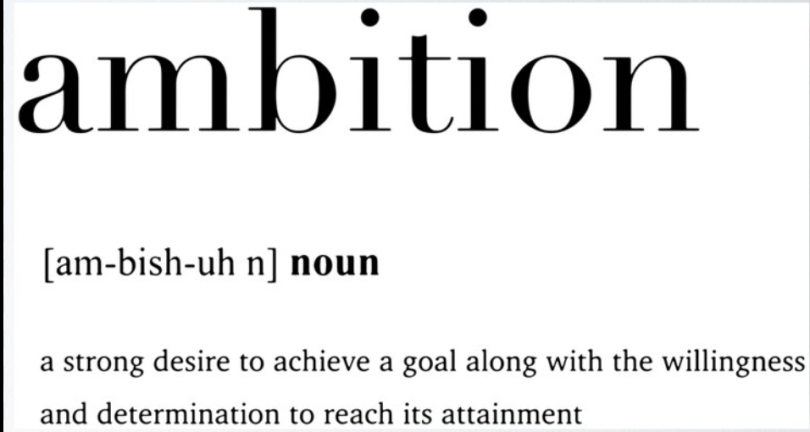
Ambition is more than chasing titles or money. It’s about growth, purpose, relationships and becoming the best version of yourself, individually and as a couple. This blog explores the psychology of ambition, why it differs for everyone, how it affects relationships, and how true ambition can build the ultimate power couple..

Ambition is often misunderstood. People assume it is about job titles, financial milestones or fame, yet the truth is far more personal. Ambition is a desire to grow, to stretch beyond who we were yesterday. For some, it burns from childhood; for others, it awakens over time through experience, opportunity or encouragement. It can feel innate or it can develop slowly, shaped by our environment and the people who influence us.

In the UK, many people value stability over striving. Research shows a nation where a large proportion are satisfied with a steady routine rather than fuelled by upward momentum, however that doesn’t make ambition rare, it simply means ambition takes different shapes. Some hearts crave peace; some crave progress; some strive for both.

Ambition is neither good nor bad on its own. It depends on what it is rooted in. When ambition grows from ego, insecurity or comparison, it becomes hollow, empty and will never lead to happiness. When it grows from purpose, meaning, kindness and a desire to contribute, it becomes powerful, it leads to freedom and peace.

What Ambition Really Means

Society often portrays ambition as a ladder to climb, a race to win or an image to uphold, however ambition can be quiet and gentle. It can be the ambition to be a loving parent, a supportive friend, a generous soul, a positive force. It can be the ambition to help others, to heal, to create, to lead with compassion. For years people have said “Kerry, I wished I had your drive and ambition” , and yes in some aspects I have succeeded, with academia, with a woman growing a business in a mans world, and my focus on self development, but my biggest ambition in life is to help others, and share wisdom and knowledge to encourage and support others.

Many people lose their grounding when ambition becomes performance. True ambition stays humble. It acknowledges gratitude for what we have while still striving for personal growth. It does not demand praise or spotlight. It simply asks: How can I become better, kinder, stronger, wiser and more impactful than I was before? I don’t say this because it resonates with me, this really is what it boils down to.

For me personally, ambition is rooted in being a good mother, a good person, a good partner and someone who lifts others. That is ambition in its purest form.

Why Some People Are Driven and Others Are Content

Not everyone feels the same pull towards growth or achievement. Some find fulfilment in routine, in stability, in a nine-to-five life where peace is the priority. Others feel restless without challenges or new goals. Personality, upbringing, environment and mindset all shape our relationship with ambition.

Those who appear unambitious may actually be deeply motivated, just in different, less outward-facing ways and there is no right or wrong, because aren’t we all just striving for happiness in the end? Those who chase achievement may be seeking meaning rather than superiority. The beauty lies in recognising that people flourish in different ways. The goal is not to judge, but to understand.

Why Ambition Can Trigger Jealousy or Misunderstanding

Ambition can make people uncomfortable. They say they want like-minded, driven people around them, yet when they encounter someone truly ambitious, admiration is often mixed with insecurity. Someone else’s growth can highlight our own fears or unfulfilled dreams. Instead of saying, “I wish I had that courage,” people sometimes say, “I don’t like what they do”, “They’re doing it wrong”, and are so quick to criticise how others push or portray theirselves.

But in reality, what they dislike is the reflection ambition holds up to them.

Learning to celebrate ambition in others , to look at someone and think, “Good for them” , is a sign of emotional maturity a sign of our own inner security. We all deserve to chase what lights us up, and to be unashamed of striving for better, however if we are quick to critique or shame others for pushing theirselves, that bitterness, is a sure sign of the un-happiness we hold inside.

Ambition in Relationships: The Foundation of a Strong Partnership

Ambition is powerful on its own, but within a relationship, it becomes transformative. The right partnership doesn’t compete with ambition – it strengthens it. An ideal couple supports each other’s drive even when their dreams differ. It is not necessary for both partners to want the same things; it is necessary that they just want each other to succeed.

Two ambitious people together can create a remarkable dynamic. They understand each other’s need for focus, passion and growth. They celebrate each other’s wins, uplift each other through challenges and inspire each other to become better. They become a team, not rivals. Something I personally revel in, as having that support drives me even more, and firing up my partner, creates something deep inside me I simply cannot explain.

My relationship this summer, started out with him loving a strong, independent successful woman, however he started to criticise my every business move, my socials, my staff choices, my working hours, and to a point, he wanted me to sell my main business and get a ‘hobby’ job, as he would support me.. WOW! No matter how successful a partner may be, I will never just take a hobby job. But deeper than this it wasn’t just about that, it was the fact, he didn’t want to push me to succeed, he wanted me to take a back seat and ‘Be a woman’ – However I can do it all! He failed to recognise.

Even when ambitions do not align, one partner chasing a creative career, the other seeking stability; one wanting expansion, the other contentment, support remains the heartbeat of a healthy relationship. A partner who says, “I may not choose your dream for myself, or the way you do it, but I support you fully,” is a partner who loves without fear or insecurity. That is partnership in its highest form.

Becoming the Ultimate Power Couple

A power couple is not defined by wealth, status or external success. A true power couple is defined by mutual respect, emotional safety, encouragement and an unshakeable belief in one another. It is two people who look at each other and think, Your dreams matter, your growth matters, your purpose matters and I am proud to stand beside you.

Becoming a power couple requires more than ambition; it requires emotional maturity. It requires celebrating each other instead of competing, communicating openly, and holding space for dreams even when they diverge. It means understanding that your partner’s journey will not always mirror your own and that their ambitions may look nothing like yours. You do not need to love their ideas; you simply need to love their passion for them. I personally don’t like putting my face to social media, and going deep into the depths of me, but to make my career go the way I need it to, I have to push that; However, would I be comfortable with a partner doing the same,…. Nope… but if that’s what they need to do, and it genuinely aligns with their business and marketing, it’s something I would need to accept.

Power couples are built when two individuals refuse to dim each other’s light. They rise together, they learn from each other. They balance each other’s strengths and weaknesses. They become a home for both ambition and vulnerability, the grow together.

When support, ambition and love intertwine, they create a bond strong enough to withstand challenges and inspiring enough to carry both people further than they could go alone.

Can Ambitious People Find Contentment?

There is a belief that ambitious people are never satisfied, forever chasing the next thing. However grounded ambition, ambition rooted in purpose and humility, does not deprive someone of peace. It simply encourages them not to settle for less than they are capable of. The most balanced ambitious people appreciate what they have while gently moving towards more meaning, more impact, more growth.

They understand that everything extra is a bonus. Not a requirement.

Ambition becomes peaceful when it is no longer tied to validation but instead tied to purpose.

So…

Ambition is not about being better than others; it is about becoming better than the person you were yesterday. It is about purpose, impact, love, humility and growth. It is about living fully and showing up for your life with intention.

In relationships, ambition becomes even more powerful. When both partners support each other wholeheartedly and treat each other’s dreams with respect, they become unstoppable. Two people driven by purpose, grounded in mutual admiration, and committed to lifting each other higher – that is a true power couple.

Ambition is not a competition, It is a journey.

The most beautiful journey is the one where you walk towards your dreams alongside someone who believes in you just as strongly as you believe in them.

If you feel ambition burning, but not sure how to dig deep and work towards achieving success, then drop me a message. Working as a transformative coach, I work with many individuals, on working towards their goal mindset, turning that glass half empty into glass half full.. and if you want to look towards releasing that ambition and leaning to support yourself or a partner more, then contact me today…