“The biggest barriers in our lives are often the ones we cannot see.”
Most of us like to believe we’re open minded.
We believe we judge people fairly. We tell ourselves we make decisions based on facts, personality and experience. We assume our opinions are our own.
But what if many of our decisions are being influenced by something we’ve never consciously questioned?
This is known as unconscious bias.
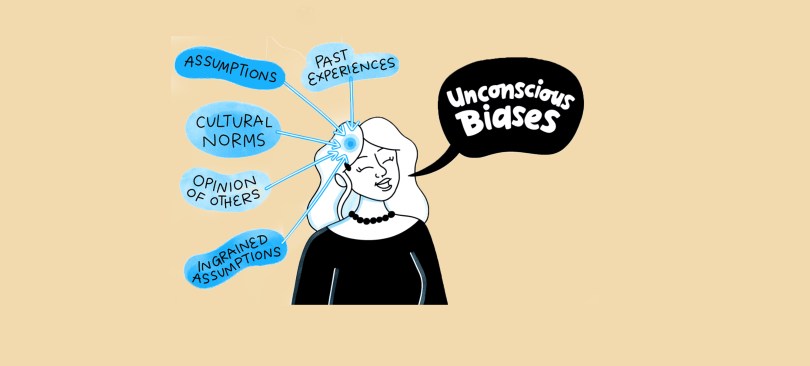
Unconscious bias refers to the automatic assumptions, beliefs and mental shortcuts our brains develop over time. These patterns are influenced by childhood experiences, family, culture, education, previous relationships, social media, television and even the conversations we overhear growing up.
They help our brains process information quickly, but they can also lead us to make unfair judgements without realising we’re doing it.
The truth is, every single one of us has unconscious biases. The difference isn’t whether we have them. It’s whether we’re willing to become aware of the,.
The Brain Likes Shortcuts
Imagine meeting someone for the first time. Within seconds you’ve already noticed their appearance, clothing, body language, accent, age and confidence. Your brain has begun creating a story before they’ve even finished introducing themselves.
Sometimes those stories are accurate, however quite often they aren’t.
The human brain is designed to look for patterns because it keeps us safe. Thousands of years ago this was useful for survival. Today, those same shortcuts can influence promotions at work, dating choices, friendships and even how we treat ourselves.
A prime example lies in meeting someone who looks like an ex partner who perhaps deceived our trust, we can meet someone with a resemblance, and before we know it, we are disregarding them without realising.
Unconscious Bias at Work
Think about a typical workplace. A manager interviews two candidates with identical qualifications. One reminds them of someone they worked well with years ago.
The other has a different communication style, dresses differently or appears quieter.
Without intending to, the manager may naturally feel more comfortable with the first candidate. Neither decision feels biased.
It simply feels like instinct.
But instinct is often influenced by previous experiences rather than objective evidence.
Unconscious bias can affect who gets hired, who receives opportunities, who gets promoted and who is viewed as having leadership potential. It can also affect how feedback is given.
Confident people may be described as natural leaders.
Quiet people may be labelled disengaged.
Someone who thinks differently may be seen as difficult rather than innovative.
This is especially important when we consider neurodiversity. Many people with ADHD, autism or dyslexia communicate differently. They may process information differently, avoid eye contact, interrupt through excitement or need additional thinking time.
These differences are not character flaws.
Yet unconscious bias can lead others to misinterpret these behaviours as lack of interest, poor attitude or incompetence. When organisations become aware of unconscious bias, they often discover hidden talent that was overlooked simply because it didn’t fit traditional expectations.
It Doesn’t Stop at the Office Door.. Look at our love lives…
The same thing happens in our love lives. How often have we dismissed someone because they weren’t physically our usual type?
How often have we assumed someone wasn’t interested because they appeared quiet?
How often have we believed confidence equals emotional maturity?
Or assumed attractive people must be happier?
Perhaps you’ve met someone who looked perfect on paper. Successful career, Great appearance, Confident, Funny,
Yet emotionally unavailable.
Meanwhile someone else may have been overlooked because they were nervous on a first date, shy in conversation or didn’t immediately create fireworks. Our unconscious bias often creates a checklist of what love should look like.
Height.
Career.
Income.
Age.
Body type.
Social status.
Confidence.
Lifestyle.
But very few of those things predict whether someone will make us feel emotionally safe, respected or loved. Sometimes we reject wonderful people because they don’t match the picture we’ve created in our minds, or we are comparing them and instantly our mind tells us ‘Unsafe’.
Sometimes we chase people who repeatedly hurt us and reject those who could love us deeply, because of their jobs weight etc etc..
The Stories We Tell Ourselves
Bias isn’t only about how we judge others. It’s also about how we judge ourselves.
Many people carry beliefs they never chose.
“I’m too old.”
“I’m too much.”
“People always leave.”
“No one finds people like me attractive.”
“I’ll never be successful.”
Those thoughts often feel like facts.
But where did they come from?
A childhood experience?
An ex partner?
A teacher?
A parent?
A single painful rejection years ago?
Our brains are incredibly good at collecting evidence to support beliefs we’ve carried for years. We rarely stop to question whether those beliefs are actually true.
Why Coaching Matters
This is one of the reasons I believe coaching can be so powerful. Coaching isn’t about giving people the answers. It’s about helping them discover the questions they’ve never thought to ask.
Why do I always choose emotionally unavailable partners?
Why do I keep avoiding opportunities at work?
Why do I assume people won’t like me?
Why do I believe I’m not good enough?
Why do I keep repeating the same patterns?
Why do I shut down when someone I’m genuinely interested in comes into my orbit?
Many of the answers lie beneath conscious awareness.
A coach helps bring those hidden patterns into the light.
Not through judgement, but through curiosity.
Together you begin noticing the automatic thoughts that influence behaviour. You explore where those thoughts originated. You test whether they’re still serving you and gradually you begin replacing automatic assumptions with conscious choices.
Looking Beyond Behaviour
One of the biggest shifts coaching creates is helping people separate behaviour from identity.
Someone interrupting you may not be rude. They may simply process conversations differently. This happens a lot with Neuro Diverse people.
Someone cancelling plans may not be rejecting you. They may genuinely be overwhelmed.
Someone who seems quiet in meetings may have brilliant ideas but need more time to think.
Equally, someone who appears incredibly confident may actually be masking insecurity.
The more curious we become, the fewer assumptions we make.
Curiosity almost always creates stronger relationships than certainty.
Flawed Thinking Isn’t Failure
One of the most common things coaching uncovers is flawed thinking. Psychologists often refer to these as cognitive distortions. These include believing we know what others are thinking.
Expecting the worst outcome.
Overgeneralising from one experience.
Seeing situations in black and white.
Filtering out positive experiences while focusing only on negatives.
These thinking patterns quietly influence both our personal and professional lives.
If one relationship ended badly, we may assume every future relationship will.
If one interview went poorly, we may decide we’re not capable.
If one manager criticised us, we may stop applying for promotions altogether.
The event ends.
The belief remains.
Coaching helps challenge those beliefs before they become permanent truths.
Awareness Changes Everything
The goal isn’t perfection. No one can completely eliminate unconscious bias.
We’re human.
Our brains will always create shortcuts.
The goal is awareness. Awareness gives us choice. Instead of immediately believing every thought, we become curious. Instead of reacting automatically, we pause. Instead of assuming we know someone’s story, we ask questions.
That pause can completely change a conversation.
It can save relationships.
It can create more inclusive workplaces.
It can open doors we never realised we’d closed.
Imagine What Could Change
Imagine interviewing someone without letting first impressions dominate your decision.
Imagine going on a date with genuine curiosity rather than comparing them with every previous partner.
Imagine recognising when your inner critic is speaking instead of accepting every thought as fact.
Imagine leading a team where different ways of thinking are valued rather than judged.
Imagine choosing people based on emotional compatibility instead of a checklist.
Imagine not judging people on. decisions they’ve made for their lives, just because they don’t match up to your values.
Those small shifts have enormous consequences.
Not only for careers and relationships, but for confidence, wellbeing and happiness.
Final Thoughts
Some of the most important conversations we’ll ever have are the ones we have with ourselves.
Every assumption deserves to be questioned.
Every belief deserves to be explored.
Every pattern deserves our curiosity.
Because when we become aware of our unconscious biases, we don’t just change the way we see other people.
We change the way we see ourselves and that may be the most powerful transformation of all.
If you’ve ever found yourself repeating the same relationship patterns, doubting your own potential or wondering why certain situations keep playing out in your life, coaching offers a space to explore those patterns without judgement. Together, we can uncover the beliefs driving your decisions, challenge thinking that no longer serves you and help you make choices that are aligned with who you are today, rather than who your past taught you to be.
Sometimes, changing your life doesn’t begin with changing your circumstances.
It begins with changing the story you’ve been unconsciously telling yourself.
 The Girl Who