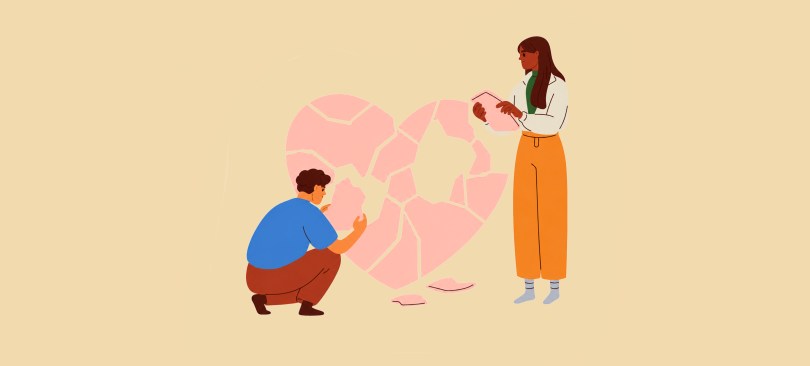
Trust Me, I Want To… So Why Can’t I?

Surviving the past is one thing. Learning to believe you’re safe enough to love again is something else entirely.

There is a question I hear more than almost any other.

“I want a relationship. I really do. So why, every time someone gets close, do I panic?”

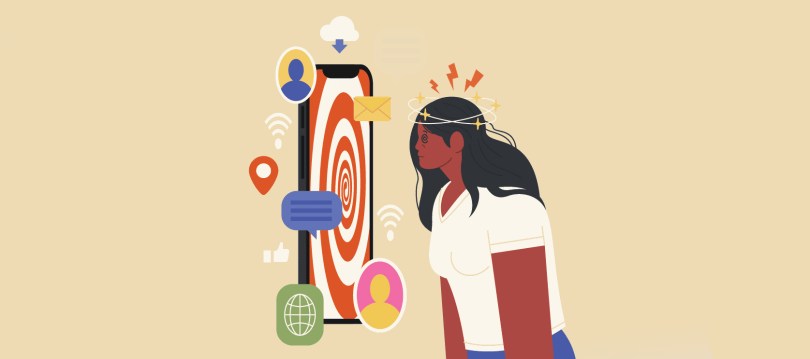
It’s one of the cruellest contradictions trauma leaves behind. Your heart wants connection, Your nervous system wants escape.

One is dreaming about Sunday mornings, shared coffees and someone who feels like home. The other is quietly checking where the exits are.

If you’ve ever found yourself pulling away from someone you genuinely liked, overthinking a text message until it became a twelve episode psychological thriller, or feeling strangely calmer with someone emotionally unavailable than with someone consistently kind, you’re not losing your mind.

You’re experiencing what happens when survival becomes stronger than intention. Trauma doesn’t just change what happened to us, it changes what we expect to happen next.

And that’s a very different thing.

For many people, trust isn’t simply about believing another person won’t cheat or lie. Trust is something much deeper. It is the feeling that if you allow someone close enough to matter, your world won’t collapse if they leave.

That changes everything.

Because suddenly relationships stop being about romance and become about survival.Trauma has a habit of turning up on first dates uninvited. It sits quietly between the bread basket and the drinks menu, whispering things like,“Don’t get too comfortable.” Or, “They’re going to leave eventually.” 

Or my personal favourite, “This is going suspiciously well…”

Dating apps certainly don’t help, I think we all know my view on those… 

Sometimes they feel less like places to find love and more like interviewing strangers for a job nobody seems qualified for.

“Tell me about yourself.”

“I enjoy travelling.”

“So does literally everyone.”

“I love dogs.”

“Congratulations. You’re human.”

We laugh because it’s true, we like the same song, and suddenly, we start fucking thinking we’ve met our soul mate. 

But underneath the humour sits something much heavier.

Many people aren’t simply trying to find a partner.They’re trying to answer a question their nervous system has been asking for years.

Am I finally safe?

The Invisible Suitcase

Imagine every relationship you’ve ever experienced has packed something into an invisible suitcase.

Parents.

Teachers.

Partners.

Friends.

Bullies.

The person who promised forever before disappearing without explanation.

The person who made you feel invisible.

The person who loved you beautifully.

The person who taught you that love came with conditions.

By the time we meet someone new, we rarely arrive carrying just ourselves.

We arrive carrying memories, expectations, beliefs and survival strategies.

Some of those are wonderful, Others are incredibly heavy.

If you’ve experienced childhood abuse, neglect, domestic abuse, coercive control, betrayal or significant emotional trauma, your suitcase may contain something else entirely.

Hypervigilance, Self doubt, People pleasing.

The belief that love has to be earned, The expectation that happiness never lasts, not because they’re true.

Because once upon a time, they kept you safe.

One of the biggest misunderstandings about trauma is that people think it’s purely about memory.

It isn’t.

As trauma psychiatrist Bessel van der Kolk explains, trauma is carried not only in our thoughts, but in our bodies. Even long after danger has passed, our nervous system may continue responding as though the threat is still present.

That’s why someone can logically know they’re safe while simultaneously feeling terrified, and consequently avoidance can happen.

Their body hasn’t received the memo.

When Your Smoke Alarm Becomes Overprotective

Imagine installing the world’s most sensitive smoke alarm.  It doesn’t just go off when there’s a fire. It screams because someone made toast or lit a candle or looked vaguely enthusiastic near the kitchen.

Ridiculous?

Perhaps.

Unless you’re a nervous system.

Trauma often creates an alarm system that becomes brilliantly efficient at spotting possible danger. The difficulty is that it becomes equally brilliant at spotting danger where there isn’t any.

A delayed text message, A slightly different tone of voice, Someone asking for space, A cancelled plan.

To another person, these are everyday experiences.

To a traumatised nervous system, they can feel like the opening scenes of abandonment. Your brain isn’t trying to ruin your relationships. It’s trying to prevent history repeating itself. That’s a very important distinction.

Trauma doesn’t mean you’re broken. It means your brain adapted to survive. Once that clicks, something extraordinary begins to happen.

Instead of asking, “What’s wrong with me?”

You begin asking,

“What happened that taught my brain this was necessary?”

That single question replaces shame with curiosity.

And curiosity is where healing begins.

Why Safety Matters More Than Trust

People often say trauma survivors have trust issues. I’d gently challenge that, because many survivors don’t actually struggle to trust. Quite often, they trust words, Potential, Hope, Promises, Future plans.

The version of someone they believe could exist if everything worked out.

Sometimes they trust far too easily.

The real difficulty isn’t trusting other people. It’s trusting themselves to leave when someone’s behaviour consistently tells them they should.

That feels very different.

Because if childhood taught you that love required endurance…

If previous relationships taught you that chaos was normal…

If your self-worth became tangled up in proving your value…

Walking away doesn’t necessarily feel empowering.. It feels terrifying.

Sometimes staying feels safer simply because it’s familiar, Not because it’s healthy. One of the saddest realities of trauma is that our definition of “normal” can become completely distorted. Healthy can feel unfamiliar.

And unfamiliar often feels unsafe.

Which brings us to one of the greatest ironies in relationships.

Healthy relationships can initially feel boring when your nervous system has been trained to expect chaos. Not because they’re lacking passion but because they’re lacking panic.

Those are two very different experiences.

Attachment: Our First Blueprint For Love

Long before we downloaded dating apps or debated whether replying after seventeen minutes looked too keen, our brains had already started forming expectations about relationships.

Psychologist John Bowlby proposed that our earliest relationships with caregivers become internal blueprints for how we understand connection.

Later, Mary Ainsworth’s research showed that children develop different attachment styles depending on how consistently safe, responsive and emotionally available their caregivers are.

This isn’t about blaming parents.

Life is rarely that simple.

Parents have histories, Stress, Mental health struggles and trauma of their own.

Most were doing the best they could with what they had. However our nervous systems don’t record intentions.

They record experiences.

If your emotional needs were generally met, your brain learned that relationships are safe places to return to.

If care was inconsistent, unpredictable or frightening, your brain learned something very different.

Love became uncertain.

Conditional.

Something that might disappear without warning.

Those lessons don’t stay in childhood. They quietly climb into adult relationships too.

When Love Feels Like An Exam You Keep Failing

People with anxious attachment are often described as “needy.”

I dislike that word.

Most aren’t asking for too much. They’re asking for reassurance because somewhere along the line reassurance became unpredictable.

If love was inconsistent growing up, uncertainty can feel unbearable.

Texts become evidence.

Silence becomes danger.

Distance becomes rejection.

Their nervous system isn’t saying,

“I need constant attention.”

It’s saying,

“Please don’t disappear.”

That’s a very human response when you’ve experienced emotional inconsistency. In todays society, people are so distracted, that sometimes they forget to deliver the basics of consistency, and this delivers as ‘Low Level’ – Deep down we’re all searching for that “Good Morning” or “Good night” message, but people become to preoccupied, and when the basics are asked of them, become overwhelmed, and presume their other half as we said ‘needy’, when deep down, equal effort, can keep both partners settled and content.

Then we have avoidant attachment.

This is perhaps one of the most misunderstood attachment styles of all. Avoidant people are often portrayed as cold or commitment phobic villains who simply don’t care.

Reality is usually much more compassionate. Many learned very early that depending on other people wasn’t safe. Maybe emotions were dismissed. Maybe vulnerability wasn’t welcomed. Maybe independence became survival.

So rather than clinging when relationships become emotionally intense, they unconsciously create distance.

Not because connection doesn’t matter, Because it matters so much that losing it feels unbearable.

Different survival strategy, Same frightened nervous system underneath.

Neither style is “better.”

Neither makes someone bad.

Both are adaptations.

Both deserve compassion.

And both can heal… but taking the time to recognise and truly see the patterns in their behaviours 

The Body Keeps The Score… Even On Date Night

One of the biggest breakthroughs in trauma research has been recognising that healing isn’t simply about changing our thoughts.

It’s also about calming our bodies.

Psychiatrist Judith Herman described recovery as moving through stages of safety, remembrance and reconnection.

Notice the order.

Safety comes first.

Not forgiveness.

Not dating.

Not positive thinking.

Safety.

Because without safety, the nervous system cannot fully relax.

This is why two people can hear exactly the same sentence.

One hears,

“Can we talk later?”

The other hears,

“They’re about to leave me.”

Same words.

Entirely different nervous system.

Our brains constantly predict what comes next based on previous experience. If previous experience included fear, criticism or abandonment, today’s relationships often become filtered through yesterday’s pain.

That doesn’t mean those fears are silly, it means they once served a purpose.

Healing isn’t about pretending those alarm bells don’t exist.

It’s about teaching the nervous system that they don’t need to ring every single time someone gets close and that takes patience.

Not perfection.

It also takes self-compassion, something many trauma survivors generously give everyone else while quietly forgetting themselves.

Perhaps that’s the first place healing really begins, Not with finding the perfect relationship but with becoming the safest relationship you’ve ever had with yourself.

One of the greatest gifts we can give ourselves is learning to pause before reacting. Not because our feelings are wrong.

But because our feelings aren’t always describing the present. Sometimes they’re describing the past.

That distinction can transform relationships.

When Every “Maybe” Feels Like “No”

If you’ve ever spent an entire evening analysing a full stop at the end of a text message, welcome to the wonderfully exhausting world of rejection sensitivity.

Someone replies a little later than usual, Your brain writes a novel. They seem quieter after work.

Your mind has already planned the break up, divided the furniture and chosen your post heartbreak playlist.

Sound familiar?

For many trauma survivors, rejection isn’t simply disappointing.

It feels dangerous.

Psychologist Gabor Maté has written extensively about how our need for attachment is one of our deepest human drives. As children, maintaining connection with our caregivers is essential for survival. If those relationships are inconsistent, frightening or emotionally unavailable, our brains learn to monitor them constantly.

That hyperawareness doesn’t magically disappear when we become adults.

It simply changes clothes.

Instead of scanning our parents’ moods, we scan our partner’s texts. Instead of wondering whether we’ll be comforted, we wonder whether they’ll reply.

The behaviour changes.

The survival strategy doesn’t.

Understanding this isn’t about excusing unhealthy behaviour.

It’s about recognising that behind many reactions is a frightened nervous system trying desperately to prevent old wounds from opening again.

Chemistry Isn’t Always Compatibility

Here’s something that often surprises people.

The strongest spark isn’t necessarily the healthiest relationship.

We’ve all heard someone say,

“I’ve never felt chemistry like this before.”

Sometimes that’s wonderful. Sometimes it’s your nervous system recognising something familiar and familiar doesn’t always mean safe.

If chaos was normal growing up, calm can initially feel unsettling.

Predictability can feel flat.

Kindness can feel suspicious.

Consistency can almost seem… boring.

Not because healthy love lacks depth.

Because your nervous system has been trained to associate emotional intensity with connection.

The butterflies might not always be butterflies.

Sometimes they’re simply adrenaline. Sometimes they’re uncertainty. Sometimes they’re your smoke alarm shouting,

“This feels familiar!”

Unfortunately, it doesn’t always specify whether familiar is healthy or harmful.

One coaching question I often encourage people to sit with is this:

Do I actually like this person, or do I simply like being chosen?

It’s an uncomfortable question.

But an important one.

Because validation can sometimes disguise itself as love.

Another worth reflecting on is:

Am I chasing love, or am I chasing rescue?

If we’re honest, many of us have spent years hoping another person would finally heal wounds that were never theirs to carry.

Love can support healing.

It cannot replace it and perhaps the hardest question of all:

Would I still choose this relationship if I wasn’t afraid of being alone?

Sit with that one.

Don’t rush it.

The answer often tells you everything you need to know.

When Anxiety Borrows Intuition’s Clothes

People often tell me,

“I knew something was wrong. I just ignored my intuition.”

Sometimes that’s true. Sometimes it isn’t.

One of the most important parts of healing is learning the difference between intuition and anxiety, because they feel remarkably similar until you know what you’re looking for.

Intuition tends to arrive quietly.

It doesn’t usually shout.

It doesn’t catastrophise.

It doesn’t demand an immediate decision.

It simply knows.

Anxiety is much louder.

It searches for evidence.

It creates endless what ifs.

It desperately wants certainty in situations where certainty simply doesn’t exist.

As I often say,

Sometimes it’s anxiety carrying a fake Louis Vuitton pretending to be intuition.

It makes me smile every time because it’s surprisingly accurate.

Anxiety can become an exceptional actor.

The challenge is learning not to hand it the lead role in every relationship.

Instead of asking, “How do I stop feeling anxious?” Try asking, “What evidence do I actually have today?”

Bring yourself back to facts, not fears, because trauma predicts.

Healing observes.

Learning To Feel Safe With Intimacy

People often assume survivors struggle because they can’t love. In reality, many struggle because their nervous system has never truly believed love is safe.

There’s a huge difference. Love requires vulnerability. Vulnerability requires safety and safety isn’t created by words.

It’s created through repeated experience.

Someone saying, “You can trust me,” means very little.

Someone consistently showing up, respecting your boundaries, repairing conflict, apologising when they’re wrong and remaining emotionally available…

That’s what teaches the nervous system something new. This is especially true when it comes to sex and intimacy. For some people, physical closeness feels natural. For others, it can activate memories they didn’t even realise their body was holding.

For some survivors of sexual abuse, the greatest challenge isn’t having sex. It’s staying emotionally present during it.

Many describe learning, often from a very young age, to mentally disconnect from what was happening as a way of surviving. Dissociation isn’t a choice. It’s an extraordinary protective response that allows the mind to distance itself from overwhelming experiences when there is no other escape.

The difficulty is that our nervous system doesn’t always recognise when the danger has passed. Years later, during consensual, loving intimacy, that same survival strategy can quietly reappear. Someone may find themselves physically present but emotionally absent, almost as though they’re watching the moment rather than truly living it. It can feel as if they slip into another version of themselves, one created to survive rather than to connect.

Ironically, the safest relationships can sometimes feel the most emotionally exposing. Not because the survivor doesn’t want intimacy, but because they do. Being fully seen by someone you genuinely care about requires a level of vulnerability that a traumatised nervous system may never have learned was safe. Remaining present, allowing yourself to be emotionally and physically connected, can take enormous courage.

This is one reason why some survivors find casual sex or sex work unexpectedly easier than deeply intimate sex. It isn’t necessarily about desire or commitment. Emotional investment changes the experience entirely. When there is little emotional attachment, the nervous system may feel less at risk. But when love enters the equation, so too can the fear of being truly vulnerable.

Many survivors also describe experiencing intimacy in two very different ways. There can be sex that feels emotionally disconnected, where the body is present but the heart and mind remains protected. Then there is deeply connected intimacy, where emotional closeness and physical closeness exist together. The contrast between those experiences can feel profound, and confusing, until we understand that both are shaped by the nervous system’s attempt to keep us safe.

There is nothing shameful about these responses. They are not signs that someone is incapable of love or healthy intimacy. They are evidence of a brain and body that adapted in remarkable ways to survive circumstances no one should ever have had to endure and, like so many survival strategies, with safety, patience and the right support, they can begin to soften.

Trauma isn’t only remembered consciously.

Sometimes the body remembers long before the mind catches up.

That can leave survivors feeling confused.

“Why did I suddenly panic?”

“Why do I freeze?”

“Why do I shut down when nothing bad is happening?”

Again, there is a reason.

Fight, Flight, Freeze, Fawn.

These aren’t personality flaws. They’re survival responses.

Fight protects through confrontation. Flight protects through escape. Freeze protects by becoming still. Fawn protects through pleasing others, often by ignoring our own needs.

Every one of these responses once served a purpose. Healing isn’t about judging them. Healing isn’t about becoming someone different.

It’s about recognising the survival strategies that no longer serve you. When we understand that, shame begins to loosen its grip.

Grieving The Future That Never Happened

One of the most painful parts of heartbreak isn’t always losing the person.

It’s losing the future you imagined with them. The Sunday mornings. The holidays. The family Christmases. The conversations that never happened. The version of life you had quietly built in your mind. Sometimes we aren’t grieving reality. We’re grieving possibility.

That’s why endings can feel so confusing.

We tell ourselves,

“I miss them.”

Sometimes what we actually miss is who we hoped they would become.

There’s a profound difference. That doesn’t make your grief any less real. If anything, it explains why it hurts so much. You’re mourning dreams as well as memories. Allow yourself to grieve both.

Just don’t confuse potential with evidence.

Hope is beautiful, but healthy relationships are built on patterns, not promises.

What Healing Actually Looks Like

Healing is often portrayed as a dramatic breakthrough.

One life changing moment, One perfect therapy session, One inspirational quote.

The truth is usually much quieter.

Healing is replying honestly instead of pretending you’re fine.

It’s recognising a red flag before explaining it away.

It’s choosing peace over unpredictability.

It’s noticing your body becoming anxious and offering yourself compassion instead of criticism.

It’s learning to apologise without believing you’re fundamentally unlovable.

It’s discovering that boundaries aren’t walls.

They’re doors with locks.

The right people knock…They don’t force their way in.

Healing is slowly teaching your nervous system that not everyone who gets close is going to hurt you. That lesson isn’t learned through thinking.

It’s learned through experience.

One safe conversation.

One respectful disagreement.

One healthy relationship.

One repaired rupture.

Over and over again.

Until your body finally believes what your mind has been trying to tell it.

Forgiveness Isn’t A Deadline

Let’s talk about forgiveness, because I think we’ve complicated it far more than necessary.

Forgiveness is deeply personal, It isn’t a competition, It isn’t proof of healing and it certainly isn’t something anybody else gets to demand from you.

Some people find freedom through forgiveness, Others find freedom through acceptance. Some never forgive at all, yet still build beautiful, peaceful lives.

All are valid.

Healing doesn’t require pretending something didn’t hurt. Nor does it require reconciling with people who continue to harm you.

Sometimes forgiveness is simply releasing the hope that the past could have been different.

Sometimes it’s choosing not to carry someone else’s behaviour into every future relationship.

And sometimes it’s quietly saying,

“What happened mattered. It changed me. But it doesn’t get to define the rest of my life.”

That, to me, is extraordinary courage.

From Surviving To Living

If you’ve recognised yourself anywhere in these words, I hope you take one thing away.

There is nothing wrong with you.

Your nervous system has spent years doing exactly what it was designed to do.

Protect you.

The difficulty is that protection and connection don’t always speak the same language.

One says,“Stay back.” The other whispers,“Come closer.”

Healing is learning to let those two parts of yourself have a conversation instead of a battle.It’s understanding that your smoke alarm doesn’t need to sound every time someone walks into the room.

It’s unpacking that invisible suitcase, one belief at a time, and asking,

“Do I still need to carry this?”

Sometimes the answer will be yes, Sometimes it will be no.

Both are okay, because healing isn’t linear.

You’ll have days where you feel calm, secure and hopeful.

You’ll have other days where an unanswered message convinces you the world is ending.

Progress isn’t never becoming triggered again.

Progress is recognising the trigger sooner, responding with greater kindness and returning to yourself more quickly.

That’s growth…Real growth.

You are not too much….You are not difficult to love.

You are not destined to repeat every painful chapter you’ve lived through.

The fact you’re reading this tells me something important…A part of you already believes life can be different.

Hold on to that part.

Feed it.

Protect it.

Because the opposite of trauma isn’t perfection.

It’s safety.

It’s connection.

It’s waking up one day and realising that love no longer feels like something you have to earn. It simply feels like somewhere you belong. Perhaps that’s what healing really is.

Not forgetting the past.

Not pretending it never happened.

But gently teaching your mind, your body and your heart that the danger has passed.

That the alarm can finally grow quieter.

That the person you’ve spent your whole life trying to become…

Was never broken in the first place.

Just brilliantly adapted.

And now, finally, free to do something far more beautiful than survive.

To Live and Love
The Context we Meet in: Why we judge women by circumstance instead of Character

There is a scene in Pretty Woman that has stayed with me for years.

Edward, played by Richard Gere, looks at Vivian and says, “I’ve never treated you like a prostitute.”

Her response is immediate.

“You just did.”

For a long time, I watched that scene and thought it was simply about a man saying the wrong thing. As I have grown older, spent more time listening to people’s stories and worked with women from all walks of life, I have come to realise that the scene is about something much bigger than a wealthy businessman falling in love with an escort. It is about judgement. It is about the labels we place on people. Most importantly, it is about how often women are judged by the circumstances in which they are found rather than the character they possess.

What strikes me most about that exchange is that Vivian never asks the obvious question. Why is she carrying the burden of judgement when Edward was equally involved? He may have been the wealthy businessman and she may have been the escort, but both of them participated in the same encounter. Without Edward, there is no transaction. Without his choices, there is no story. Yet somehow society finds it easier to judge Vivian than it does Edward. He is seen as successful. She is seen as shameful. He is allowed complexity. She is reduced to a label, she could be incredibly successful in her own right, but it’s always the man casting judgement, without the understanding.

That scene has always felt like a reflection of something much bigger that still exists today. Women continue to be judged differently for the very same situations that men willingly participate in. The details may have changed. Dating apps have replaced chance meetings in bars. Social media has transformed how people connect. Entire industries have emerged that did not exist twenty years ago. Yet the underlying double standard remains surprisingly familiar.

A woman can meet a man on Tinder, spend an evening talking, laughing and building what she believes is a genuine connection, sleep with him, and then discover she has been quietly disqualified from relationship status because she slept with him too quickly. The irony is extraordinary. He was there too. He made the same decision. He participated in exactly the same experience. Yet somehow he walks away feeling entitled to judge her for behaviour he willingly took part in himself.

What fascinates me is that many women do not think this way. They are often looking at the bigger picture. They are wondering whether there is chemistry, whether there is potential, whether this person could become a meaningful part of their life. Of course there are exceptions. Both men and women can be manipulative. Both men and women can seek validation. Both men and women can be dishonest. This is not about pretending one gender is innocent and the other is guilty. Human beings are complicated. What interests me is the imbalance in how judgement is applied. Society still seems far more comfortable attaching shame to women than it does to men.

One of the most interesting questions in modern dating is why some men automatically assume that a woman on Hinge is more suitable for a relationship than a woman they meet in a lap dancing club or who perhaps has worked as an escort. Why? What evidence do they actually have? Have they spent time understanding her values? Do they know how she treats people? Do they know whether she is loyal, emotionally available, trustworthy or kind? Usually the answer is no. What they are really judging is not the woman herself. They are judging the story attached to her, and the crazy thing is from my day to day life, I actually hear that ‘BodyCount’ can often reign higher in the women they perceive as ‘Marriage material’.

The woman on Hinge is viewed as someone searching for love. The woman in the club is viewed as someone selling fantasy. One is placed into a socially approved category. The other is placed into a socially disapproved category. Yet neither label tells us very much. The woman in the club may have stronger boundaries than anyone the man has ever met. She may have spent years single because she refuses to settle for relationships that do not meet her standards. She may be fiercely loyal once she commits to someone. She may have had fewer sexual partners than many of the women being praised as relationship material. Meanwhile, the woman on Hinge may be dating multiple people, have no interest in commitment and be seeking validation rather than connection. Or the opposite may be true. The point is that nobody knows.

Character cannot be determined by profession. It cannot be determined by appearance. It cannot be determined by where somebody happened to meet you. Yet people continue to make assumptions every single day based on these things. They judge a book by its cover and then convince themselves they know the entire story.

What I have learned over the years is that public image and private reality are often worlds apart. We live in a culture where people carefully curate how they are perceived. Dating profiles are curated. Social media accounts are curated. Influencer brands are curated. Even ordinary people curate versions of themselves for public consumption. We look at photographs, captions and carefully selected moments and convince ourselves we know somebody. The truth is that we rarely do.

There are women with enormous social media followings who are admired by millions. There are reality television personalities, influencers and public figures who have built highly successful brands around their image. Some have found ways to monetise their beauty, fame and desirability in ways previous generations could never have imagined, and behind closed doors are being sent out on secret Whatssap groups for £10k for the night. Personally, I do not see anything wrong with that. If somebody has built an audience, worked hard to create opportunities and found a way to capitalise on their success, then fair play to them. What interests me is not what they do. What interests me is how society responds to them depending on what information is publicly available.

The same man who judges a woman working openly within the adult industry may spend years admiring, following and fantasising about a public figure whose private life he knows nothing about. The difference is not necessarily morality. The difference is visibility. One woman is judged because people know. The other escapes judgement because people do not. Yet both may be making similar choices in private. This is why assumptions are so dangerous. They are built on incomplete information and presented as certainty.

Another aspect of this conversation that deserves far more compassion is the reality that some women carry experiences most people know nothing about. Some women working within parts of the adult industry have histories of childhood sexual abuse, rape, domestic violence, coercive relationships or profound emotional neglect. Of course this is not true of everyone and it would be wrong to make assumptions. Every woman’s story is different. Yet it is important to recognise that for some women, their relationship with their body, sexuality and sense of control has been shaped by experiences that occurred long before anyone met them. I work with one lady in the industry, who was date raped, and is simply too scared to date, and maybe she’s lost her way a little, but who are we to sit and judge.

What often frustrates me is how quickly people jump to judgement without any curiosity about what might have brought someone to where they are today. We see a profession and assume we understand a person. We see a choice and assume we know the story behind it. Yet human beings are rarely that simple. For some women, stepping into a space where they choose the terms, set the boundaries and decide what access people have to them can feel very different from experiences where control was taken away. What outsiders may perceive as exploitation, another person may experience as autonomy. Whether people agree with those choices or not is almost irrelevant. The point is that we cannot understand someone’s life by reducing them to a label.

Perhaps that is another reason I find judgement so problematic. It leaves no room for complexity. It leaves no room for empathy. It leaves no room for the possibility that the person standing in front of us has survived things we cannot imagine. We do not know their history. We do not know their struggles. We do not know what they have overcome to become the person they are today. Yet society is often quick to condemn women for the choices they make while showing very little interest in understanding the experiences that shaped those choices in the first place.

As the film draws to a close, something interesting happens. Edward finally understands what he could not see at the beginning. The issue was never Vivian’s profession. It was never the circumstances in which they met. It was never the label he had attached to her. The real obstacle was his inability to look beyond those things. Only when he lets go of his assumptions is he able to see the woman standing in front of him.

If we return back to the film ‘Pretty woman’ in one of the most iconic scenes in the film, Edward arrives with flowers and climbs the fire escape despite his fear of heights. He becomes the knight in shining armour Vivian once dreamed about as a little girl. Of course, we live in a different world now. Most women are not waiting to be rescued. Women build careers, raise families, buy their own flowers and save themselves every single day. The fantasy was never really about being rescued anyway. The fantasy was about being chosen. Being valued. Being seen… finally the little girl who had led such a traumatic and sad life, was seen.

Perhaps that is what so many people are searching for beneath all the noise of modern dating. Not perfection, Not status, Not somebody who ticks every box on paper. Just somebody willing to look beyond the stereotypes, beyond the assumptions and beyond the story attached to how they met.

Because love does not arrive wrapped in social approval. It does not ask whether someone was met through friends, on a dating app, in a club, at work or during the most unexpected chapter of their life. Love only asks whether two people are willing to know each other honestly.

And perhaps that is the real lesson hidden inside Pretty Woman. The greatest relationships are not built by people who meet in the perfect circumstances…. They are built by people brave enough to see beyond them….

Maybe the real question is not where are the women worth loving. Maybe the real question is where are the men willing to put down their judgement long enough to recognise them.

Because the most beautiful love stories have never been about how two people met.

They have always been about what happened when they decided to truly see one another.

2026 – The year Choosing Me: The Moment I Stopped Waiting to Be Chosen

There’s a truth I’ve had to learn the long way round:

Sometimes you have to experience the wrong people to finally understand your worth.

Not in a cliché way and not in a “everything happens for a reason” way, but in a very real, very lived way, where each connection leaves a mark, teaches you something, and slowly pulls you back to yourself.

I’ve loved different kinds of men.

Last year I met the one who felt electric at the start, passionate, intense, everything turned up to 100. The sex was something else, I mean girls, there is good and then there is WILD! Insane until it wasn’t. Until the warmth turned into walking on eggshells. The subtle put-downs. The control disguised as care. The disappearing acts followed by apologies that reset everything… until the cycle began again and I lost myself in that, not just emotionally, but physically too. So swept up in the sex, attention, gifts and love-bombing, I suddenly realised after watch him down pink cocaine for two weeks, that this was not the kind of man who should be in mine or my Childs life.

Then came along a good man, Kind-hearted, Safe, I thought. Someone I let myself open up to in a way I hadn’t in a good few years. We built something slowly, calls, messages, shared moments across distance, it felt so familiar… And then… he shut down.

No warning. No gradual fade. Just a switch.

One minute, he was planning a weekend with me, so excited I was in his country. The next, it was “this feels like pressure, I should respect my boundary, I can’t do long distance”, That kind of emotional whiplash does something to you. It doesn’t just hurt, it changes how you see people. How you trust. How you show up. I’m so glad I didn’t have sex with him, because in all honesty seeing his insecurities at play with avoidance, makes me feel there would have been disappointment. I think it felt familiar, because it threw me back into the summer of 2023, another situation, the calls, messages, consistency, deep intimacy on all levels except sex.

and somewhere underneath all of that, there’s been another truth sitting quietly in my life:

There is someone I love… who didn’t choose me, and it was after the experience with my Californian guy, I realised, it simply reminded me of that! The heartbreak of 2023, where I wasn’t chosen, but had fallen anyway..

For a long time, I told myself it was limerence, Infatuation. Something I’d grow out of, however time has a way of clarifying things, not erasing them and the truth is some feelings don’t fade just because they’re inconvenient, they simply get avoided.

But here’s what I’ve realised:

Someone not choosing you doesn’t make them “the one.” It makes them unavailable.

The Pattern I Couldn’t Ignore

There’s something else I started to notice.

Men would leave… choose someone else… build lives with other women.

Then years later, they’d come back, Telling me I was always the one, That they see me now, That they made the wrong choice. It happened last summer. I had a call, with an ex asking to meet me, I was seeing the narcissist at the time, and I declined, but he pushed and pushed, so I agreed ten mins in a public place only. I showed up, and was met with, basically I was the one perfect for them, I was the one they loved, I was the one aligned, I was so shocked, but its not the first time this has happened.

But by then, it’s too late, Because love isn’t just about recognition, It’s about timing. It’s about courage. It’s about choosing.

And I deserve to be chosen in real time, not in hindsight.

I appreciate if things don’t work out with someone else they chose, and then try and rekindle, but I will never be the other woman, whilst you keep someone there incase I say NO, and I did say NO!

The Misunderstanding of Who I Am

I think part of my story is this:

People think they know me when they first meet me, I get judged all the time. They see confidence, Strength, Independence.
They assume I’m “a lot.”, That I’ll be hard to handle. People see the Kerry now before them, not the Kerry I was for all of my life, they see the girl with the lips, the tan, the hair, taking images and posing, and they see me in a certain way, because that’s what their ind interprets.

But the truth?

In a relationship, I’m soft, I’m calm, I’m loyal, I’m simple in what I want.

A quiet life.
A genuine connection.
A partner to build with, not perform for.

And it’s only later, when they’ve already chosen someone else, that they realise actually she’s the opposite to who she comes across as, But I’m not waiting around to be understood after the fact anymore. Judgement is on them, Darlings, not me!

What I See Clearly Now

I see the half-effort.

The “let’s plan something” followed by inconsistency.
The words that don’t match actions.
The low-level energy that expects access to me.

And I’m done with it, yep over it! You will remain in the archived, because quite frankly, I cannot be arsed seeing your face!

Because here’s the truth:

There is no attraction without consistency.
There is no connection without effort.
And there is no future where I am not fully chosen.

What I Actually Want

It’s not complicated.

I want someone grounded, Calm, Emotionally available.
Someone who values routine, health, stability. Someone who has kids already, maybe similar age to my child, so we can just enjoy watching the kids grow, rather than the stress and worry of having another! I love my life now to start all over again with a new baby. Someone who wants to build a life, not escape into one.

A home.
A partnership.
A quiet, real kind of love, that will last

Not the loud, chaotic kind that burns fast and leaves damage behind.

Just… a good man…

Here’s Where Everything Changed

At some point over the last 8-9 months, something shifted in me. In that time, I dated a narcissist, was sexually assaulted by someone I went on a date with, and then I met the ultimate avoidant. This was all meant to happen, and I don’t say that to minimise it, I say it not through bitterness or coldness, but

Clarity.

I realised I’ve spent so much time pouring into other people, trying to understand them, support them, love them, hold space for them…And not enough time choosing myself. Too much time not filling up my own cup.

So now?

I’m not chasing.
I’m not convincing.
I’m not waiting to be picked.

You either show me, consistently, clearly, and show that you choose me…
or you don’t get access to me at all.
..

There is no in-between anymore my body, my mind, my heart. No, you are not welcome!

It’s taken 42 years to reach this point, and I realise, I’m worth something, and it’s a deep routed find, and wow, my eyes are open.

For Any Woman Reading This

If you’ve ever felt like the one they come back to… but never the one they choose first…

If you’ve ever been “almost” loved properly…

If you’ve ever questioned your worth because someone couldn’t meet you where you are…

This is your reminder:

You are not too much.
You are not misunderstood.
You are not “almost.”

You are just no longer available for half-hearted love, and please hold your value high, hold it for someone who offers consistency, but offers to show up to! Not just a lunchtime meet in costa! Because the coffee dates are devaluing romance!!

However the true message stands, the moment you truly choose yourself, set your boundaries and recognise your value matters, is the moment the shift will happen!

When two different people come together and learn to love one another…. ‘The Soul Mate Connection’

One of the most beautiful things about relationships is how two completely different people can come together, two individuals with their own interests, personalities, histories, and ways of seeing the world, and slowly begin to grow alongside one another.

At the beginning, you are separate worlds. Different routines, different habits, different comforts. One might love football, the other reality television. One might wake up early and love quiet mornings, while the other thrives at night. In the early stages, these differences can feel noticeable, sometimes even amusing.

But when a connection is real, something subtle and beautiful begins to happen.

Without even realising it, your worlds start to overlap.

You might find yourself sitting beside her watching ‘Love is Blind’, even though you never thought you would Or you might find yourself asking about the football score because it matters to him, and somehow that makes it matter to you too. What once felt like their interest slowly becomes something you share.

Not because you are changing who you are, but because love naturally invites you into each other’s worlds. You start to walk together on a path, a journey of alignment.

This is where the beauty of a true bond lies. Real connection doesn’t erase individuality. Instead, it gently weaves two lives together while still allowing each person to remain fully themselves.

Over time, the shift becomes deeper than shared hobbies or interests.

Their joys begin to feel like your joys.

Their worries begin to feel like your worries.

Their dreams start to intertwine with your own.

Their desires become yours, and yours become theirs. Not in a way that feels forced or sacrificial, but in a way that feels completely natural. Almost effortless.

And this is often when couples begin to say something that sounds strange to anyone outside the relationship:

“We’re basically the same person….”There are not many people who can look at the other and say this.. and that’s when you know you’ve found your person.

Of course, no two people are truly identical. You still carry your own thoughts, experiences, and individuality, however the connection becomes so deep that your emotional rhythms start to align. You begin to understand each other without needing to explain everything. Sometimes a look is enough. A silence can speak volumes.

It begins to feel like you are moving through life with someone who understands you on a level that very few people ever will.

The Feeling of a Soulmate

A true soulmate often doesn’t feel like fireworks. It feels like recognition, it feels like an intensity that overwhelms, engulfs you and blows your mind.

Like meeting someone your soul already understands.

You may notice that your values align naturally. Conversations flow effortlessly. Time together, calls together, feel peaceful rather than draining. Even when you disagree, there is still respect, still care, still a desire to understand each other rather than win.

You start to feel a quiet certainty.

Not the anxious kind of love that leaves you questioning everything, but the calm kind that settles in your chest and says: this feels right, this is my person, we’re basically the same person.

When you meet someone like this, life begins to align in unexpected ways. Your goals start to complement each other. Your emotional worlds feel compatible. You find yourselves growing together instead of pulling in opposite directions.

And that’s when many people say something that captures the depth of that connection:

“We’re the same person.”

Not because you are identical, but because your souls move in the same direction.

When everything aligns, your values, your intentions, your willingness to grow, the connection feels natural rather than forced. Being together doesn’t feel like hard work. It feels like partnership.

Like you are walking the same path…

And when you meet that person, something inside you recognises it. The noise quietens. The confusion disappears.

You simply feel… home…

When Trauma Tries to Protect Us

But there is another side to deep connection that many people don’t talk about.

Sometimes when we meet someone who truly sees us, who truly connects with us, it can feel overwhelming, to much, the boats rocking and it can cause incredible confusion and anxiety.

Not because the connection is wrong — but because it is powerful…

For many people, past experiences, heartbreak, or emotional wounds create protective patterns. We learn ways to cope with pain: shutting down, pulling away, overthinking, creating distance, or convincing ourselves that something is wrong when things actually feel right, but our physiological states tries to overwhelm us and force the pressure on ourselves, that we start to question everything..

Trauma often teaches us to protect ourselves.

But sometimes those protections can appear right when something beautiful is forming.

If someone is used to shutting down when emotions feel intense, they might withdraw from the very connection they’ve always wanted. If someone is used to expecting abandonment, they may start searching for problems that don’t actually exist.

And before they realise it, fear begins to interfere with something that could have been incredibly special.

This is why self-awareness matters so deeply in love….

When you recognise your patterns, when you understand how your past experiences might influence your reactions, you give yourself the power to respond differently.

Instead of shutting down, you pause.

Instead of running, you communicate.

Instead of assuming the worst, you choose curiosity.

Meeting someone who truly aligns with you can feel intense, scary and stir unwanted anxiety and pressures. It can stir emotions you’re not used to feeling. It can make you vulnerable in ways that feel unfamiliar.

But vulnerability is often the doorway to real connection.

Protecting Something That Matters

When you realise you have something special with someone, it’s important to nurture it.

That doesn’t mean the relationship will be perfect. Every connection will have moments of uncertainty, overwhelm, or misunderstanding. But what makes a soulmate connection so powerfu is the willingness to work through those moments together, however apprehensive and fearful you are

Instead of letting fear take control, you choose honesty.

Instead of letting overwhelm create distance, you talk about it.

Instead of pushing someone away when things feel intense, you lean into understanding what you’re feeling and why.

Real love is not just about finding the right person, it’s also about being emotionally aware enough to protect the connection once you find it.

Sometimes that means slowing down.

Sometimes it means communicating your fears.

Sometimes it means learning new ways to handle emotions you once avoided.

But when two people are willing to grow, the connection becomes stronger rather than fragile.

When You Know

When you truly meet your person, interests aside, emotions aside, even past trauma aside… something deeper connects.

Two different people.

Two different lives.

Yet somehow, everything aligns.

Your lives begin to weave together naturally. Your worlds blend. Your hearts recognise something familiar in each other.

And in those quiet moments — when you look at them and feel peace instead of doubt — you may find yourself saying something that captures it perfectly:

“We’re the same person.”

Not because you’ve lost yourselves, but because you’ve found someone whose soul walks beside yours, a heavenly feeling of your person walking alongside you, like the Universe and God have brought you both together..

And when that happens, when everything inside you says this is my person, when love feels calm rather than confusing, when being with them feels as natural as breathing…

You realise something powerful.

You’re home…

You have your person…

The Men of 2025: How my year of Dating Hell, and Hard-Learnt Lessons, can help you spot Red Flags!

What the hell happened!!??

Sex, fantasy, consistency — and why modern dating keeps breaking women

After a long period of celibacy, I met my ex-boyfriend — let’s call him The Lion. We don’t need his real name.

The Lion, The narcissist.

In fact The grandiose narcissist.

He was very handsome, Beautiful, actually. Perfect white teeth. A full head of hair, (two hair transplants because one wasn’t enough). He was sexy, but not my usual type. I normally go for taller, lean, athletic men with no tattoos. He was huge. Six foot tall, probably six foot wide. Muscly. Strong. Dominant.

He wasn’t my type — and yet something about him completely undid me.

I found him intensely attractive, in a way I hadn’t experienced before. Maybe because he wasn’t my normal type. Who knows. But the sex between us was off the scale. Raw. Animalistic. Lust-driven. Some of the best sex I’ve ever had.

We couldn’t get enough of each other. Sexy weekends away. Him telling me how to dress. The gifts, ( And for anyone who knows me, Im not normally into this) The energy. The chemistry. The obsession.

I almost felt like his doll — something he couldn’t put down, and that, I think, is where most of the attraction came from.

And that’s all it was.

Sex.

There was no substance. No emotional safety. No real love. Just intensity masquerading as connection. My therapist later told me clearly: the “connection” existed because I had been celibate, and my body and mind craved attention.

The first three or four months felt incredible.

Then everything shifted.

The final two months were hell.

I dropped from 9st 4 to 7st 10, living in pure survival mode.

He became verbally abusive — at first subtly, then relentlessly. Comments about my body. My teeth. My weight. My scars. Criticism disguised as jokes or “help.” Tiny cuts, over and over again.

This was a man who knew my history with an eating disorder and body dysmorphia. All the “I want to know everything about you” had been a ploy — to gather ammunition.

I treated him like a king.

He treated me like something and someone he owned…

He’d say things like, “Why do you have this effect on me? I just can’t give you up.”

As if I was the problem. As if I was doing something to him.

Once, sitting in my car, he pulled me onto his lap and said,

“Kerry, you do this to me. I’m not sure I want this, but you have this way of winning me back.”

I hadn’t done anything wrong.

Then he hugged me and said,

“I’m scared I could become abusive towards you — you’re too soft and nurturing.”

Let that sink in.

I’ve been told before that I have a presence, that I make people feel seen. With him, that became a weapon. He leaned into my kindness while resenting me for it.

The worst moment came on a drug-fuelled Ibiza trip. Pink cocaine from 7am to midnight. Then the comedown.

For twelve hours — hotel, airport, plane — he broke me down.

Told me I was a bad person. Needed therapy. Needed to change my career. Needed to look different. This was Loudly, Publicly, to the point people noticed.

Every time I looked away, he physically lifted my chin and told me I wasn’t listening.

I hadn’t done a single thing wrong.

At one point a stranger followed me into an airport toilet and said,

“This is not okay. I’m worried about you, as this is dangerous’

And I still made excuses for him.

That’s how deep it was, and I knew I was hours away from the safety of my own home..

After that, he love-bombed me, Promises. Romance. Safety. Then after one trip, I fell seriously unwell, to the point I was hospitalised for 8 days — He then broke off with me saying ‘I didn’t sign up for this’ – Meaning his Girl in hospital and being super unwell, then nothing. Coldness. Disinterest. Silence.

And that’s when I finally saw it.

This was just sex.

And no sex — no matter how good — is worth fear.

He did wonders to my body sexually I thought at the time, and then I realised, No, I made that happen, I had gone so long without sex that I think anyone could of made that happen.

What he did to my head nearly destroyed me.

He tried to break me.

And I very nearly let him.

Reflection: The Narcissist

This wasn’t love. It was trauma bonding. Intensity without safety. Power without care. He fed on devotion, then punished me for giving it.

Narcissists don’t want partners — they want mirrors, supply, and control.

Lessons Learned: If You Meet a Narcissist

  • Intensity is not intimacy
  • Amazing sex does not cancel abuse
  • If he uses your vulnerabilities against you, leave
  • If your body is deteriorating, your nervous system is screaming
  • Love never requires survival mode

Airport Guy: When Kindness Still Isn’t Compatibility

A few days after splitting with my Ex, I flew abroad with my little boy.

I was still fragile. Still healing. Still very much in recovery mode — physically and emotionally.

At the airport, a man stared at me so intensely it actually made me blush — and I am not easily flustered. I mean, his neck nearly broke turning to look back at me. Later, delayed on my flight, I opened a dating app.

And there he was.

We matched. Of course we did.

Airport Guy.

He was kind, sweet, down to earth, handsome — and back to my usual type: dark, tall, athletic. After everything I’d been through, he felt… safe. Gentle. Normal.

We talked for weeks. He was attentive and consistent with messaging. There was warmth there, ease, laughter. But as time went on, I realised something was missing. There was no real depth. No emotional intelligence. No stimulation that made me feel mentally alive.

Still, I agreed to a date.

And actually, we had a ball.

It was last minute, impulsive, a “fuck it” moment. The evening was easy and fun, and before it ended, we’d already agreed to a second date.

On the second date, he went all out. He booked Louie’s in Manchester and really made an effort. That night, he stayed over. We cuddled, talked, laughed, but lying there, I found myself thinking something that surprised me.

I really fancied him – but I didn’t want sex with him.

Not in that way.

There was attraction, but no pull. No hunger. No emotional spark that made me want to cross that line. And I can’t fake that, nor should I.

We ended up seeing each other six times over several weeks. I kept hoping something would ignite. I wanted it to. He was good company, however instead of things deepening, cracks started to show.

He moaned constantly about the two-hour distance.

He lacked curiosity and depth.

When life got hard, he disappeared into drug-fuelled benders.

One night, he rang me 37 times, completely off his head, telling me he’d fallen for me — but his mind was a mess, I was too far away, and I was “too good for him.”

That sentence told me everything I needed to know.

I don’t do drugs. I won’t tolerate them in a partner, especially after what I’d just survived and while he was genuinely lovely, he was also lost, unhealed, and not self-aware enough to know it — without playing the victim role.

I wasn’t the woman who could save him.

And in truth, I also wasn’t ready to progress intimacy with anyone. You can’t force a spark. It’s either there or it isn’t. And without it, nothing meaningful grows.

So I ended it.

Not because he was bad — but because nice isn’t enough.

Reflection: The “Good on Paper” Man

Airport Guy represents a difficult truth: not every connection that feels safe is right. After abuse, kindness can feel like chemistry — but they are not the same thing.

He wasn’t cruel. He wasn’t manipulative. He was simply unhealed. And unhealed people often look for partners to steady them, soothe them, or anchor them through chaos.

That isn’t partnership — it’s emotional dependency in waiting.

Lessons Learned: When the Man Is Kind but Not Ready

  • Safety alone does not equal compatibility
  • Attraction without depth leads nowhere
  • You cannot build intimacy with someone who avoids their own pain
  • Substance abuse is not a “phase” — it’s a coping mechanism
  • It’s okay to walk away from someone good because you need something right

Choosing yourself doesn’t always mean leaving bad men.

Sometimes it means leaving good men who aren’t capable of meeting you where you are.

The Mistake Guy: When Your Body Knows Before You Do

Then came The Mistake.

We matched on Hinge — and as anyone who’s been on dating apps knows, even getting off them and exchanging numbers takes effort. This man had recently moved back to the UK from Dubai, Ex-soldier. Worked on high-end military contracts, Father of three.

On paper, he sounded solid.

He was intelligent, direct, keen to align. We shared beliefs around supporting the military — but beyond that, there wasn’t much emotional alignment. I felt he tried to force more alignments than there were, and I wasn’t sure if I was attracted to him, beyond recognising that he was tall, dark, and handsome.

Still, as always, he was the only person I was speaking to.

He was persistent, offered date after date and even though he lived four hours away, he kept pushing to see me.

At the time, I’d been off work and unwell so on week three of chatting, he badgered me for a date and offered to drive to my city. With hesitation — and, if I’m honest, feeling a little guilt-tripped — I agreed.

On one condition: I would drive myself.

Within minutes of me saying yes, he told me he’d booked a hotel (for himself), chosen the restaurant, and planned the evening. Later, I discovered he’d lied about part of this, but at the time, I put it down to enthusiasm.

When we met, I was late and had misunderstood the bar he’d suggested, so I went straight to the restaurant. Standing at the bar waiting, I suddenly felt someone come up behind me and pick me up and squeeze me.

Anyone who knows me knows I have strong boundaries — and I hate being picked up unexpectedly.

I froze.

I told myself to calm down. He’s just excited to see you.

At dinner, he commented that he didn’t like sitting opposite me. I replied that I was comfortable where I was. When I went to the bathroom and came back, he’d moved to my side of the booth. I felt cornered. I slid back into my seat, forcing him to stand up, and angled my body so I wasn’t fully facing him.

He put his arm around me and went in to kiss me.

I pecked him — more out of politeness and shock than desire.

I think he felt my energy change, because suddenly he pulled back and shifted tone. For the next few hours, he was a perfect gentleman. I relaxed. I enjoyed the date.

And that’s where I made the mistake.

I ignored my intuition — the tight chest, the internal warning — because nothing “bad” had happened yet, and I put it down to my own over-thinking.

What followed was something I won’t detail publicly, but it was enough to teach me a lesson I will never forget.

He is well and truly blocked and I hope our paths never cross again.

Reflection: This Is What Happens When You Override Your Gut

Nothing dramatic has to happen for something to be wrong. Women are taught to override discomfort to avoid appearing rude, dramatic, or ungrateful.

Predatory or unsafe men rely on that conditioning.

Your body recognised danger long before your mind caught up.

Lessons Learned: What Women Need to Hear About “The Mistake”

  • Discomfort is information, not anxiety
  • You don’t need proof to leave a situation
  • Being polite has put women in danger for generations
  • A man who ignores physical boundaries early will ignore bigger ones later
  • If your intuition whispers, listen — if it screams, run

Ignoring your gut doesn’t make you open-minded.

It makes you vulnerable.

Mr Avoidant: The Fantasist Who Never Intended to Stay

Then there was Mr Avoidant — someone I’d known briefly before, who had actually helped and advised me after The Mistake.

At first, he seemed different.

Attentive, Caring. Emotionally available. He listened. Asked questions. Showed understanding. I told him early on that I’d sworn to celibacy — that my body needed to belong to me again.

He said he respected it.

He talked about the future, About long-term plans, About a relationship. Even about going to Auschwitz together — somewhere I’ve always wanted to go but this was from the off and straight away I recognised the feeling immediately: love bombing.

I’ve learned something important about myself — I attract fantasists. Men who talk. Men who imagine. Men who build futures with words rather than actions.

Men who want the idea of me.

One night, we kissed. Just a kiss. A cuddle. No intimacy. During that moment, he said, “You’re dangerous.” I asked what he meant. He brushed it off — but I knew exactly what he meant.

After that night, the shift was immediate.

Avoidance. Excuses. Distance. Mixed signals.

Too ill to see me with a supposed chest infection — yet somehow well enough to win a padel tournament. Constant viewing of my Instagram stories within minutes of posting. Suddenly posting stories himself, despite never doing so before.

WhatsApp messages sent — then deleted before I could read them.

It felt unhinged.

I don’t do games.

There is a short window with me. Once I feel self-protection kick in, the switch goes off — and that’s not self-sabotage. That’s self-preservation.

The following week, I went back on dating apps.

And there he was, Back on them too.

You don’t get access to me while shopping for someone else. You don’t get my emotional energy while keeping your options open.

Reflection: Fantasists Want Access, Not Responsibility

Avoidant men love connection — until it requires consistency. They crave intimacy but panic when it becomes real.

They want you close enough to soothe them, but far enough that they don’t have to commit.

Lessons Learned: How to Spot an Avoidant Early

  • Words without follow-through are a red flag
  • If he’s still on dating apps, you’re not chosen
  • Mixed signals are the signal
  • Consistency is emotional maturity
  • If he disappears after intimacy (even emotional), believe the pattern

A man who wants you doesn’t confuse you.

He makes space. He makes plans. He shows up.

The Red Flags I Will Never Ignore Again

(And Neither Should You)

These aren’t dramatic.

They aren’t always obvious.

Most of them appear early — and we talk ourselves out of them.

Early Behavioural Red Flags

  • Intensity too soon — fair enough if its a month in, but i’m talking week 1 week 2.
  • Boundary testing on first or early dates (touching, closeness, pressure)
  • Discomfort in your body that you rationalise away
  • Inconsistent communication disguised as “busy” or “overwhelmed”
  • Charm paired with entitlement

Emotional & Psychological Red Flags

  • Making their feelings your responsibility
  • Subtle criticism framed as jokes, concern, or “help”
  • Playing victim while avoiding accountability
  • Blaming stress, substances, or mental health for harmful behaviour
  • Turning your empathy into a weapon

Consistency & Availability Red Flags

  • Talking about commitment without backing it up with action
  • Keeping you in conversation but vague about seeing you
  • Still active on dating apps while claiming interest
  • Hot–cold behaviour after intimacy (even emotional intimacy)
  • Making you feel anxious instead of grounded

Lifestyle & Coping Red Flags

  • Using drugs or alcohol to escape discomfort
  • Chaotic lives with no evidence of self-work
  • Expecting you to stabilise or rescue them
  • Treating therapy, growth, or accountability as optional

The Biggest Red Flag of All

  • You feel smaller, quieter, or less yourself around him
  • You start editing your needs to keep the peace
  • Your nervous system is on edge more than it’s at rest

Love does not feel like walking on eggshells.

Connection does not cost your health.

Desire does not require self-betrayal.

What 2025 Really Taught Me

It would be easy to frame 2025 as a year where I simply met the wrong men.

But that would let me off too lightly.

The truth is, I chose them.

Not consciously. Not maliciously. But through patterns I hadn’t fully interrupted yet.

The narcissist wanted power.

Airport Guy wanted comfort.

The Mistake wanted access.

The Avoidant wanted fantasy.

Different men — same outcome.

And while each of them was responsible for their behaviour, I have to be honest about my part in letting them close.

My Accountability

I didn’t attract these men because I’m weak.

I attracted them because I am open, emotionally literate, warm, and capable of holding space. I listen deeply. I give generously. I see people for who they could be — not just who they are in front of me.

That’s not a flaw.

But here’s where my responsibility lies:

I stayed too long in potential.

I rationalised early discomfort.

I confused intensity, kindness, or familiarity with readiness.

I allowed words to carry more weight than actions.

I also entered dating while still healing — believing I was strong enough to spot danger, without fully respecting how vulnerable that season made me.

That vulnerability didn’t make me stupid.

But it did lower my tolerance for red flags.

The Pattern I Finally Saw

Each of these men was offering something that looked like connection — but none of them were offering consistency.

And consistency is the only thing that makes love safe.

They talked.

They imagined.

They promised.

They performed.

But when it came to showing up — emotionally, practically, predictably — they disappeared, destabilised, or turned harmful.

What I learned is this:

If a man cannot meet you in reality, he will meet you in fantasy — and fantasy always collapses, its unsustainable!

We need to spot Green Flags!

The Green Flags of Real Love

(The Signs You Can Trust and Build With)

These are the behaviours and qualities that signal safety, consistency, and emotional availability. They’re not flashy or dramatic, they’re grounded in reality.

Early Behavioural Green Flags

  • Respects your boundaries — physical, emotional, and temporal
  • Doesn’t rush intimacy — values connection over convenience
  • Takes your discomfort seriously — validates it instead of brushing it off
  • Consistent communication — not overbearing, not disappearing

Emotional & Psychological Green Flags

  • Owns their emotions and mistakes — doesn’t blame you for their problems
  • Shows empathy without expectation — can see your perspective without needing to fix it
  • Encourages your growth — celebrates your strengths and supports your goals
  • Balances give-and-take — emotional labor isn’t one-sided

Consistency & Availability Green Flags

  • Follows through on plans — action matches words
  • Prioritizes quality time with you — without making excuses or distractions
  • Shows a genuine interest in getting to know you as a person
  • Keeps commitments — from simple promises to long-term discussions

Lifestyle & Coping Green Flags

  • Manages stress in healthy ways — doesn’t turn to substances to escape reality
  • Engages in self-work — therapy, reflection, or intentional growth
  • Seeks partnership, not rescue — wants a relationship of equals, not a project
  • Communicates openly — expresses needs and feelings honestly

The Biggest Green Flag of All

  • You feel fully yourself — at ease, grounded, excited, and safe
  • You can voice your needs without fear
  • You don’t feel anxious just being near him
  • You see a future and it feels like a shared love story…but you can still keep each other grounded without fear of love bombing.

Love should feel like a homecoming, not a battle.

Safety, respect, a man who is self aware and consistency are far sexier than drama, intensity, or unpredictability.

What I Want Other Women to Take From This

This isn’t about becoming colder, harder, or closed.

It’s about becoming clear.

  • Attraction without safety is not chemistry — it’s your nervous system reacting
  • Kindness without emotional capacity is not partnership
  • Words without follow-through are not hope — they are placeholders
  • If your body is in distress, your intuition already knows the truth

And most importantly:

You are not “too much” for wanting consistency.

You are not demanding for wanting clarity.

You are not difficult for expecting follow-through.

Those are the bare minimum requirements for love.

Where I Am Now

I no longer chase intensity, reassurance, or potential.

I look for:

  • Actions
  • Effort
  • Emotional regulation
  • Consistency over time

And if those things aren’t present, I don’t negotiate with myself anymore.

This isn’t bitterness.

It’s self-respect.

2025 didn’t break me.

It taught me how to stop abandoning myself.

And that lesson will change everything that comes next.

The best sex of My Life started at 40 and Trust me so can yours to!

There’s a quiet lie we’re told as women: that sex peaks when we’re young, slim, inexperienced, and eager to please.

My reality has been the exact opposite.

Sex in my 20s was full of nerves. I was in my head. I was performing. I was worried about angles, stomach rolls, facial expressions, whether I was “too much” or “not enough.” I thought confidence meant pretending — pretending to orgasm, pretending to enjoy things, pretending I knew what I was doing.

Now, in my 40s, sex lives in my body, not my head.

And the difference is everything.

The Body Shift: Strength Changed My Sexuality

One of the biggest turning points for me wasn’t age, it was movement.

Since committing to Pilates, yoga, stretching, and strength-based movement, my relationship with my body has fundamentally changed. My body doesn’t just exist anymore, it moves with intention. I understand it. I feel it. I trust it.

Flexibility, stamina, and strength didn’t just improve my posture or how my clothes fit — they transformed how I experience sex.

I move with confidence.

I don’t fatigue the way I once did.

I feel grounded, present, and powerful.

I can stay engaged, connected, and responsive for longer.

And that stamina? It unlocked a level of sexual intensity I had never experienced before.

Honestly — extraordinary is the only word for it.

Weight Loss, Fitness, and the Confidence Loop

Let’s be honest, losing weight and becoming physically fitter did shift my confidence, however not in the way people assume. It wasn’t about being smaller. It was about being stronger, more capable, more embodied.

That physical confidence created a loop:

I felt good in my body.

So I trusted my body.

So I surrendered more during sex.

So sex became deeper, more intense.

Which made me feel even more confident.

In my 40s, when I’m into someone, I’m really into them. There’s no half-heartedness. No distraction. No performance. I show up fully, and that intensity is intoxicating, for me and for the person I’m with.

Intensity Grows With Age — If You Let It

One thing no one talks about enough is this: sexual intensity can increase as you get older.

For me, orgasms didn’t even really exist in my early 20s — I faked them, yep I did, like so many women do. At 27, I experienced my first real multiple orgasm, and since then? It’s been a steady, powerful evolution.

Now, in my 40s, my orgasms are deeper, more embodied, more consuming, and more connected to my breath and movement.

I experience different kinds of orgasms depending on the type of sex I’m having. That curiosity, that openness — is something I never allowed myself when I was younger.

This past year, despite being one of the worst years I’ve ever had for dating emotionally, I also experienced some of the best sex of my life.

Not because of luck.

Because of freedom.

Open-Mindedness Without Shame

I’m not interested in ticking boxes or sticking to scripts. I’m open-minded because I understand my body and because I want sex to evolve, not stagnate.

For me, that has meant being curious about introducing new sensations into my sex life and not being afraid to explore what heightens pleasure. That curiosity has included experimenting with things like poppers (alkyl nitrites), and honestly, the intensity they can bring to orgasm is on another level entirely, crazy you can buy these things on Amazon, for a girl that doesn’t even have caffeine in her coffee, this was quite the experience. I’ve never considered myself a drug taker and I never will be, but poppers are widely available and, when used intentionally, the heightened sensation they create during sex can feel absolutely explosive. The intensity is difficult to describe — it’s consuming, immersive, and unlike anything I had experienced before, however it only adds, to what needs to be incredible sex.

But exploration doesn’t have to mean anything extreme. Sometimes it’s the smaller ingredients that completely transform the experience. Teasing. Anticipation. Power dynamics. Touch. I know, as a woman, that I love to be teased. I love a sense of confidence and masculinity from a man. I love the energy shift when someone knows exactly what they’re doing and isn’t afraid to lean into it.

That’s the point: electrifying sex looks different for every woman.

And we’re allowed to ask ourselves what makes it electric for us.

Why limit ourselves to the same routine, the same positions, the same outcomes? Why assume sex has to look one way? Now as I have sexually matured, certain positions I just don’t enjoy anymore, mainly because I feel that break in connection, such as ‘Doggy Style’ , I mean it just feels a bit cheap, but hey reverse cowgirl, kinda still a turn on! Just exploring different types of intimacy, deeper connection through oral sex, different forms of touch, or new dynamics, can unlock entirely different kinds of pleasure and orgasmic experiences.

I don’t see exploration as reckless, I see it as intentional and embodied. When you’re grounded in yourself, you know your limits. You know your boundaries and you know what feels right for you.

Sex doesn’t have to be repetitive to be safe.

It doesn’t have to be predictable to be satisfying.

And it certainly doesn’t have to stay the same forever, you can keep a relationship for years and with the right amount of effort keep the power of sex off the scale..

Sex Stops Being About Impressing — And Starts Being About Pleasure

In my 30s, sex often felt like an audition. Trying to impress. Trying to be chosen. Trying to be desirable.

In my 40s, sex is something I do for me.

And here’s the secret no one tells you:

When you’re having sex for your pleasure, partners feel it immediately.

Confidence is contagious.

I take the lead when I want to. I give guidance without apology. I’m not afraid to say what I want, how I want it, or to invite someone to explore my body with me.

And presence? Presence is magnetic.

Fantasy, Anticipation, and the Power of Desire

Right now, I’m in a period of celibacy and yet, my desire feels more alive than ever.

I have my eye on someone and WOW the anticipation? Electric.

Fantasy has become richer with age, not desperate or rushed, but slow, intentional, delicious.

Masturbation, Self-Knowledge, and Sexual Ownership

A woman who knows how to pleasure herself is a woman who knows her body.

Masturbation isn’t something you “outgrow.” It’s something you grow into.

Self-pleasure builds confidence, awareness, and autonomy. It reminds you that your body belongs to you.

What I Know Now (That I Didn’t Then)

Confidence is sexier than perfection.

Strength and stamina matter more than youth.

Orgasms deepen when you’re embodied, not self-conscious.

Desire doesn’t disappear with age — it matures.

When you’re free in your body, your partner feels free too.

A Message to Women Reading This

If you’re in your 20s, 30s, 40s, or beyond, your most satisfying sex may still be ahead of you.

Move your body.

Get strong.

Touch yourself without shame.

Explore curiosity over performance.

Let confidence come from inside.

Sex doesn’t fade with age — it evolves.

And for me? I can honestly say:

I’ve never been more excited about sex, life and my future sex life— than I am now… and I want you to think to yourself, create your own story, create your own sexual future… enjoy every second…

‘If you want to learn how to develop your sexual being and sexual confidence, join me for confidence coaching, I will partner with you to ensure your best sex is only weeks away’ p

Email me on transformwithkerry@gmail.com or contact me http://www.transformwithkerry.co.uk

What Would Happen If We Walked Away From Dating Apps in 2026?

Dating apps promised connection. Instead, they’ve left many of us anxious, disposable, and lonelier than ever.

My mum doesn’t believe me when I tell her that the only real way people meet these days is through dating apps. She’s from a different generation, one where people met through friends, work, chance encounters, or simple introductions. You met someone, you liked them, and you tried to make it work.

Today, dating feels nothing like that… it’s even hard to imagine, life was that simple, once!!

In 2026, dating apps dominate modern romance, yet, more people than ever feel emotionally burnt out, disconnected, and deeply unsure about love. So I keep asking myself the same question:

What would actually happen if we all made a conscious decision to walk away from dating apps?

Dating Apps and the Rise of Modern Dating Anxiety

There’s no denying it, dating apps have rewired how we connect.

Psychologically, they operate on the same reward systems as gambling: dopamine hits, intermittent validation, endless novelty. You swipe, you match, you wait. You check notifications. You compare. You question your worth.

Research over the last few years has consistently linked dating apps to:

  • Increased anxiety and stress
  • Lower self-esteem
  • Addictive usage patterns
  • Emotional burnout

So much so that users have attempted to sue dating apps, claiming the platforms are deliberately designed to encourage compulsive behaviour, emotional dependence, and prolonged singlehood rather than healthy relationships.

And honestly? I believe it, I have seen it with my own eyes, and my eyes are so tired of it..

Recently, I deleted Tinder and Bumble completely, I barely used Raya and have now set it to friends only. I thought everything was gone — until I realised I still had Hinge on my work phone. I hadn’t checked it in weeks.

There were 236 notifications.

And I didn’t feel excited. I didn’t feel curious.

I felt sick.

I didn’t even want to open it. I just wanted my pictures offline. I didn’t want to exist digitally anymore. That, in itself, says everything about what dating apps do to us. As soon as I clicked onto it, to delete, the universe spoke, on a dark reminder of why I want to be offline, lay before me on my screen, It was like I was being told… yes delete, delete, delete, because bad people lurk here…

The Illusion of Endless Choice

Dating apps sell the idea that more choice equals better outcomes, however psychologically, the opposite is often true.

Too much choice leads to:

  • Paralysis
  • Dissatisfaction
  • Constant comparison
  • A belief that something “better” is always out there

We find a diamond and still keep fucking digging anyway… why???

People become disposable, A face, A profile, A moment of interest, then… replaced. Not because something is wrong — but because the swipe never ends. It’s so cruel, not just to others but to ourselves..

We’ve become fickle and the apps reward it.

The Scariest Part of Online Dating: The 3–4 Week Pattern

This is the part nobody wants to admit — because once you see it, you can’t unsee it.

You meet someone, You talk every day, The connection feels consistent, Warm and Promising.

Then you hit week three or week four.

And something changes.

Replies slow down, Effort drops, the tone shifts. Suddenly they’re busy. Work is stressful. Life is overwhelming. They’ve got so much on.

The good mornings , the good nights disappear. The curiosity fades.

And you’re left asking:

Why does it always seem to end here? Why do people stop trying at the exact same point?

Dating apps encourage people to fantasise rather than commit, its all words and no action, To chase excitement without responsibility. To invest emotionally just enough, until someone else catches their eye.

Because someone always does.

A girl drops into their DMs. A new face swipes right. And before you know it, the excuses begin:

“I didn’t get a chance to reply.”

“I’ve been exhausted.”

“I’ve just been really busy.”

It’s not that they suddenly became busy.

It’s that their attention moved elsewhere… and it hurts…

When You Have a Good Heart, This Hurts More

This pattern cuts deeper when you’re someone who leads with sincerity, when your heart is pure, and you just simply hope for a glimmer of happiness in love…

When you like someone, you focus. You don’t browse. You don’t keep your options open “just in case.” Once you’ve met someone, you don’t feel the need to even look at an app.

So when things fade — again — it makes you question everything:

Who do I get close to?

Who do I trust?

When is it safe to let my barriers down?

As a woman, I sometimes wish I could be colder, more guarded, less emotionally available. Like friends of mine who can detach easily and give nothing away, and play the complete bitch, and they get treated like absolute royalty..

But I can’t help who I am.

And that softness — in a swipe culture — feels like a liability…

The Emotional Cost of Subtle Withdrawal

What makes this even harder is how quiet the withdrawal is.

If you’re intuitive, you feel it instantly. You notice the shift before it’s acknowledged. The delayed replies. The lack of effort. The energy change.

So when it happens again, it’s not just disappointment — it’s exhaustion.

It makes you not want to date at all. Not because you don’t want love, but because you’re tired of walking the same emotional loop with different faces.

Sometimes, you wish the internet didn’t exist, because people used to learn how to love. They worked through boredom. They chose each other. They didn’t disappear when novelty wore off.

Now, instead of asking “Can I grow with this person?”

People ask “Who else is out there?”

And that question alone destroys connection.

This is why celibacy is so key, because we can give part of our souls, but at least our body can remain untouched and we can hold onto some dignity. The real sadness these days, is how a lot of women, do give their bodies up too early, too freely, and the men take take take.. so you’ve given everything and feel left with nothing, and it hits you twice as hard.

Are Dating Apps Really How Most People Meet?

Despite how dominant apps feel, the data tells a different story.

While dating app usage has skyrocketed over the last decade, most long-term relationships still don’t start online. Even now, the majority of couples meet through:

  • Friends
  • Work
  • Social circles
  • Shared interests
  • Real-world environments

Apps feel unavoidable, but they aren’t the only way. They’ve just become the loudest.

What If We Walked Away From Dating Apps in 2026?

If we collectively stepped back, even temporarily, something interesting might happen.

  • Effort would return — because access wouldn’t be endless
  • Presence would matter more than performance
  • People would have to communicate instead of disappearing
  • Traditions would slowly reinstall themselves

When temptation isn’t constantly in your pocket, you’re more likely to lean into what’s in front of you.

And maybe — just maybe — if we stepped away from apps once we met someone, we’d actually try. We’d communicate. We’d work through discomfort instead of escaping it.

Choosing Depth in a World Addicted to Dopamine

As I step into 2026, I don’t have all the answers when it comes to love. I don’t know where life will take me romantically. What I do know is that I’m no longer willing to participate in something that leaves me feeling anxious, disposable, or disconnected from myself. I have hopes, I have dreams, I have affection, right now even desire, and I know where my heart points… but still trying to remain the ever optimist, and hope somewhere in this big wide world, a good man who aligns still exists.. somewhere.. maybe an ocean away… but there will be that man in the world, who brings calm, brings smiles, and brings a genuine love…

Right now, I’m single and you know what I’m okay with that… because I know my worth and what I deserve… and what’s more so If I feel the tone change, trust me, I will switch off quicker than any guy saying ‘Sorry Ive had a busy day’ – FU and FU …

So until a man asks me to be his girlfriend, his girl, until there is clarity, intention, and consistency — I choose to remain exactly where I am. Open-hearted, hopeful, but no longer available for half-effort, fantasy, or emotional breadcrumbs, darling, you we’re great for the 3 week Disney story, now I have shit to do, but yes, I use the word hopeful… you just never know, what’s around the corner!

Sadly Dating apps have trained us to believe that being alone is something to fix quickly, rather than something to sit with consciously. They’ve taught us that love is abundant but shallow, that connection is instant but disposable, and that if something feels hard, there’s always another option waiting.

But real love has never worked like that.

Love requires patience. It requires discomfort. It requires staying, even when the novelty fades and perhaps that’s why so many people feel lost now: not because love no longer exists, but because we’ve forgotten how to nurture it.

We’re living in a time where people want the feeling of connection without the responsibility of maintaining it. Where intimacy is mistaken for attention. Where consistency feels rare, and emotional safety feels almost radical.

And yet — despite all of this — I don’t believe love is gone.

I believe it’s quieter now. Slower. Less performative. I believe it exists in real conversations, in shared experiences, in moments that aren’t filtered or curated for an audience. I believe it grows when temptation isn’t constantly whispering in your pocket, telling you someone else might be better.

Maybe walking away from dating apps isn’t about rejecting modern dating entirely. Maybe it’s about reclaiming our nervous systems. Relearning how to be present. Choosing depth over dopamine.

Because when you remove endless choice, what’s left is intention.

When you remove constant comparison, what’s left is appreciation.

And when you remove distraction, what’s left is the possibility of something real.

So perhaps the question isn’t “How do we find love in 2026?”

But rather:

“How do we protect it when it shows up?”

And maybe — just maybe — the answer starts with putting the phone down, stepping back into the world, and allowing connection to unfold the way it always did… slowly, imperfectly, and humanly. Maybe the olden day love is still out there, maybe we just need to allow our eyes to glance further than our phone screens, and maybe we should just cherish the connections we do make.. making our own Hollywood ending…

You never know, maybe love is already in your life.. and you’ll find it when the distractions cease…

Crossing Into 2026: Choosing Love Over Distraction, Depth Over Drift

There is something sacred about crossing into a new year.

It isn’t just a change of numbers, it’s a psychological threshold. A pause, A moment where we are invited to ask ourselves not what happened, but what matters now.

As we step into 2026, the question isn’t simply What do I want this year? It’s not about setting resolutions that fade out in February, its about realising just how special love is, and learning to recognise how beautiful it can me.

It’s Who do I want to be and how do I want to love?

Because a new year isn’t meant to be dreaded. It’s meant to be welcomed, with intention, courage, and hope.

A New Year Is a Reset, Not a Carryover

One of the most powerful things about a new year is that it gives us permission to put the past to bed.

The disappointments, The heartbreaks, The almosts and what-ifs.

They don’t disappear, but they no longer get to drive the car.

Psychologists often talk about the “fresh start effect”, the idea that temporal landmarks (like a new year) increase motivation for meaningful change. We are more likely to recommit to our values when we feel we are beginning again. 2026 offers that doorway.

This is the year to say:

I’m not dragging old negativity into a new season.

The Question We Avoid: Are We Actually Choosing Love?

We live in a time of endless options, but shrinking commitment.

Dating apps promise abundance, yet study after study shows that choice overload leads to dissatisfaction, not fulfillment. When we believe something better, something easier, is always one swipe away, we stop tending to what’s right in front of us.

And that’s where love quietly slips through our fingers.

What if, instead of asking “Is there someone better? Something easier?”, we asked:

  • Is there potential here?
  • Does this have legs?
  • Could this grow into something meaningful if I actually stayed present?
  • What would happen if I offered consistency to this?

Love is rarely lightning every day. More often, it’s a slow burn that deepens with care, fondness and admiration.

If You’re Looking for Love in 2026

If you are single, this year doesn’t need to be about chasing love harder, it can be about meeting it differently. Do we need to stay on the swipe conveyor belt… because just one swipe can potentially change the course and direction of our whole lives… that one swipe..

Research consistently shows that long-term relationship satisfaction is less about instant chemistry and more about shared values, emotional safety, and mutual effort.

So when you meet someone:

  • Don’t rush to judge them against a fantasy.
  • Don’t treat them as disposable, they’re a human being!!
  • Don’t assume connection must feel explosive to be real, its about alignment, shared values and making each other smile.

What if this person is also looking for love, not entertainment, not validation, not distraction—but something real?

What if this meeting is a blessing? Trying doesn’t mean settling. Trying means honoring possibility.

So many of us are lost on the love journey right now, the phrase ‘I’m not ready’, has long become get out of jail free card. People run from love, and want it, however feel love is a prison, a commitment too far.. problem is, so many people will reach middle to old age, lonely, unloved and actually with more issues than they started with…

If You Already Have Love – This Is Where the Work Begins

If you’re already in a relationship, 2026 can be revolutionary, not by adding something new, but by seeing what you already have with new eyes.

Ask yourself:

  • When was the last time I truly cherished my partner?
  • When did I last remember who they were when we first fell in love?
  • Have I been loving them—or just coexisting?

Long-term studies on marriage and partnership show that relationships don’t fail from lack of love, they fail from lack of attention, consistency and communication.

So what would it look like to start again?

  • To date your partner again.
  • To speak to them with curiosity, not assumption.
  • To remember the laughter, the tenderness, the shared dreams.

Love grows where it is noticed.

The Courage of the Next Step

A new year is also a mirror.

If you’ve been together for years, ask the honest questions:

  • Why haven’t we taken the next step?
  • What fear is holding us back?
  • Are we avoiding commitment—or avoiding growth?

Commitment doesn’t trap love—it anchors it.

Moving in together.

Getting engaged.

Building a shared future.

Making a plan.

These aren’t obligations—they’re declarations:

I choose you. Not just today, but going forward the future… my life.

Becoming Better So Love Can Become Better

Healthy love requires healthy individuals.

Multiple longitudinal studies show that personal growth, emotional regulation, and self-awareness are directly linked to relationship satisfaction. Love doesn’t ask us to be perfect—but it does ask us to be responsible.

2026 is the year to:

  • Heal what you’ve been carrying.
  • Communicate instead of withdrawing.
  • Choose kindness over defensiveness.
  • Grow not just for love—but through it.

Why This Matters More Than Ever

Swipe culture trains us to consume people instead of connect with them. The data is sobering: despite more dating access than any generation before, rates of loneliness, anxiety, and relational burnout continue to rise, especially among younger adults.

A future built on disposability leads to emptiness.

A future built on intention leads to fulfillment.

A Happy 2026 Is a Chosen One

Happiness isn’t found by accident.

Love isn’t sustained by chance.

A joyful 2026 comes from deciding:

  • To stop running.
  • To stop comparing.
  • To stop assuming something better is elsewhere.

And to start believing:

What I build with care can become extraordinary.

This year isn’t about perfection.

It’s about presence.

It’s about choosing depth over distraction.

Love over fear.

Commitment over convenience.

Let 2026 be the year we stop drifting—and start developing.

Because love, when we nurture it, doesn’t just survive.

It thrives. 💫

To the Man Turning 40: This Isn’t a Crisis — It’s a Reckoning

(A Coach/therapist’s letter to men who feel restless, disconnected, and quietly unfulfilled)

If you’re a man approaching 40, or already there climbing up the big steep hill to the next milestone, and you feel unsettled in a way you can’t quite explain — this is for you.

Not because something has gone “wrong”, but because something has finally become clear.

Most men don’t wake up at 40 and announce, “I’m having a midlife crisis.”

What actually happens is far quieter.

You start feeling bored by things that used to distract you.

You feel irritated by routines you once accepted.

You look at your relationship, your job, your social life — and can start to feel strangely disconnected from all of it.

And the most confusing part? Nothing is obviously broken….

Why This Age Hits Men So Hard – The Biological Facts!

As a coach and trainee therapist, I sit with men every week who say some version of:

“I don’t know what’s wrong. I should be happy, but I’m not.”

At 40, men reach a point where autopilot stops working.

Let’s pause and talk about something many guys never learn in school: your hormones are not static. They change over time, and that matters deeply for your energy, mood, desire, and how you experience life and relationships.

Around the age of 40, many men begin to feel changes that don’t feel random and that’s because they’re linked to very real shifts in hormone biology.

Testosterone Doesn’t Fall Off a Cliff – It Declines Gradually

Unlike what you might hear in the media, men don’t go through a sudden “male menopause” like women do. Instead, testosterone, the hormone most closely associated with male biological identity, begins to decline slowly and steadily from around your 30s onward. Research shows this decline is roughly about 1 % per year after age 30. 

To put that in perspective:

  • At 30, your testosterone is near its adult peak.
  • By 40, you’ve already experienced years of gradual decline.
  • By 50–60, the difference is more noticeable both physically and emotionally.  

This slow hormonal change is often referred to in medical literature as part of andropause or late-onset hypogonadism, though those terms can sometimes be misleading because the shift is gradual, not abrupt, and affects each man differently. 

What Testosterone Actually Does

Testosterone plays many roles in your body — far beyond libido:

  • It helps maintain muscle mass and strength.
  • It supports bone density and skeletal health.
  • It influences red blood cell production and overall energy.
  • It plays a part in mood, motivation, and emotional regulation.
  • It stimulates sexual desire and reproductive function.  

So when testosterone dips – even just a bit — it can show up in ways that feel psychological, emotional, and physical all at once.

Why You Might Not Notice at First

Because the decline is gradual, most men don’t feel a “switch flip.” Instead, you start noticing:

  • Less energy, even after decent sleep
  • Motivation that once came easily now requires effort
  • Lower drive and desire in sex and life
  • Mood shifts, more irritation, less patience
  • Reduced confidence or feeling “not quite myself”
  • Changes in body composition a bit more fat, a bit less muscle
  • A creeping sense that things aren’t as fun anymore  

These aren’t dramatic changes one day, they’re the subtle results of years of small hormonal shifts and because testosterone influences mood and motivation, these shifts can feel emotional before they feel biological.

It’s Not Just Testosterone — The Whole System Changes

The production of testosterone is governed by a feedback loop between your brain and your testes. With age, this loop becomes less efficient, meaning your body produces slightly less hormone and responds slightly differently to what it does produce. 

Plus, other hormones like growth hormone and adrenal androgens (which also affect vitality and stress response) decline over time too, so the whole hormonal landscape shifts. 

Why This Matters at 40

At 40, these hormonal shifts often intersect with life reality checks, relationship strains, career plateau, unmet goals, changing bodies, and the first real awareness of time passing.

That’s why what feels like a “crisis” often feels like:

  • low energy
  • lack of motivation
  • creeping dissatisfaction
  • longing for something more

Not because you’re weak —

but because your internal chemistry has changed, and your brain is suddenly comparing your inner experience to your outer life expectations and when your internal validation sources aren’t as strong as they once were, your brain starts searching externally, in relationships, sex, novelty, validation from others, and fantasies that feel exciting precisely because they promise a rush of feeling alive again.

Biologically, testosterone begins to fluctuate and slowly decline. This doesn’t just affect libido, it affects drive, confidence, tolerance, and motivation. What you once pushed down or ignored suddenly demands attention.

Psychologically, your brain shifts from building mode to meaning mode. You start asking:

  • Is this the life I actually chose?
  • Have I lived for myself, or for everyone else?
  • Who am I?
  • If nothing changes, is this really how I want the next 40 years to look?

This is not weakness. This is self-awareness arriving late, because no one taught you how to access it earlier.

The Life of Convenience (And Why It Feels Like a Trap)

Many men arrive at 40 realising they didn’t consciously design their life – they slid into it.

The relationship made sense.

The job was stable.

The family structure worked.

The expectations were met.

But alignment and convenience are not the same thing.

A lot of men are not unhappy because their partner is “wrong” – they’re unhappy because they were never honest about who they were or what they needed, and do start to feel everything became about convenience, and now that’s not enough..

So now you feel:

  • tied down
  • under pressure
  • emotionally muted
  • resentful without knowing why

Not because someone is controlling you, but because you’ve been people-pleasing your way through adulthood.

You learned early that being a “good man” meant not rocking the boat. Now you’re suffocating in the boat you never questioned getting into.

Validation: The Missing Piece No One Talks About

Let’s talk about validation, because this is at the core of so much male behaviour at this age. Men are rarely taught how to validate themselves.

Your worth has likely been measured by:

  • productivity
  • providing
  • being wanted
  • being chosen
  • being a team player
  • being useful
  • being successful in sports and work

By 40, many men feel invisible. At work, you’re replaceable. At home, you’re functional. In your relationship, you’re familiar.

So your nervous system starts searching for external confirmation that you still matter.

This is where validation-seeking behaviours appear.

Let’s Talk About the Relationship You’re In

If you’re around 40, there’s a good chance the relationship you’re in wasn’t chosen with full awareness, because you weren’t the man you are now when you entered it.

You might be with your first love, the person you grew up with, changed with, adapted to, without ever stopping to ask whether you still fit each other.

You might be with your second or third serious partner, a relationship formed after heartbreak, loneliness, or the fear of starting again Or you might be in a relationship that simply worked at the time, it felt safe, sensible, and stable and now feels flat, distant, or restrictive.

None of this makes you a bad man. It makes you human – and honest enough to notice change.

Why You’re Still There, Even If You’re Unhappy

Let me say this clearly, because men rarely hear it said plainly.

You’re probably not staying because you’re happy.

You’re staying because you’re afraid.

Afraid of hurting someone you care about.

Afraid of being judged.

Afraid of losing access to your children.

Afraid of starting again at 40.

Afraid that you won’t be chosen again.

But underneath all of that is a quieter fear, one most men don’t name:

The fear of being alone with yourself.

If you’ve moved from one relationship to another, or if you’ve never truly been single as an adult, the idea of being alone can feel confronting rather than freeing, and it’s not what your ‘mates’ are doing –

This relationship may be doing more than offering companionship. It may be protecting you from having to face yourself, and providing that comforting feeling of conforming.

Be Honest: Did You Choose This, or Did You Settle?

I’m not asking this to shame you.

I’m asking because clarity matters.

Settling sounds like:

  • It’s not perfect, but nothing is.
  • I should be grateful.
  • It’s easier to stay.
  • I’ve already invested so much.
  • I do love her but…
  • I often think of someone else, but I couldn’t her
  • It just works.. I guess
  • Everyone else is married off..

Choosing sounds different:

  • I can be myself here, everything aligns perfect
  • I feel emotionally and physically connected.
  • I don’t have to shrink or perform.
  • This relationship supports the man I’m becoming.

If you’re honest, you already know which one you’re doing.

Why the Thought of Being Single Feels So Heavy

Being single at 40 can feel like failure, especially in a culture that measures men by stability and continuity. However the real weight isn’t social, It’s emotional.

Being single means:

  • no distraction
  • no automatic validation
  • no role to hide behind

It forces you to ask: Who am I without this relationship?

If you’ve never learned how to self-validate, self-soothe, or sit with your own emotions, that question can feel overwhelming.

So staying feels safer than facing it.

Here’s the Truth Most Men Avoid

If you can’t imagine being single, that doesn’t mean you should stay.

It means you haven’t yet built a relationship with yourself.

Being single at 40 isn’t a failure.

For many men, it’s a developmental stage you were never encouraged to enter earlier.

It’s where you:

  • stop performing
  • rebuild self-trust
  • learn what you actually want
  • choose a partner rather than needing one

Men who never allow themselves this phase often repeat the same relationship – different person, same dynamic, because there hasn’t been growth, maybe healing, but not growth! Are you back on the couch each night? Are you secretly thinking about someone else?

Staying Isn’t Always the Noble Choice

Staying in the wrong relationship doesn’t protect anyone in the long run.

It creates:

  • quiet resentment
  • emotional withdrawal
  • sexual disconnection
  • fantasy lives outside the relationship
  • a slow erosion of self-respect

Leaving doesn’t make you selfish. Staying disconnected doesn’t make you loyal.

The real issue isn’t leaving or staying – it’s living unconsciously.

What I’d Ask You as Your Therapist

Before you ask yourself,

“Should I leave or stay?”

Ask yourself:

  • Am I here out of love, or out of fear?
  • Can I be fully honest in this relationship?
  • Do I feel more myself, or less, when I’m in it?
  • If nothing changed, could I accept this life forever?
  • Is she the one who blows my mind, and am I happy sleeping with her for the rest of my life?

You don’t need immediate answers. You do need the courage to stop avoiding the questions.

Because the most painful thing I see men do at this age

isn’t leaving a relationship – it’s staying silent and slowly disappearing inside it.

Men block away the questions, block away the doubt and try and plod on, and what the fuck for? To live a life you’ve never really wanted? To make do?? Is this all life means to you?

This is the problem – Because this is where the need for validation, can take strong hold, this is where affairs can creep in.. and suddenly your mind starts to wander..

Seeking out the answers..

Why Younger Women Suddenly start to stand out..

When a younger woman shows interest, it doesn’t just feel flattering – it feels restorative.

It says:

  • You’re still attractive.
  • You still have power.
  • You still have options.
  • You’re not past it.

This isn’t always about sex.

It’s about identity repair.

Dating apps amplify this. You lower your age. You lower the age you’re searching for. You chase the dopamine hit of being wanted rather than asking yourself what you actually want.

But here’s the part I challenge men on in coaching therapy:

If you don’t want more children, repeatedly choosing women without children, or significantly younger women, is not accidental.

It’s avoidance.

You’re outsourcing clarity to the future and hoping it won’t cost anyone.

That’s not malicious – but it is your responsibility.

You look at women, and think – “will my friends be impressed by her”, “Will she fit into my social circle”, “Will she make me feel younger” , I mean yes, yes and yes, but after the first year or two, you will realise, this isn’t enough. When your baby raising days are over, you’re sat now with a childless younger woman, and the question of “Do I really want to become a father again?” – Now do you people-please, or take the reigns and seek what you truly want.

Sex, Threesomes, and the Search for Validation

Around this age, many men suddenly start thinking about sexual exploration – threesomes, older women, young women, experimentation, novelty, fantasies they ignored earlier in life.

Let me be very clear:

This is not about being perverted, broken, or immature.

It’s about validation multiplied.

Being desired by one woman reassures you. Being desired by two feels like confirmation of masculinity, relevance, and power.

It can feel like stepping into a “boss era” — admired, wanted, envied.

But here’s the question I ask men:

“What do you think this experience would finally prove about you?”

Because sexual novelty often isn’t about pleasure – it’s about self-worth.

There is nothing wrong with curiosity. There is a risk when curiosity becomes a way to avoid looking at deeper dissatisfaction.

If your life feels flat, sex becomes the fantasy of aliveness. If your identity feels lost, desire becomes proof you still exist, so multiplying that in a ménage a trois.

Children, Regret, and the Illusion of Starting Over

Many men at 40 already have children – and for the first time in years, life is easing.

Your kids are more independent. You’re getting space back.

You can breathe.

This is why the idea of another baby creates such conflict.

A new child can symbolise youth, purpose, and renewal, that fresh feeling of a new little love in your life, but it also means losing autonomy again, and as stats prove, children 2nd time around can cause much more conflict. The woman you chose second time around, who made you feel young, alive again, suddenly becomes mum, and the circle that trapped you in the first cycle, starts all over again.

I work with men who agree to another child not because they want one, but because they don’t want to disappoint their partner or face difficult conversations – again people-pleasing!!

That isn’t selflessness.

That’s fear and fear-based choices are where resentment is born.

Men’s Mental Health at 40: What I See in the coaching Room

Men don’t usually talk about this stage — they act it out.

They:

  • withdraw emotionally
  • fantasise about escape
  • chase validation
  • avoid honesty
  • live parallel lives

Not because they’re selfish – but because no one taught them how to process change without running from it.

If you recognise yourself here, I want you to hear this:

You are not broken.

You are not failing.

You are waking up.

My Advice…

Before you change your relationship, your partner, your sex life, or your future – pause.

Ask yourself:

  • Where am I seeking validation instead of self-acceptance?
  • What have I never allowed myself to say out loud?
  • Am I avoiding discomfort, or avoiding truth?
  • If I keep living this way, who do I become?

You don’t need to implode your life.

You do need to stop abandoning yourself.

Sometimes staying and rebuilding is the bravest thing. Sometimes leaving honestly is the healthiest thing.

What matters is that you choose, consciously – instead of drifting.

What do you really want? Who do you really want? Are you happy to conform? Are you happy with you? What is missing? What brought you here…

To the Man Reading This

You’re allowed to want more than convenience.

You’re allowed to evolve.

You’re allowed to change your mind.

You’re allowed to prioritise authenticity over approval.

Turning 40 isn’t about getting your youth back.

It’s about finally becoming the man you never had space to be.

And that journey doesn’t start with validation from women, sex, or novelty — it starts with honesty.

With yourself..

(Contact me for Coaching – transformwithkerry@gmail.com)

Why Studying Relationships, Love and Sex -Changed My Dating Life

Why I date different Now: Time, Boundaries and emotional capacity.

As I study to become a therapist – particularly in love, attachment, sexual development, and relationships, something unexpected has happened.

The more I understand relationships, the more intentional I’ve become about the ones I allow into my life.

That doesn’t mean I’ve lost faith in love.

It means I’ve gained clarity.

What Being a Gentleman Really Means

There’s a difference between manners and character. Small gestures matter, of course, but real emotional maturity goes deeper than surface charm. Consistency, integrity, and follow-through are what sustain connection over time.

Connection isn’t something you perform for a few weeks. It’s something you live, especially when things slow down, become familiar, or require effort.

Boundaries Are Not Barriers

People often assume that because I set boundaries clearly, I must be “hard work.”

But boundaries aren’t walls, they’re guidelines for respect.

If someone wants my mind, my connection, my body, and my energy, that should be mutual. I believe both people should earn each other, at the same pace, with the same intention.

My Love Language Is Time

One thing I’ve come to understand about myself is that my love language is time.

Not grand gestures. Not constant texting. BUT Presence.

Time is the clearest signal of intention. When someone makes time for you, they’re showing that they’re open, emotionally and practically, to building something. They’re showing availability, not just interest.

And equally important: not everyone can make time.

That doesn’t make someone wrong, unavailable, or unkind. Sometimes people are aligned with you in many ways, but they simply don’t have the capacity for a relationship, logistically, emotionally, or both. The age I’m at now, men and women are in their ‘Selfish’ phase recapturing the years as a parent or wrong relationship, so letting someone else in, doesn’t often work, until they’ve really healed. I spot it a mile off, and it makes me back off, because I will test the waters with availability, and I get a feeling very fast. However like I always say it is what it is, and one mans loss is another mans gain.. (I fucking hope so anyway)

And that has to be okay… I think?

Capacity Matters — On Both Sides

I often question whether I have the capacity for a relationship myself. Between my work, my studies, and the life I’ve built, I’ve had to ask that honestly.

This summer felt like a quiet test. What I noticed is that when someone genuinely captures my heart, I do make time. I create space. I shift priorities. There is with me a pull towards want, I may not need, but I would say ‘Like’ a relationship, and yes that key evidence is time..

That’s how I know time matters to me — because I offer it when it’s real.

What I don’t yet know is whether I’ve captured someone else’s heart in the same way. Post Covid dating, is a mile away from dating 10 years ago, and it’s literally horrific!

Intention Over Attention

I’m not interested in connection without direction.. I mean what is the point in one night stands, no thank you, I deserve better!

I don’t want endless messaging with no plan, or conversations that drift without purpose. I value intention, presence, and someone who wants to see me, and shows that through action. I value a man who is confident in dating women his own age, and not dating women 10 years younger just to find validation. Connection is so important.

There’s something deeply reassuring about someone who says, “I want to spend time with you,” and then follows through.

I’m Not a Text Pen Pal

What I have noticed lately is men wanting to access without intention.

They chat, They disappear, They return, they mirror your interests, They force connection. All desperation – not desire.

I don’t want nor need

  • A text pen pal
  • Endless FaceTimes to pass someones lonely nights
  • Swiping apps
  • Emotional ambiguity

I want leadership. I’m a traditional – Not in a submission, but in polarity. I’m not trying to be ‘one of the boys’. I’m very much in my feminine power, and I want a man who meets me in his masculine – Naturally, not performatively.

Consistency Is the Foundation

Consistency is the bare minimum. Inconsistency is just a flag for me (pink or red situation dependent) Inconsistency doesn’t make someone a bad person , it simply reveals misalignment.

I don’t need validation. I’m confident in who I am and the life I’ve created. What I look for is consistency, curiosity, and emotional availability, someone who shows up, communicates clearly, and understands that connection requires time, not just words.

My life, my look can intimidate men, but then I look at the exes I have remained friends with, and they know the real me, the soft, nurturing wife, mummy, friend. So I know those I intimidate.. aren’t right for me, I saw that this summer, he chipped away at everything he fell in love with it.. because as you will recall what was said ‘Kerry Men are 51% and women will always be 49%.

Alone Isn’t the Same as Lonely

I’m not afraid of being single. I value my independence and my peace. What I’m mindful of is choosing wisely. The fear isn’t weakness – It’s wisdom! 42 Years of Kerry wisdom perfected. My own self awareness so awake, that there is a completeness to knowing exactly what I want, but also what I deserve.

The right connection won’t require me to wonder where I stand. It will feel reciprocal, steady, and considered.

This isn’t just about me though, it’s about everyone.

Don’t settle, AIM HIGH!

No I don’t mean in the sense of constantly chasing ‘something better’ but in recognising real alignment when it happens, when it appears, and CHERISH IT!

When someone truly sees you, chooses you and shows up, that’s rare and that’s special – Hold onto that!

So Where Am I Now?

Right now, I’m here — grounded, open, and discerning.

As you mature, things change, the boat gets rocked, one day you wake up, and the boyfriend type who used to fit in with your friends and social circle, seems somewhat distant, the conforming boyfriends, seems a million miles away from where you want to be. Yes my 20’s and 30’s the looks, the social circle and friendship circles mattered, but as you mature, you start to realise, what seemed like perfect alignments, change.. and wow the last 2 years, I’ve felt the shift in me.

I believe there is someone out there who understands that time is love. Someone who has the capacity to show up, to plan, to be present and maybe not perfectly, but intentionally. Yes I closed the door on potentials very quickly, because I’m high value, and I don’t need ‘maybe’ in my life. You’re in or out.. let’s not work with blurred or grey lines.

And if that person hasn’t found me yet, that doesn’t mean they don’t exist..

It just means the story isn’t finished… and these mishaps (ahem Mistakes ssssh) that I keep having, are just part of my own journey… so I’m returning back to my morning coffee and all I can say is….

TO BE CONTINUED….