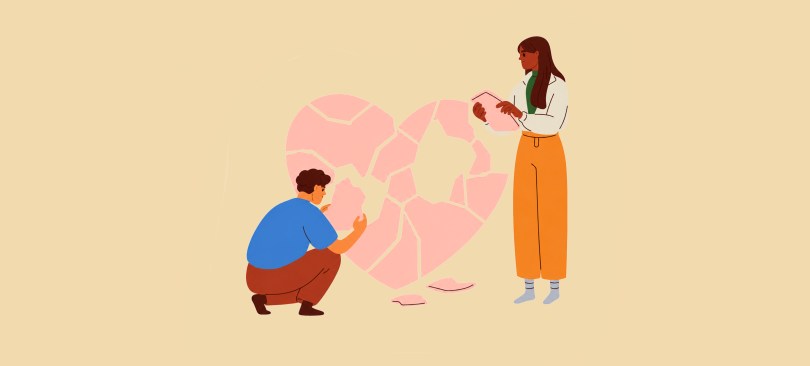
Trust Me, I Want To… So Why Can’t I?

Surviving the past is one thing. Learning to believe you’re safe enough to love again is something else entirely.

There is a question I hear more than almost any other.

“I want a relationship. I really do. So why, every time someone gets close, do I panic?”

It’s one of the cruellest contradictions trauma leaves behind. Your heart wants connection, Your nervous system wants escape.

One is dreaming about Sunday mornings, shared coffees and someone who feels like home. The other is quietly checking where the exits are.

If you’ve ever found yourself pulling away from someone you genuinely liked, overthinking a text message until it became a twelve episode psychological thriller, or feeling strangely calmer with someone emotionally unavailable than with someone consistently kind, you’re not losing your mind.

You’re experiencing what happens when survival becomes stronger than intention. Trauma doesn’t just change what happened to us, it changes what we expect to happen next.

And that’s a very different thing.

For many people, trust isn’t simply about believing another person won’t cheat or lie. Trust is something much deeper. It is the feeling that if you allow someone close enough to matter, your world won’t collapse if they leave.

That changes everything.

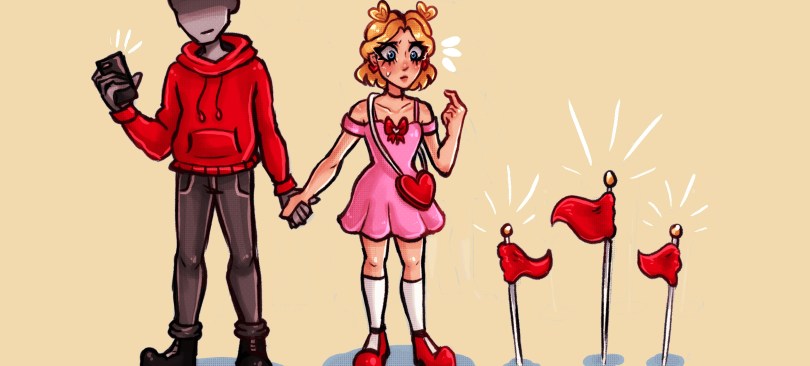
Because suddenly relationships stop being about romance and become about survival.Trauma has a habit of turning up on first dates uninvited. It sits quietly between the bread basket and the drinks menu, whispering things like,“Don’t get too comfortable.” Or, “They’re going to leave eventually.” 

Or my personal favourite, “This is going suspiciously well…”

Dating apps certainly don’t help, I think we all know my view on those… 

Sometimes they feel less like places to find love and more like interviewing strangers for a job nobody seems qualified for.

“Tell me about yourself.”

“I enjoy travelling.”

“So does literally everyone.”

“I love dogs.”

“Congratulations. You’re human.”

We laugh because it’s true, we like the same song, and suddenly, we start fucking thinking we’ve met our soul mate. 

But underneath the humour sits something much heavier.

Many people aren’t simply trying to find a partner.They’re trying to answer a question their nervous system has been asking for years.

Am I finally safe?

The Invisible Suitcase

Imagine every relationship you’ve ever experienced has packed something into an invisible suitcase.

Parents.

Teachers.

Partners.

Friends.

Bullies.

The person who promised forever before disappearing without explanation.

The person who made you feel invisible.

The person who loved you beautifully.

The person who taught you that love came with conditions.

By the time we meet someone new, we rarely arrive carrying just ourselves.

We arrive carrying memories, expectations, beliefs and survival strategies.

Some of those are wonderful, Others are incredibly heavy.

If you’ve experienced childhood abuse, neglect, domestic abuse, coercive control, betrayal or significant emotional trauma, your suitcase may contain something else entirely.

Hypervigilance, Self doubt, People pleasing.

The belief that love has to be earned, The expectation that happiness never lasts, not because they’re true.

Because once upon a time, they kept you safe.

One of the biggest misunderstandings about trauma is that people think it’s purely about memory.

It isn’t.

As trauma psychiatrist Bessel van der Kolk explains, trauma is carried not only in our thoughts, but in our bodies. Even long after danger has passed, our nervous system may continue responding as though the threat is still present.

That’s why someone can logically know they’re safe while simultaneously feeling terrified, and consequently avoidance can happen.

Their body hasn’t received the memo.

When Your Smoke Alarm Becomes Overprotective

Imagine installing the world’s most sensitive smoke alarm.  It doesn’t just go off when there’s a fire. It screams because someone made toast or lit a candle or looked vaguely enthusiastic near the kitchen.

Ridiculous?

Perhaps.

Unless you’re a nervous system.

Trauma often creates an alarm system that becomes brilliantly efficient at spotting possible danger. The difficulty is that it becomes equally brilliant at spotting danger where there isn’t any.

A delayed text message, A slightly different tone of voice, Someone asking for space, A cancelled plan.

To another person, these are everyday experiences.

To a traumatised nervous system, they can feel like the opening scenes of abandonment. Your brain isn’t trying to ruin your relationships. It’s trying to prevent history repeating itself. That’s a very important distinction.

Trauma doesn’t mean you’re broken. It means your brain adapted to survive. Once that clicks, something extraordinary begins to happen.

Instead of asking, “What’s wrong with me?”

You begin asking,

“What happened that taught my brain this was necessary?”

That single question replaces shame with curiosity.

And curiosity is where healing begins.

Why Safety Matters More Than Trust

People often say trauma survivors have trust issues. I’d gently challenge that, because many survivors don’t actually struggle to trust. Quite often, they trust words, Potential, Hope, Promises, Future plans.

The version of someone they believe could exist if everything worked out.

Sometimes they trust far too easily.

The real difficulty isn’t trusting other people. It’s trusting themselves to leave when someone’s behaviour consistently tells them they should.

That feels very different.

Because if childhood taught you that love required endurance…

If previous relationships taught you that chaos was normal…

If your self-worth became tangled up in proving your value…

Walking away doesn’t necessarily feel empowering.. It feels terrifying.

Sometimes staying feels safer simply because it’s familiar, Not because it’s healthy. One of the saddest realities of trauma is that our definition of “normal” can become completely distorted. Healthy can feel unfamiliar.

And unfamiliar often feels unsafe.

Which brings us to one of the greatest ironies in relationships.

Healthy relationships can initially feel boring when your nervous system has been trained to expect chaos. Not because they’re lacking passion but because they’re lacking panic.

Those are two very different experiences.

Attachment: Our First Blueprint For Love

Long before we downloaded dating apps or debated whether replying after seventeen minutes looked too keen, our brains had already started forming expectations about relationships.

Psychologist John Bowlby proposed that our earliest relationships with caregivers become internal blueprints for how we understand connection.

Later, Mary Ainsworth’s research showed that children develop different attachment styles depending on how consistently safe, responsive and emotionally available their caregivers are.

This isn’t about blaming parents.

Life is rarely that simple.

Parents have histories, Stress, Mental health struggles and trauma of their own.

Most were doing the best they could with what they had. However our nervous systems don’t record intentions.

They record experiences.

If your emotional needs were generally met, your brain learned that relationships are safe places to return to.

If care was inconsistent, unpredictable or frightening, your brain learned something very different.

Love became uncertain.

Conditional.

Something that might disappear without warning.

Those lessons don’t stay in childhood. They quietly climb into adult relationships too.

When Love Feels Like An Exam You Keep Failing

People with anxious attachment are often described as “needy.”

I dislike that word.

Most aren’t asking for too much. They’re asking for reassurance because somewhere along the line reassurance became unpredictable.

If love was inconsistent growing up, uncertainty can feel unbearable.

Texts become evidence.

Silence becomes danger.

Distance becomes rejection.

Their nervous system isn’t saying,

“I need constant attention.”

It’s saying,

“Please don’t disappear.”

That’s a very human response when you’ve experienced emotional inconsistency. In todays society, people are so distracted, that sometimes they forget to deliver the basics of consistency, and this delivers as ‘Low Level’ – Deep down we’re all searching for that “Good Morning” or “Good night” message, but people become to preoccupied, and when the basics are asked of them, become overwhelmed, and presume their other half as we said ‘needy’, when deep down, equal effort, can keep both partners settled and content.

Then we have avoidant attachment.

This is perhaps one of the most misunderstood attachment styles of all. Avoidant people are often portrayed as cold or commitment phobic villains who simply don’t care.

Reality is usually much more compassionate. Many learned very early that depending on other people wasn’t safe. Maybe emotions were dismissed. Maybe vulnerability wasn’t welcomed. Maybe independence became survival.

So rather than clinging when relationships become emotionally intense, they unconsciously create distance.

Not because connection doesn’t matter, Because it matters so much that losing it feels unbearable.

Different survival strategy, Same frightened nervous system underneath.

Neither style is “better.”

Neither makes someone bad.

Both are adaptations.

Both deserve compassion.

And both can heal… but taking the time to recognise and truly see the patterns in their behaviours 

The Body Keeps The Score… Even On Date Night

One of the biggest breakthroughs in trauma research has been recognising that healing isn’t simply about changing our thoughts.

It’s also about calming our bodies.

Psychiatrist Judith Herman described recovery as moving through stages of safety, remembrance and reconnection.

Notice the order.

Safety comes first.

Not forgiveness.

Not dating.

Not positive thinking.

Safety.

Because without safety, the nervous system cannot fully relax.

This is why two people can hear exactly the same sentence.

One hears,

“Can we talk later?”

The other hears,

“They’re about to leave me.”

Same words.

Entirely different nervous system.

Our brains constantly predict what comes next based on previous experience. If previous experience included fear, criticism or abandonment, today’s relationships often become filtered through yesterday’s pain.

That doesn’t mean those fears are silly, it means they once served a purpose.

Healing isn’t about pretending those alarm bells don’t exist.

It’s about teaching the nervous system that they don’t need to ring every single time someone gets close and that takes patience.

Not perfection.

It also takes self-compassion, something many trauma survivors generously give everyone else while quietly forgetting themselves.

Perhaps that’s the first place healing really begins, Not with finding the perfect relationship but with becoming the safest relationship you’ve ever had with yourself.

One of the greatest gifts we can give ourselves is learning to pause before reacting. Not because our feelings are wrong.

But because our feelings aren’t always describing the present. Sometimes they’re describing the past.

That distinction can transform relationships.

When Every “Maybe” Feels Like “No”

If you’ve ever spent an entire evening analysing a full stop at the end of a text message, welcome to the wonderfully exhausting world of rejection sensitivity.

Someone replies a little later than usual, Your brain writes a novel. They seem quieter after work.

Your mind has already planned the break up, divided the furniture and chosen your post heartbreak playlist.

Sound familiar?

For many trauma survivors, rejection isn’t simply disappointing.

It feels dangerous.

Psychologist Gabor Maté has written extensively about how our need for attachment is one of our deepest human drives. As children, maintaining connection with our caregivers is essential for survival. If those relationships are inconsistent, frightening or emotionally unavailable, our brains learn to monitor them constantly.

That hyperawareness doesn’t magically disappear when we become adults.

It simply changes clothes.

Instead of scanning our parents’ moods, we scan our partner’s texts. Instead of wondering whether we’ll be comforted, we wonder whether they’ll reply.

The behaviour changes.

The survival strategy doesn’t.

Understanding this isn’t about excusing unhealthy behaviour.

It’s about recognising that behind many reactions is a frightened nervous system trying desperately to prevent old wounds from opening again.

Chemistry Isn’t Always Compatibility

Here’s something that often surprises people.

The strongest spark isn’t necessarily the healthiest relationship.

We’ve all heard someone say,

“I’ve never felt chemistry like this before.”

Sometimes that’s wonderful. Sometimes it’s your nervous system recognising something familiar and familiar doesn’t always mean safe.

If chaos was normal growing up, calm can initially feel unsettling.

Predictability can feel flat.

Kindness can feel suspicious.

Consistency can almost seem… boring.

Not because healthy love lacks depth.

Because your nervous system has been trained to associate emotional intensity with connection.

The butterflies might not always be butterflies.

Sometimes they’re simply adrenaline. Sometimes they’re uncertainty. Sometimes they’re your smoke alarm shouting,

“This feels familiar!”

Unfortunately, it doesn’t always specify whether familiar is healthy or harmful.

One coaching question I often encourage people to sit with is this:

Do I actually like this person, or do I simply like being chosen?

It’s an uncomfortable question.

But an important one.

Because validation can sometimes disguise itself as love.

Another worth reflecting on is:

Am I chasing love, or am I chasing rescue?

If we’re honest, many of us have spent years hoping another person would finally heal wounds that were never theirs to carry.

Love can support healing.

It cannot replace it and perhaps the hardest question of all:

Would I still choose this relationship if I wasn’t afraid of being alone?

Sit with that one.

Don’t rush it.

The answer often tells you everything you need to know.

When Anxiety Borrows Intuition’s Clothes

People often tell me,

“I knew something was wrong. I just ignored my intuition.”

Sometimes that’s true. Sometimes it isn’t.

One of the most important parts of healing is learning the difference between intuition and anxiety, because they feel remarkably similar until you know what you’re looking for.

Intuition tends to arrive quietly.

It doesn’t usually shout.

It doesn’t catastrophise.

It doesn’t demand an immediate decision.

It simply knows.

Anxiety is much louder.

It searches for evidence.

It creates endless what ifs.

It desperately wants certainty in situations where certainty simply doesn’t exist.

As I often say,

Sometimes it’s anxiety carrying a fake Louis Vuitton pretending to be intuition.

It makes me smile every time because it’s surprisingly accurate.

Anxiety can become an exceptional actor.

The challenge is learning not to hand it the lead role in every relationship.

Instead of asking, “How do I stop feeling anxious?” Try asking, “What evidence do I actually have today?”

Bring yourself back to facts, not fears, because trauma predicts.

Healing observes.

Learning To Feel Safe With Intimacy

People often assume survivors struggle because they can’t love. In reality, many struggle because their nervous system has never truly believed love is safe.

There’s a huge difference. Love requires vulnerability. Vulnerability requires safety and safety isn’t created by words.

It’s created through repeated experience.

Someone saying, “You can trust me,” means very little.

Someone consistently showing up, respecting your boundaries, repairing conflict, apologising when they’re wrong and remaining emotionally available…

That’s what teaches the nervous system something new. This is especially true when it comes to sex and intimacy. For some people, physical closeness feels natural. For others, it can activate memories they didn’t even realise their body was holding.

For some survivors of sexual abuse, the greatest challenge isn’t having sex. It’s staying emotionally present during it.

Many describe learning, often from a very young age, to mentally disconnect from what was happening as a way of surviving. Dissociation isn’t a choice. It’s an extraordinary protective response that allows the mind to distance itself from overwhelming experiences when there is no other escape.

The difficulty is that our nervous system doesn’t always recognise when the danger has passed. Years later, during consensual, loving intimacy, that same survival strategy can quietly reappear. Someone may find themselves physically present but emotionally absent, almost as though they’re watching the moment rather than truly living it. It can feel as if they slip into another version of themselves, one created to survive rather than to connect.

Ironically, the safest relationships can sometimes feel the most emotionally exposing. Not because the survivor doesn’t want intimacy, but because they do. Being fully seen by someone you genuinely care about requires a level of vulnerability that a traumatised nervous system may never have learned was safe. Remaining present, allowing yourself to be emotionally and physically connected, can take enormous courage.

This is one reason why some survivors find casual sex or sex work unexpectedly easier than deeply intimate sex. It isn’t necessarily about desire or commitment. Emotional investment changes the experience entirely. When there is little emotional attachment, the nervous system may feel less at risk. But when love enters the equation, so too can the fear of being truly vulnerable.

Many survivors also describe experiencing intimacy in two very different ways. There can be sex that feels emotionally disconnected, where the body is present but the heart and mind remains protected. Then there is deeply connected intimacy, where emotional closeness and physical closeness exist together. The contrast between those experiences can feel profound, and confusing, until we understand that both are shaped by the nervous system’s attempt to keep us safe.

There is nothing shameful about these responses. They are not signs that someone is incapable of love or healthy intimacy. They are evidence of a brain and body that adapted in remarkable ways to survive circumstances no one should ever have had to endure and, like so many survival strategies, with safety, patience and the right support, they can begin to soften.

Trauma isn’t only remembered consciously.

Sometimes the body remembers long before the mind catches up.

That can leave survivors feeling confused.

“Why did I suddenly panic?”

“Why do I freeze?”

“Why do I shut down when nothing bad is happening?”

Again, there is a reason.

Fight, Flight, Freeze, Fawn.

These aren’t personality flaws. They’re survival responses.

Fight protects through confrontation. Flight protects through escape. Freeze protects by becoming still. Fawn protects through pleasing others, often by ignoring our own needs.

Every one of these responses once served a purpose. Healing isn’t about judging them. Healing isn’t about becoming someone different.

It’s about recognising the survival strategies that no longer serve you. When we understand that, shame begins to loosen its grip.

Grieving The Future That Never Happened

One of the most painful parts of heartbreak isn’t always losing the person.

It’s losing the future you imagined with them. The Sunday mornings. The holidays. The family Christmases. The conversations that never happened. The version of life you had quietly built in your mind. Sometimes we aren’t grieving reality. We’re grieving possibility.

That’s why endings can feel so confusing.

We tell ourselves,

“I miss them.”

Sometimes what we actually miss is who we hoped they would become.

There’s a profound difference. That doesn’t make your grief any less real. If anything, it explains why it hurts so much. You’re mourning dreams as well as memories. Allow yourself to grieve both.

Just don’t confuse potential with evidence.

Hope is beautiful, but healthy relationships are built on patterns, not promises.

What Healing Actually Looks Like

Healing is often portrayed as a dramatic breakthrough.

One life changing moment, One perfect therapy session, One inspirational quote.

The truth is usually much quieter.

Healing is replying honestly instead of pretending you’re fine.

It’s recognising a red flag before explaining it away.

It’s choosing peace over unpredictability.

It’s noticing your body becoming anxious and offering yourself compassion instead of criticism.

It’s learning to apologise without believing you’re fundamentally unlovable.

It’s discovering that boundaries aren’t walls.

They’re doors with locks.

The right people knock…They don’t force their way in.

Healing is slowly teaching your nervous system that not everyone who gets close is going to hurt you. That lesson isn’t learned through thinking.

It’s learned through experience.

One safe conversation.

One respectful disagreement.

One healthy relationship.

One repaired rupture.

Over and over again.

Until your body finally believes what your mind has been trying to tell it.

Forgiveness Isn’t A Deadline

Let’s talk about forgiveness, because I think we’ve complicated it far more than necessary.

Forgiveness is deeply personal, It isn’t a competition, It isn’t proof of healing and it certainly isn’t something anybody else gets to demand from you.

Some people find freedom through forgiveness, Others find freedom through acceptance. Some never forgive at all, yet still build beautiful, peaceful lives.

All are valid.

Healing doesn’t require pretending something didn’t hurt. Nor does it require reconciling with people who continue to harm you.

Sometimes forgiveness is simply releasing the hope that the past could have been different.

Sometimes it’s choosing not to carry someone else’s behaviour into every future relationship.

And sometimes it’s quietly saying,

“What happened mattered. It changed me. But it doesn’t get to define the rest of my life.”

That, to me, is extraordinary courage.

From Surviving To Living

If you’ve recognised yourself anywhere in these words, I hope you take one thing away.

There is nothing wrong with you.

Your nervous system has spent years doing exactly what it was designed to do.

Protect you.

The difficulty is that protection and connection don’t always speak the same language.

One says,“Stay back.” The other whispers,“Come closer.”

Healing is learning to let those two parts of yourself have a conversation instead of a battle.It’s understanding that your smoke alarm doesn’t need to sound every time someone walks into the room.

It’s unpacking that invisible suitcase, one belief at a time, and asking,

“Do I still need to carry this?”

Sometimes the answer will be yes, Sometimes it will be no.

Both are okay, because healing isn’t linear.

You’ll have days where you feel calm, secure and hopeful.

You’ll have other days where an unanswered message convinces you the world is ending.

Progress isn’t never becoming triggered again.

Progress is recognising the trigger sooner, responding with greater kindness and returning to yourself more quickly.

That’s growth…Real growth.

You are not too much….You are not difficult to love.

You are not destined to repeat every painful chapter you’ve lived through.

The fact you’re reading this tells me something important…A part of you already believes life can be different.

Hold on to that part.

Feed it.

Protect it.

Because the opposite of trauma isn’t perfection.

It’s safety.

It’s connection.

It’s waking up one day and realising that love no longer feels like something you have to earn. It simply feels like somewhere you belong. Perhaps that’s what healing really is.

Not forgetting the past.

Not pretending it never happened.

But gently teaching your mind, your body and your heart that the danger has passed.

That the alarm can finally grow quieter.

That the person you’ve spent your whole life trying to become…

Was never broken in the first place.

Just brilliantly adapted.

And now, finally, free to do something far more beautiful than survive.

To Live and Love
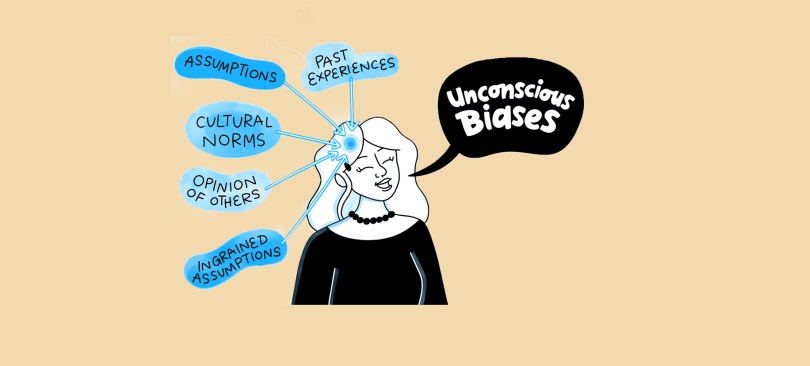
The Stories We Never Knew We Were Telling Ourselves: How Unconscious Bias Shapes Our Careers, Relationships and Happiness

“The biggest barriers in our lives are often the ones we cannot see.”

Most of us like to believe we’re open minded.

We believe we judge people fairly. We tell ourselves we make decisions based on facts, personality and experience. We assume our opinions are our own.

But what if many of our decisions are being influenced by something we’ve never consciously questioned?

This is known as unconscious bias.

Unconscious bias refers to the automatic assumptions, beliefs and mental shortcuts our brains develop over time. These patterns are influenced by childhood experiences, family, culture, education, previous relationships, social media, television and even the conversations we overhear growing up.

They help our brains process information quickly, but they can also lead us to make unfair judgements without realising we’re doing it.

The truth is, every single one of us has unconscious biases. The difference isn’t whether we have them. It’s whether we’re willing to become aware of the,.

The Brain Likes Shortcuts

Imagine meeting someone for the first time. Within seconds you’ve already noticed their appearance, clothing, body language, accent, age and confidence. Your brain has begun creating a story before they’ve even finished introducing themselves.

Sometimes those stories are accurate, however quite often they aren’t.

The human brain is designed to look for patterns because it keeps us safe. Thousands of years ago this was useful for survival. Today, those same shortcuts can influence promotions at work, dating choices, friendships and even how we treat ourselves.

A prime example lies in meeting someone who looks like an ex partner who perhaps deceived our trust, we can meet someone with a resemblance, and before we know it, we are disregarding them without realising.

Unconscious Bias at Work

Think about a typical workplace. A manager interviews two candidates with identical qualifications. One reminds them of someone they worked well with years ago.

The other has a different communication style, dresses differently or appears quieter.

Without intending to, the manager may naturally feel more comfortable with the first candidate. Neither decision feels biased.

It simply feels like instinct.

But instinct is often influenced by previous experiences rather than objective evidence.

Unconscious bias can affect who gets hired, who receives opportunities, who gets promoted and who is viewed as having leadership potential. It can also affect how feedback is given.

Confident people may be described as natural leaders.

Quiet people may be labelled disengaged.

Someone who thinks differently may be seen as difficult rather than innovative.

This is especially important when we consider neurodiversity. Many people with ADHD, autism or dyslexia communicate differently. They may process information differently, avoid eye contact, interrupt through excitement or need additional thinking time.

These differences are not character flaws.

Yet unconscious bias can lead others to misinterpret these behaviours as lack of interest, poor attitude or incompetence. When organisations become aware of unconscious bias, they often discover hidden talent that was overlooked simply because it didn’t fit traditional expectations.

It Doesn’t Stop at the Office Door.. Look at our love lives…

The same thing happens in our love lives. How often have we dismissed someone because they weren’t physically our usual type?

How often have we assumed someone wasn’t interested because they appeared quiet?

How often have we believed confidence equals emotional maturity?

Or assumed attractive people must be happier?

Perhaps you’ve met someone who looked perfect on paper. Successful career, Great appearance, Confident, Funny,

Yet emotionally unavailable.

Meanwhile someone else may have been overlooked because they were nervous on a first date, shy in conversation or didn’t immediately create fireworks. Our unconscious bias often creates a checklist of what love should look like.

Height.

Career.

Income.

Age.

Body type.

Social status.

Confidence.

Lifestyle.

But very few of those things predict whether someone will make us feel emotionally safe, respected or loved. Sometimes we reject wonderful people because they don’t match the picture we’ve created in our minds, or we are comparing them and instantly our mind tells us ‘Unsafe’.

Sometimes we chase people who repeatedly hurt us and reject those who could love us deeply, because of their jobs weight etc etc..

The Stories We Tell Ourselves

Bias isn’t only about how we judge others. It’s also about how we judge ourselves.

Many people carry beliefs they never chose.

“I’m too old.”

“I’m too much.”

“People always leave.”

“No one finds people like me attractive.”

“I’ll never be successful.”

Those thoughts often feel like facts.

But where did they come from?

A childhood experience?

An ex partner?

A teacher?

A parent?

A single painful rejection years ago?

Our brains are incredibly good at collecting evidence to support beliefs we’ve carried for years. We rarely stop to question whether those beliefs are actually true.

Why Coaching Matters

This is one of the reasons I believe coaching can be so powerful. Coaching isn’t about giving people the answers. It’s about helping them discover the questions they’ve never thought to ask.

Why do I always choose emotionally unavailable partners?

Why do I keep avoiding opportunities at work?

Why do I assume people won’t like me?

Why do I believe I’m not good enough?

Why do I keep repeating the same patterns?

Why do I shut down when someone I’m genuinely interested in comes into my orbit?

Many of the answers lie beneath conscious awareness.

A coach helps bring those hidden patterns into the light.

Not through judgement, but through curiosity.

Together you begin noticing the automatic thoughts that influence behaviour. You explore where those thoughts originated. You test whether they’re still serving you and gradually you begin replacing automatic assumptions with conscious choices.

Looking Beyond Behaviour

One of the biggest shifts coaching creates is helping people separate behaviour from identity.

Someone interrupting you may not be rude. They may simply process conversations differently. This happens a lot with Neuro Diverse people.

Someone cancelling plans may not be rejecting you. They may genuinely be overwhelmed.

Someone who seems quiet in meetings may have brilliant ideas but need more time to think.

Equally, someone who appears incredibly confident may actually be masking insecurity.

The more curious we become, the fewer assumptions we make.

Curiosity almost always creates stronger relationships than certainty.

Flawed Thinking Isn’t Failure

One of the most common things coaching uncovers is flawed thinking. Psychologists often refer to these as cognitive distortions. These include believing we know what others are thinking.

Expecting the worst outcome.

Overgeneralising from one experience.

Seeing situations in black and white.

Filtering out positive experiences while focusing only on negatives.

These thinking patterns quietly influence both our personal and professional lives.

If one relationship ended badly, we may assume every future relationship will.

If one interview went poorly, we may decide we’re not capable.

If one manager criticised us, we may stop applying for promotions altogether.

The event ends.

The belief remains.

Coaching helps challenge those beliefs before they become permanent truths.

Awareness Changes Everything

The goal isn’t perfection. No one can completely eliminate unconscious bias.

We’re human.

Our brains will always create shortcuts.

The goal is awareness. Awareness gives us choice. Instead of immediately believing every thought, we become curious. Instead of reacting automatically, we pause. Instead of assuming we know someone’s story, we ask questions.

That pause can completely change a conversation.

It can save relationships.

It can create more inclusive workplaces.

It can open doors we never realised we’d closed.

Imagine What Could Change

Imagine interviewing someone without letting first impressions dominate your decision.

Imagine going on a date with genuine curiosity rather than comparing them with every previous partner.

Imagine recognising when your inner critic is speaking instead of accepting every thought as fact.

Imagine leading a team where different ways of thinking are valued rather than judged.

Imagine choosing people based on emotional compatibility instead of a checklist.

Imagine not judging people on. decisions they’ve made for their lives, just because they don’t match up to your values.

Those small shifts have enormous consequences.

Not only for careers and relationships, but for confidence, wellbeing and happiness.

Final Thoughts

Some of the most important conversations we’ll ever have are the ones we have with ourselves.

Every assumption deserves to be questioned.

Every belief deserves to be explored.

Every pattern deserves our curiosity.

Because when we become aware of our unconscious biases, we don’t just change the way we see other people.

We change the way we see ourselves and that may be the most powerful transformation of all.

If you’ve ever found yourself repeating the same relationship patterns, doubting your own potential or wondering why certain situations keep playing out in your life, coaching offers a space to explore those patterns without judgement. Together, we can uncover the beliefs driving your decisions, challenge thinking that no longer serves you and help you make choices that are aligned with who you are today, rather than who your past taught you to be.

Sometimes, changing your life doesn’t begin with changing your circumstances.

It begins with changing the story you’ve been unconsciously telling yourself.

The Context we Meet in: Why we judge women by circumstance instead of Character

There is a scene in Pretty Woman that has stayed with me for years.

Edward, played by Richard Gere, looks at Vivian and says, “I’ve never treated you like a prostitute.”

Her response is immediate.

“You just did.”

For a long time, I watched that scene and thought it was simply about a man saying the wrong thing. As I have grown older, spent more time listening to people’s stories and worked with women from all walks of life, I have come to realise that the scene is about something much bigger than a wealthy businessman falling in love with an escort. It is about judgement. It is about the labels we place on people. Most importantly, it is about how often women are judged by the circumstances in which they are found rather than the character they possess.

What strikes me most about that exchange is that Vivian never asks the obvious question. Why is she carrying the burden of judgement when Edward was equally involved? He may have been the wealthy businessman and she may have been the escort, but both of them participated in the same encounter. Without Edward, there is no transaction. Without his choices, there is no story. Yet somehow society finds it easier to judge Vivian than it does Edward. He is seen as successful. She is seen as shameful. He is allowed complexity. She is reduced to a label, she could be incredibly successful in her own right, but it’s always the man casting judgement, without the understanding.

That scene has always felt like a reflection of something much bigger that still exists today. Women continue to be judged differently for the very same situations that men willingly participate in. The details may have changed. Dating apps have replaced chance meetings in bars. Social media has transformed how people connect. Entire industries have emerged that did not exist twenty years ago. Yet the underlying double standard remains surprisingly familiar.

A woman can meet a man on Tinder, spend an evening talking, laughing and building what she believes is a genuine connection, sleep with him, and then discover she has been quietly disqualified from relationship status because she slept with him too quickly. The irony is extraordinary. He was there too. He made the same decision. He participated in exactly the same experience. Yet somehow he walks away feeling entitled to judge her for behaviour he willingly took part in himself.

What fascinates me is that many women do not think this way. They are often looking at the bigger picture. They are wondering whether there is chemistry, whether there is potential, whether this person could become a meaningful part of their life. Of course there are exceptions. Both men and women can be manipulative. Both men and women can seek validation. Both men and women can be dishonest. This is not about pretending one gender is innocent and the other is guilty. Human beings are complicated. What interests me is the imbalance in how judgement is applied. Society still seems far more comfortable attaching shame to women than it does to men.

One of the most interesting questions in modern dating is why some men automatically assume that a woman on Hinge is more suitable for a relationship than a woman they meet in a lap dancing club or who perhaps has worked as an escort. Why? What evidence do they actually have? Have they spent time understanding her values? Do they know how she treats people? Do they know whether she is loyal, emotionally available, trustworthy or kind? Usually the answer is no. What they are really judging is not the woman herself. They are judging the story attached to her, and the crazy thing is from my day to day life, I actually hear that ‘BodyCount’ can often reign higher in the women they perceive as ‘Marriage material’.

The woman on Hinge is viewed as someone searching for love. The woman in the club is viewed as someone selling fantasy. One is placed into a socially approved category. The other is placed into a socially disapproved category. Yet neither label tells us very much. The woman in the club may have stronger boundaries than anyone the man has ever met. She may have spent years single because she refuses to settle for relationships that do not meet her standards. She may be fiercely loyal once she commits to someone. She may have had fewer sexual partners than many of the women being praised as relationship material. Meanwhile, the woman on Hinge may be dating multiple people, have no interest in commitment and be seeking validation rather than connection. Or the opposite may be true. The point is that nobody knows.

Character cannot be determined by profession. It cannot be determined by appearance. It cannot be determined by where somebody happened to meet you. Yet people continue to make assumptions every single day based on these things. They judge a book by its cover and then convince themselves they know the entire story.

What I have learned over the years is that public image and private reality are often worlds apart. We live in a culture where people carefully curate how they are perceived. Dating profiles are curated. Social media accounts are curated. Influencer brands are curated. Even ordinary people curate versions of themselves for public consumption. We look at photographs, captions and carefully selected moments and convince ourselves we know somebody. The truth is that we rarely do.

There are women with enormous social media followings who are admired by millions. There are reality television personalities, influencers and public figures who have built highly successful brands around their image. Some have found ways to monetise their beauty, fame and desirability in ways previous generations could never have imagined, and behind closed doors are being sent out on secret Whatssap groups for £10k for the night. Personally, I do not see anything wrong with that. If somebody has built an audience, worked hard to create opportunities and found a way to capitalise on their success, then fair play to them. What interests me is not what they do. What interests me is how society responds to them depending on what information is publicly available.

The same man who judges a woman working openly within the adult industry may spend years admiring, following and fantasising about a public figure whose private life he knows nothing about. The difference is not necessarily morality. The difference is visibility. One woman is judged because people know. The other escapes judgement because people do not. Yet both may be making similar choices in private. This is why assumptions are so dangerous. They are built on incomplete information and presented as certainty.

Another aspect of this conversation that deserves far more compassion is the reality that some women carry experiences most people know nothing about. Some women working within parts of the adult industry have histories of childhood sexual abuse, rape, domestic violence, coercive relationships or profound emotional neglect. Of course this is not true of everyone and it would be wrong to make assumptions. Every woman’s story is different. Yet it is important to recognise that for some women, their relationship with their body, sexuality and sense of control has been shaped by experiences that occurred long before anyone met them. I work with one lady in the industry, who was date raped, and is simply too scared to date, and maybe she’s lost her way a little, but who are we to sit and judge.

What often frustrates me is how quickly people jump to judgement without any curiosity about what might have brought someone to where they are today. We see a profession and assume we understand a person. We see a choice and assume we know the story behind it. Yet human beings are rarely that simple. For some women, stepping into a space where they choose the terms, set the boundaries and decide what access people have to them can feel very different from experiences where control was taken away. What outsiders may perceive as exploitation, another person may experience as autonomy. Whether people agree with those choices or not is almost irrelevant. The point is that we cannot understand someone’s life by reducing them to a label.

Perhaps that is another reason I find judgement so problematic. It leaves no room for complexity. It leaves no room for empathy. It leaves no room for the possibility that the person standing in front of us has survived things we cannot imagine. We do not know their history. We do not know their struggles. We do not know what they have overcome to become the person they are today. Yet society is often quick to condemn women for the choices they make while showing very little interest in understanding the experiences that shaped those choices in the first place.

As the film draws to a close, something interesting happens. Edward finally understands what he could not see at the beginning. The issue was never Vivian’s profession. It was never the circumstances in which they met. It was never the label he had attached to her. The real obstacle was his inability to look beyond those things. Only when he lets go of his assumptions is he able to see the woman standing in front of him.

If we return back to the film ‘Pretty woman’ in one of the most iconic scenes in the film, Edward arrives with flowers and climbs the fire escape despite his fear of heights. He becomes the knight in shining armour Vivian once dreamed about as a little girl. Of course, we live in a different world now. Most women are not waiting to be rescued. Women build careers, raise families, buy their own flowers and save themselves every single day. The fantasy was never really about being rescued anyway. The fantasy was about being chosen. Being valued. Being seen… finally the little girl who had led such a traumatic and sad life, was seen.

Perhaps that is what so many people are searching for beneath all the noise of modern dating. Not perfection, Not status, Not somebody who ticks every box on paper. Just somebody willing to look beyond the stereotypes, beyond the assumptions and beyond the story attached to how they met.

Because love does not arrive wrapped in social approval. It does not ask whether someone was met through friends, on a dating app, in a club, at work or during the most unexpected chapter of their life. Love only asks whether two people are willing to know each other honestly.

And perhaps that is the real lesson hidden inside Pretty Woman. The greatest relationships are not built by people who meet in the perfect circumstances…. They are built by people brave enough to see beyond them….

Maybe the real question is not where are the women worth loving. Maybe the real question is where are the men willing to put down their judgement long enough to recognise them.

Because the most beautiful love stories have never been about how two people met.

They have always been about what happened when they decided to truly see one another.

2026 – The year Choosing Me: The Moment I Stopped Waiting to Be Chosen

There’s a truth I’ve had to learn the long way round:

Sometimes you have to experience the wrong people to finally understand your worth.

Not in a cliché way and not in a “everything happens for a reason” way, but in a very real, very lived way, where each connection leaves a mark, teaches you something, and slowly pulls you back to yourself.

I’ve loved different kinds of men.

Last year I met the one who felt electric at the start, passionate, intense, everything turned up to 100. The sex was something else, I mean girls, there is good and then there is WILD! Insane until it wasn’t. Until the warmth turned into walking on eggshells. The subtle put-downs. The control disguised as care. The disappearing acts followed by apologies that reset everything… until the cycle began again and I lost myself in that, not just emotionally, but physically too. So swept up in the sex, attention, gifts and love-bombing, I suddenly realised after watch him down pink cocaine for two weeks, that this was not the kind of man who should be in mine or my Childs life.

Then came along a good man, Kind-hearted, Safe, I thought. Someone I let myself open up to in a way I hadn’t in a good few years. We built something slowly, calls, messages, shared moments across distance, it felt so familiar… And then… he shut down.

No warning. No gradual fade. Just a switch.

One minute, he was planning a weekend with me, so excited I was in his country. The next, it was “this feels like pressure, I should respect my boundary, I can’t do long distance”, That kind of emotional whiplash does something to you. It doesn’t just hurt, it changes how you see people. How you trust. How you show up. I’m so glad I didn’t have sex with him, because in all honesty seeing his insecurities at play with avoidance, makes me feel there would have been disappointment. I think it felt familiar, because it threw me back into the summer of 2023, another situation, the calls, messages, consistency, deep intimacy on all levels except sex.

and somewhere underneath all of that, there’s been another truth sitting quietly in my life:

There is someone I love… who didn’t choose me, and it was after the experience with my Californian guy, I realised, it simply reminded me of that! The heartbreak of 2023, where I wasn’t chosen, but had fallen anyway..

For a long time, I told myself it was limerence, Infatuation. Something I’d grow out of, however time has a way of clarifying things, not erasing them and the truth is some feelings don’t fade just because they’re inconvenient, they simply get avoided.

But here’s what I’ve realised:

Someone not choosing you doesn’t make them “the one.” It makes them unavailable.

The Pattern I Couldn’t Ignore

There’s something else I started to notice.

Men would leave… choose someone else… build lives with other women.

Then years later, they’d come back, Telling me I was always the one, That they see me now, That they made the wrong choice. It happened last summer. I had a call, with an ex asking to meet me, I was seeing the narcissist at the time, and I declined, but he pushed and pushed, so I agreed ten mins in a public place only. I showed up, and was met with, basically I was the one perfect for them, I was the one they loved, I was the one aligned, I was so shocked, but its not the first time this has happened.

But by then, it’s too late, Because love isn’t just about recognition, It’s about timing. It’s about courage. It’s about choosing.

And I deserve to be chosen in real time, not in hindsight.

I appreciate if things don’t work out with someone else they chose, and then try and rekindle, but I will never be the other woman, whilst you keep someone there incase I say NO, and I did say NO!

The Misunderstanding of Who I Am

I think part of my story is this:

People think they know me when they first meet me, I get judged all the time. They see confidence, Strength, Independence.
They assume I’m “a lot.”, That I’ll be hard to handle. People see the Kerry now before them, not the Kerry I was for all of my life, they see the girl with the lips, the tan, the hair, taking images and posing, and they see me in a certain way, because that’s what their ind interprets.

But the truth?

In a relationship, I’m soft, I’m calm, I’m loyal, I’m simple in what I want.

A quiet life.
A genuine connection.
A partner to build with, not perform for.

And it’s only later, when they’ve already chosen someone else, that they realise actually she’s the opposite to who she comes across as, But I’m not waiting around to be understood after the fact anymore. Judgement is on them, Darlings, not me!

What I See Clearly Now

I see the half-effort.

The “let’s plan something” followed by inconsistency.
The words that don’t match actions.
The low-level energy that expects access to me.

And I’m done with it, yep over it! You will remain in the archived, because quite frankly, I cannot be arsed seeing your face!

Because here’s the truth:

There is no attraction without consistency.
There is no connection without effort.
And there is no future where I am not fully chosen.

What I Actually Want

It’s not complicated.

I want someone grounded, Calm, Emotionally available.
Someone who values routine, health, stability. Someone who has kids already, maybe similar age to my child, so we can just enjoy watching the kids grow, rather than the stress and worry of having another! I love my life now to start all over again with a new baby. Someone who wants to build a life, not escape into one.

A home.
A partnership.
A quiet, real kind of love, that will last

Not the loud, chaotic kind that burns fast and leaves damage behind.

Just… a good man…

Here’s Where Everything Changed

At some point over the last 8-9 months, something shifted in me. In that time, I dated a narcissist, was sexually assaulted by someone I went on a date with, and then I met the ultimate avoidant. This was all meant to happen, and I don’t say that to minimise it, I say it not through bitterness or coldness, but

Clarity.

I realised I’ve spent so much time pouring into other people, trying to understand them, support them, love them, hold space for them…And not enough time choosing myself. Too much time not filling up my own cup.

So now?

I’m not chasing.
I’m not convincing.
I’m not waiting to be picked.

You either show me, consistently, clearly, and show that you choose me…
or you don’t get access to me at all.
..

There is no in-between anymore my body, my mind, my heart. No, you are not welcome!

It’s taken 42 years to reach this point, and I realise, I’m worth something, and it’s a deep routed find, and wow, my eyes are open.

For Any Woman Reading This

If you’ve ever felt like the one they come back to… but never the one they choose first…

If you’ve ever been “almost” loved properly…

If you’ve ever questioned your worth because someone couldn’t meet you where you are…

This is your reminder:

You are not too much.
You are not misunderstood.
You are not “almost.”

You are just no longer available for half-hearted love, and please hold your value high, hold it for someone who offers consistency, but offers to show up to! Not just a lunchtime meet in costa! Because the coffee dates are devaluing romance!!

However the true message stands, the moment you truly choose yourself, set your boundaries and recognise your value matters, is the moment the shift will happen!

Survival Mode in Relationships: When Emotional Abandonment Pushes the Body Into Crisis

How avoidant and narcissistic relationship patterns trigger fight-or-flight, hormonal disruption, and physical collapse, especially in women

There is a kind of stress that doesn’t stay in the mind.

It moves into the body.

It shuts down appetite.

It steals sleep.

It disrupts hormones.

It turns love into a medical emergency.

For me, stress from romantic relationships affects my body more than anything else in my life, Not work, Not money, Not external pressure. Love, or more accurately, emotional instability disguised as love, is what pushes my body into survival mode.

And once I’m there, I can’t simply “calm down.”

My body is panicking.

What Survival Mode Really Is (Fight, Flight, and Freeze)

Survival mode is not a metaphor. It is a physiological nervous system response that occurs when safety is threatened.

In relationships with avoidant partners or narcissistic partners, the body does not experience emotional inconsistency as inconvenience, it experiences it as danger.

Hot-and-cold behaviour.

Sudden withdrawal.

Love-bombing followed by emotional abandonment.

Connection offered, then removed.

The nervous system responds by activating the sympathetic response, fight, flight, or freeze. This response is meant for short-term danger. In emotionally unstable relationships, the threat is ongoing.

So the body stays switched on.

The Avoidant Attachment Cycle — Step by Step in the Body

Avoidant attachment is often unconscious. But its impact on the other person’s nervous system is very real.

1. Connection Phase: “This Feels Safe”

What the avoidant does

  • Emotional intimacy
  • Deep conversations
  • Strong sense of alignment
  • Feeling chosen and secure
  • A perfect mirror to you, which helps secure a sense of bond

What happens in your body

  • Oxytocin increases (bonding hormone)
  • Dopamine rises (hope and reward)
  • Nervous system softens
  • Appetite and sleep may stabilise

Your body begins to wire this person as safety.

2. Deactivation Phase: Emotional Withdrawal

What the avoidant does

  • Becomes distant
  • Reduces communication
  • Feels “overwhelmed”
  • Shuts down emotionally

What you begin to feel

  • Unease
  • Tight chest
  • Anxiety
  • A sense that something is wrong

Physiological response

  • Cortisol begins to rise
  • Vagus nerve regulation drops
  • Fight-or-flight activates

Your body senses danger before your mind understands it.

3. Push–Pull Dynamics and Intermittent Reinforcement

What the avoidant does- Sometimes , may I add, however most are too weak to return and do not have the emotional bandwidth

  • Returns briefly
  • Reassures you
  • Withdraws again

What you feel

  • Relief followed by panic
  • Hypervigilance
  • Emotional preoccupation

What happens in the body

  • Cortisol remains elevated
  • Adrenal system overstimulated
  • Digestion suppressed → appetite loss
  • Sleep disrupted

This is where survival mode becomes chronic.

4. Sudden Breakup or Emotional Disappearance

What the avoidant does

  • Ends the relationship abruptly
  • Avoids closure
  • Emotionally shuts the door
  • Blocks you everywhere

What happens to you

  • Shock
  • Disbelief
  • Inability to eat
  • Inability to sleep
  • Inability to just function with day to day life

Physiology

  • Cortisol spikes
  • Melatonin suppressed
  • Blood pressure may drop
  • Immune system weakens

This is often the point people say:

“I don’t recognise myself anymore.”

The Narcissistic Relationship Cycle — And Why It Damages the Body

Narcissistic relationship patterns are different because the instability is often manipulative rather than avoidant.

1. Love-Bombing and Idealisation

What they do

  • Intense attention
  • Excessive affection
  • Fast emotional bonding

Body response

  • Dopamine surge
  • Oxytocin surge
  • Rapid attachment

The body bonds before trust has time to develop.

2. Devaluation and Emotional Withholding

What they do

  • Withdraw affection
  • Criticise or invalidate
  • Create emotional insecurity

What you feel

  • Anxiety
  • Self-doubt
  • Trying harder to regain safety

Physical impact

  • Cortisol rises
  • Appetite shuts down
  • Gut function slows
  • Weight loss begins

3. Discard, Return, Repeat

What they do

  • End the relationship
  • Return
  • End it again

Each cycle re-activates the trauma response.

The body never fully resets.

During one such relationship, my weight fell from nine stone (around 57 kg) to seven stone ten (around 49–50 kg). I couldn’t eat. I couldn’t sleep. My periods became severe and prolonged, leading to hospitalisation.

This was not just emotional distress. It was physiological breakdown caused by chronic stress.

Blocking: The Nervous System Impact of Sudden Disappearance

Blocking is not neutral.

Blocking is digital abandonment.

Psychological and Neurological Impact

Research shows that social rejection activates the same brain regions as physical pain. Blocking removes:

  • Access
  • Repair
  • Explanation

The brain interprets this as:

“You no longer exist.”

What Blocking Does to the Body

  • Sudden cortisol spike
  • Panic response
  • Obsessive thinking
  • Appetite shutdown
  • Severe insomnia

For bonded individuals, blocking can:

  • Disrupt menstrual cycles
  • Lower blood pressure
  • Trigger medical symptoms
  • Psychologically impact their whole future

There is no nervous system regulation without closure.

Why Emotional Stress Affects Women’s Bodies So Deeply

Chronic relational stress disrupts the HPA axis (hypothalamic-pituitary-adrenal axis), which governs stress hormones.

This impacts:

  • Cortisol regulation
  • Progesterone production
  • Oestrogen balance
  • Ovulation and menstrual cycles

This is why emotional stress can cause:

  • Heavy or prolonged periods
  • Hormonal imbalance
  • Faintness or low blood pressure
  • Hospital admissions

Women don’t just experience stress psychologically.

We carry it physically.

The Core Truth About Survival Mode in Love

Avoidant partners regulate by leaving, a selfish act for their own self preservation and to maintain their narrative ‘As the good guy’ – Which sadly to you and to an outsider not in their orbit, is actually anything but.

Narcissistic partners regulate by controlling, they can’t control someone who starts to remember their own self worth, and who starts to call them out…

The person left behind regulates by breaking down internally.

They close the door, and your body absorbs the impact.

Grounding: Gently Returning the Body to Safety

If you are in survival mode, your body is not betraying you.

It is protecting you.

Healing does not come from forcing yourself to move on. It comes from restoring safety slowly:

  • Eating what you can, when you can
  • Sleeping without self-judgment
  • Reducing exposure to emotional chaos
  • Choosing calm over intensity

Your nervous system does not need answers.

It needs consistency, gentleness, and time.

My little tip…

This blog is written from my own lived experience.

I share my story, including weight loss, hormonal disruption, hospital admissions, and the physical effects of emotional abandonment, not for sympathy, but for validation. To them you may not matter, but the key thing is, you should matter to you. They tried to rob you of dignity, clarity, and validation… but you have to remember, stop investing all that into them, and protect yourself… I mean we literally have no hope right now when it comes to dating, do we girls? Because everyone left who isn’t taken has that much trauma they become Avoidants or Narcissists, however remember, our own trauma can simply be making us anxious attachments… we need to stop the cycle!

Too many women are told they are “too sensitive” when their bodies react to relational stress. In reality, these reactions are often normal nervous system responses to instability and loss of safety.

If this resonates with you, please know:

You are not broken.

Your body has been fighting for you.

Everything Happens for a Reason – The American Dream

I flew 8,500 kilometres to follow my heart.

Not to chase anything, just to listen to that quiet inner pull that told me I needed to be here. I knew there was a risk. I knew the outcome might not be what I hoped for, and it wasn’t.

What I thought would happen didn’t happen.

But what did happen has changed my life.

Last year was one of the hardest years I’ve ever lived through. I’ve become very good at wearing a mask, hiding the sadness in my eyes, disguising the cracks in my confidence, especially in places where I once felt strong. I show up smiling, even when parts of me are still healing.

This trip stripped that mask away.

The first day here was filled with joy. The second day, it all disappeared. Everything I thought this journey was about was taken from me in an instant and instead of sitting in it, instead of becoming bitter, playing the victim, or feeling sorry for myself, I made a decision.

I chose kindness.

I chose to go out into the world and give what I still had left. Not because I expected anything back, but because being kind makes me feel whole. And if kindness returns, that’s beautiful, but it doesn’t need to.

So I complimented elderly women.

I bought an old man a mango tea.

I spoke to strangers.

I made friends.

I shared socials with photographers.

I laughed with people I’d never met before.

I had conversations with potential love matches that reminded me I’m still open, still hopeful.

And suddenly, this week became a week of discovery.

A week that felt… meant to be.

I’ve always felt drawn to America. No matter where I’ve lived, I’ve rarely felt truly at home, but every time I’m here, especially this time, there’s a deep, unexplainable sense of belonging. Not the kind you get when you’re on holiday and fantasise about a new life, but a quiet knowing. A feeling in my bones that says, this place matters.

I don’t know how that fits into my life yet, especially with a young child and a father who loves him deeply, but I trust that clarity will come when it’s meant to.

One thing that surprised me about LA is how obsessed the world thinks it is with perfection. Beautiful people, perfect faces, flawless bodies. You wonder how you could ever fit in.

And yet… everywhere I went this week, I was met with kindness and unexpected affirmation.

I went on a date with a truly lovely man, someone I’d known only as an Instagram connection for years. He drove an hour and a half just to spend the day with me, showed me the Hollywood sign, took me to dinner in Beverly Hills, and gave me his time and presence. There was no romantic compatibility, but he had one of the most beautiful souls I’ve encountered.

At one point he looked at me and said, “You’re the most American British woman I’ve ever met.”

As we walked around Beverley Hills, he told me to look, and he told me I stood out, He told me people noticed me, everyones heads turned…

And they did.

Women complimented my outfit.

Strangers asked if I worked in TV.

People asked if I modelled.

They told me my hair was fabulous, that I looked pretty, that I carried myself beautifully…

As a 42-year-old woman, that kind of attention can feel uncomfortable, even embarrassing. But this time, I let it in. I needed it. Not for my ego, but for my spirit. For the parts of me that had forgotten their worth.

This trip reminded me of something important:

There are two types of people in this world.

Those who say they are kind, and then hurt others without hesitation.

And those who show kindness through action, consistency, and integrity.

This week showed me exactly which one I am.

I don’t just call myself a Christian — I live it. I believe in the words from Matthew: “Treat others as you would like to be treated.” Being a Christian isn’t about what you say on Sundays; it’s about how you show up when it’s hard. When you’re hurting. When it would be easier to close your heart.

And I won’t close mine.

No matter how much pain I experience, I will never stop being kind.

I will never stop showing up.

I will never stop loving.

This journey, this unexpected, imperfect, emotional trip, has reminded me that everything truly does happen for a reason. I was pulled here for a reason, even if I don’t fully understand it yet.

The Signs I Couldn’t Ignore

As this week comes to an end, I’ve realised it wasn’t just the experiences that changed me, it was the signs, Quiet ones, Gentle ones, The kind you don’t notice unless you’re finally still enough to listen.

Yesterday I sat alone on the beach, the ocean stretched out in front of me, my heart heavy from the emotional rollercoaster of the week. I had a tear in my eye when someone came and sat a few metres away, music blaring from their speaker…. and then it played , Red Red Wine by UB40. You never hear that song anymore, But there it was and I won’t explain why it matters to me only that it does. Deeply. In that moment, looking out across a California beach with that song playing, I knew. I knew why I was here.

Every time sadness crept in this week, I walked, and every time I walked, I was reminded of something familiar, something grounding. One day, while quietly sharing my sadness, Dexys Midnight Runners came on, my life anthem. The song that has carried me through more than anyone knows. Hearing it felt like a nudge: Back in the room, Kerry. You’re okay.

And then there was the word Joe.

Everywhere I looked, it appeared. Cafes, Fridge magnets, Sign, Small ordinary places, to me, it wasn’t ordinary. It reminded me of my son, It reminded me of my Grandad. It gave me strength when I needed it most. Too many times to be coincidence, this week.

There is a reason I’m here. I don’t know what it is yet, and I wish I had the answers now. I trust that one day I will. Whether the reason is joyful or painful, big or subtle, it matters, America has always felt like this to me, I never feel home anywhere, but here.. yes my God, I feel home. There is a pull here, the strongest pull I’ve ever felt.

And no, it has nothing to do with the original reason I came. That chapter ended, not by my choice, but by having my vulnerability met with unkindness, by being left in shock when all I needed was compassion. But instead of letting that define this journey, I chose goodness.

I rode the buses, trams, bikes even though everyone told me not to use public transport, I am no snob and I wanted to feel part of something, To see everything, To experience the city as it really is. I ended up on the weirdest, most wonderful bus journeys through LA’s rougher parts, and then somehow found myself walking through Rodeo Drive, feeling like I’d stepped into a Pretty Woman dream.

And that’s when it hit me.

Life really is special.

Even in pain.

Even in disappointment.

Even when plans fall apart.

Especially then.

This week reminded me that meaning doesn’t always arrive the way we expect, but it always arrives when we’re open enough to receive it, and for that, I am endlessly grateful, and as I conclude this, just finishing a call with my son and his father, I’ve just been told, my ex would move here in a flash, and has offices all over here.. maybe the dream isn’t too far away…

I can’t wait to bring Joe back … Is this home? Let’s see…

The Men of 2025: How my year of Dating Hell, and Hard-Learnt Lessons, can help you spot Red Flags!

What the hell happened!!??

Sex, fantasy, consistency — and why modern dating keeps breaking women

After a long period of celibacy, I met my ex-boyfriend — let’s call him The Lion. We don’t need his real name.

The Lion, The narcissist.

In fact The grandiose narcissist.

He was very handsome, Beautiful, actually. Perfect white teeth. A full head of hair, (two hair transplants because one wasn’t enough). He was sexy, but not my usual type. I normally go for taller, lean, athletic men with no tattoos. He was huge. Six foot tall, probably six foot wide. Muscly. Strong. Dominant.

He wasn’t my type — and yet something about him completely undid me.

I found him intensely attractive, in a way I hadn’t experienced before. Maybe because he wasn’t my normal type. Who knows. But the sex between us was off the scale. Raw. Animalistic. Lust-driven. Some of the best sex I’ve ever had.

We couldn’t get enough of each other. Sexy weekends away. Him telling me how to dress. The gifts, ( And for anyone who knows me, Im not normally into this) The energy. The chemistry. The obsession.

I almost felt like his doll — something he couldn’t put down, and that, I think, is where most of the attraction came from.

And that’s all it was.

Sex.

There was no substance. No emotional safety. No real love. Just intensity masquerading as connection. My therapist later told me clearly: the “connection” existed because I had been celibate, and my body and mind craved attention.

The first three or four months felt incredible.

Then everything shifted.

The final two months were hell.

I dropped from 9st 4 to 7st 10, living in pure survival mode.

He became verbally abusive — at first subtly, then relentlessly. Comments about my body. My teeth. My weight. My scars. Criticism disguised as jokes or “help.” Tiny cuts, over and over again.

This was a man who knew my history with an eating disorder and body dysmorphia. All the “I want to know everything about you” had been a ploy — to gather ammunition.

I treated him like a king.

He treated me like something and someone he owned…

He’d say things like, “Why do you have this effect on me? I just can’t give you up.”

As if I was the problem. As if I was doing something to him.

Once, sitting in my car, he pulled me onto his lap and said,

“Kerry, you do this to me. I’m not sure I want this, but you have this way of winning me back.”

I hadn’t done anything wrong.

Then he hugged me and said,

“I’m scared I could become abusive towards you — you’re too soft and nurturing.”

Let that sink in.

I’ve been told before that I have a presence, that I make people feel seen. With him, that became a weapon. He leaned into my kindness while resenting me for it.

The worst moment came on a drug-fuelled Ibiza trip. Pink cocaine from 7am to midnight. Then the comedown.

For twelve hours — hotel, airport, plane — he broke me down.

Told me I was a bad person. Needed therapy. Needed to change my career. Needed to look different. This was Loudly, Publicly, to the point people noticed.

Every time I looked away, he physically lifted my chin and told me I wasn’t listening.

I hadn’t done a single thing wrong.

At one point a stranger followed me into an airport toilet and said,

“This is not okay. I’m worried about you, as this is dangerous’

And I still made excuses for him.

That’s how deep it was, and I knew I was hours away from the safety of my own home..

After that, he love-bombed me, Promises. Romance. Safety. Then after one trip, I fell seriously unwell, to the point I was hospitalised for 8 days — He then broke off with me saying ‘I didn’t sign up for this’ – Meaning his Girl in hospital and being super unwell, then nothing. Coldness. Disinterest. Silence.

And that’s when I finally saw it.

This was just sex.

And no sex — no matter how good — is worth fear.

He did wonders to my body sexually I thought at the time, and then I realised, No, I made that happen, I had gone so long without sex that I think anyone could of made that happen.

What he did to my head nearly destroyed me.

He tried to break me.

And I very nearly let him.

Reflection: The Narcissist

This wasn’t love. It was trauma bonding. Intensity without safety. Power without care. He fed on devotion, then punished me for giving it.

Narcissists don’t want partners — they want mirrors, supply, and control.

Lessons Learned: If You Meet a Narcissist

  • Intensity is not intimacy
  • Amazing sex does not cancel abuse
  • If he uses your vulnerabilities against you, leave
  • If your body is deteriorating, your nervous system is screaming
  • Love never requires survival mode

Airport Guy: When Kindness Still Isn’t Compatibility

A few days after splitting with my Ex, I flew abroad with my little boy.

I was still fragile. Still healing. Still very much in recovery mode — physically and emotionally.

At the airport, a man stared at me so intensely it actually made me blush — and I am not easily flustered. I mean, his neck nearly broke turning to look back at me. Later, delayed on my flight, I opened a dating app.

And there he was.

We matched. Of course we did.

Airport Guy.

He was kind, sweet, down to earth, handsome — and back to my usual type: dark, tall, athletic. After everything I’d been through, he felt… safe. Gentle. Normal.

We talked for weeks. He was attentive and consistent with messaging. There was warmth there, ease, laughter. But as time went on, I realised something was missing. There was no real depth. No emotional intelligence. No stimulation that made me feel mentally alive.

Still, I agreed to a date.

And actually, we had a ball.

It was last minute, impulsive, a “fuck it” moment. The evening was easy and fun, and before it ended, we’d already agreed to a second date.

On the second date, he went all out. He booked Louie’s in Manchester and really made an effort. That night, he stayed over. We cuddled, talked, laughed, but lying there, I found myself thinking something that surprised me.

I really fancied him – but I didn’t want sex with him.

Not in that way.

There was attraction, but no pull. No hunger. No emotional spark that made me want to cross that line. And I can’t fake that, nor should I.

We ended up seeing each other six times over several weeks. I kept hoping something would ignite. I wanted it to. He was good company, however instead of things deepening, cracks started to show.

He moaned constantly about the two-hour distance.

He lacked curiosity and depth.

When life got hard, he disappeared into drug-fuelled benders.

One night, he rang me 37 times, completely off his head, telling me he’d fallen for me — but his mind was a mess, I was too far away, and I was “too good for him.”

That sentence told me everything I needed to know.

I don’t do drugs. I won’t tolerate them in a partner, especially after what I’d just survived and while he was genuinely lovely, he was also lost, unhealed, and not self-aware enough to know it — without playing the victim role.

I wasn’t the woman who could save him.

And in truth, I also wasn’t ready to progress intimacy with anyone. You can’t force a spark. It’s either there or it isn’t. And without it, nothing meaningful grows.

So I ended it.

Not because he was bad — but because nice isn’t enough.

Reflection: The “Good on Paper” Man

Airport Guy represents a difficult truth: not every connection that feels safe is right. After abuse, kindness can feel like chemistry — but they are not the same thing.

He wasn’t cruel. He wasn’t manipulative. He was simply unhealed. And unhealed people often look for partners to steady them, soothe them, or anchor them through chaos.

That isn’t partnership — it’s emotional dependency in waiting.

Lessons Learned: When the Man Is Kind but Not Ready

  • Safety alone does not equal compatibility
  • Attraction without depth leads nowhere
  • You cannot build intimacy with someone who avoids their own pain
  • Substance abuse is not a “phase” — it’s a coping mechanism
  • It’s okay to walk away from someone good because you need something right

Choosing yourself doesn’t always mean leaving bad men.

Sometimes it means leaving good men who aren’t capable of meeting you where you are.

The Mistake Guy: When Your Body Knows Before You Do

Then came The Mistake.

We matched on Hinge — and as anyone who’s been on dating apps knows, even getting off them and exchanging numbers takes effort. This man had recently moved back to the UK from Dubai, Ex-soldier. Worked on high-end military contracts, Father of three.

On paper, he sounded solid.

He was intelligent, direct, keen to align. We shared beliefs around supporting the military — but beyond that, there wasn’t much emotional alignment. I felt he tried to force more alignments than there were, and I wasn’t sure if I was attracted to him, beyond recognising that he was tall, dark, and handsome.

Still, as always, he was the only person I was speaking to.

He was persistent, offered date after date and even though he lived four hours away, he kept pushing to see me.

At the time, I’d been off work and unwell so on week three of chatting, he badgered me for a date and offered to drive to my city. With hesitation — and, if I’m honest, feeling a little guilt-tripped — I agreed.

On one condition: I would drive myself.

Within minutes of me saying yes, he told me he’d booked a hotel (for himself), chosen the restaurant, and planned the evening. Later, I discovered he’d lied about part of this, but at the time, I put it down to enthusiasm.

When we met, I was late and had misunderstood the bar he’d suggested, so I went straight to the restaurant. Standing at the bar waiting, I suddenly felt someone come up behind me and pick me up and squeeze me.

Anyone who knows me knows I have strong boundaries — and I hate being picked up unexpectedly.

I froze.

I told myself to calm down. He’s just excited to see you.

At dinner, he commented that he didn’t like sitting opposite me. I replied that I was comfortable where I was. When I went to the bathroom and came back, he’d moved to my side of the booth. I felt cornered. I slid back into my seat, forcing him to stand up, and angled my body so I wasn’t fully facing him.

He put his arm around me and went in to kiss me.

I pecked him — more out of politeness and shock than desire.

I think he felt my energy change, because suddenly he pulled back and shifted tone. For the next few hours, he was a perfect gentleman. I relaxed. I enjoyed the date.

And that’s where I made the mistake.

I ignored my intuition — the tight chest, the internal warning — because nothing “bad” had happened yet, and I put it down to my own over-thinking.

What followed was something I won’t detail publicly, but it was enough to teach me a lesson I will never forget.

He is well and truly blocked and I hope our paths never cross again.

Reflection: This Is What Happens When You Override Your Gut

Nothing dramatic has to happen for something to be wrong. Women are taught to override discomfort to avoid appearing rude, dramatic, or ungrateful.

Predatory or unsafe men rely on that conditioning.

Your body recognised danger long before your mind caught up.

Lessons Learned: What Women Need to Hear About “The Mistake”

  • Discomfort is information, not anxiety
  • You don’t need proof to leave a situation
  • Being polite has put women in danger for generations
  • A man who ignores physical boundaries early will ignore bigger ones later
  • If your intuition whispers, listen — if it screams, run

Ignoring your gut doesn’t make you open-minded.

It makes you vulnerable.

Mr Avoidant: The Fantasist Who Never Intended to Stay

Then there was Mr Avoidant — someone I’d known briefly before, who had actually helped and advised me after The Mistake.

At first, he seemed different.

Attentive, Caring. Emotionally available. He listened. Asked questions. Showed understanding. I told him early on that I’d sworn to celibacy — that my body needed to belong to me again.

He said he respected it.

He talked about the future, About long-term plans, About a relationship. Even about going to Auschwitz together — somewhere I’ve always wanted to go but this was from the off and straight away I recognised the feeling immediately: love bombing.

I’ve learned something important about myself — I attract fantasists. Men who talk. Men who imagine. Men who build futures with words rather than actions.

Men who want the idea of me.

One night, we kissed. Just a kiss. A cuddle. No intimacy. During that moment, he said, “You’re dangerous.” I asked what he meant. He brushed it off — but I knew exactly what he meant.

After that night, the shift was immediate.

Avoidance. Excuses. Distance. Mixed signals.

Too ill to see me with a supposed chest infection — yet somehow well enough to win a padel tournament. Constant viewing of my Instagram stories within minutes of posting. Suddenly posting stories himself, despite never doing so before.

WhatsApp messages sent — then deleted before I could read them.

It felt unhinged.

I don’t do games.

There is a short window with me. Once I feel self-protection kick in, the switch goes off — and that’s not self-sabotage. That’s self-preservation.

The following week, I went back on dating apps.

And there he was, Back on them too.

You don’t get access to me while shopping for someone else. You don’t get my emotional energy while keeping your options open.

Reflection: Fantasists Want Access, Not Responsibility

Avoidant men love connection — until it requires consistency. They crave intimacy but panic when it becomes real.

They want you close enough to soothe them, but far enough that they don’t have to commit.

Lessons Learned: How to Spot an Avoidant Early

  • Words without follow-through are a red flag
  • If he’s still on dating apps, you’re not chosen
  • Mixed signals are the signal
  • Consistency is emotional maturity
  • If he disappears after intimacy (even emotional), believe the pattern

A man who wants you doesn’t confuse you.

He makes space. He makes plans. He shows up.

The Red Flags I Will Never Ignore Again

(And Neither Should You)

These aren’t dramatic.

They aren’t always obvious.

Most of them appear early — and we talk ourselves out of them.

Early Behavioural Red Flags

  • Intensity too soon — fair enough if its a month in, but i’m talking week 1 week 2.
  • Boundary testing on first or early dates (touching, closeness, pressure)
  • Discomfort in your body that you rationalise away
  • Inconsistent communication disguised as “busy” or “overwhelmed”
  • Charm paired with entitlement

Emotional & Psychological Red Flags

  • Making their feelings your responsibility
  • Subtle criticism framed as jokes, concern, or “help”
  • Playing victim while avoiding accountability
  • Blaming stress, substances, or mental health for harmful behaviour
  • Turning your empathy into a weapon

Consistency & Availability Red Flags

  • Talking about commitment without backing it up with action
  • Keeping you in conversation but vague about seeing you
  • Still active on dating apps while claiming interest
  • Hot–cold behaviour after intimacy (even emotional intimacy)
  • Making you feel anxious instead of grounded

Lifestyle & Coping Red Flags

  • Using drugs or alcohol to escape discomfort
  • Chaotic lives with no evidence of self-work
  • Expecting you to stabilise or rescue them
  • Treating therapy, growth, or accountability as optional

The Biggest Red Flag of All

  • You feel smaller, quieter, or less yourself around him
  • You start editing your needs to keep the peace
  • Your nervous system is on edge more than it’s at rest

Love does not feel like walking on eggshells.

Connection does not cost your health.

Desire does not require self-betrayal.

What 2025 Really Taught Me

It would be easy to frame 2025 as a year where I simply met the wrong men.

But that would let me off too lightly.

The truth is, I chose them.

Not consciously. Not maliciously. But through patterns I hadn’t fully interrupted yet.

The narcissist wanted power.

Airport Guy wanted comfort.

The Mistake wanted access.

The Avoidant wanted fantasy.

Different men — same outcome.

And while each of them was responsible for their behaviour, I have to be honest about my part in letting them close.

My Accountability

I didn’t attract these men because I’m weak.

I attracted them because I am open, emotionally literate, warm, and capable of holding space. I listen deeply. I give generously. I see people for who they could be — not just who they are in front of me.

That’s not a flaw.

But here’s where my responsibility lies:

I stayed too long in potential.

I rationalised early discomfort.

I confused intensity, kindness, or familiarity with readiness.

I allowed words to carry more weight than actions.

I also entered dating while still healing — believing I was strong enough to spot danger, without fully respecting how vulnerable that season made me.

That vulnerability didn’t make me stupid.

But it did lower my tolerance for red flags.

The Pattern I Finally Saw

Each of these men was offering something that looked like connection — but none of them were offering consistency.

And consistency is the only thing that makes love safe.

They talked.

They imagined.

They promised.

They performed.

But when it came to showing up — emotionally, practically, predictably — they disappeared, destabilised, or turned harmful.

What I learned is this:

If a man cannot meet you in reality, he will meet you in fantasy — and fantasy always collapses, its unsustainable!

We need to spot Green Flags!

The Green Flags of Real Love

(The Signs You Can Trust and Build With)

These are the behaviours and qualities that signal safety, consistency, and emotional availability. They’re not flashy or dramatic, they’re grounded in reality.

Early Behavioural Green Flags

  • Respects your boundaries — physical, emotional, and temporal
  • Doesn’t rush intimacy — values connection over convenience
  • Takes your discomfort seriously — validates it instead of brushing it off
  • Consistent communication — not overbearing, not disappearing

Emotional & Psychological Green Flags

  • Owns their emotions and mistakes — doesn’t blame you for their problems
  • Shows empathy without expectation — can see your perspective without needing to fix it
  • Encourages your growth — celebrates your strengths and supports your goals
  • Balances give-and-take — emotional labor isn’t one-sided

Consistency & Availability Green Flags

  • Follows through on plans — action matches words
  • Prioritizes quality time with you — without making excuses or distractions
  • Shows a genuine interest in getting to know you as a person
  • Keeps commitments — from simple promises to long-term discussions

Lifestyle & Coping Green Flags

  • Manages stress in healthy ways — doesn’t turn to substances to escape reality
  • Engages in self-work — therapy, reflection, or intentional growth
  • Seeks partnership, not rescue — wants a relationship of equals, not a project
  • Communicates openly — expresses needs and feelings honestly

The Biggest Green Flag of All

  • You feel fully yourself — at ease, grounded, excited, and safe
  • You can voice your needs without fear
  • You don’t feel anxious just being near him
  • You see a future and it feels like a shared love story…but you can still keep each other grounded without fear of love bombing.

Love should feel like a homecoming, not a battle.

Safety, respect, a man who is self aware and consistency are far sexier than drama, intensity, or unpredictability.

What I Want Other Women to Take From This

This isn’t about becoming colder, harder, or closed.

It’s about becoming clear.

  • Attraction without safety is not chemistry — it’s your nervous system reacting
  • Kindness without emotional capacity is not partnership
  • Words without follow-through are not hope — they are placeholders
  • If your body is in distress, your intuition already knows the truth

And most importantly:

You are not “too much” for wanting consistency.

You are not demanding for wanting clarity.

You are not difficult for expecting follow-through.

Those are the bare minimum requirements for love.

Where I Am Now

I no longer chase intensity, reassurance, or potential.

I look for:

  • Actions
  • Effort
  • Emotional regulation
  • Consistency over time

And if those things aren’t present, I don’t negotiate with myself anymore.

This isn’t bitterness.

It’s self-respect.

2025 didn’t break me.

It taught me how to stop abandoning myself.

And that lesson will change everything that comes next.

What Would Happen If We Walked Away From Dating Apps in 2026?

Dating apps promised connection. Instead, they’ve left many of us anxious, disposable, and lonelier than ever.

My mum doesn’t believe me when I tell her that the only real way people meet these days is through dating apps. She’s from a different generation, one where people met through friends, work, chance encounters, or simple introductions. You met someone, you liked them, and you tried to make it work.

Today, dating feels nothing like that… it’s even hard to imagine, life was that simple, once!!

In 2026, dating apps dominate modern romance, yet, more people than ever feel emotionally burnt out, disconnected, and deeply unsure about love. So I keep asking myself the same question:

What would actually happen if we all made a conscious decision to walk away from dating apps?

Dating Apps and the Rise of Modern Dating Anxiety

There’s no denying it, dating apps have rewired how we connect.

Psychologically, they operate on the same reward systems as gambling: dopamine hits, intermittent validation, endless novelty. You swipe, you match, you wait. You check notifications. You compare. You question your worth.

Research over the last few years has consistently linked dating apps to:

  • Increased anxiety and stress
  • Lower self-esteem
  • Addictive usage patterns
  • Emotional burnout

So much so that users have attempted to sue dating apps, claiming the platforms are deliberately designed to encourage compulsive behaviour, emotional dependence, and prolonged singlehood rather than healthy relationships.

And honestly? I believe it, I have seen it with my own eyes, and my eyes are so tired of it..

Recently, I deleted Tinder and Bumble completely, I barely used Raya and have now set it to friends only. I thought everything was gone — until I realised I still had Hinge on my work phone. I hadn’t checked it in weeks.

There were 236 notifications.

And I didn’t feel excited. I didn’t feel curious.

I felt sick.

I didn’t even want to open it. I just wanted my pictures offline. I didn’t want to exist digitally anymore. That, in itself, says everything about what dating apps do to us. As soon as I clicked onto it, to delete, the universe spoke, on a dark reminder of why I want to be offline, lay before me on my screen, It was like I was being told… yes delete, delete, delete, because bad people lurk here…

The Illusion of Endless Choice

Dating apps sell the idea that more choice equals better outcomes, however psychologically, the opposite is often true.

Too much choice leads to:

  • Paralysis
  • Dissatisfaction
  • Constant comparison
  • A belief that something “better” is always out there

We find a diamond and still keep fucking digging anyway… why???

People become disposable, A face, A profile, A moment of interest, then… replaced. Not because something is wrong — but because the swipe never ends. It’s so cruel, not just to others but to ourselves..

We’ve become fickle and the apps reward it.

The Scariest Part of Online Dating: The 3–4 Week Pattern

This is the part nobody wants to admit — because once you see it, you can’t unsee it.

You meet someone, You talk every day, The connection feels consistent, Warm and Promising.

Then you hit week three or week four.

And something changes.

Replies slow down, Effort drops, the tone shifts. Suddenly they’re busy. Work is stressful. Life is overwhelming. They’ve got so much on.

The good mornings , the good nights disappear. The curiosity fades.

And you’re left asking:

Why does it always seem to end here? Why do people stop trying at the exact same point?

Dating apps encourage people to fantasise rather than commit, its all words and no action, To chase excitement without responsibility. To invest emotionally just enough, until someone else catches their eye.

Because someone always does.

A girl drops into their DMs. A new face swipes right. And before you know it, the excuses begin:

“I didn’t get a chance to reply.”

“I’ve been exhausted.”

“I’ve just been really busy.”

It’s not that they suddenly became busy.

It’s that their attention moved elsewhere… and it hurts…

When You Have a Good Heart, This Hurts More

This pattern cuts deeper when you’re someone who leads with sincerity, when your heart is pure, and you just simply hope for a glimmer of happiness in love…

When you like someone, you focus. You don’t browse. You don’t keep your options open “just in case.” Once you’ve met someone, you don’t feel the need to even look at an app.

So when things fade — again — it makes you question everything:

Who do I get close to?

Who do I trust?

When is it safe to let my barriers down?

As a woman, I sometimes wish I could be colder, more guarded, less emotionally available. Like friends of mine who can detach easily and give nothing away, and play the complete bitch, and they get treated like absolute royalty..

But I can’t help who I am.

And that softness — in a swipe culture — feels like a liability…

The Emotional Cost of Subtle Withdrawal

What makes this even harder is how quiet the withdrawal is.

If you’re intuitive, you feel it instantly. You notice the shift before it’s acknowledged. The delayed replies. The lack of effort. The energy change.

So when it happens again, it’s not just disappointment — it’s exhaustion.

It makes you not want to date at all. Not because you don’t want love, but because you’re tired of walking the same emotional loop with different faces.

Sometimes, you wish the internet didn’t exist, because people used to learn how to love. They worked through boredom. They chose each other. They didn’t disappear when novelty wore off.

Now, instead of asking “Can I grow with this person?”

People ask “Who else is out there?”

And that question alone destroys connection.

This is why celibacy is so key, because we can give part of our souls, but at least our body can remain untouched and we can hold onto some dignity. The real sadness these days, is how a lot of women, do give their bodies up too early, too freely, and the men take take take.. so you’ve given everything and feel left with nothing, and it hits you twice as hard.

Are Dating Apps Really How Most People Meet?

Despite how dominant apps feel, the data tells a different story.

While dating app usage has skyrocketed over the last decade, most long-term relationships still don’t start online. Even now, the majority of couples meet through:

  • Friends
  • Work
  • Social circles
  • Shared interests
  • Real-world environments

Apps feel unavoidable, but they aren’t the only way. They’ve just become the loudest.

What If We Walked Away From Dating Apps in 2026?

If we collectively stepped back, even temporarily, something interesting might happen.

  • Effort would return — because access wouldn’t be endless
  • Presence would matter more than performance
  • People would have to communicate instead of disappearing
  • Traditions would slowly reinstall themselves

When temptation isn’t constantly in your pocket, you’re more likely to lean into what’s in front of you.

And maybe — just maybe — if we stepped away from apps once we met someone, we’d actually try. We’d communicate. We’d work through discomfort instead of escaping it.

Choosing Depth in a World Addicted to Dopamine

As I step into 2026, I don’t have all the answers when it comes to love. I don’t know where life will take me romantically. What I do know is that I’m no longer willing to participate in something that leaves me feeling anxious, disposable, or disconnected from myself. I have hopes, I have dreams, I have affection, right now even desire, and I know where my heart points… but still trying to remain the ever optimist, and hope somewhere in this big wide world, a good man who aligns still exists.. somewhere.. maybe an ocean away… but there will be that man in the world, who brings calm, brings smiles, and brings a genuine love…

Right now, I’m single and you know what I’m okay with that… because I know my worth and what I deserve… and what’s more so If I feel the tone change, trust me, I will switch off quicker than any guy saying ‘Sorry Ive had a busy day’ – FU and FU …

So until a man asks me to be his girlfriend, his girl, until there is clarity, intention, and consistency — I choose to remain exactly where I am. Open-hearted, hopeful, but no longer available for half-effort, fantasy, or emotional breadcrumbs, darling, you we’re great for the 3 week Disney story, now I have shit to do, but yes, I use the word hopeful… you just never know, what’s around the corner!

Sadly Dating apps have trained us to believe that being alone is something to fix quickly, rather than something to sit with consciously. They’ve taught us that love is abundant but shallow, that connection is instant but disposable, and that if something feels hard, there’s always another option waiting.

But real love has never worked like that.

Love requires patience. It requires discomfort. It requires staying, even when the novelty fades and perhaps that’s why so many people feel lost now: not because love no longer exists, but because we’ve forgotten how to nurture it.

We’re living in a time where people want the feeling of connection without the responsibility of maintaining it. Where intimacy is mistaken for attention. Where consistency feels rare, and emotional safety feels almost radical.

And yet — despite all of this — I don’t believe love is gone.

I believe it’s quieter now. Slower. Less performative. I believe it exists in real conversations, in shared experiences, in moments that aren’t filtered or curated for an audience. I believe it grows when temptation isn’t constantly whispering in your pocket, telling you someone else might be better.

Maybe walking away from dating apps isn’t about rejecting modern dating entirely. Maybe it’s about reclaiming our nervous systems. Relearning how to be present. Choosing depth over dopamine.

Because when you remove endless choice, what’s left is intention.

When you remove constant comparison, what’s left is appreciation.

And when you remove distraction, what’s left is the possibility of something real.

So perhaps the question isn’t “How do we find love in 2026?”

But rather:

“How do we protect it when it shows up?”

And maybe — just maybe — the answer starts with putting the phone down, stepping back into the world, and allowing connection to unfold the way it always did… slowly, imperfectly, and humanly. Maybe the olden day love is still out there, maybe we just need to allow our eyes to glance further than our phone screens, and maybe we should just cherish the connections we do make.. making our own Hollywood ending…

You never know, maybe love is already in your life.. and you’ll find it when the distractions cease…

Crossing Into 2026: Choosing Love Over Distraction, Depth Over Drift

There is something sacred about crossing into a new year.

It isn’t just a change of numbers, it’s a psychological threshold. A pause, A moment where we are invited to ask ourselves not what happened, but what matters now.

As we step into 2026, the question isn’t simply What do I want this year? It’s not about setting resolutions that fade out in February, its about realising just how special love is, and learning to recognise how beautiful it can me.

It’s Who do I want to be and how do I want to love?

Because a new year isn’t meant to be dreaded. It’s meant to be welcomed, with intention, courage, and hope.

A New Year Is a Reset, Not a Carryover

One of the most powerful things about a new year is that it gives us permission to put the past to bed.

The disappointments, The heartbreaks, The almosts and what-ifs.

They don’t disappear, but they no longer get to drive the car.

Psychologists often talk about the “fresh start effect”, the idea that temporal landmarks (like a new year) increase motivation for meaningful change. We are more likely to recommit to our values when we feel we are beginning again. 2026 offers that doorway.

This is the year to say:

I’m not dragging old negativity into a new season.

The Question We Avoid: Are We Actually Choosing Love?

We live in a time of endless options, but shrinking commitment.

Dating apps promise abundance, yet study after study shows that choice overload leads to dissatisfaction, not fulfillment. When we believe something better, something easier, is always one swipe away, we stop tending to what’s right in front of us.

And that’s where love quietly slips through our fingers.

What if, instead of asking “Is there someone better? Something easier?”, we asked:

  • Is there potential here?
  • Does this have legs?
  • Could this grow into something meaningful if I actually stayed present?
  • What would happen if I offered consistency to this?

Love is rarely lightning every day. More often, it’s a slow burn that deepens with care, fondness and admiration.

If You’re Looking for Love in 2026

If you are single, this year doesn’t need to be about chasing love harder, it can be about meeting it differently. Do we need to stay on the swipe conveyor belt… because just one swipe can potentially change the course and direction of our whole lives… that one swipe..

Research consistently shows that long-term relationship satisfaction is less about instant chemistry and more about shared values, emotional safety, and mutual effort.

So when you meet someone:

  • Don’t rush to judge them against a fantasy.
  • Don’t treat them as disposable, they’re a human being!!
  • Don’t assume connection must feel explosive to be real, its about alignment, shared values and making each other smile.

What if this person is also looking for love, not entertainment, not validation, not distraction—but something real?

What if this meeting is a blessing? Trying doesn’t mean settling. Trying means honoring possibility.

So many of us are lost on the love journey right now, the phrase ‘I’m not ready’, has long become get out of jail free card. People run from love, and want it, however feel love is a prison, a commitment too far.. problem is, so many people will reach middle to old age, lonely, unloved and actually with more issues than they started with…

If You Already Have Love – This Is Where the Work Begins

If you’re already in a relationship, 2026 can be revolutionary, not by adding something new, but by seeing what you already have with new eyes.

Ask yourself:

  • When was the last time I truly cherished my partner?
  • When did I last remember who they were when we first fell in love?
  • Have I been loving them—or just coexisting?

Long-term studies on marriage and partnership show that relationships don’t fail from lack of love, they fail from lack of attention, consistency and communication.

So what would it look like to start again?

  • To date your partner again.
  • To speak to them with curiosity, not assumption.
  • To remember the laughter, the tenderness, the shared dreams.

Love grows where it is noticed.

The Courage of the Next Step

A new year is also a mirror.

If you’ve been together for years, ask the honest questions:

  • Why haven’t we taken the next step?
  • What fear is holding us back?
  • Are we avoiding commitment—or avoiding growth?

Commitment doesn’t trap love—it anchors it.

Moving in together.

Getting engaged.

Building a shared future.

Making a plan.

These aren’t obligations—they’re declarations:

I choose you. Not just today, but going forward the future… my life.

Becoming Better So Love Can Become Better

Healthy love requires healthy individuals.

Multiple longitudinal studies show that personal growth, emotional regulation, and self-awareness are directly linked to relationship satisfaction. Love doesn’t ask us to be perfect—but it does ask us to be responsible.

2026 is the year to:

  • Heal what you’ve been carrying.
  • Communicate instead of withdrawing.
  • Choose kindness over defensiveness.
  • Grow not just for love—but through it.

Why This Matters More Than Ever

Swipe culture trains us to consume people instead of connect with them. The data is sobering: despite more dating access than any generation before, rates of loneliness, anxiety, and relational burnout continue to rise, especially among younger adults.

A future built on disposability leads to emptiness.

A future built on intention leads to fulfillment.

A Happy 2026 Is a Chosen One

Happiness isn’t found by accident.

Love isn’t sustained by chance.

A joyful 2026 comes from deciding:

  • To stop running.
  • To stop comparing.
  • To stop assuming something better is elsewhere.

And to start believing:

What I build with care can become extraordinary.

This year isn’t about perfection.

It’s about presence.

It’s about choosing depth over distraction.

Love over fear.

Commitment over convenience.

Let 2026 be the year we stop drifting—and start developing.

Because love, when we nurture it, doesn’t just survive.

It thrives. 💫

The WhatsApp Graveyard – The Hidden sadness behind the Archived chats.

There’s a sadness attached to the WhatsApp archived box that I don’t think people talk about enough. For me, it isn’t just a folder. It isn’t a feature. It isn’t even practical….

It’s a graveyard.

A quiet cemetery of conversations that once lit up my screen, once lit up my heart, once got me all excited, and then, slowly, silently – went dark. Every time I open it, I’m reminded not just of people I’ve spoken to, but people I had hope for. People who came, touched my life for a moment, said all the right things, and then floated out just as easily.

And I ask myself:

‘Kerry how did we end up here?’ How did words that felt full of potential turn into silence? How did light turn into dimness?

What the Archived Box Means to Me

The archived box feels like the place I put people when I can’t bear to see them dwindle down my chat list. Watching someone slide further and further down, past the group chats, past the random acquaitance chats, past the family you rarely reply to, is painful. It’s a visual reminder of how long it’s been since they cared enough to speak… or since I cared enough to try again.

I don’t like putting people in the archived box. I don’t enjoy the symbolic burial of a conversation that once mattered, but sometimes keeping them in my main inbox hurts even more, because every day they drift further down, it’s like watching a candle burn out in slow motion.

So I archive them, Not because I don’t care, But because maybe… I care too much.

“Out of sight, out of mind” never really works – but it gives me a moment of peace.

Why We Put People There – Psychologically Speaking

From a psychologist point of view, the archiving someone is a coping mechanism. It’s emotional self-preservation. It’s the digital version of pushing a painful memory into a drawer so it doesn’t stab you every time you pass it.

However as you know I love to do this, let’s break it down, Here’s what’s actually happening:

We’re protecting ourselves from dopamine withdrawal

When communication drops, dopamine drops. It feels like a crash. We’re wired to attach to patterns of attention, affection, and consistency… and when that suddenly stops, the brain reads it as rejection, danger, loss, and fuck me, it starts to hurt!

Archiving becomes a way to minimise triggers. In a way it’s managing pain rejection. Even psychology textbooks say the brain processes social rejection like physical pain. Seeing their name every time we open the app hurts. Archiving puts a plaster on the bruise.

We’re grieving potential – not just a person

We call this ambiguous loss. It’s grief with no closure.

The archive holds:

  • potential relationships that never became real
  • stories that could have been beautiful
  • versions of people we hoped they were
  • versions of ourselves we were becoming

When someone pulls away, we feel powerless. Archiving gives us one small act of agency and dignity…

One small click that says: “I won’t let this hurt me every day.”

The Hope That Lives in the Archive

What makes it even sadder is that the archived box isn’t just grief – it’s hope. Every time a WhatsApp notification pops up, there’s a flicker of excitement. A tiny spark. A second of wondering if one of the voices from the archive has come back to life.

And sometimes… it’s just AliExpress… That sigh of disappointment says everything. Just seeing that (1) feels like a gamble, like Russian Roulette.. The archived box is where hope and heartbreak sit next to each other, quietly. Sad isn’t it.

So I know you’re wondering, what chats and who are in your archived Kerry.. it’s very simple

My Ex Husband (RIP), My best friend who passed 7 years ago, 4 Old business chats, Two men I fell for, and 6 men I got bored of chat with, and one who didn’t know if he was coming or going… 2017 – 2025!

When Do I Decide to Archive Someone?

For me, it’s when communication starts to hurt more than it feels good. When messages slow.When replies turn into half-hearted sentences. When 10 minute podcasts turn into ‘You ok’ … Noooo Inconsistency and emotional immaturity, does not work for me! Sorry but true!

When someone who once told you they liked you begins to backtrack internally… inventing flaws in you that don’t exist, inventing “I’ve been busy”, “I’ve got so much on” , bull shit with the excuses hun, In or OUT, it’s simple.. we don’t do bread crumbing!

That’s when I archive… NOT because I want to, but because watching the decline pains me, I see it as a Soft goodbye, a gentle retreat, it could have been.. but you fucked it mate! It’s my way of saying, I deserve more!!

Are We in Someone’s Archived Box Too?

We’ll never know for sure, but we know when communication drops. We know when someone judges us silently. We know when enthusiasm fades.

And the sad truth is:

we end up in their archive the same way they end up in ours – through silence, avoidance, miscommunication, fear, or simply choosing someone else.

The Graveyard of “Almost” Relationships

When I scroll through my archive, it feels like looking at a cemetery of could-have-beens.

People I let go, People who let me go. Opportunities that slipped away, Men who chose the wrong partner over me and now speak about feeling unloved, stay in my orbit, like I am the one that got away… No Darling, you let me get away!

I sit there thinking:

If you were that unhappy… why didn’t you see me? Why didn’t you realise I’m the opposite of everything that broke you? Why didn’t you recognise sincerity when it stood right in front of you?

They didn’t. The sad thing is by the time people realise they want you, their games and inconsistency, the communication stopping…

Me being archived… Or they being archived… It’s all just a digital tombstone for a story that might have been.

Maybe the Archive Tells Us More About Them Than About Us

In the end, people often put themselves in the archived box through:

  • mixed signals
  • fear
  • avoidance
  • emotional immaturity
  • choosing comfort over connection
  • choosing chaos over calm

And maybe that’s the real graveyard – not the WhatsApp folder, but the emotional space inside someone who never let themselves love fully. Those miss out, because out of self preservation, they talk theirselves out of real happiness, and maybe you could of helped them to find real happiness..

As much as the archive feels like a graveyard, I’m learning that I don’t have to keep visiting it like a mourner. Moving on isn’t about deleting people – it’s about understanding why the story didn’t progress and why that’s okay…

How I heal, and how I move on…

1. I Accept That Silence Is an Answer

Lack of communication is communication. Confusion is clarity.

2. I Focus on My Behaviour, Not Theirs

I can’t control why someone pulled away – but I can control how I respond.

3. I Reduce Triggers Without Punishing Myself

Archiving is a soft boundary, not a failure.

4. I Let Myself Feel the Micro-Grief

Losing potential hurts – but only for a moment, not forever.

5. I Remember That Genuine Connection Doesn’t Need Forcing

The right person won’t need convincing, won’t need chasing, just to boost their own ego, they could feel scared of the whole situation, but you know what… They still show up!

6. I Let New Conversations Start Fresh

Healing is attachment repair, not emotional replacement.

7. I Rewrite the Meaning of the Archive

It’s not a grave anymore.

It’s a record of how I’ve grown.

And that’s where the shift begins: when you stop chasing the ones who keep you guessing and start choosing the ones who make you feel safe, seen, and certain. When you realise that consistency isn’t boring – it’s calming. That genuine interest isn’t overwhelming – it’s reassuring. That real connection doesn’t spike your anxiety, their emotional chaos doesn’t throw you in fight or flight, – it steadies your nervous system, you feel at home, at peace.. You can’t wait to be in their arms again!

The moment you understand this, you reclaim your attention from the chaos and redirect it toward people who actually show up. People who don’t leave you hanging in the grey area. People who don’t make you fight for scraps of effort. People who choose you in a way you don’t have to earn.

Because the right connection won’t make you overthink – it will make you exhale.

And once you’ve felt that difference, the old patterns stop feeling tempting.