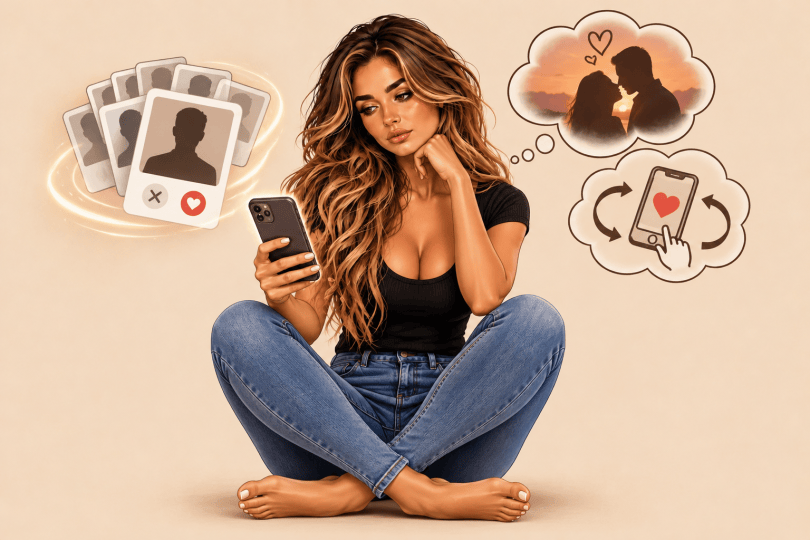
Are We Dating to Find Love, or Addicted to the Search?

The psychology of dating apps, the business of loneliness and why modern romance might be in trouble.

When did finding love become an endless shopping experience?

We live in a time when we have more opportunities than ever to meet people. With a few taps on a phone, we can access hundreds, sometimes thousands, of potential romantic partners. We can browse profiles, swipe through photographs, exchange messages and arrange dates without ever having to leave the comfort of our homes.

On paper, this should be the golden age of romance. Yet something rather peculiar seems to be happening.

People are increasingly talking about dating fatigue, emotional exhaustion, ghosting, situationships and the difficulty of finding someone who genuinely wants a relationship. We have an extraordinary amount of choice, but are we actually becoming any better at choosing?

And perhaps a more uncomfortable question: Are dating apps designed to help us find love, or have we become the product of an industry that makes money from our continued search for it?

The business model behind looking for love

I recently had a conversation with somebody who works in analytics and algorithms. They raised an interesting point about the economics of dating platforms. Their argument was that a relatively small proportion of men receive a disproportionate amount of attention, while a much larger proportion experience considerably less success. Those who receive fewer matches may consequently spend more time on the platforms, purchase subscriptions, pay for boosts and invest money in trying to improve their visibility.

It got me thinking.

There is a popular theory circulating online known as the 80/20 rule of dating apps. It suggests that a small proportion of men receive the majority of female attention.

You will also hear variations of this as the 90/10 rule.

However, it is important to distinguish internet theories from established research. There is no reliable universal statistic proving that 10% of men receive 90% of all matches across dating apps.

What we do have is some interesting evidence.

A 2016 academic study, A First Look at User Activity on Tinder, conducted by researchers including Gareth Tyson at Queen Mary University of London, examined almost half a million Tinder users using a combination of controlled profiles and survey research.

The researchers identified significant differences in how men and women interacted with the platform. Women tended to be more selective, while men tended to swipe right on a much larger proportion of profiles.

This created what the researchers described as a feedback loop: men became less selective in the hope of securing matches, while women became increasingly selective because their likes were more likely to result in matches.

The result was an unequal experience of the same platform.

This doesn’t prove that a fixed percentage of men monopolise all the attention. But it does demonstrate that dating apps can create very different experiences for different groups of users.

Oh and the commercial implications are interesting.

If somebody is repeatedly unsuccessful, they may be more inclined to keep trying. They might purchase premium membership, pay to see who has liked them, increase their profile visibility or buy additional features.

Meanwhile, somebody receiving hundreds of likes may find themselves overwhelmed by choice and struggle to establish meaningful connections. Two very different experiences. Potentially the same commercial outcome: continued engagement, addiction and lack of love.

The psychology of the swipe

So why are these apps so difficult to put down? Part of the answer lies in behavioural psychology.

Dating apps use a mechanism that has a lot in common with variable reward systems.

Think about a slot machine. You don’t know when the next reward is coming. Sometimes you get nothing. Sometimes you get a small reward. Occasionally, you get something that feels particularly exciting.

The uncertainty is part of what makes the experience compelling. A dating app can operate in a similar psychological environment.

You swipe through several profiles. Nothing particularly interesting happens. Then suddenly, a match appears.

Someone attractive. Someone interesting. Someone who looks as though they might tick every box.

There is a little rush of excitement. Perhaps a notification, a message or a compliment.

You begin imagining the possibilities, but then the interaction might fade, the person might stop replying, or the date might never materialise.

And so you return to the app….Perhaps the next swipe will be different.

This is not to say that every dating app user is addicted or that every notification produces a predictable dopamine response. Human behaviour is much more complicated than that.

But intermittent rewards, anticipation, novelty and uncertainty are well-established psychological mechanisms that can reinforce repeated behaviour.

The interesting thing is that the reward isn’t necessarily the relationship itself.

Sometimes, it is simply the possibility of one.

The addiction to the new crush

I think this is one of the most fascinating aspects of modern dating.

Why do we become so excited about somebody we barely know?

A new match can generate an extraordinary amount of anticipation. You exchange messages, learn little details about each other, start imagining what meeting might be like and perhaps begin to picture a future.

There is an element of fantasy involved.

Because when we first meet somebody, we don’t know them particularly well. We are often responding to the potential of who they might be, rather than the reality of who they are.

The early stages of attraction are exciting precisely because there is so much we don’t know. Every message can feel significant. Every compliment can reinforce our interest. Every little sign of attention can make us want more.

Psychologically, anticipation can sometimes be more exciting than the eventual reward and this creates an interesting problem.

Once we have actually met somebody, the mystery begins to disappear. We move from imagining a person to getting to know an actual human being.

Real relationships require patience, communication, compromise and consistency. They also involve ordinary moments that aren’t particularly exciting, but if we become accustomed to the constant stimulation of new profiles, new matches and new conversations, could the ordinary process of getting to know somebody start to feel less exciting by comparison?

Are we becoming better at starting connections but worse at allowing them to develop?

Why are we still swiping after a brilliant date?

Imagine this.

You meet somebody. The date is wonderful. You laugh, there’s chemistry, the conversation flows and you feel genuinely attracted to each other.

You go home feeling happy.

There is every possibility that this could develop into something meaningful… maybe?

Yet the following morning, while lying in bed, you open your dating app again.

Why?

Perhaps you’re not entirely convinced that the person is right for you.

Perhaps you’re worried about becoming too invested too quickly.

Perhaps you simply want to know that other options are still available.

Or perhaps the app has conditioned you to believe that there is always somebody else around the corner.

This is where the psychology of choice becomes particularly interesting.

When we believe there are endless alternatives available, committing to one possibility can feel like closing the door on hundreds of others.

What if the next person is more attractive? More successful? Funnier? More compatible? What if somebody even better is only three swipes away?

This is sometimes referred to as the paradox of choice.

More options can create more opportunities, but they can also make decisions harder and increase the fear of missing out.

Research published in 2025 by Marina Thomas, Alice Binder and Jörg Matthes examined how the number of profiles people evaluate affects their decision-making. Their experiment involved 401 participants.

Those who evaluated more profiles were less likely to accept a potential partner than those presented with fewer profiles. Greater numbers of profiles also increased feelings of choice overload.

The study also found that the way people made decisions mattered. More intuitive, rapid decision-making was associated with less favourable self-evaluations.

Think about what that means.

The more people we browse, the more difficult it may become to feel satisfied with any individual choice.

Perhaps the problem isn’t that we haven’t found somebody good enough.

Perhaps we’ve become accustomed to looking for somebody better.

The evidence: Are dating apps making us unhappy?

There is growing academic interest in the psychological effects of dating app use.

A 2023 research paper published in Telematics and Informatics, titled 99+ Matches but a Spark Ain’t One, examined the adverse psychological effects associated with excessive swiping.

The researchers identified links between excessive swiping and:

  • Upward social comparison.
  • Fear of being single.
  • Partner choice overload.

The study also found that excessive swiping helped explain the relationship between frequent dating app use and these negative psychological experiences.

In other words, simply having access to dating apps isn’t necessarily the whole issue. How much we use them, and how we interact with them, matters.

A further systematic review and meta-analysis published in Communications Psychology in 2026 examined 27 studies involving 21,263 participants.

It found small-to-moderate associations between dating app use and emotional distress, appearance concerns, body image disturbance, behavioural dysregulation and interpersonal sensitivity. The strongest associations were found in behavioural dysregulation and body-related outcomes.

Importantly, the researchers also highlighted that these findings do not establish that dating apps cause these problems. Individual circumstances, pre-existing vulnerabilities and social context all matter.

Nevertheless, it raises an important question about the psychological environment in which modern dating now takes place.

When your romantic prospects are presented as a continuous stream of photographs, profiles and first impressions, it is easy to start evaluating yourself in the same way.

Am I attractive enough? Am I getting enough matches? Why hasn’t that person replied? Why have they viewed my profile but not messaged?

Something that began as an attempt to find companionship can gradually become another source of comparison and self-doubt.

The legal challenges: Are dating apps being held accountable?

Interestingly, concerns about the business practices and psychological effects of dating platforms have moved beyond online discussions.

There have been actual legal challenges.

1. The Match Group addiction lawsuit – 2024

In February 2024, nine users filed a proposed class action in the United States against Match Group, the company behind Tinder, Hinge and The League.

The plaintiffs alleged that the platforms were deliberately designed to encourage compulsive use, using features that kept users engaged and encouraged them to purchase increasingly expensive subscriptions.

Their argument was that the companies’ commercial interests were in conflict with users’ stated objective of finding lasting relationships.

In December 2024, a federal judge ruled that the claims had to proceed through individual arbitration rather than as a federal class action, relying on arbitration provisions in the companies’ user agreements.

This was a procedural decision. It was not a finding that the addiction allegations were proven.

Match Group disputed the allegations.

Nevertheless, the case brought an important question into the legal arena: should technology companies be held accountable if the design of their products encourages patterns of behaviour that users struggle to control?

2. The Federal Trade Commission versus Match Group

Another significant case involved the United States Federal Trade Commission.

In 2019, the FTC sued Match Group over allegations concerning deceptive advertising, billing and subscription practices on Match.com.

Among the allegations was that the platform used potentially fraudulent or fake romantic interest notifications to encourage non-paying users to subscribe.

In September 2025, Match Group agreed to pay $14 million to resolve the FTC’s charges.

The agreement also required changes to its advertising representations, account practices and cancellation processes.

This case was not a court finding that the company had deliberately engineered romantic addiction. It was a consumer protection case concerning commercial practices.

But it does demonstrate that the way dating platforms make money, market their services and treat paying customers is a legitimate area of regulatory scrutiny.

3. The wider question of accountability

These cases raise a much bigger issue.

Social media platforms have faced increasing scrutiny over engagement-driven design, and dating apps are beginning to attract similar questions.

Should a company whose customers are seeking romantic relationships be judged purely on how many people use its platform, how long they stay or how much they spend?

Or should we also be asking whether its business model genuinely supports the outcome those customers are paying for?

There is a fundamental difference between a business that helps you find something and one that makes money from you continuing to look for it.

That distinction deserves closer examination.

The numbers behind modern dating

Let’s look at the UK picture.

According to Ofcom’s 2024 Online Nation research, approximately 4.9 million UK adults used an online dating service during the year.

In May 2024:

  • Tinder reached approximately 1.9 million UK adults.
  • Hinge reached approximately 1.4 million.
  • Bumble reached approximately 1.1 million.
  • Men accounted for 65% of adult visitors to online dating services overall.
  • Women accounted for 35%.

Interestingly, Hinge was the only one of the top ten services where women outnumbered men, accounting for 53% of its adult visitors.

Ofcom also reported that nearly two million adults visited dating services on Valentine’s Day 2024, spending an average of 19 minutes looking for love online that day.

These figures tell us something important.

Dating apps are not a small niche industry. They have become a substantial part of how people meet, interact and pursue relationships.

And yet, more access to potential partners doesn’t automatically translate into more meaningful relationships.

Are we creating a culture of disposable relationships?

Perhaps one of the biggest cultural changes is the way we perceive potential partners. When we meet someone in everyday life, we tend to encounter them as a whole person. We might meet through friends, work, church, social activities or a shared interest.

Attraction develops through conversation, familiarity, humour, shared experiences and the little things that make somebody interesting.

Dating apps change that starting point.

We are presented with a profile. A photograph. An age. A location. A short description. Before we’ve even spoken, we have often made a decision about whether somebody is worth our time and if we don’t immediately feel excited, we can simply move on.

There is always another profile waiting.

Could this be encouraging a more disposable attitude towards people?

Are we becoming less tolerant of imperfections because we believe there is an endless supply of alternatives?

Do we abandon connections at the first sign of uncertainty because we have become accustomed to instant gratification?

And what happens when two people who might actually be compatible never give themselves the opportunity to find out?

Of course, not every relationship deserves a second chance. Nobody should feel obliged to pursue someone they aren’t interested in.

But there is a difference between recognising genuine incompatibility and constantly searching for an imaginary perfect person.

Real people are not profiles. They have difficult days, insecurities, responsibilities, histories and imperfections.

The challenge of a relationship is learning whether two real people can build something together.

That requires a little more than a swipe.

Are we heading towards a lonelier society?

It would be unfair to blame dating apps for loneliness.

Loneliness is influenced by many factors, including social isolation, changing family structures, work patterns, financial pressures and the decline of some traditional community connections.

But it is worth looking at the wider picture.

The UK Government’s Community Life Survey for 2024/25 reported that approximately 6.6% of adults in England felt lonely often or always.

Among adults aged 16–24, that figure was 9%.

For those aged 25–34, it was 8%.

These statistics don’t tell us that dating apps are responsible. They do, however, remind us that loneliness remains a significant social issue and there is an interesting contradiction here.

We can have hundreds of conversations in our phones and still feel disconnected.

We can receive constant notifications and still feel unwanted.

We can have multiple matches and still struggle to find somebody who genuinely wants to spend time with us.

Digital access to people is not the same thing as emotional intimacy.

Perhaps we have become very good at making contact but less confident about building connection.

So how do we change the way we date?

I don’t believe the answer is necessarily to delete every dating app or return to a world where people can only meet through friends.

Dating apps can be wonderful. They have introduced people who might otherwise never have crossed paths. They can be particularly valuable for people with busy lives, those who have moved to new areas and those who find approaching strangers difficult.

There is absolutely nothing wrong with using technology to meet someone.

The question is whether we are using it intentionally. Perhaps we need to rethink some of our habits.

What if, after a genuinely enjoyable date, we allowed ourselves to enjoy the experience rather than immediately returning to the search?

What if we gave somebody the opportunity to show us who they are over a few meetings, rather than deciding whether they are our future partner after two hours?

What if we stopped treating every interaction as an opportunity to assess whether somebody is better than the last person? And what if we became a little more comfortable with the idea that choosing one person means temporarily putting other possibilities aside?

That isn’t settling. It’s recognising that meaningful relationships are built through attention, consistency and time.

You cannot cultivate something while constantly digging it up to see whether something better might be growing elsewhere.

The question we should all be asking

Perhaps the most important question isn’t whether dating apps are ruining relationships.

It’s whether we have allowed the culture of endless choice to change what we expect from relationships in the first place.

We want excitement, but also stability.

We want somebody emotionally available, but sometimes struggle to make ourselves available.

We want to be someone’s first choice, while keeping our own options open.

We want meaningful connection, but can become impatient with the ordinary process of getting to know another human being and perhaps the biggest irony of all is that the very technology designed to bring us closer together can sometimes leave us feeling that nobody is quite enough.

There is a difference between being open to meeting somebody and being permanently available to the possibility of somebody better.

Maybe we need to rediscover the ability to pause…

To enjoy a date.

To be curious about a person rather than their next potential replacement.

To recognise that chemistry is a beginning, not a finished relationship, and that something meaningful needs room to grow… or at least enjoy…

Because if we spend all our time searching for the next exciting possibility, we might eventually overlook the person sitting right in front of us.

Perhaps we don’t have a shortage of potential partners. Perhaps we have a shortage of people willing to put down their phones long enough to discover one another… rather than seeking constant validation.

And that is a much bigger problem than dating apps alone
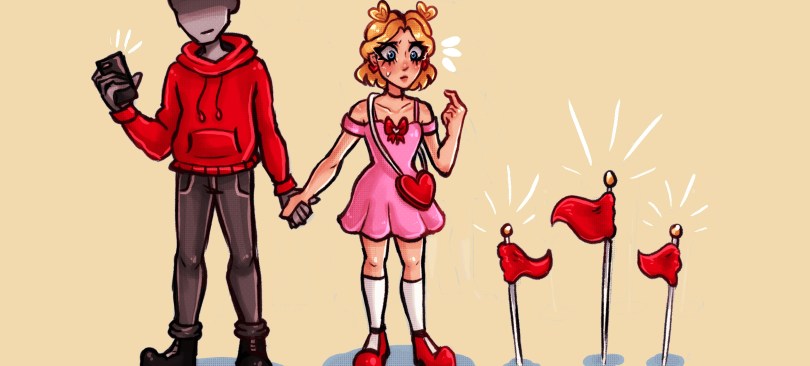
The Men of 2025: How my year of Dating Hell, and Hard-Learnt Lessons, can help you spot Red Flags!

What the hell happened!!??

Sex, fantasy, consistency — and why modern dating keeps breaking women

After a long period of celibacy, I met my ex-boyfriend — let’s call him The Lion. We don’t need his real name.

The Lion, The narcissist.

In fact The grandiose narcissist.

He was very handsome, Beautiful, actually. Perfect white teeth. A full head of hair, (two hair transplants because one wasn’t enough). He was sexy, but not my usual type. I normally go for taller, lean, athletic men with no tattoos. He was huge. Six foot tall, probably six foot wide. Muscly. Strong. Dominant.

He wasn’t my type — and yet something about him completely undid me.

I found him intensely attractive, in a way I hadn’t experienced before. Maybe because he wasn’t my normal type. Who knows. But the sex between us was off the scale. Raw. Animalistic. Lust-driven. Some of the best sex I’ve ever had.

We couldn’t get enough of each other. Sexy weekends away. Him telling me how to dress. The gifts, ( And for anyone who knows me, Im not normally into this) The energy. The chemistry. The obsession.

I almost felt like his doll — something he couldn’t put down, and that, I think, is where most of the attraction came from.

And that’s all it was.

Sex.

There was no substance. No emotional safety. No real love. Just intensity masquerading as connection. My therapist later told me clearly: the “connection” existed because I had been celibate, and my body and mind craved attention.

The first three or four months felt incredible.

Then everything shifted.

The final two months were hell.

I dropped from 9st 4 to 7st 10, living in pure survival mode.

He became verbally abusive — at first subtly, then relentlessly. Comments about my body. My teeth. My weight. My scars. Criticism disguised as jokes or “help.” Tiny cuts, over and over again.

This was a man who knew my history with an eating disorder and body dysmorphia. All the “I want to know everything about you” had been a ploy — to gather ammunition.

I treated him like a king.

He treated me like something and someone he owned…

He’d say things like, “Why do you have this effect on me? I just can’t give you up.”

As if I was the problem. As if I was doing something to him.

Once, sitting in my car, he pulled me onto his lap and said,

“Kerry, you do this to me. I’m not sure I want this, but you have this way of winning me back.”

I hadn’t done anything wrong.

Then he hugged me and said,

“I’m scared I could become abusive towards you — you’re too soft and nurturing.”

Let that sink in.

I’ve been told before that I have a presence, that I make people feel seen. With him, that became a weapon. He leaned into my kindness while resenting me for it.

The worst moment came on a drug-fuelled Ibiza trip. Pink cocaine from 7am to midnight. Then the comedown.

For twelve hours — hotel, airport, plane — he broke me down.

Told me I was a bad person. Needed therapy. Needed to change my career. Needed to look different. This was Loudly, Publicly, to the point people noticed.

Every time I looked away, he physically lifted my chin and told me I wasn’t listening.

I hadn’t done a single thing wrong.

At one point a stranger followed me into an airport toilet and said,

“This is not okay. I’m worried about you, as this is dangerous’

And I still made excuses for him.

That’s how deep it was, and I knew I was hours away from the safety of my own home..

After that, he love-bombed me, Promises. Romance. Safety. Then after one trip, I fell seriously unwell, to the point I was hospitalised for 8 days — He then broke off with me saying ‘I didn’t sign up for this’ – Meaning his Girl in hospital and being super unwell, then nothing. Coldness. Disinterest. Silence.

And that’s when I finally saw it.

This was just sex.

And no sex — no matter how good — is worth fear.

He did wonders to my body sexually I thought at the time, and then I realised, No, I made that happen, I had gone so long without sex that I think anyone could of made that happen.

What he did to my head nearly destroyed me.

He tried to break me.

And I very nearly let him.

Reflection: The Narcissist

This wasn’t love. It was trauma bonding. Intensity without safety. Power without care. He fed on devotion, then punished me for giving it.

Narcissists don’t want partners — they want mirrors, supply, and control.

Lessons Learned: If You Meet a Narcissist

  • Intensity is not intimacy
  • Amazing sex does not cancel abuse
  • If he uses your vulnerabilities against you, leave
  • If your body is deteriorating, your nervous system is screaming
  • Love never requires survival mode

Airport Guy: When Kindness Still Isn’t Compatibility

A few days after splitting with my Ex, I flew abroad with my little boy.

I was still fragile. Still healing. Still very much in recovery mode — physically and emotionally.

At the airport, a man stared at me so intensely it actually made me blush — and I am not easily flustered. I mean, his neck nearly broke turning to look back at me. Later, delayed on my flight, I opened a dating app.

And there he was.

We matched. Of course we did.

Airport Guy.

He was kind, sweet, down to earth, handsome — and back to my usual type: dark, tall, athletic. After everything I’d been through, he felt… safe. Gentle. Normal.

We talked for weeks. He was attentive and consistent with messaging. There was warmth there, ease, laughter. But as time went on, I realised something was missing. There was no real depth. No emotional intelligence. No stimulation that made me feel mentally alive.

Still, I agreed to a date.

And actually, we had a ball.

It was last minute, impulsive, a “fuck it” moment. The evening was easy and fun, and before it ended, we’d already agreed to a second date.

On the second date, he went all out. He booked Louie’s in Manchester and really made an effort. That night, he stayed over. We cuddled, talked, laughed, but lying there, I found myself thinking something that surprised me.

I really fancied him – but I didn’t want sex with him.

Not in that way.

There was attraction, but no pull. No hunger. No emotional spark that made me want to cross that line. And I can’t fake that, nor should I.

We ended up seeing each other six times over several weeks. I kept hoping something would ignite. I wanted it to. He was good company, however instead of things deepening, cracks started to show.

He moaned constantly about the two-hour distance.

He lacked curiosity and depth.

When life got hard, he disappeared into drug-fuelled benders.

One night, he rang me 37 times, completely off his head, telling me he’d fallen for me — but his mind was a mess, I was too far away, and I was “too good for him.”

That sentence told me everything I needed to know.

I don’t do drugs. I won’t tolerate them in a partner, especially after what I’d just survived and while he was genuinely lovely, he was also lost, unhealed, and not self-aware enough to know it — without playing the victim role.

I wasn’t the woman who could save him.

And in truth, I also wasn’t ready to progress intimacy with anyone. You can’t force a spark. It’s either there or it isn’t. And without it, nothing meaningful grows.

So I ended it.

Not because he was bad — but because nice isn’t enough.

Reflection: The “Good on Paper” Man

Airport Guy represents a difficult truth: not every connection that feels safe is right. After abuse, kindness can feel like chemistry — but they are not the same thing.

He wasn’t cruel. He wasn’t manipulative. He was simply unhealed. And unhealed people often look for partners to steady them, soothe them, or anchor them through chaos.

That isn’t partnership — it’s emotional dependency in waiting.

Lessons Learned: When the Man Is Kind but Not Ready

  • Safety alone does not equal compatibility
  • Attraction without depth leads nowhere
  • You cannot build intimacy with someone who avoids their own pain
  • Substance abuse is not a “phase” — it’s a coping mechanism
  • It’s okay to walk away from someone good because you need something right

Choosing yourself doesn’t always mean leaving bad men.

Sometimes it means leaving good men who aren’t capable of meeting you where you are.

The Mistake Guy: When Your Body Knows Before You Do

Then came The Mistake.

We matched on Hinge — and as anyone who’s been on dating apps knows, even getting off them and exchanging numbers takes effort. This man had recently moved back to the UK from Dubai, Ex-soldier. Worked on high-end military contracts, Father of three.

On paper, he sounded solid.

He was intelligent, direct, keen to align. We shared beliefs around supporting the military — but beyond that, there wasn’t much emotional alignment. I felt he tried to force more alignments than there were, and I wasn’t sure if I was attracted to him, beyond recognising that he was tall, dark, and handsome.

Still, as always, he was the only person I was speaking to.

He was persistent, offered date after date and even though he lived four hours away, he kept pushing to see me.

At the time, I’d been off work and unwell so on week three of chatting, he badgered me for a date and offered to drive to my city. With hesitation — and, if I’m honest, feeling a little guilt-tripped — I agreed.

On one condition: I would drive myself.

Within minutes of me saying yes, he told me he’d booked a hotel (for himself), chosen the restaurant, and planned the evening. Later, I discovered he’d lied about part of this, but at the time, I put it down to enthusiasm.

When we met, I was late and had misunderstood the bar he’d suggested, so I went straight to the restaurant. Standing at the bar waiting, I suddenly felt someone come up behind me and pick me up and squeeze me.

Anyone who knows me knows I have strong boundaries — and I hate being picked up unexpectedly.

I froze.

I told myself to calm down. He’s just excited to see you.

At dinner, he commented that he didn’t like sitting opposite me. I replied that I was comfortable where I was. When I went to the bathroom and came back, he’d moved to my side of the booth. I felt cornered. I slid back into my seat, forcing him to stand up, and angled my body so I wasn’t fully facing him.

He put his arm around me and went in to kiss me.

I pecked him — more out of politeness and shock than desire.

I think he felt my energy change, because suddenly he pulled back and shifted tone. For the next few hours, he was a perfect gentleman. I relaxed. I enjoyed the date.

And that’s where I made the mistake.

I ignored my intuition — the tight chest, the internal warning — because nothing “bad” had happened yet, and I put it down to my own over-thinking.

What followed was something I won’t detail publicly, but it was enough to teach me a lesson I will never forget.

He is well and truly blocked and I hope our paths never cross again.

Reflection: This Is What Happens When You Override Your Gut

Nothing dramatic has to happen for something to be wrong. Women are taught to override discomfort to avoid appearing rude, dramatic, or ungrateful.

Predatory or unsafe men rely on that conditioning.

Your body recognised danger long before your mind caught up.

Lessons Learned: What Women Need to Hear About “The Mistake”

  • Discomfort is information, not anxiety
  • You don’t need proof to leave a situation
  • Being polite has put women in danger for generations
  • A man who ignores physical boundaries early will ignore bigger ones later
  • If your intuition whispers, listen — if it screams, run

Ignoring your gut doesn’t make you open-minded.

It makes you vulnerable.

Mr Avoidant: The Fantasist Who Never Intended to Stay

Then there was Mr Avoidant — someone I’d known briefly before, who had actually helped and advised me after The Mistake.

At first, he seemed different.

Attentive, Caring. Emotionally available. He listened. Asked questions. Showed understanding. I told him early on that I’d sworn to celibacy — that my body needed to belong to me again.

He said he respected it.

He talked about the future, About long-term plans, About a relationship. Even about going to Auschwitz together — somewhere I’ve always wanted to go but this was from the off and straight away I recognised the feeling immediately: love bombing.

I’ve learned something important about myself — I attract fantasists. Men who talk. Men who imagine. Men who build futures with words rather than actions.

Men who want the idea of me.

One night, we kissed. Just a kiss. A cuddle. No intimacy. During that moment, he said, “You’re dangerous.” I asked what he meant. He brushed it off — but I knew exactly what he meant.

After that night, the shift was immediate.

Avoidance. Excuses. Distance. Mixed signals.

Too ill to see me with a supposed chest infection — yet somehow well enough to win a padel tournament. Constant viewing of my Instagram stories within minutes of posting. Suddenly posting stories himself, despite never doing so before.

WhatsApp messages sent — then deleted before I could read them.

It felt unhinged.

I don’t do games.

There is a short window with me. Once I feel self-protection kick in, the switch goes off — and that’s not self-sabotage. That’s self-preservation.

The following week, I went back on dating apps.

And there he was, Back on them too.

You don’t get access to me while shopping for someone else. You don’t get my emotional energy while keeping your options open.

Reflection: Fantasists Want Access, Not Responsibility

Avoidant men love connection — until it requires consistency. They crave intimacy but panic when it becomes real.

They want you close enough to soothe them, but far enough that they don’t have to commit.

Lessons Learned: How to Spot an Avoidant Early

  • Words without follow-through are a red flag
  • If he’s still on dating apps, you’re not chosen
  • Mixed signals are the signal
  • Consistency is emotional maturity
  • If he disappears after intimacy (even emotional), believe the pattern

A man who wants you doesn’t confuse you.

He makes space. He makes plans. He shows up.

The Red Flags I Will Never Ignore Again

(And Neither Should You)

These aren’t dramatic.

They aren’t always obvious.

Most of them appear early — and we talk ourselves out of them.

Early Behavioural Red Flags

  • Intensity too soon — fair enough if its a month in, but i’m talking week 1 week 2.
  • Boundary testing on first or early dates (touching, closeness, pressure)
  • Discomfort in your body that you rationalise away
  • Inconsistent communication disguised as “busy” or “overwhelmed”
  • Charm paired with entitlement

Emotional & Psychological Red Flags

  • Making their feelings your responsibility
  • Subtle criticism framed as jokes, concern, or “help”
  • Playing victim while avoiding accountability
  • Blaming stress, substances, or mental health for harmful behaviour
  • Turning your empathy into a weapon

Consistency & Availability Red Flags

  • Talking about commitment without backing it up with action
  • Keeping you in conversation but vague about seeing you
  • Still active on dating apps while claiming interest
  • Hot–cold behaviour after intimacy (even emotional intimacy)
  • Making you feel anxious instead of grounded

Lifestyle & Coping Red Flags

  • Using drugs or alcohol to escape discomfort
  • Chaotic lives with no evidence of self-work
  • Expecting you to stabilise or rescue them
  • Treating therapy, growth, or accountability as optional

The Biggest Red Flag of All

  • You feel smaller, quieter, or less yourself around him
  • You start editing your needs to keep the peace
  • Your nervous system is on edge more than it’s at rest

Love does not feel like walking on eggshells.

Connection does not cost your health.

Desire does not require self-betrayal.

What 2025 Really Taught Me

It would be easy to frame 2025 as a year where I simply met the wrong men.

But that would let me off too lightly.

The truth is, I chose them.

Not consciously. Not maliciously. But through patterns I hadn’t fully interrupted yet.

The narcissist wanted power.

Airport Guy wanted comfort.

The Mistake wanted access.

The Avoidant wanted fantasy.

Different men — same outcome.

And while each of them was responsible for their behaviour, I have to be honest about my part in letting them close.

My Accountability

I didn’t attract these men because I’m weak.

I attracted them because I am open, emotionally literate, warm, and capable of holding space. I listen deeply. I give generously. I see people for who they could be — not just who they are in front of me.

That’s not a flaw.

But here’s where my responsibility lies:

I stayed too long in potential.

I rationalised early discomfort.

I confused intensity, kindness, or familiarity with readiness.

I allowed words to carry more weight than actions.

I also entered dating while still healing — believing I was strong enough to spot danger, without fully respecting how vulnerable that season made me.

That vulnerability didn’t make me stupid.

But it did lower my tolerance for red flags.

The Pattern I Finally Saw

Each of these men was offering something that looked like connection — but none of them were offering consistency.

And consistency is the only thing that makes love safe.

They talked.

They imagined.

They promised.

They performed.

But when it came to showing up — emotionally, practically, predictably — they disappeared, destabilised, or turned harmful.

What I learned is this:

If a man cannot meet you in reality, he will meet you in fantasy — and fantasy always collapses, its unsustainable!

We need to spot Green Flags!

The Green Flags of Real Love

(The Signs You Can Trust and Build With)

These are the behaviours and qualities that signal safety, consistency, and emotional availability. They’re not flashy or dramatic, they’re grounded in reality.

Early Behavioural Green Flags

  • Respects your boundaries — physical, emotional, and temporal
  • Doesn’t rush intimacy — values connection over convenience
  • Takes your discomfort seriously — validates it instead of brushing it off
  • Consistent communication — not overbearing, not disappearing

Emotional & Psychological Green Flags

  • Owns their emotions and mistakes — doesn’t blame you for their problems
  • Shows empathy without expectation — can see your perspective without needing to fix it
  • Encourages your growth — celebrates your strengths and supports your goals
  • Balances give-and-take — emotional labor isn’t one-sided

Consistency & Availability Green Flags

  • Follows through on plans — action matches words
  • Prioritizes quality time with you — without making excuses or distractions
  • Shows a genuine interest in getting to know you as a person
  • Keeps commitments — from simple promises to long-term discussions

Lifestyle & Coping Green Flags

  • Manages stress in healthy ways — doesn’t turn to substances to escape reality
  • Engages in self-work — therapy, reflection, or intentional growth
  • Seeks partnership, not rescue — wants a relationship of equals, not a project
  • Communicates openly — expresses needs and feelings honestly

The Biggest Green Flag of All

  • You feel fully yourself — at ease, grounded, excited, and safe
  • You can voice your needs without fear
  • You don’t feel anxious just being near him
  • You see a future and it feels like a shared love story…but you can still keep each other grounded without fear of love bombing.

Love should feel like a homecoming, not a battle.

Safety, respect, a man who is self aware and consistency are far sexier than drama, intensity, or unpredictability.

What I Want Other Women to Take From This

This isn’t about becoming colder, harder, or closed.

It’s about becoming clear.

  • Attraction without safety is not chemistry — it’s your nervous system reacting
  • Kindness without emotional capacity is not partnership
  • Words without follow-through are not hope — they are placeholders
  • If your body is in distress, your intuition already knows the truth

And most importantly:

You are not “too much” for wanting consistency.

You are not demanding for wanting clarity.

You are not difficult for expecting follow-through.

Those are the bare minimum requirements for love.

Where I Am Now

I no longer chase intensity, reassurance, or potential.

I look for:

  • Actions
  • Effort
  • Emotional regulation
  • Consistency over time

And if those things aren’t present, I don’t negotiate with myself anymore.

This isn’t bitterness.

It’s self-respect.

2025 didn’t break me.

It taught me how to stop abandoning myself.

And that lesson will change everything that comes next.