Is Marriage Dead in 2026? Or Have We Just Forgotten How to Love?

As I drive past a wedding dress shop today driving to my studio, I look through the window and think, oh my God. I’m in love.

Not necessarily with a particular dress, not even necessarily with the idea of the wedding itself, but with what those dresses represent.

Love.

Commitment.

Romance.

Two people standing in front of the people they love and saying, I choose you.

Not just today, not just while it feels easy, not just while we agree.

But I choose you.

Perhaps that is why I find myself wondering something that feels increasingly uncomfortable to ask in 2026:

Is marriage dead?

I don’t want to believe it is, Actually, I really don’t.

As a Christian woman, I believe in marriage. I believe in the beauty of making a commitment to another person. I believe in getting married in a church, standing before God and making promises that mean something.

I know not everybody believes the same way and that’s absolutely okay, but what I do wonder about is when we collectively started treating commitment as though it were somehow embarrassing.

When did marriage become just a piece of paper?

When did two people declaring their love, respect, dedication and commitment to each other become something we could dismiss with one sentence?

“It’s only a piece of paper.”

Really?

Because that piece of paper represents a promise.

And perhaps the promise is the bit we’ve forgotten how to value.

We don’t want to settle anymore and that’s a good thing.

Let me be clear about something before anybody starts shouting at me. I am not suggesting that people should stay in unhappy, abusive, neglectful or destructive marriages.

Absolutely not.

For generations, people stayed in relationships they should never have been expected to stay in. Women, in particular, were often financially dependent on their husbands, socially pressured to remain married and told that leaving was shameful.

We have every reason to be grateful that things have changed.

You don’t have to stay somewhere that destroys you. You don’t have to tolerate abuse in the name of commitment. You don’t have to spend your life desperately trying to make something work when the other person is unwilling to meet you halfway.

But somewhere between “I don’t have to settle” and “I don’t have to tolerate anything I don’t like”, I wonder whether we’ve lost something.

The ability to try.

Because there is a difference between settling for someone who isn’t right for you and learning how to love someone who isn’t perfect.

And none of us are perfect.

Not you.

Not me.

Not the person sitting opposite you at dinner.

The statistics tell us something is changing

Marriage hasn’t disappeared.

In England and Wales, there were 231,949 marriages and civil partnerships in 2023, with marriage still overwhelmingly the most common form of legal partnership formation. But the longer-term picture shows that marriage is changing. The number of marriages in England and Wales was 20.8% lower in 2022 than it had been in 1992.

And in 2025, married or civil-partnered people were still the largest legal partnership group among adults aged 18 and over in England and Wales, but their share had fallen from 52.3% in 2015 to 51.1%. At the same time, the proportion who had never married or civil partnered had risen from 32.6% to 34.9%. 

So no, marriage isn’t dead, however it isn’t what it once was, and perhaps that’s not necessarily a bad thing.

People are marrying later. In 2023, the median age at marriage for opposite-sex couples was 34.8 for men and 33.0 for women. More than nine in ten couples marrying in 2021 or 2022 were already living together before marriage. 

We’re taking longer, We’re thinking more carefully, We’re choosing differently, but are we also becoming less willing to work at love?

That’s the question I’m interested in.

When did we become a throwaway culture?

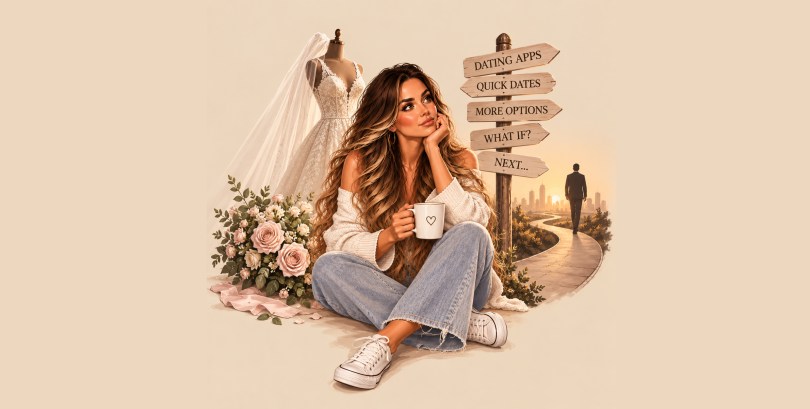
I sometimes wonder whether dating has become a little bit like online shopping.

Swipe.

Match.

Message.

Meet.

Evaluate.

Reject.

Next.

There are always more options.

And when there are always more options, why would I work on the one in front of me?

Maybe there’ll be somebody better.

Maybe somebody more attractive.

Maybe somebody more exciting.

Maybe somebody who doesn’t annoy me.

Maybe somebody who agrees with me more.

Maybe somebody who gives me more butterflies.

And so we keep searching.

But here’s the problem.

Eventually, you can become so obsessed with finding the perfect person that you never learn how to build something imperfect with a real one.

You have one disagreement.

“This isn’t going to work.”

They don’t text in exactly the way you want.

“They’re emotionally unavailable.”

You have a difficult conversation.

“We’re incompatible.”

You sleep together sooner than you intended and suddenly the excitement changes.

“I don’t think I’m feeling it anymore.”

And off we go.

Next…Next….Next.

At what point did people become replaceable?

Whatever happened to wooing somebody?

Maybe I’m a traditionalist, actually, I know I am, but I like romance.

I like getting dressed up for a date, I like putting effort into how I look. I like somebody making an effort with me and no, before anybody says it, I’m not talking about wanting somebody to pay for my dinner.

I’ll happily pay fifty-fifty.

It’s not about getting a free meal.

It’s about effort.

It’s about anticipation.

It’s getting ready and wondering what they’re going to wear.

It’s butterflies in your stomach.

It’s sitting across from someone and talking over each other because you’ve got so much to say.

It’s losing track of time.

It’s that moment when they reach across the table and touch your hand.

It’s smiling when their name appears on your phone.

It’s going home thinking, Oh my God, I really like them.

It’s being giddy.

Perhaps we’ve become so afraid of looking foolish that we’ve stopped allowing ourselves to be romantic.

We don’t want to seem too keen.

Don’t reply too quickly.

Don’t text first.

Don’t show too much interest.

Don’t get attached.

Don’t let them know you like them.

Don’t give them too much power.

Keep your options open.

And suddenly two people who genuinely like each other are both sitting there pretending they couldn’t care less.

What a strange way to fall in love.

The 20-minute coffee date

And this is where modern dating really makes me laugh.

“Let’s just grab a quick coffee.”

Twenty minutes.

Thirty minutes.

Something casual.

Something easy.

No pressure.

No effort.

No risk.

And I understand why people do it.

Dating can be exhausting.

Nobody wants to spend three hours with someone they discover they don’t like. I sometimes wonder whether we’ve become so frightened of wasting our time that we’re not giving people enough time to show us who they are. What can you really learn about somebody in twenty minutes?

You might learn whether they are attractive to you.

You might learn whether conversation flows.

You might get a feeling.

But you probably haven’t seen how they treat the waiter.

You haven’t heard them talk about their childhood.

You haven’t discovered what makes them laugh until they can’t breathe.

You haven’t seen how they respond when something doesn’t go their way.

You haven’t heard their hopes.

You haven’t seen their vulnerability.

You haven’t watched them become comfortable enough to stop performing.

And maybe that’s the problem.

We’re assessing people before we’ve actually met them.

And then there’s sex

This is another area where I think we’ve complicated dating enormously.

Two people meet.

There’s chemistry.

They sleep together.

And suddenly the rules change.

The dopamine rush settles.

The chase disappears.

And instead of asking:

“Who is this person?”

we sometimes start asking:

“Why did they sleep with me so quickly?”

Or:

“Why didn’t they make me wait?”

Or:

“Do they do this with everyone?”

And suddenly we’re judging the person based on the speed at which intimacy happened.

But what about everything else they’ve shown you?

Are they kind?

Are they funny?

Are they honest?

Are they emotionally generous?

Do they listen?

Do they make you feel safe?

Do they have integrity?

Do they show up?

Do they treat people well?

Are they interesting?

Do they make you laugh?

Do they make you feel like yourself?

Why can one decision about sex suddenly erase everything else?

I’m not saying people shouldn’t have boundaries.

Of course they should.

I’m saying that perhaps we’ve become very good at reducing complicated human beings to one decision, one mistake, one night or one moment.

And then we discard them.

The divorce paradox

Here’s the really interesting part.

In England and Wales, the divorce rate actually peaked decades ago.

ONS data shows that divorce numbers reached their highest point in 1993, while the longer-term divorce rate has since declined. In 2023, there were 102,678 divorces, with the divorce rate at 8.6 per 1,000 married men and 8.5 per 1,000 married women. 

So perhaps the story isn’t simply that everyone is getting divorced. It’s more complicated than that. Marriage itself is less common. 

People marry later. 

More people cohabit.

More people remain unmarried.

And when people do marry, they have more legal and social freedom to leave relationships that aren’t working.

That’s progress in many ways.

But perhaps we now have a different problem.

Not “Why can’t I leave?”

But:

“Do I leave too quickly?”

There’s a huge difference.

The other side of the world

I was curious about what this looks like elsewhere too, particularly because so many people who read my work are in America and China.

And what I found was fascinating.

China isn’t some romantic haven where everyone stays together forever.

Quite the opposite.

Marriage rates have been falling significantly there too. In the first half of 2024, 3.43 million couples registered marriages, the lowest first-half figure since 2013. Full-year 2024 registrations subsequently fell by around a fifth, according to reporting based on official Chinese data. Researchers and officials have pointed to factors including the cost of marriage and raising children, economic uncertainty, demographic change and shifting attitudes among younger people. 

Japan is experiencing its own dramatic changes.

Its government has become sufficiently concerned about declining marriage and birth rates that Tokyo has even developed initiatives designed to help people meet potential partners, including an AI-supported matchmaking service. Reuters reported that the initiative was launched against a backdrop of declining marriage rates and a significant number of unmarried middle-aged people and young adults who had never dated. 

And America?

Again, it isn’t a simple story.

The US marriage rate has remained relatively stable over the longer period examined by the Census Bureau, while its divorce rate has declined substantially from 2008 to 2022. 

So we can’t simply point at another country and say, “They value relationships more than we do.”

Human beings are complicated.

Culture matters.

Economics matter.

Religion matters.

Gender expectations matter.

Housing matters.

Childcare matters.

Dating apps matter.

And people’s individual experiences matter.

But there is one thing that seems to be happening across many developed societies:

Marriage and long-term relationships are changing.

Have we confused standards with perfection?

This is where I think we need to be really honest with ourselves. Having standards is healthy, having boundaries is healthy, knowing what you won’t tolerate is healthy, however there is a danger in turning a list of standards into a search for a flawless human being.

Because eventually, somebody will disappoint you.

They’ll say the wrong thing.

They’ll have a bad day.

They’ll misunderstand you.

They’ll irritate you.

You’ll irritate them.

You’ll disagree.

You’ll have different needs.

You’ll have an argument.

And that’s when the relationship actually begins.

Because the first few months of dating aren’t really a test of whether you can get along. You’re both on your best behaviour.

The real test is what happens when the fantasy meets reality.

Do we communicate?

Do we apologise?

Do we listen?

Do we compromise?

Do we seek counselling?

Do we learn about attachment?

Do we understand each other’s wounds?

Do we take responsibility for our own behaviour?

Do we try to become better partners?

Or do we simply decide that the person is defective and start looking for a replacement?

What if the person isn’t the problem?

This is something I think we desperately need to talk about.

Sometimes the person in front of you isn’t wrong for you.

Sometimes you aren’t ready for what a healthy relationship requires.

Maybe you’ve spent years protecting yourself.

Maybe intimacy scares you.

Maybe you’re avoidant.

Maybe you’re anxious.

Maybe you’ve never learned how to communicate.

Maybe conflict sends you running.

Maybe you expect rejection.

Maybe you’ve never seen a healthy relationship modelled.

Maybe you don’t know how to receive love.

Maybe you’ve never learned how to give it properly.

And none of those things make you broken.

But they might mean you have work to do.

And imagine if instead of saying:

“This relationship isn’t working.”

we sometimes said:

“What can I learn from this?”

What if we went to therapy?

What if we learned to communicate?

What if we confronted our own patterns?

What if we became a better version of ourselves, not because somebody demanded it, but because we genuinely wanted to love somebody well?

That isn’t settling.

That’s growth.

Perhaps we’ve become too good at protecting ourselves

We talk a lot about self-protection now.

Protect your peace.

Protect your energy.

Don’t let anybody disturb your peace.

Cut them off.

Block them.

Walk away.

And sometimes that advice is absolutely necessary.

But if we take it too literally, we can end up building such a fortress around ourselves that nobody can get in.

And then we wonder why we’re lonely.

You cannot have deep intimacy without vulnerability.

You cannot have commitment without risk.

You cannot build a lifelong relationship without occasionally being disappointed.

And you certainly cannot love somebody without sometimes being hurt.

The answer isn’t to avoid every possible source of pain.

The answer is learning how to recognise the difference between normal relationship difficulty and genuine harm.

One requires communication.

The other may require leaving.

We need to know the difference.

I still believe in the wedding dress

So when I drive past that wedding dress shop and look at those beautiful dresses, I don’t feel silly for getting a little bit emotional.

I still believe in it.

I believe in the romance.

I believe in getting dressed up.

I believe in flowers.

I believe in walking down the aisle.

I believe in holding someone’s hand and promising to stand beside them.

I believe in marriage.

And as a Christian, I believe there is something deeply meaningful about making that commitment before God.

But I also believe the wedding is the easy bit.

The photographs are easy.

The flowers are easy.

The dress is easy.

The champagne is easy.

The Instagram post is easy.

The marriage is the work.

It’s waking up beside someone when you’re annoyed with them and choosing kindness anyway.

It’s having the difficult conversation.

It’s saying sorry.

It’s forgiving.

It’s asking for help.

It’s learning.

It’s changing.

It’s laughing when things go wrong.

It’s holding each other when life becomes unbearable.

It’s choosing each other again and again.

Not because you have to.

Because you want to.

Maybe marriage isn’t dead. Maybe patience is.

Perhaps marriage isn’t dead in 2026.

Perhaps patience is.

Perhaps we’ve become so accustomed to instant gratification that we’ve forgotten that the most beautiful things in life often take time.

We want instant chemistry.

Instant certainty.

Instant compatibility.

Instant answers.

Instant happiness.

And the moment something becomes difficult, we’re told there is another option waiting around the corner.

But what if there isn’t?

What if the person you walked away from was actually wonderful?

What if the argument could have been repaired?

What if the relationship could have grown?

What if you hadn’t needed another person?

What if you needed to become a different version of yourself?

And I’m not saying this because I think everybody should stay in every relationship. I’m saying it because I think we should become more honest about our own behaviour. Before you decide they’re the problem, ask yourself what part you played. Before you decide they’re not right for you, ask yourself whether you’ve actually given the relationship a chance. Before you walk away, ask yourself whether you’re walking away because the relationship is genuinely wrong for you…

or because intimacy is frightening.

Because commitment is frightening.

Because vulnerability is frightening.

Because you’ve been hurt before.

Because another person cannot give you the perfect relationship you imagined and before you start looking for somebody better, ask yourself whether you’re actually capable of loving the person in front of you.

Because perhaps the greatest tragedy of modern dating isn’t that there are no good people left.

Perhaps it’s that good people are finding each other and then throwing each other away before they’ve had the chance to become something extraordinary.

And maybe, just maybe, we need to start trying again.

We need to court again.

We need to woo again.

We need to make an effort again.

We need to put our phones down and talk.

We need to dress up.

We need to flirt.

We need to hold hands.

We need to let ourselves get butterflies.

We need to stop pretending we don’t care.

We need to learn how to disagree without destroying everything.

We need to stop expecting perfect people.

And perhaps we need to remember that love isn’t just a feeling that happens to us.

Love is something we participate in.

Something we nurture.

Something we protect.

Something we build.

Something we choose.

And maybe that’s why I still look at wedding dresses and think:

Oh my God.

I’m in love.

Not because I believe marriage guarantees happiness.

But because I still believe there is something incredibly beautiful about two imperfect human beings looking at each other and saying:

“Out of everyone in this world, I choose you.”

And then waking up the next morning…

and choosing each other again.

And again.

And again.

Maybe marriage isn’t dead.

Maybe we just need to remember why we wanted it in the first place.
Why Modern Dating Hurts So Much: Attachment, Rejection, and Healing in Today’s Post-COVID World

Modern dating is changing us. Not just how we meet partners, but how we relate to ourselves, our self-worth, our boundaries, our hope for connection. Something in today’s dating culture is making us forget who we are, what we deserve, and how to love ourselves first.

I’ve been watching, not just in my life, but in conversations, in friends’ stories, in what feels like the general pulse of modern love, and I’ve realised there’s something dark and quiet happening inside us. There’s something about today’s post-COVID dating world that’s not just reshaping the way we date, but the way we see ourselves. and I think it’s worth calling it out and us taking time to visit this…

Today’s post-COVID dating world is fast, unpredictable, and constantly in motion. Apps give us swipe-based access to hundreds of faces we never would have met 20 years ago. On paper, it looks like endless choice. In reality, it often produces:

  • emotional burnout
  • attachment anxiety
  • confusion and insecurity
  • fear of intimacy
  • fear of rejection

We’re wired for love – but we’re living in a culture that prioritises availability over authenticity and options over depth.

We’re wired for connection – but the environment keeps pulling us away

As human beings, our biology and psychology are designed for connection, belonging, intimacy. From the moment we were born, being seen, held, accepted mattered. Security, attachment, we evolved to crave these things because they helped us survive and thrive.

But fast forward to now, apps, social media, endless options, midnight messages, “situationships,” and ghosting. On paper, we have more “freedom” and “choice” than ever. But in practice, many of us are more isolated, more anxious, more starved for real connection.

We’ve built a dating culture that normalises disposability and emotional detachment, a culture where it’s normal to treat intimacy like a transaction, and then wonder why we feel hollow.

So when someone shows even a gesture of interest, a kind smile, a compliment,  a deep chat, even just attention, our nervous system reacts like it’s light. We crave that light. We lean into that possibility of warmth the way a plant leans toward the sun. It’s instinct, it awakens us, we WANT the light!

The biology of intimacy – why “casual” doesn’t stay casual

We tell ourselves we’re fine with casual. However our biology often thinks differently. Intimacy, emotional or physical – releases chemicals: hormones like oxytocin, bound up with bonding and trust; neurotransmitters like dopamine, tied with reward, pleasure, anticipation. Touch, warmth, closeness – they make us feel safe, seen, wanted.

Human beings aren’t built for disposability. Physically, emotionally, chemically:

  • Oxytocin (bonding + connection hormone)
  • Dopamine (reward + longing chemical)
  • Vasopressin (attachment + pair-bonding hormone)

These aren’t psychological myths — they’re biology. Intimacy signals to the brain:

Once those signals hit us, we begin to tether, Not necessarily consciously, but deep in our limbic system: “This person made me feel something real.” Maybe for a night, Maybe for a conversation. But real enough.

When that tether is formed, the weight of rejection doesn’t just feel like a lost relationship – it feels like a disruption of safety, of attachment, of self-value.

That’s why sometimes, after the “casual thing,” heartbreak doesn’t feel casual at all. It feels raw, visceral, heavy, because we attached, and tried to convince ourselves “We just wanted fun”. 

Attachment styles, vulnerability and the modern dating trap

Part of the struggle lies in our variation in attachment styles. Some of us find comfort in closeness; some recoil at it; some oscillate between the two. Roughly a third to two-fifths of adults show some kind of insecure attachment style (anxious, avoidant or disorganised). Among those, some lean toward anxious attachment – craving closeness and validation, but haunted by fear of abandonment or rejection.

In a dating environment rife with uncertainty (ghosting, mixed signals, hot-and-cold behaviour, ambiguous “situationships”), anxious people get caught in a loop:

  • They seek validation: “If I can just get this person to like me – text me, stay with me – I’ll feel safe.”
  • They become available, open, emotionally generous, seeking connection.
  • But availability sometimes gets misinterpreted as access, not value.
  • They stay, hoping for stability or love; but often meet inconsistency, indifference, or rejection.
  • Their own emotional need is dismissed, ignored, or undercut – and they’re left feeling replaceable.

That leaves a deeper wound than just being single. It chips away at self-worth. It consumes us. We try to convince ourselves we have the power, but we don’t! We don’t at all, but our conscious mind will do anything to convince us, ‘We’re ok!’ 

The paradox of “availability” vs “value” in modern dating

Here’s the painful paradox I keep seeing and not only that, what I have experienced myself:

  • If a person (often a woman) is warm, available, open to love – they are ready for connection. They offer emotional honesty, clarity, possibility.
  • Yet, sometimes the people who are genuinely looking for that kind of connection don’t recognise its value. They expect something easier: fun, convenience, less emotional labour.
  • On the other hand, a person who seems harder to get – more aloof, more “mysterious,” more reserved – can sometimes be perceived as more desirable simply because there’s a sense of challenge, of scarcity, of chase.

Sociologically and psychologically, it’s a glaring mismatch between what we need (authentic connection, emotional honesty, mutual respect) and what gets rewarded (scarcity, challenge, detachment).

It’s not about “blame” – it’s about recognising that the marketplace of modern dating values the wrong things and for those who come to it with softness, vulnerability, readiness for love –  it’s often the hardest place to find what they genuinely seek.

Rejection: more than just “loss” it’s an identity fracture

When we get rejected, when someone disappears, or treats us like we were never a priority, it doesn’t just sting. It shakes something deeper. I myself have struggled over the years with this, even trying with various therapists to understand the root cause of it all, and I know the answers now, however for most of my life, I was left feeling unwanted, unloved and rejected..

  • Validation-based self-worth: If a lot of our self-esteem depends on “being wanted,” then rejection becomes proof of inadequacy, unworthiness, or invisibility.
  • Attachment rupture: Because our nervous system may have already started to bond, rejection doesn’t feel like a story that ends , it feels like a safe place collapsing, and our whole world is crumbling
  • Internalising blame: We tend to whisper (or shout) to ourselves: “I’m too much / not enough / unlovable.” And instead of seeing that the system is what’s broken, we turn the mirror on ourselves.

In today’s environment, rejection isn’t just a breakup. It’s often felt like a personal failure.

What are we really chasing and what’s missing?

Maybe what we’re seeking is not another person. Maybe we’re seeking:

  • To be seen, to feel that someone understands us beyond the surface.
  • To be valued, to believe that who we are, what we bring, matters.
  • To be safe , emotionally, physically, mentally.
  • To belong,  to connect, to share, to build.

What so many of us discover and sometimes too late, is that these things likely begin with self. If we don’t see ourselves as worthy, safe, valuable, and whole … then no external validation can truly fill that void.

And what gets missing in that chase is often self-respect, self-compassion, self-understanding.

Healing isn’t about “not wanting love” – it’s about redefining where love starts

We can’t necessarily change the system. We can’t rename apps. We can’t make society stop valuing challenge over emotional availability. But we can start changing ourselves. We can build a different inner story. One grounded not in external validation, but internal integrity.

Here’s a rough “healing script” I’m writing for myself , maybe you, or anyone reading this, might relate too:

  1. Recognise my own worth – independent of attention. I am worthy whether someone texts me or not. I am love; I don’t need someone else to confirm it.
  2. Slow down intimacy – emotional and physical. Intimacy doesn’t have to be fast. I give my body, my heart the time to read: “Is this person safe? Do I feel respected?” before I lean in. Of course as any sexual being, of course I crave intimacy, but after my celibacy journey I realised, what I have holds value to me.
  3. Cultivate inner validation, with self-care, self-love, self-respect. I get to look in the mirror and say: “You matter. You deserve respect. You don’t need to chase love – you need to walk towards it.”
  4. Seek emotional clarity – not just physical. I value people who show up with words and actions that match. I’m not afraid to ask: “What do you want? Why are you here?”!!! Don’t be afraid to as that! Sleeping with someone will not suddenly make them fall in love with you! Trust me im pretty confident in the bedroom, but it doesn’t cast them under some love spell!
  5. Set boundaries – protect my time, energy, heart. I will not compromise my self-respect just to feel desired or accepted. I will leave what feels like convenience rather than connection.
  • Find belonging in my community and self-worth in purpose. Real love, trust, and belonging may come from friendships, passions, creativity – not just romantic pursuit.
  • Hold space for growth, patience, and self-compassion. Healing takes time. I might stumble, I might be impatient. I choose to believe that I and the people who deserve me, are worth waiting for.

Conclusion: Relearning love from the inside out

This isn’t a manifesto against dating, sex, or modern love. I still believe in love. I still believe in connection. I still believe in the power of human closeness.

What we’re really fighting against,  what we need to heal from, is the dissonance between what our hearts and bodies crave, and what this fast-moving world offers.

We’re not broken for wanting love, or for wanting closeness. We’re human. We’re wired for bonding, for care, for tenderness.

But maybe the first step is to stop chasing love as a drug. Maybe the first step is to reclaim love from within, to remind ourselves that we are already whole, already worthy, already enough. To remind ourselves its all just chemical reactions… 

Maybe then, when we do open ourselves to another person, it won’t be out of desperation, longing, or validation-hunger, but out of a surplus of self-love.

Because the love we truly deserve isn’t transactional. It’s not earned by being “easy to get” or “hard to win.” It’s simply a reflection, of how much we respect ourselves, believe in ourselves, and hold ourselves worthy of loyalty, kindness, and care.

Maybe, if enough of us do that , change the way we love ourselves first,  we begin to change the way we let others love us.

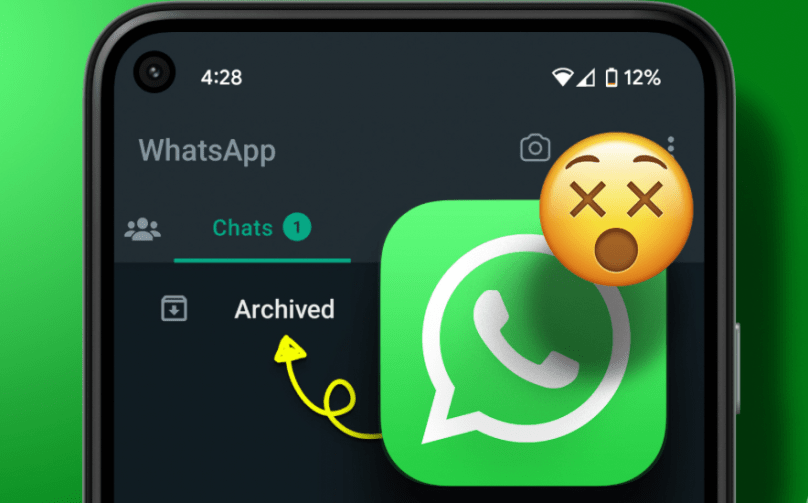
The WhatsApp Graveyard – The Hidden sadness behind the Archived chats.

There’s a sadness attached to the WhatsApp archived box that I don’t think people talk about enough. For me, it isn’t just a folder. It isn’t a feature. It isn’t even practical….

It’s a graveyard.

A quiet cemetery of conversations that once lit up my screen, once lit up my heart, once got me all excited, and then, slowly, silently – went dark. Every time I open it, I’m reminded not just of people I’ve spoken to, but people I had hope for. People who came, touched my life for a moment, said all the right things, and then floated out just as easily.

And I ask myself:

‘Kerry how did we end up here?’ How did words that felt full of potential turn into silence? How did light turn into dimness?

What the Archived Box Means to Me

The archived box feels like the place I put people when I can’t bear to see them dwindle down my chat list. Watching someone slide further and further down, past the group chats, past the random acquaitance chats, past the family you rarely reply to, is painful. It’s a visual reminder of how long it’s been since they cared enough to speak… or since I cared enough to try again.

I don’t like putting people in the archived box. I don’t enjoy the symbolic burial of a conversation that once mattered, but sometimes keeping them in my main inbox hurts even more, because every day they drift further down, it’s like watching a candle burn out in slow motion.

So I archive them, Not because I don’t care, But because maybe… I care too much.

“Out of sight, out of mind” never really works – but it gives me a moment of peace.

Why We Put People There – Psychologically Speaking

From a psychologist point of view, the archiving someone is a coping mechanism. It’s emotional self-preservation. It’s the digital version of pushing a painful memory into a drawer so it doesn’t stab you every time you pass it.

However as you know I love to do this, let’s break it down, Here’s what’s actually happening:

We’re protecting ourselves from dopamine withdrawal

When communication drops, dopamine drops. It feels like a crash. We’re wired to attach to patterns of attention, affection, and consistency… and when that suddenly stops, the brain reads it as rejection, danger, loss, and fuck me, it starts to hurt!

Archiving becomes a way to minimise triggers. In a way it’s managing pain rejection. Even psychology textbooks say the brain processes social rejection like physical pain. Seeing their name every time we open the app hurts. Archiving puts a plaster on the bruise.

We’re grieving potential – not just a person

We call this ambiguous loss. It’s grief with no closure.

The archive holds:

  • potential relationships that never became real
  • stories that could have been beautiful
  • versions of people we hoped they were
  • versions of ourselves we were becoming

When someone pulls away, we feel powerless. Archiving gives us one small act of agency and dignity…

One small click that says: “I won’t let this hurt me every day.”

The Hope That Lives in the Archive

What makes it even sadder is that the archived box isn’t just grief – it’s hope. Every time a WhatsApp notification pops up, there’s a flicker of excitement. A tiny spark. A second of wondering if one of the voices from the archive has come back to life.

And sometimes… it’s just AliExpress… That sigh of disappointment says everything. Just seeing that (1) feels like a gamble, like Russian Roulette.. The archived box is where hope and heartbreak sit next to each other, quietly. Sad isn’t it.

So I know you’re wondering, what chats and who are in your archived Kerry.. it’s very simple

My Ex Husband (RIP), My best friend who passed 7 years ago, 4 Old business chats, Two men I fell for, and 6 men I got bored of chat with, and one who didn’t know if he was coming or going… 2017 – 2025!

When Do I Decide to Archive Someone?

For me, it’s when communication starts to hurt more than it feels good. When messages slow.When replies turn into half-hearted sentences. When 10 minute podcasts turn into ‘You ok’ … Noooo Inconsistency and emotional immaturity, does not work for me! Sorry but true!

When someone who once told you they liked you begins to backtrack internally… inventing flaws in you that don’t exist, inventing “I’ve been busy”, “I’ve got so much on” , bull shit with the excuses hun, In or OUT, it’s simple.. we don’t do bread crumbing!

That’s when I archive… NOT because I want to, but because watching the decline pains me, I see it as a Soft goodbye, a gentle retreat, it could have been.. but you fucked it mate! It’s my way of saying, I deserve more!!

Are We in Someone’s Archived Box Too?

We’ll never know for sure, but we know when communication drops. We know when someone judges us silently. We know when enthusiasm fades.

And the sad truth is:

we end up in their archive the same way they end up in ours – through silence, avoidance, miscommunication, fear, or simply choosing someone else.

The Graveyard of “Almost” Relationships

When I scroll through my archive, it feels like looking at a cemetery of could-have-beens.

People I let go, People who let me go. Opportunities that slipped away, Men who chose the wrong partner over me and now speak about feeling unloved, stay in my orbit, like I am the one that got away… No Darling, you let me get away!

I sit there thinking:

If you were that unhappy… why didn’t you see me? Why didn’t you realise I’m the opposite of everything that broke you? Why didn’t you recognise sincerity when it stood right in front of you?

They didn’t. The sad thing is by the time people realise they want you, their games and inconsistency, the communication stopping…

Me being archived… Or they being archived… It’s all just a digital tombstone for a story that might have been.

Maybe the Archive Tells Us More About Them Than About Us

In the end, people often put themselves in the archived box through:

  • mixed signals
  • fear
  • avoidance
  • emotional immaturity
  • choosing comfort over connection
  • choosing chaos over calm

And maybe that’s the real graveyard – not the WhatsApp folder, but the emotional space inside someone who never let themselves love fully. Those miss out, because out of self preservation, they talk theirselves out of real happiness, and maybe you could of helped them to find real happiness..

As much as the archive feels like a graveyard, I’m learning that I don’t have to keep visiting it like a mourner. Moving on isn’t about deleting people – it’s about understanding why the story didn’t progress and why that’s okay…

How I heal, and how I move on…

1. I Accept That Silence Is an Answer

Lack of communication is communication. Confusion is clarity.

2. I Focus on My Behaviour, Not Theirs

I can’t control why someone pulled away – but I can control how I respond.

3. I Reduce Triggers Without Punishing Myself

Archiving is a soft boundary, not a failure.

4. I Let Myself Feel the Micro-Grief

Losing potential hurts – but only for a moment, not forever.

5. I Remember That Genuine Connection Doesn’t Need Forcing

The right person won’t need convincing, won’t need chasing, just to boost their own ego, they could feel scared of the whole situation, but you know what… They still show up!

6. I Let New Conversations Start Fresh

Healing is attachment repair, not emotional replacement.

7. I Rewrite the Meaning of the Archive

It’s not a grave anymore.

It’s a record of how I’ve grown.

And that’s where the shift begins: when you stop chasing the ones who keep you guessing and start choosing the ones who make you feel safe, seen, and certain. When you realise that consistency isn’t boring – it’s calming. That genuine interest isn’t overwhelming – it’s reassuring. That real connection doesn’t spike your anxiety, their emotional chaos doesn’t throw you in fight or flight, – it steadies your nervous system, you feel at home, at peace.. You can’t wait to be in their arms again!

The moment you understand this, you reclaim your attention from the chaos and redirect it toward people who actually show up. People who don’t leave you hanging in the grey area. People who don’t make you fight for scraps of effort. People who choose you in a way you don’t have to earn.

Because the right connection won’t make you overthink – it will make you exhale.

And once you’ve felt that difference, the old patterns stop feeling tempting.

Why Dating Feels Hard in 2025: Romance, Apps & Real Connection

Modern dating feels harder than ever. From dating apps to emotional disconnect, here’s why relationships feel complicated in 2025 , and why real romance isn’t dead.

How Do We Meet People These Days , and Can We Still Find Something Real?

There was a time when meeting someone happened almost by accident. You’d bump into someone in the supermarket, catch a stranger’s eye in a coffee shop, (we all know this happens to me all the time lol) or be introduced through a friend, and romance seemed to unfold naturally. Our grandparents didn’t have dating apps, social media or an endless stream of profiles. If they found someone attractive, they simply had to talk to them or the moment would pass forever and sometimes I do wonder whether that made them braver. Not necessarily more confident, just more present in real life because they didn’t have another option.

These days, even if you see someone across a cafe whom you’re drawn to, you probably look away, second-guess yourself, or assume they’re unavailable. I’m the girl on a night out, who gets called ‘stuck up’ because I wear an engagement ring, when I’m single, and refuses to talk to anyone, and so be it, if people want to knock me for that, but I have this deep rooted personal issue, of not wanting to give people the wrong idea, and then when someone is attractive I’m too bloody shy to chat anyway, so apps have been for me the only way to truly meet someone.

Modern dating culture has conditioned us to believe that real-life connection is unusual, almost surprising, when not so long ago it was the most natural way people met. It’s not that our confidence has disappeared; it’s that the world around us has changed. Our social circles have become smaller, our work-life routines more insular, and the unspoken rule now is that if you’re single, you should be on a dating app.

In 2025, dating apps have become the dominant way to meet people. You match, chat, hope, and repeat. And while dating apps open doors, they also create complications. There’s choice overload, emotional burnout, lack of effort, and this strange feeling that everything has become disposable. Even though a large percentage of newly married couples meet online now, and around a third of adults have used apps, not all of them feel that deeper sense of connection or relationship satisfaction. In fact, some research suggests that couples who meet offline tend to feel more stable and more connected long term. So while apps give us access to more people, they don’t necessarily make it easier to find something meaningful.

What feels hardest in modern dating is how quickly things shift when two people start to genuinely like each other. You can meet someone amazing, feel a spark, be open and honest about how you feel, and suddenly the other person goes cold. It’s a pattern so many of us recognise now, and it hurts. Honesty, which should bring people closer, often seems to push one person away, And in 2025, people are terrified of being seen as “too keen,” “love bombing,” or “moving too fast,” so they hold their feelings back and hope the other person will magically intuit how they feel, and it all falls to shit! Sorry to be blunt but it does, ‘He’s not into me’ is what I think, and then as soon as I call it off, he’s like, ‘I really like you’ – TOO Late, i’ve checked out!

There are psychological and biological layers to this. When we meet someone who excites us, our bodies release dopamine and adrenaline the “new attraction” chemicals. It feels intense, addictive, hopeful. But after a few weeks, those chemicals naturally settle. If the connection doesn’t develop into deeper bonding — the oxytocin stage — the initial rush fades. Many women tend to become more emotionally invested during that bonding period, while some men may start feeling pressure, uncertainty or emotional withdrawal. It isn’t universal, but it helps explain why one person leans in while the other pulls back, and even the emotionally stable, can still be like this, I have seen men and women so incredibly self aware, not understand the biology of this period.

Then there’s the lifestyle side of modern dating. So many people say they want a relationship, yet their behaviour shows something different. They want the companionship, but not the compromise. They want closeness, but not change. We’ve normalised this idea of “this is my life — if you want me, you fit into it,” making relationships feel like something that must not disrupt personal freedom. The result? Many people like the idea of love far more than they like the reality of having to make space for it. Everyone these days is like “I love my own space”, “I enjoy my own company” – Great, good for you, but are you realising a real relationship that won’t fail = Adaptations, effort and change!

This is especially painful when you’re a giver. I know this personally. I’m a selfless person by nature — I care, I give, I show up for others emotionally and physically and because of that, people often take me for granted. I’ve experienced it in dating, friendships and even family. People get used to you being the one who understands, who adjusts, who nurtures, who comforts, who puts in the extra effort and they begin to rely on it without ever matching it. Takers are often drawn to givers because givers make their lives easier and givers, hoping for reciprocity, often hold on longer than they should. It’s a hard, painful imbalance that has become more visible in today’s dating world. I mean we are not going back to the Giraffe and Lion story, you don’t have to be a narcissist to feed off others…

It also ties into something else: fear of losing freedom. Modern dating has created a culture where people want emotional security without sacrificing independence. They want someone, but they don’t want to change anything about their life to accommodate that someone. They want connection, but not commitment that requires effort, and unless two people are equally ready to show up emotionally and practically, dating becomes an exhausting game of mismatched expectations.

But even with all of this, the apps, the fear, the disposability, the emotional imbalance, I do still believe romance exists. Not in a grand, cinematic way, but in the quiet, steady ways two people show up for each other. There are people who want to go above and beyond emotionally. People who want to care deeply, build a partnership, prioritise each other, and make their partner feel chosen and valued. These people are absolutely out there, even if they get overshadowed by the noise of modern dating apps, they could very well sat on dating apps, and they could be sat there with an inbox full, but waiting for someone like you, to show up!

The truth is, being on your own isn’t a failure. If anything, it’s where your strength grows. Being single gives you space to understand who you are, what you want, what you deserve, and what your boundaries are. Your independence becomes an asset, not a barrier. When you stand strong in yourself, you choose better. You stop tolerating less than you deserve. You recognise taking behaviour sooner. And you attract people who value your strength instead of draining it. You need to look in the mirror and love who looks back a you, love that person, and realise they need nurturing above anyone and all else. I make this a priority of mine, I look in the mirror or I take a selfie, and tell myself, Kerry you are worth more.. so do the same and never stop.

So yes, dating apps might be the main way to meet someone in 2025, and spontaneous real-life encounters might be rarer, however that doesn’t mean real love has disappeared. It means we approach dating with more awareness, more intention, and more self-worth. It means we stay open, but grounded. Hopeful, but realistic and it means we believe that the right person, whether found on an app, in a coffee shop, or through a friend, will match our effort, not take advantage of it. They will make space for us, not ask us to shrink. They will honour our giving nature, not drain it.

Romance is still alive. Good people do still exist. And no matter how complicated modern dating becomes, it’s always worth giving someone a chance when they show you they’re ready to show up too.

If we don’t keep taking chances , how will we ever know…