Are We Dating for Connection, or Are We Waiting for Someone to Validate Our Existence?

Have we outsourced our self-worth to people who can’t even manage to reply to a WhatsApp message?

Let’s talk about modern dating. Not the usual conversations about red flags, situationships, attachment styles or whether someone who takes six hours to reply is genuinely busy or simply not that interested.

I want to talk about something a little deeper.

Something that might explain why so many of us seem to be emotionally exhausted by dating before we’ve even established whether we actually like the person we’re dating.

Are we becoming so dependent on external validation that we’ve forgotten how to evaluate ourselves?

More importantly, are we allowing other people’s opinions, behaviour and attention to determine how we feel about our own worth? Because if we’re honest, there’s something quite extraordinary about the amount of emotional power we can hand over to someone we’ve known for approximately three weeks.

One minute we’re perfectly happy, getting on with our lives, feeling reasonably confident. The next, somebody hasn’t replied to a message, and suddenly we’re conducting a full forensic investigation into our personality.

Did I say something wrong? Was I too keen? Was I not keen enough? Did I come across as desperate? Was that joke a bit much? Was I not good looking enough?

And before we know it, we’re analysing a conversation that lasted eleven minutes as though we’re preparing evidence for the Crown Court.

But perhaps the problem isn’t always the person who hasn’t texted back.

Perhaps it’s what their silence has come to mean to us.

Enter Carl Rogers: Conditions of Worth

In person-centred psychology, Carl Rogers introduced the concept of conditions of worth.

The basic idea is that we develop an understanding of our own value through the conditions we believe we must meet to receive acceptance, affection and approval from others.

In an ideal world, we’re raised experiencing unconditional positive regard. We’re accepted as individuals, rather than feeling that love and approval must be earned through our behaviour, achievements or ability to meet somebody else’s expectations.

Unfortunately, real life isn’t always quite so straightforward. We can grow up learning, consciously or unconsciously, that we’re more lovable when we’re agreeable, more acceptable when we’re successful, more deserving of affection when we’re attractive, helpful, accommodating or easy to be around.

Eventually, these external expectations can become internalised.

We begin to believe that our worth is conditional.

We might not consciously think, “I’m only worthy if somebody chooses me,” but our behaviour can suggest otherwise and this is where modern dating becomes particularly interesting. Because how many of us have found ourselves measuring our attractiveness, desirability or even our basic worth against whether another person wants us?

We say we want a relationship, but sometimes what we’re desperately seeking is confirmation that we’re wanted.

There’s a difference.

One is about connection. The other is about validation.

And confusing the two can get us into a whole world of trouble.

The Locus of Evaluation: Who Gets to Decide Your Worth?

Another important concept in Rogers’ theory is the locus of evaluation.

Put simply, this concerns where we look when evaluating ourselves and deciding what we think, feel and believe about our experiences.

An internal locus of evaluation means we’re increasingly able to assess ourselves using our own values, experiences and feelings.

We can listen to other people’s opinions without allowing those opinions to become the final verdict on who we are.

An external locus of evaluation, on the other hand, means we’re placing greater emphasis on other people’s judgements, expectations and approval when deciding how to feel about ourselves.

Now, let’s apply that to dating.

Imagine you’ve been on a date. You’ve had a lovely evening, enjoyed the conversation, laughed, felt comfortable and thought there was a genuine connection.

You get home feeling quite positive.

Then you don’t hear from them the following day…. Your stomach ends up in knots, you suddenly feel anxious..

Suddenly, your evaluation of the entire evening changes.

Was it actually that good? Did they find me attractive? Did I talk too much? Perhaps I wasn’t their type after all. Did they lie about the chemistry?

Notice what has happened.

Your original experience was positive. You enjoyed yourself. You felt comfortable. But somebody else’s subsequent behaviour has suddenly become more important than your own experience.

You’ve effectively handed them the authority to rewrite your evening.

And this is the bit I find fascinating…. Because we’re all caught in this fucked up washing machine cycle, of analysing everything!


I can actually relate to this from personal experience. Last year, I was in a relationship with somebody who I would describe as having strong narcissistic traits, well actually I’m being kind there, he was a full on Narcissist! When I initially entered that relationship, I was confident in myself. I knew who I was, I was comfortable in my own skin and I didn’t particularly need anybody else’s approval to validate me. But as the relationship progressed, something started to change. I gradually found myself questioning myself, feeling as though I wasn’t good enough and becoming increasingly conscious of whether I was meeting his expectations. Almost everything I did felt as though it needed his approval or validation. I found myself looking externally for reassurance that I had previously been able to find within myself.

Looking back, what I find particularly interesting is that I hadn’t necessarily entered the relationship with those insecurities. They developed within the dynamic of the relationship itself. It was almost as though my internal locus of evaluation had gradually shifted towards an external one. His opinions, reactions and approval began to carry more weight than my own feelings and judgement and I think that’s something worth recognising: sometimes we don’t realise how much of our self-concept has become influenced by another person until we step outside the relationship and begin to find ourselves again.

Why does somebody else’s lack of interest suddenly make us question our own value?

They might not be compatible with us. They might not be emotionally available. They might have different priorities, preferences or expectations.

Or perhaps they simply didn’t fancy us…. That’s allowed. We’re not everybody’s cup of tea.

But why does their preference become a judgement about our worth?

Somewhere along the way, we’ve confused being chosen with being valuable and those two things are not remotely interchangeable.

The WhatsApp Waiting Room: When Someone Else Controls Your Mood

Let’s talk about the modern dating ritual that deserves its own psychological diagnosis.

Waiting for a text.

You send a message. Nothing…

You put your phone down. Pick it up again. Check whether they’re online. Notice they’ve viewed your story. Wonder why they can apparently operate Instagram but cannot locate the WhatsApp application.

You check the last-seen status.

You analyse the punctuation in their previous message.

You consider whether the full stop was passive-aggressive.

God forbid they were previously sending good morning messages with kisses and have suddenly reduced their communication to “Morning”… or Nothing!

What the actual fuck happened???

But underneath the humour is something worth examining.

When we’re waiting for a message to determine how we feel, we’re potentially placing our emotional wellbeing in somebody else’s hands.

Their attention provides reassurance. Their enthusiasm provides a temporary boost. Their silence creates uncertainty and we can become increasingly preoccupied with obtaining the next little piece of reassurance.

It’s worth distinguishing between the psychological theories here. Rogers’ locus of evaluation helps us understand why we might rely on somebody else’s response to judge ourselves. Behavioural psychology also offers useful ways of understanding how unpredictable rewards can reinforce checking behaviours.

When attention arrives inconsistently, we can become particularly focused on when it might arrive again. We don’t know whether we’ll receive affection, enthusiasm or silence.

So we check.

And check again.

And again… FUCK ME! You want to stop checking your phone but cant!

We’re not necessarily waiting for a meaningful conversation anymore. Sometimes we’re waiting for the emotional relief that comes with knowing we’re still wanted.

That’s quite a distinction.

And perhaps the most uncomfortable question is this:

If that person never messaged again, would we miss them, or would we miss how they made us feel about ourselves?

Because those are two very different experiences.

Self-Concept: Are We Seeing Ourselves Clearly?

Rogers also placed considerable importance on self-concept: the collection of beliefs and perceptions we hold about ourselves.

This includes our self-image, the person we believe we are, and our ideal self, the person we would like to become.

He also explored the relationship between our self-concept and our experiences. When there’s a significant gap between how we experience ourselves and how we believe we should be, psychological tension can develop.

Dating can expose this gap rather dramatically.

We might see ourselves as independent, confident, emotionally intelligent people who know exactly what we want. Yet, when somebody we’re attracted to becomes distant, we find ourselves abandoning our usual boundaries.

We might tolerate behaviour we wouldn’t normally accept, make excuses for inconsistency or become preoccupied with winning back somebody’s attention.

Suddenly, the person who was quite happy being single is wondering whether they should send another message. The person who said they wanted emotional availability is making allowances for somebody who communicates like a faulty satellite.

The person who knows their worth is trying to negotiate a better price for it and perhaps that’s where we need to examine the difference between what we say we value and what we actually demonstrate through our behaviour.

Because self-worth isn’t simply about telling ourselves we’re wonderful.

It’s about whether we can maintain our sense of self when somebody else doesn’t see us in the way we’d hoped.

Are We Making Decisions Based on Someone Else’s Verdict?

Here’s another question.

How often do we actually stop and ask ourselves whether we like the person we’re dating?

Not whether they like us, Not whether they fancy us, Not whether they’re going to ask us out again.

But whether we genuinely like them.

Are they kind? Are they emotionally available? Do we enjoy their company? Do our values align? Do we feel comfortable being ourselves around them?

Or have we become so preoccupied with being selected that we’ve forgotten we’re supposed to be selecting too? I mean, has it just become one shitty game, we’re all addicted to.

I think this is one of the biggest traps in modern dating.

We can become so focused on securing somebody else’s approval that we stop evaluating whether they’re suitable for us.

We start auditioning.

We become more conscious of how we’re presenting ourselves, whether we’re saying the right things, whether we’re being too available, too enthusiastic, too independent or too much of anything and dating starts to resemble a job interview where both candidates are pretending not to care whether they get the position.

Meanwhile, neither of them has actually checked whether the job comes with decent working conditions.

Perhaps we’re not always looking for compatibility.

Perhaps sometimes we’re looking for confirmation.

Confirmation that we’re attractive. Desirable. Interesting. Worth pursuing.

And when somebody doesn’t provide that confirmation, we experience it as rejection, even when we might not have been particularly interested in them ourselves.

The Gender Question: Are Men and Women Playing Different Versions of the Same Game?

It’s tempting to think this is predominantly a female issue, particularly when we consider the pressures women experience around appearance, desirability, ageing and being chosen.

Women can find themselves measuring their value against whether they’re considered attractive enough, young enough, feminine enough or desirable enough.

Social media hasn’t exactly helped.

We’re constantly exposed to carefully curated versions of other people’s relationships, appearances and lifestyles and dating apps can make romantic attention feel measurable.

Matches, likes, messages, dates and followers become little indicators of perceived desirability.

However men aren’t necessarily immune to the same psychological process.

Men can experience conditions of worth around success, financial security, status, physical attractiveness, sexual performance and being perceived as desirable. Some may feel their value is tied to being wanted, admired, successful or sexually validated.

Others may seek reassurance through romantic or sexual attention without necessarily being comfortable with emotional vulnerability.

Of course, these aren’t universal male or female characteristics. People experience validation differently, and social expectations can influence how they express it.

But perhaps both sexes are participating in a similar psychological dance.

One person is waiting to feel chosen.

The other is waiting to feel desired.

Both are potentially looking outside themselves for reassurance.

And neither necessarily feels particularly secure.

The Disaster of Conditional Dating

Here’s where I think things can become particularly problematic.

If our self-worth is heavily dependent on external approval, dating can become less about finding a compatible partner and more about managing our own insecurities.

We might pursue people who are emotionally unavailable because their approval feels particularly rewarding. We might become more interested when somebody withdraws their attention. We might interpret inconsistency as a challenge rather than information. We might overlook incompatibility because we’re too invested in being chosen.

And we might confuse the intensity of our emotional response with the depth of our connection…

Sometimes, the person we’re most preoccupied with isn’t necessarily the person who makes us happiest.

They’re simply the person whose approval we haven’t secured, and we like to chase.

That uncertainty can keep us emotionally invested long after the relationship has stopped offering anything particularly meaningful and that’s a dangerous place to find ourselves.

Because when somebody else’s behaviour determines our emotional state, we’re no longer making decisions entirely from our own values.

We’re reacting to their behaviour. We’re adjusting ourselves around their availability. We’re waiting for their approval before allowing ourselves to feel okay again and eventually, we can lose sight of what we actually wanted in the first place.

So, How Do We Get Our Internal Locus of Evaluation Back?

Perhaps the answer isn’t to stop caring what other people think.

We’re human. We want connection, affection, acceptance and intimacy. There’s absolutely nothing wrong with wanting to be loved or wanted. Nor does having an internal locus of evaluation mean ignoring feedback or refusing to acknowledge when we’ve made mistakes.

It’s about developing the ability to consider other people’s opinions without automatically treating them as the truth.

It’s about being able to say: I enjoyed that date, regardless of whether they enjoyed it.

I found that person attractive, but that doesn’t mean they’re right for me.

I’d like them to message, but my evening doesn’t need to revolve around whether they do.

I’m disappointed that they aren’t interested, but their lack of interest doesn’t diminish my value and perhaps most importantly:

I don’t need somebody else to choose me before I decide that I’m worth choosing.

That last one is worth sitting with.

Because when we begin to develop a more internal sense of evaluation, something changes. We stop treating every interaction as a referendum on our desirability. We become more interested in how people make us feel rather than how we make them feel. We become better at recognising incompatibility without interpreting it as personal failure and we become less willing to abandon ourselves in exchange for somebody else’s attention.

Final Thoughts: Perhaps We Need to Stop Auditioning

I think modern dating has created an environment where external validation is incredibly accessible, but genuine emotional security can feel increasingly elusive.

We can receive hundreds of likes, matches and messages and still question whether we’re desirable. We can have somebody tell us we’re beautiful and still need them to tell us again tomorrow. We can receive attention from multiple people and still become fixated on the one person who isn’t giving us any and perhaps that’s because validation and self-worth are not the same thing.

External validation can make us feel good. It can reassure us, excite us and make us feel desirable.

But it cannot permanently resolve an underlying belief that we’re somehow not enough.

That work has to happen internally.

Perhaps the real question we should be asking ourselves when dating isn’t simply, “Do they like me?”

It’s:

“Do I like them?”

“Do I feel comfortable being myself?”

“Am I enjoying this experience?”

“Am I acting in accordance with my own values?”

And, most importantly:

“Would I still feel good about myself if this person decided they weren’t interested?”

Because we cannot spend our lives waiting for other people to issue us with a certificate confirming that we’re attractive, lovable and worthy of affection and if somebody’s inability to send a text message can dismantle your entire sense of self, perhaps it’s time to take a little of that power back.

Stop waiting for somebody else’s verdict. You’re not applying for the position of being worthy.

And for fuck’s sake, put your phone down.

You’ve got a life to live.
The Stories We Never Knew We Were Telling Ourselves: How Unconscious Bias Shapes Our Careers, Relationships and Happiness

“The biggest barriers in our lives are often the ones we cannot see.”

Most of us like to believe we’re open minded.

We believe we judge people fairly. We tell ourselves we make decisions based on facts, personality and experience. We assume our opinions are our own.

But what if many of our decisions are being influenced by something we’ve never consciously questioned?

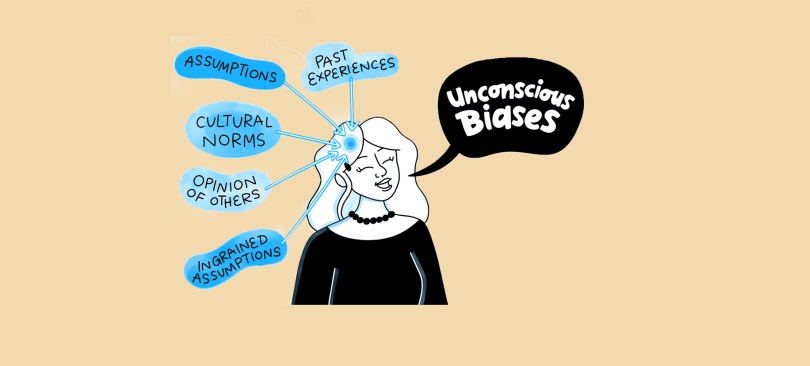
This is known as unconscious bias.

Unconscious bias refers to the automatic assumptions, beliefs and mental shortcuts our brains develop over time. These patterns are influenced by childhood experiences, family, culture, education, previous relationships, social media, television and even the conversations we overhear growing up.

They help our brains process information quickly, but they can also lead us to make unfair judgements without realising we’re doing it.

The truth is, every single one of us has unconscious biases. The difference isn’t whether we have them. It’s whether we’re willing to become aware of the,.

The Brain Likes Shortcuts

Imagine meeting someone for the first time. Within seconds you’ve already noticed their appearance, clothing, body language, accent, age and confidence. Your brain has begun creating a story before they’ve even finished introducing themselves.

Sometimes those stories are accurate, however quite often they aren’t.

The human brain is designed to look for patterns because it keeps us safe. Thousands of years ago this was useful for survival. Today, those same shortcuts can influence promotions at work, dating choices, friendships and even how we treat ourselves.

A prime example lies in meeting someone who looks like an ex partner who perhaps deceived our trust, we can meet someone with a resemblance, and before we know it, we are disregarding them without realising.

Unconscious Bias at Work

Think about a typical workplace. A manager interviews two candidates with identical qualifications. One reminds them of someone they worked well with years ago.

The other has a different communication style, dresses differently or appears quieter.

Without intending to, the manager may naturally feel more comfortable with the first candidate. Neither decision feels biased.

It simply feels like instinct.

But instinct is often influenced by previous experiences rather than objective evidence.

Unconscious bias can affect who gets hired, who receives opportunities, who gets promoted and who is viewed as having leadership potential. It can also affect how feedback is given.

Confident people may be described as natural leaders.

Quiet people may be labelled disengaged.

Someone who thinks differently may be seen as difficult rather than innovative.

This is especially important when we consider neurodiversity. Many people with ADHD, autism or dyslexia communicate differently. They may process information differently, avoid eye contact, interrupt through excitement or need additional thinking time.

These differences are not character flaws.

Yet unconscious bias can lead others to misinterpret these behaviours as lack of interest, poor attitude or incompetence. When organisations become aware of unconscious bias, they often discover hidden talent that was overlooked simply because it didn’t fit traditional expectations.

It Doesn’t Stop at the Office Door.. Look at our love lives…

The same thing happens in our love lives. How often have we dismissed someone because they weren’t physically our usual type?

How often have we assumed someone wasn’t interested because they appeared quiet?

How often have we believed confidence equals emotional maturity?

Or assumed attractive people must be happier?

Perhaps you’ve met someone who looked perfect on paper. Successful career, Great appearance, Confident, Funny,

Yet emotionally unavailable.

Meanwhile someone else may have been overlooked because they were nervous on a first date, shy in conversation or didn’t immediately create fireworks. Our unconscious bias often creates a checklist of what love should look like.

Height.

Career.

Income.

Age.

Body type.

Social status.

Confidence.

Lifestyle.

But very few of those things predict whether someone will make us feel emotionally safe, respected or loved. Sometimes we reject wonderful people because they don’t match the picture we’ve created in our minds, or we are comparing them and instantly our mind tells us ‘Unsafe’.

Sometimes we chase people who repeatedly hurt us and reject those who could love us deeply, because of their jobs weight etc etc..

The Stories We Tell Ourselves

Bias isn’t only about how we judge others. It’s also about how we judge ourselves.

Many people carry beliefs they never chose.

“I’m too old.”

“I’m too much.”

“People always leave.”

“No one finds people like me attractive.”

“I’ll never be successful.”

Those thoughts often feel like facts.

But where did they come from?

A childhood experience?

An ex partner?

A teacher?

A parent?

A single painful rejection years ago?

Our brains are incredibly good at collecting evidence to support beliefs we’ve carried for years. We rarely stop to question whether those beliefs are actually true.

Why Coaching Matters

This is one of the reasons I believe coaching can be so powerful. Coaching isn’t about giving people the answers. It’s about helping them discover the questions they’ve never thought to ask.

Why do I always choose emotionally unavailable partners?

Why do I keep avoiding opportunities at work?

Why do I assume people won’t like me?

Why do I believe I’m not good enough?

Why do I keep repeating the same patterns?

Why do I shut down when someone I’m genuinely interested in comes into my orbit?

Many of the answers lie beneath conscious awareness.

A coach helps bring those hidden patterns into the light.

Not through judgement, but through curiosity.

Together you begin noticing the automatic thoughts that influence behaviour. You explore where those thoughts originated. You test whether they’re still serving you and gradually you begin replacing automatic assumptions with conscious choices.

Looking Beyond Behaviour

One of the biggest shifts coaching creates is helping people separate behaviour from identity.

Someone interrupting you may not be rude. They may simply process conversations differently. This happens a lot with Neuro Diverse people.

Someone cancelling plans may not be rejecting you. They may genuinely be overwhelmed.

Someone who seems quiet in meetings may have brilliant ideas but need more time to think.

Equally, someone who appears incredibly confident may actually be masking insecurity.

The more curious we become, the fewer assumptions we make.

Curiosity almost always creates stronger relationships than certainty.

Flawed Thinking Isn’t Failure

One of the most common things coaching uncovers is flawed thinking. Psychologists often refer to these as cognitive distortions. These include believing we know what others are thinking.

Expecting the worst outcome.

Overgeneralising from one experience.

Seeing situations in black and white.

Filtering out positive experiences while focusing only on negatives.

These thinking patterns quietly influence both our personal and professional lives.

If one relationship ended badly, we may assume every future relationship will.

If one interview went poorly, we may decide we’re not capable.

If one manager criticised us, we may stop applying for promotions altogether.

The event ends.

The belief remains.

Coaching helps challenge those beliefs before they become permanent truths.

Awareness Changes Everything

The goal isn’t perfection. No one can completely eliminate unconscious bias.

We’re human.

Our brains will always create shortcuts.

The goal is awareness. Awareness gives us choice. Instead of immediately believing every thought, we become curious. Instead of reacting automatically, we pause. Instead of assuming we know someone’s story, we ask questions.

That pause can completely change a conversation.

It can save relationships.

It can create more inclusive workplaces.

It can open doors we never realised we’d closed.

Imagine What Could Change

Imagine interviewing someone without letting first impressions dominate your decision.

Imagine going on a date with genuine curiosity rather than comparing them with every previous partner.

Imagine recognising when your inner critic is speaking instead of accepting every thought as fact.

Imagine leading a team where different ways of thinking are valued rather than judged.

Imagine choosing people based on emotional compatibility instead of a checklist.

Imagine not judging people on. decisions they’ve made for their lives, just because they don’t match up to your values.

Those small shifts have enormous consequences.

Not only for careers and relationships, but for confidence, wellbeing and happiness.

Final Thoughts

Some of the most important conversations we’ll ever have are the ones we have with ourselves.

Every assumption deserves to be questioned.

Every belief deserves to be explored.

Every pattern deserves our curiosity.

Because when we become aware of our unconscious biases, we don’t just change the way we see other people.

We change the way we see ourselves and that may be the most powerful transformation of all.

If you’ve ever found yourself repeating the same relationship patterns, doubting your own potential or wondering why certain situations keep playing out in your life, coaching offers a space to explore those patterns without judgement. Together, we can uncover the beliefs driving your decisions, challenge thinking that no longer serves you and help you make choices that are aligned with who you are today, rather than who your past taught you to be.

Sometimes, changing your life doesn’t begin with changing your circumstances.

It begins with changing the story you’ve been unconsciously telling yourself.

When two different people come together and learn to love one another…. ‘The Soul Mate Connection’

One of the most beautiful things about relationships is how two completely different people can come together, two individuals with their own interests, personalities, histories, and ways of seeing the world, and slowly begin to grow alongside one another.

At the beginning, you are separate worlds. Different routines, different habits, different comforts. One might love football, the other reality television. One might wake up early and love quiet mornings, while the other thrives at night. In the early stages, these differences can feel noticeable, sometimes even amusing.

But when a connection is real, something subtle and beautiful begins to happen.

Without even realising it, your worlds start to overlap.

You might find yourself sitting beside her watching ‘Love is Blind’, even though you never thought you would Or you might find yourself asking about the football score because it matters to him, and somehow that makes it matter to you too. What once felt like their interest slowly becomes something you share.

Not because you are changing who you are, but because love naturally invites you into each other’s worlds. You start to walk together on a path, a journey of alignment.

This is where the beauty of a true bond lies. Real connection doesn’t erase individuality. Instead, it gently weaves two lives together while still allowing each person to remain fully themselves.

Over time, the shift becomes deeper than shared hobbies or interests.

Their joys begin to feel like your joys.

Their worries begin to feel like your worries.

Their dreams start to intertwine with your own.

Their desires become yours, and yours become theirs. Not in a way that feels forced or sacrificial, but in a way that feels completely natural. Almost effortless.

And this is often when couples begin to say something that sounds strange to anyone outside the relationship:

“We’re basically the same person….”There are not many people who can look at the other and say this.. and that’s when you know you’ve found your person.

Of course, no two people are truly identical. You still carry your own thoughts, experiences, and individuality, however the connection becomes so deep that your emotional rhythms start to align. You begin to understand each other without needing to explain everything. Sometimes a look is enough. A silence can speak volumes.

It begins to feel like you are moving through life with someone who understands you on a level that very few people ever will.

The Feeling of a Soulmate

A true soulmate often doesn’t feel like fireworks. It feels like recognition, it feels like an intensity that overwhelms, engulfs you and blows your mind.

Like meeting someone your soul already understands.

You may notice that your values align naturally. Conversations flow effortlessly. Time together, calls together, feel peaceful rather than draining. Even when you disagree, there is still respect, still care, still a desire to understand each other rather than win.

You start to feel a quiet certainty.

Not the anxious kind of love that leaves you questioning everything, but the calm kind that settles in your chest and says: this feels right, this is my person, we’re basically the same person.

When you meet someone like this, life begins to align in unexpected ways. Your goals start to complement each other. Your emotional worlds feel compatible. You find yourselves growing together instead of pulling in opposite directions.

And that’s when many people say something that captures the depth of that connection:

“We’re the same person.”

Not because you are identical, but because your souls move in the same direction.

When everything aligns, your values, your intentions, your willingness to grow, the connection feels natural rather than forced. Being together doesn’t feel like hard work. It feels like partnership.

Like you are walking the same path…

And when you meet that person, something inside you recognises it. The noise quietens. The confusion disappears.

You simply feel… home…

When Trauma Tries to Protect Us

But there is another side to deep connection that many people don’t talk about.

Sometimes when we meet someone who truly sees us, who truly connects with us, it can feel overwhelming, to much, the boats rocking and it can cause incredible confusion and anxiety.

Not because the connection is wrong — but because it is powerful…

For many people, past experiences, heartbreak, or emotional wounds create protective patterns. We learn ways to cope with pain: shutting down, pulling away, overthinking, creating distance, or convincing ourselves that something is wrong when things actually feel right, but our physiological states tries to overwhelm us and force the pressure on ourselves, that we start to question everything..

Trauma often teaches us to protect ourselves.

But sometimes those protections can appear right when something beautiful is forming.

If someone is used to shutting down when emotions feel intense, they might withdraw from the very connection they’ve always wanted. If someone is used to expecting abandonment, they may start searching for problems that don’t actually exist.

And before they realise it, fear begins to interfere with something that could have been incredibly special.

This is why self-awareness matters so deeply in love….

When you recognise your patterns, when you understand how your past experiences might influence your reactions, you give yourself the power to respond differently.

Instead of shutting down, you pause.

Instead of running, you communicate.

Instead of assuming the worst, you choose curiosity.

Meeting someone who truly aligns with you can feel intense, scary and stir unwanted anxiety and pressures. It can stir emotions you’re not used to feeling. It can make you vulnerable in ways that feel unfamiliar.

But vulnerability is often the doorway to real connection.

Protecting Something That Matters

When you realise you have something special with someone, it’s important to nurture it.

That doesn’t mean the relationship will be perfect. Every connection will have moments of uncertainty, overwhelm, or misunderstanding. But what makes a soulmate connection so powerfu is the willingness to work through those moments together, however apprehensive and fearful you are

Instead of letting fear take control, you choose honesty.

Instead of letting overwhelm create distance, you talk about it.

Instead of pushing someone away when things feel intense, you lean into understanding what you’re feeling and why.

Real love is not just about finding the right person, it’s also about being emotionally aware enough to protect the connection once you find it.

Sometimes that means slowing down.

Sometimes it means communicating your fears.

Sometimes it means learning new ways to handle emotions you once avoided.

But when two people are willing to grow, the connection becomes stronger rather than fragile.

When You Know

When you truly meet your person, interests aside, emotions aside, even past trauma aside… something deeper connects.

Two different people.

Two different lives.

Yet somehow, everything aligns.

Your lives begin to weave together naturally. Your worlds blend. Your hearts recognise something familiar in each other.

And in those quiet moments — when you look at them and feel peace instead of doubt — you may find yourself saying something that captures it perfectly:

“We’re the same person.”

Not because you’ve lost yourselves, but because you’ve found someone whose soul walks beside yours, a heavenly feeling of your person walking alongside you, like the Universe and God have brought you both together..

And when that happens, when everything inside you says this is my person, when love feels calm rather than confusing, when being with them feels as natural as breathing…

You realise something powerful.

You’re home…

You have your person…

What ambition really means: Purpose, Relationships and becoming a Power Couple..

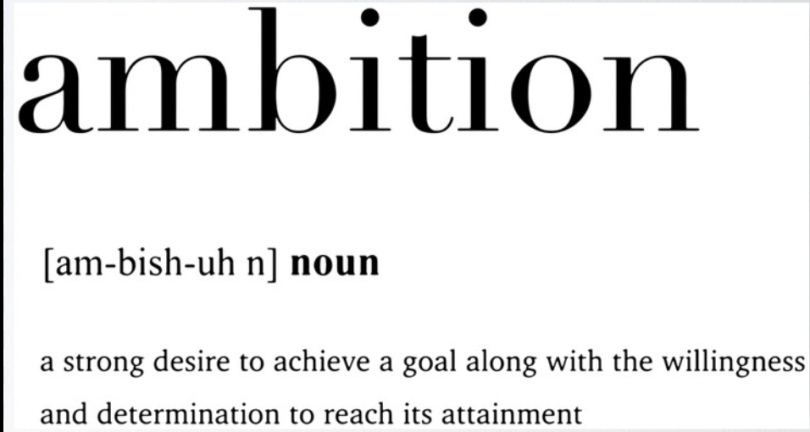
Ambition is more than chasing titles or money. It’s about growth, purpose, relationships and becoming the best version of yourself, individually and as a couple. This blog explores the psychology of ambition, why it differs for everyone, how it affects relationships, and how true ambition can build the ultimate power couple..

Ambition is often misunderstood. People assume it is about job titles, financial milestones or fame, yet the truth is far more personal. Ambition is a desire to grow, to stretch beyond who we were yesterday. For some, it burns from childhood; for others, it awakens over time through experience, opportunity or encouragement. It can feel innate or it can develop slowly, shaped by our environment and the people who influence us.

In the UK, many people value stability over striving. Research shows a nation where a large proportion are satisfied with a steady routine rather than fuelled by upward momentum, however that doesn’t make ambition rare, it simply means ambition takes different shapes. Some hearts crave peace; some crave progress; some strive for both.

Ambition is neither good nor bad on its own. It depends on what it is rooted in. When ambition grows from ego, insecurity or comparison, it becomes hollow, empty and will never lead to happiness. When it grows from purpose, meaning, kindness and a desire to contribute, it becomes powerful, it leads to freedom and peace.

What Ambition Really Means

Society often portrays ambition as a ladder to climb, a race to win or an image to uphold, however ambition can be quiet and gentle. It can be the ambition to be a loving parent, a supportive friend, a generous soul, a positive force. It can be the ambition to help others, to heal, to create, to lead with compassion. For years people have said “Kerry, I wished I had your drive and ambition” , and yes in some aspects I have succeeded, with academia, with a woman growing a business in a mans world, and my focus on self development, but my biggest ambition in life is to help others, and share wisdom and knowledge to encourage and support others.

Many people lose their grounding when ambition becomes performance. True ambition stays humble. It acknowledges gratitude for what we have while still striving for personal growth. It does not demand praise or spotlight. It simply asks: How can I become better, kinder, stronger, wiser and more impactful than I was before? I don’t say this because it resonates with me, this really is what it boils down to.

For me personally, ambition is rooted in being a good mother, a good person, a good partner and someone who lifts others. That is ambition in its purest form.

Why Some People Are Driven and Others Are Content

Not everyone feels the same pull towards growth or achievement. Some find fulfilment in routine, in stability, in a nine-to-five life where peace is the priority. Others feel restless without challenges or new goals. Personality, upbringing, environment and mindset all shape our relationship with ambition.

Those who appear unambitious may actually be deeply motivated, just in different, less outward-facing ways and there is no right or wrong, because aren’t we all just striving for happiness in the end? Those who chase achievement may be seeking meaning rather than superiority. The beauty lies in recognising that people flourish in different ways. The goal is not to judge, but to understand.

Why Ambition Can Trigger Jealousy or Misunderstanding

Ambition can make people uncomfortable. They say they want like-minded, driven people around them, yet when they encounter someone truly ambitious, admiration is often mixed with insecurity. Someone else’s growth can highlight our own fears or unfulfilled dreams. Instead of saying, “I wish I had that courage,” people sometimes say, “I don’t like what they do”, “They’re doing it wrong”, and are so quick to criticise how others push or portray theirselves.

But in reality, what they dislike is the reflection ambition holds up to them.

Learning to celebrate ambition in others , to look at someone and think, “Good for them” , is a sign of emotional maturity a sign of our own inner security. We all deserve to chase what lights us up, and to be unashamed of striving for better, however if we are quick to critique or shame others for pushing theirselves, that bitterness, is a sure sign of the un-happiness we hold inside.

Ambition in Relationships: The Foundation of a Strong Partnership

Ambition is powerful on its own, but within a relationship, it becomes transformative. The right partnership doesn’t compete with ambition – it strengthens it. An ideal couple supports each other’s drive even when their dreams differ. It is not necessary for both partners to want the same things; it is necessary that they just want each other to succeed.

Two ambitious people together can create a remarkable dynamic. They understand each other’s need for focus, passion and growth. They celebrate each other’s wins, uplift each other through challenges and inspire each other to become better. They become a team, not rivals. Something I personally revel in, as having that support drives me even more, and firing up my partner, creates something deep inside me I simply cannot explain.

My relationship this summer, started out with him loving a strong, independent successful woman, however he started to criticise my every business move, my socials, my staff choices, my working hours, and to a point, he wanted me to sell my main business and get a ‘hobby’ job, as he would support me.. WOW! No matter how successful a partner may be, I will never just take a hobby job. But deeper than this it wasn’t just about that, it was the fact, he didn’t want to push me to succeed, he wanted me to take a back seat and ‘Be a woman’ – However I can do it all! He failed to recognise.

Even when ambitions do not align, one partner chasing a creative career, the other seeking stability; one wanting expansion, the other contentment, support remains the heartbeat of a healthy relationship. A partner who says, “I may not choose your dream for myself, or the way you do it, but I support you fully,” is a partner who loves without fear or insecurity. That is partnership in its highest form.

Becoming the Ultimate Power Couple

A power couple is not defined by wealth, status or external success. A true power couple is defined by mutual respect, emotional safety, encouragement and an unshakeable belief in one another. It is two people who look at each other and think, Your dreams matter, your growth matters, your purpose matters and I am proud to stand beside you.

Becoming a power couple requires more than ambition; it requires emotional maturity. It requires celebrating each other instead of competing, communicating openly, and holding space for dreams even when they diverge. It means understanding that your partner’s journey will not always mirror your own and that their ambitions may look nothing like yours. You do not need to love their ideas; you simply need to love their passion for them. I personally don’t like putting my face to social media, and going deep into the depths of me, but to make my career go the way I need it to, I have to push that; However, would I be comfortable with a partner doing the same,…. Nope… but if that’s what they need to do, and it genuinely aligns with their business and marketing, it’s something I would need to accept.

Power couples are built when two individuals refuse to dim each other’s light. They rise together, they learn from each other. They balance each other’s strengths and weaknesses. They become a home for both ambition and vulnerability, the grow together.

When support, ambition and love intertwine, they create a bond strong enough to withstand challenges and inspiring enough to carry both people further than they could go alone.

Can Ambitious People Find Contentment?

There is a belief that ambitious people are never satisfied, forever chasing the next thing. However grounded ambition, ambition rooted in purpose and humility, does not deprive someone of peace. It simply encourages them not to settle for less than they are capable of. The most balanced ambitious people appreciate what they have while gently moving towards more meaning, more impact, more growth.

They understand that everything extra is a bonus. Not a requirement.

Ambition becomes peaceful when it is no longer tied to validation but instead tied to purpose.

So…

Ambition is not about being better than others; it is about becoming better than the person you were yesterday. It is about purpose, impact, love, humility and growth. It is about living fully and showing up for your life with intention.

In relationships, ambition becomes even more powerful. When both partners support each other wholeheartedly and treat each other’s dreams with respect, they become unstoppable. Two people driven by purpose, grounded in mutual admiration, and committed to lifting each other higher – that is a true power couple.

Ambition is not a competition, It is a journey.

The most beautiful journey is the one where you walk towards your dreams alongside someone who believes in you just as strongly as you believe in them.

If you feel ambition burning, but not sure how to dig deep and work towards achieving success, then drop me a message. Working as a transformative coach, I work with many individuals, on working towards their goal mindset, turning that glass half empty into glass half full.. and if you want to look towards releasing that ambition and leaning to support yourself or a partner more, then contact me today…

Transform with Kerry

What My Role as a Coach Really Is

I get asked quite often what my job as a coach actually is. And truthfully, it’s not as simple as just helping people “feel better.”

Of course, I want my clients to feel safe, supported, and heard — that’s the foundation of any meaningful coaching relationship. But my role goes deeper than comfort. My job isn’t to validate misconceptions or help people stay in their comfort zone. My job is to help you get results — to move forward, to grow, and to become the version of yourself that’s waiting underneath all the doubt, fear, and old patterns.

Coaching isn’t always comfortable. Growth never is. But it’s always worth it.

A Safe Space — But Not a Soft One

When you work with me, I want you to know that you’ll always have a safe space. A space where you can be honest, raw, and real without judgment. But being “safe” doesn’t mean being “comfortable.”

I’m not here to sugar-coat the truth or tell you what you want to hear. I’m here to help you see things clearly — especially the things you’ve been avoiding. Sometimes that means tough conversations. Sometimes it means gentle reminders of your own strength. I consider myself after all my life experiences, to be straight to the point, however remaining personable at all times. However I will not feed you just what you want to hear, or agree with what you feel is right.

Growth happens when we lean into discomfort. My job is to hold you through that process, to be your rock when life feels heavy, and to remind you that clarity and confidence come on the other side of truth.

Coaching Is a Partnership

The coaching relationship is a partnership — one built on trust, respect, and accountability.

From our very first consultation, I see us as teammates. We’ll work together to understand where you are, what’s blocking you, and what you truly want to create in your life and relationships. I’ll always be honest with you, and I’ll expect honesty in return.

I believe the best growth comes when we’re both willing to show up fully — me as your coach, and you as someone ready to do the work.

Because coaching isn’t about me fixing you. It’s about us walking side by side as you begin to fix the parts of your life that don’t feel aligned anymore.

The Relationship With Yourself Comes First

My niche as a relationship coach is all about the relationships you have — not just with others, but with yourself.

Everything starts there.

If you don’t have a healthy, loving, and aligned relationship with yourself, every other relationship will feel harder than it needs to. The truth is, you can’t pour from an empty cup. You can’t give love freely if you’re still struggling to give it to yourself.

When we work together, we’ll look at how you connect to yourself — your self-worth, your inner voice, your boundaries, your patterns. Because when you begin to realign within, you start to naturally attract better connections, stronger relationships, and a calmer, more grounded sense of peace.

Alignment is everything.

If you’re not aligned with yourself or your partner, it often leads to frustration, miscommunication, and sometimes — heartbreak. My job is to help you see whether the relationship you’re in has room to grow, or whether it’s keeping you stagnant. From that awareness, real change can begin.

Accountability: The Key to Growth

One of the biggest parts of growth is accountability. It’s being brave enough to look at your own choices, your patterns, and your reactions — and take responsibility for them.

That’s not about blame. It’s about ownership.

When you take accountability, you reclaim your power. You move from “Why is this happening to me?” to “What can I do to change it?”

My role is to hold you accountable with compassion. I’ll challenge you when you need it, encourage you when you doubt yourself, and celebrate every win — no matter how small — because they all count towards your growth.

Looking Ahead, Not Back

While we may talk about past experiences and old wounds, my focus is always on moving forward. You can’t rewrite your past, but you can shape your future.

Coaching is about building momentum — setting goals, finding clarity, and creating a life that feels aligned with who you truly are.

Working with a coach isn’t just about relationships; it’s about wellbeing, mindset, and fulfilment. It’s about learning to live from a place of purpose rather than reaction, and rediscovering your ability to thrive — not just survive.

The Power of Self-Intimacy

One of the most powerful lessons I’ve seen in this work is that everything starts with self-intimacy — the ability to truly know, accept, and love yourself.

It’s about sitting with yourself, even when it’s uncomfortable. It’s about learning to understand what you need, what you feel, and what you want.

When you develop that relationship with yourself, everything changes. You stop seeking external validation. You begin to attract healthier connections. You see the world — and yourself — in a softer, more loving way.

That’s where freedom begins.

In the End, My Job Is to Help You Grow

At the heart of everything I do, my mission as a coach is simple: to help you grow.

To help you ease your suffering, find alignment, and break through the limitations that have held you back. To give you the tools, support, and perspective to step into the life and relationships you truly deserve.

Growth isn’t always pretty, and it’s rarely easy. But with trust, honesty, and commitment, it’s absolutely possible.

If you’re ready to face yourself, embrace change, and step into alignment, then you’re ready for coaching. Together, we’ll build the foundation for your next chapter — stronger, clearer, and more connected than ever before.