The Stories We Never Knew We Were Telling Ourselves: How Unconscious Bias Shapes Our Careers, Relationships and Happiness

“The biggest barriers in our lives are often the ones we cannot see.”

Most of us like to believe we’re open minded.

We believe we judge people fairly. We tell ourselves we make decisions based on facts, personality and experience. We assume our opinions are our own.

But what if many of our decisions are being influenced by something we’ve never consciously questioned?

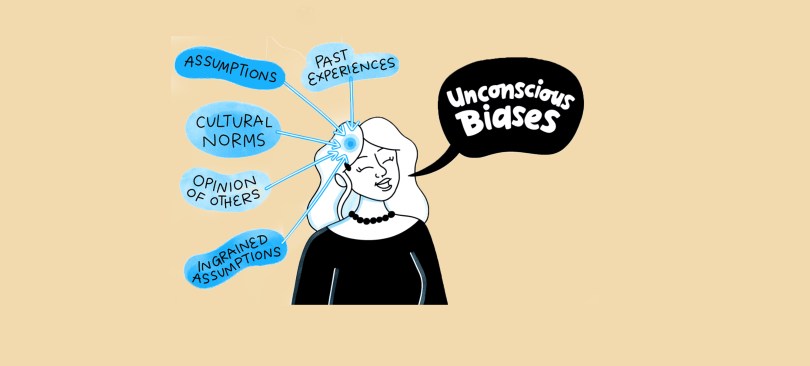
This is known as unconscious bias.

Unconscious bias refers to the automatic assumptions, beliefs and mental shortcuts our brains develop over time. These patterns are influenced by childhood experiences, family, culture, education, previous relationships, social media, television and even the conversations we overhear growing up.

They help our brains process information quickly, but they can also lead us to make unfair judgements without realising we’re doing it.

The truth is, every single one of us has unconscious biases. The difference isn’t whether we have them. It’s whether we’re willing to become aware of the,.

The Brain Likes Shortcuts

Imagine meeting someone for the first time. Within seconds you’ve already noticed their appearance, clothing, body language, accent, age and confidence. Your brain has begun creating a story before they’ve even finished introducing themselves.

Sometimes those stories are accurate, however quite often they aren’t.

The human brain is designed to look for patterns because it keeps us safe. Thousands of years ago this was useful for survival. Today, those same shortcuts can influence promotions at work, dating choices, friendships and even how we treat ourselves.

A prime example lies in meeting someone who looks like an ex partner who perhaps deceived our trust, we can meet someone with a resemblance, and before we know it, we are disregarding them without realising.

Unconscious Bias at Work

Think about a typical workplace. A manager interviews two candidates with identical qualifications. One reminds them of someone they worked well with years ago.

The other has a different communication style, dresses differently or appears quieter.

Without intending to, the manager may naturally feel more comfortable with the first candidate. Neither decision feels biased.

It simply feels like instinct.

But instinct is often influenced by previous experiences rather than objective evidence.

Unconscious bias can affect who gets hired, who receives opportunities, who gets promoted and who is viewed as having leadership potential. It can also affect how feedback is given.

Confident people may be described as natural leaders.

Quiet people may be labelled disengaged.

Someone who thinks differently may be seen as difficult rather than innovative.

This is especially important when we consider neurodiversity. Many people with ADHD, autism or dyslexia communicate differently. They may process information differently, avoid eye contact, interrupt through excitement or need additional thinking time.

These differences are not character flaws.

Yet unconscious bias can lead others to misinterpret these behaviours as lack of interest, poor attitude or incompetence. When organisations become aware of unconscious bias, they often discover hidden talent that was overlooked simply because it didn’t fit traditional expectations.

It Doesn’t Stop at the Office Door.. Look at our love lives…

The same thing happens in our love lives. How often have we dismissed someone because they weren’t physically our usual type?

How often have we assumed someone wasn’t interested because they appeared quiet?

How often have we believed confidence equals emotional maturity?

Or assumed attractive people must be happier?

Perhaps you’ve met someone who looked perfect on paper. Successful career, Great appearance, Confident, Funny,

Yet emotionally unavailable.

Meanwhile someone else may have been overlooked because they were nervous on a first date, shy in conversation or didn’t immediately create fireworks. Our unconscious bias often creates a checklist of what love should look like.

Height.

Career.

Income.

Age.

Body type.

Social status.

Confidence.

Lifestyle.

But very few of those things predict whether someone will make us feel emotionally safe, respected or loved. Sometimes we reject wonderful people because they don’t match the picture we’ve created in our minds, or we are comparing them and instantly our mind tells us ‘Unsafe’.

Sometimes we chase people who repeatedly hurt us and reject those who could love us deeply, because of their jobs weight etc etc..

The Stories We Tell Ourselves

Bias isn’t only about how we judge others. It’s also about how we judge ourselves.

Many people carry beliefs they never chose.

“I’m too old.”

“I’m too much.”

“People always leave.”

“No one finds people like me attractive.”

“I’ll never be successful.”

Those thoughts often feel like facts.

But where did they come from?

A childhood experience?

An ex partner?

A teacher?

A parent?

A single painful rejection years ago?

Our brains are incredibly good at collecting evidence to support beliefs we’ve carried for years. We rarely stop to question whether those beliefs are actually true.

Why Coaching Matters

This is one of the reasons I believe coaching can be so powerful. Coaching isn’t about giving people the answers. It’s about helping them discover the questions they’ve never thought to ask.

Why do I always choose emotionally unavailable partners?

Why do I keep avoiding opportunities at work?

Why do I assume people won’t like me?

Why do I believe I’m not good enough?

Why do I keep repeating the same patterns?

Why do I shut down when someone I’m genuinely interested in comes into my orbit?

Many of the answers lie beneath conscious awareness.

A coach helps bring those hidden patterns into the light.

Not through judgement, but through curiosity.

Together you begin noticing the automatic thoughts that influence behaviour. You explore where those thoughts originated. You test whether they’re still serving you and gradually you begin replacing automatic assumptions with conscious choices.

Looking Beyond Behaviour

One of the biggest shifts coaching creates is helping people separate behaviour from identity.

Someone interrupting you may not be rude. They may simply process conversations differently. This happens a lot with Neuro Diverse people.

Someone cancelling plans may not be rejecting you. They may genuinely be overwhelmed.

Someone who seems quiet in meetings may have brilliant ideas but need more time to think.

Equally, someone who appears incredibly confident may actually be masking insecurity.

The more curious we become, the fewer assumptions we make.

Curiosity almost always creates stronger relationships than certainty.

Flawed Thinking Isn’t Failure

One of the most common things coaching uncovers is flawed thinking. Psychologists often refer to these as cognitive distortions. These include believing we know what others are thinking.

Expecting the worst outcome.

Overgeneralising from one experience.

Seeing situations in black and white.

Filtering out positive experiences while focusing only on negatives.

These thinking patterns quietly influence both our personal and professional lives.

If one relationship ended badly, we may assume every future relationship will.

If one interview went poorly, we may decide we’re not capable.

If one manager criticised us, we may stop applying for promotions altogether.

The event ends.

The belief remains.

Coaching helps challenge those beliefs before they become permanent truths.

Awareness Changes Everything

The goal isn’t perfection. No one can completely eliminate unconscious bias.

We’re human.

Our brains will always create shortcuts.

The goal is awareness. Awareness gives us choice. Instead of immediately believing every thought, we become curious. Instead of reacting automatically, we pause. Instead of assuming we know someone’s story, we ask questions.

That pause can completely change a conversation.

It can save relationships.

It can create more inclusive workplaces.

It can open doors we never realised we’d closed.

Imagine What Could Change

Imagine interviewing someone without letting first impressions dominate your decision.

Imagine going on a date with genuine curiosity rather than comparing them with every previous partner.

Imagine recognising when your inner critic is speaking instead of accepting every thought as fact.

Imagine leading a team where different ways of thinking are valued rather than judged.

Imagine choosing people based on emotional compatibility instead of a checklist.

Imagine not judging people on. decisions they’ve made for their lives, just because they don’t match up to your values.

Those small shifts have enormous consequences.

Not only for careers and relationships, but for confidence, wellbeing and happiness.

Final Thoughts

Some of the most important conversations we’ll ever have are the ones we have with ourselves.

Every assumption deserves to be questioned.

Every belief deserves to be explored.

Every pattern deserves our curiosity.

Because when we become aware of our unconscious biases, we don’t just change the way we see other people.

We change the way we see ourselves and that may be the most powerful transformation of all.

If you’ve ever found yourself repeating the same relationship patterns, doubting your own potential or wondering why certain situations keep playing out in your life, coaching offers a space to explore those patterns without judgement. Together, we can uncover the beliefs driving your decisions, challenge thinking that no longer serves you and help you make choices that are aligned with who you are today, rather than who your past taught you to be.

Sometimes, changing your life doesn’t begin with changing your circumstances.

It begins with changing the story you’ve been unconsciously telling yourself.
The Context we Meet in: Why we judge women by circumstance instead of Character

There is a scene in Pretty Woman that has stayed with me for years.

Edward, played by Richard Gere, looks at Vivian and says, “I’ve never treated you like a prostitute.”

Her response is immediate.

“You just did.”

For a long time, I watched that scene and thought it was simply about a man saying the wrong thing. As I have grown older, spent more time listening to people’s stories and worked with women from all walks of life, I have come to realise that the scene is about something much bigger than a wealthy businessman falling in love with an escort. It is about judgement. It is about the labels we place on people. Most importantly, it is about how often women are judged by the circumstances in which they are found rather than the character they possess.

What strikes me most about that exchange is that Vivian never asks the obvious question. Why is she carrying the burden of judgement when Edward was equally involved? He may have been the wealthy businessman and she may have been the escort, but both of them participated in the same encounter. Without Edward, there is no transaction. Without his choices, there is no story. Yet somehow society finds it easier to judge Vivian than it does Edward. He is seen as successful. She is seen as shameful. He is allowed complexity. She is reduced to a label, she could be incredibly successful in her own right, but it’s always the man casting judgement, without the understanding.

That scene has always felt like a reflection of something much bigger that still exists today. Women continue to be judged differently for the very same situations that men willingly participate in. The details may have changed. Dating apps have replaced chance meetings in bars. Social media has transformed how people connect. Entire industries have emerged that did not exist twenty years ago. Yet the underlying double standard remains surprisingly familiar.

A woman can meet a man on Tinder, spend an evening talking, laughing and building what she believes is a genuine connection, sleep with him, and then discover she has been quietly disqualified from relationship status because she slept with him too quickly. The irony is extraordinary. He was there too. He made the same decision. He participated in exactly the same experience. Yet somehow he walks away feeling entitled to judge her for behaviour he willingly took part in himself.

What fascinates me is that many women do not think this way. They are often looking at the bigger picture. They are wondering whether there is chemistry, whether there is potential, whether this person could become a meaningful part of their life. Of course there are exceptions. Both men and women can be manipulative. Both men and women can seek validation. Both men and women can be dishonest. This is not about pretending one gender is innocent and the other is guilty. Human beings are complicated. What interests me is the imbalance in how judgement is applied. Society still seems far more comfortable attaching shame to women than it does to men.

One of the most interesting questions in modern dating is why some men automatically assume that a woman on Hinge is more suitable for a relationship than a woman they meet in a lap dancing club or who perhaps has worked as an escort. Why? What evidence do they actually have? Have they spent time understanding her values? Do they know how she treats people? Do they know whether she is loyal, emotionally available, trustworthy or kind? Usually the answer is no. What they are really judging is not the woman herself. They are judging the story attached to her, and the crazy thing is from my day to day life, I actually hear that ‘BodyCount’ can often reign higher in the women they perceive as ‘Marriage material’.

The woman on Hinge is viewed as someone searching for love. The woman in the club is viewed as someone selling fantasy. One is placed into a socially approved category. The other is placed into a socially disapproved category. Yet neither label tells us very much. The woman in the club may have stronger boundaries than anyone the man has ever met. She may have spent years single because she refuses to settle for relationships that do not meet her standards. She may be fiercely loyal once she commits to someone. She may have had fewer sexual partners than many of the women being praised as relationship material. Meanwhile, the woman on Hinge may be dating multiple people, have no interest in commitment and be seeking validation rather than connection. Or the opposite may be true. The point is that nobody knows.

Character cannot be determined by profession. It cannot be determined by appearance. It cannot be determined by where somebody happened to meet you. Yet people continue to make assumptions every single day based on these things. They judge a book by its cover and then convince themselves they know the entire story.

What I have learned over the years is that public image and private reality are often worlds apart. We live in a culture where people carefully curate how they are perceived. Dating profiles are curated. Social media accounts are curated. Influencer brands are curated. Even ordinary people curate versions of themselves for public consumption. We look at photographs, captions and carefully selected moments and convince ourselves we know somebody. The truth is that we rarely do.

There are women with enormous social media followings who are admired by millions. There are reality television personalities, influencers and public figures who have built highly successful brands around their image. Some have found ways to monetise their beauty, fame and desirability in ways previous generations could never have imagined, and behind closed doors are being sent out on secret Whatssap groups for £10k for the night. Personally, I do not see anything wrong with that. If somebody has built an audience, worked hard to create opportunities and found a way to capitalise on their success, then fair play to them. What interests me is not what they do. What interests me is how society responds to them depending on what information is publicly available.

The same man who judges a woman working openly within the adult industry may spend years admiring, following and fantasising about a public figure whose private life he knows nothing about. The difference is not necessarily morality. The difference is visibility. One woman is judged because people know. The other escapes judgement because people do not. Yet both may be making similar choices in private. This is why assumptions are so dangerous. They are built on incomplete information and presented as certainty.

Another aspect of this conversation that deserves far more compassion is the reality that some women carry experiences most people know nothing about. Some women working within parts of the adult industry have histories of childhood sexual abuse, rape, domestic violence, coercive relationships or profound emotional neglect. Of course this is not true of everyone and it would be wrong to make assumptions. Every woman’s story is different. Yet it is important to recognise that for some women, their relationship with their body, sexuality and sense of control has been shaped by experiences that occurred long before anyone met them. I work with one lady in the industry, who was date raped, and is simply too scared to date, and maybe she’s lost her way a little, but who are we to sit and judge.

What often frustrates me is how quickly people jump to judgement without any curiosity about what might have brought someone to where they are today. We see a profession and assume we understand a person. We see a choice and assume we know the story behind it. Yet human beings are rarely that simple. For some women, stepping into a space where they choose the terms, set the boundaries and decide what access people have to them can feel very different from experiences where control was taken away. What outsiders may perceive as exploitation, another person may experience as autonomy. Whether people agree with those choices or not is almost irrelevant. The point is that we cannot understand someone’s life by reducing them to a label.

Perhaps that is another reason I find judgement so problematic. It leaves no room for complexity. It leaves no room for empathy. It leaves no room for the possibility that the person standing in front of us has survived things we cannot imagine. We do not know their history. We do not know their struggles. We do not know what they have overcome to become the person they are today. Yet society is often quick to condemn women for the choices they make while showing very little interest in understanding the experiences that shaped those choices in the first place.

As the film draws to a close, something interesting happens. Edward finally understands what he could not see at the beginning. The issue was never Vivian’s profession. It was never the circumstances in which they met. It was never the label he had attached to her. The real obstacle was his inability to look beyond those things. Only when he lets go of his assumptions is he able to see the woman standing in front of him.

If we return back to the film ‘Pretty woman’ in one of the most iconic scenes in the film, Edward arrives with flowers and climbs the fire escape despite his fear of heights. He becomes the knight in shining armour Vivian once dreamed about as a little girl. Of course, we live in a different world now. Most women are not waiting to be rescued. Women build careers, raise families, buy their own flowers and save themselves every single day. The fantasy was never really about being rescued anyway. The fantasy was about being chosen. Being valued. Being seen… finally the little girl who had led such a traumatic and sad life, was seen.

Perhaps that is what so many people are searching for beneath all the noise of modern dating. Not perfection, Not status, Not somebody who ticks every box on paper. Just somebody willing to look beyond the stereotypes, beyond the assumptions and beyond the story attached to how they met.

Because love does not arrive wrapped in social approval. It does not ask whether someone was met through friends, on a dating app, in a club, at work or during the most unexpected chapter of their life. Love only asks whether two people are willing to know each other honestly.

And perhaps that is the real lesson hidden inside Pretty Woman. The greatest relationships are not built by people who meet in the perfect circumstances…. They are built by people brave enough to see beyond them….

Maybe the real question is not where are the women worth loving. Maybe the real question is where are the men willing to put down their judgement long enough to recognise them.

Because the most beautiful love stories have never been about how two people met.

They have always been about what happened when they decided to truly see one another.

2026 – The year Choosing Me: The Moment I Stopped Waiting to Be Chosen

There’s a truth I’ve had to learn the long way round:

Sometimes you have to experience the wrong people to finally understand your worth.

Not in a cliché way and not in a “everything happens for a reason” way, but in a very real, very lived way, where each connection leaves a mark, teaches you something, and slowly pulls you back to yourself.

I’ve loved different kinds of men.

Last year I met the one who felt electric at the start, passionate, intense, everything turned up to 100. The sex was something else, I mean girls, there is good and then there is WILD! Insane until it wasn’t. Until the warmth turned into walking on eggshells. The subtle put-downs. The control disguised as care. The disappearing acts followed by apologies that reset everything… until the cycle began again and I lost myself in that, not just emotionally, but physically too. So swept up in the sex, attention, gifts and love-bombing, I suddenly realised after watch him down pink cocaine for two weeks, that this was not the kind of man who should be in mine or my Childs life.

Then came along a good man, Kind-hearted, Safe, I thought. Someone I let myself open up to in a way I hadn’t in a good few years. We built something slowly, calls, messages, shared moments across distance, it felt so familiar… And then… he shut down.

No warning. No gradual fade. Just a switch.

One minute, he was planning a weekend with me, so excited I was in his country. The next, it was “this feels like pressure, I should respect my boundary, I can’t do long distance”, That kind of emotional whiplash does something to you. It doesn’t just hurt, it changes how you see people. How you trust. How you show up. I’m so glad I didn’t have sex with him, because in all honesty seeing his insecurities at play with avoidance, makes me feel there would have been disappointment. I think it felt familiar, because it threw me back into the summer of 2023, another situation, the calls, messages, consistency, deep intimacy on all levels except sex.

and somewhere underneath all of that, there’s been another truth sitting quietly in my life:

There is someone I love… who didn’t choose me, and it was after the experience with my Californian guy, I realised, it simply reminded me of that! The heartbreak of 2023, where I wasn’t chosen, but had fallen anyway..

For a long time, I told myself it was limerence, Infatuation. Something I’d grow out of, however time has a way of clarifying things, not erasing them and the truth is some feelings don’t fade just because they’re inconvenient, they simply get avoided.

But here’s what I’ve realised:

Someone not choosing you doesn’t make them “the one.” It makes them unavailable.

The Pattern I Couldn’t Ignore

There’s something else I started to notice.

Men would leave… choose someone else… build lives with other women.

Then years later, they’d come back, Telling me I was always the one, That they see me now, That they made the wrong choice. It happened last summer. I had a call, with an ex asking to meet me, I was seeing the narcissist at the time, and I declined, but he pushed and pushed, so I agreed ten mins in a public place only. I showed up, and was met with, basically I was the one perfect for them, I was the one they loved, I was the one aligned, I was so shocked, but its not the first time this has happened.

But by then, it’s too late, Because love isn’t just about recognition, It’s about timing. It’s about courage. It’s about choosing.

And I deserve to be chosen in real time, not in hindsight.

I appreciate if things don’t work out with someone else they chose, and then try and rekindle, but I will never be the other woman, whilst you keep someone there incase I say NO, and I did say NO!

The Misunderstanding of Who I Am

I think part of my story is this:

People think they know me when they first meet me, I get judged all the time. They see confidence, Strength, Independence.
They assume I’m “a lot.”, That I’ll be hard to handle. People see the Kerry now before them, not the Kerry I was for all of my life, they see the girl with the lips, the tan, the hair, taking images and posing, and they see me in a certain way, because that’s what their ind interprets.

But the truth?

In a relationship, I’m soft, I’m calm, I’m loyal, I’m simple in what I want.

A quiet life.
A genuine connection.
A partner to build with, not perform for.

And it’s only later, when they’ve already chosen someone else, that they realise actually she’s the opposite to who she comes across as, But I’m not waiting around to be understood after the fact anymore. Judgement is on them, Darlings, not me!

What I See Clearly Now

I see the half-effort.

The “let’s plan something” followed by inconsistency.
The words that don’t match actions.
The low-level energy that expects access to me.

And I’m done with it, yep over it! You will remain in the archived, because quite frankly, I cannot be arsed seeing your face!

Because here’s the truth:

There is no attraction without consistency.
There is no connection without effort.
And there is no future where I am not fully chosen.

What I Actually Want

It’s not complicated.

I want someone grounded, Calm, Emotionally available.
Someone who values routine, health, stability. Someone who has kids already, maybe similar age to my child, so we can just enjoy watching the kids grow, rather than the stress and worry of having another! I love my life now to start all over again with a new baby. Someone who wants to build a life, not escape into one.

A home.
A partnership.
A quiet, real kind of love, that will last

Not the loud, chaotic kind that burns fast and leaves damage behind.

Just… a good man…

Here’s Where Everything Changed

At some point over the last 8-9 months, something shifted in me. In that time, I dated a narcissist, was sexually assaulted by someone I went on a date with, and then I met the ultimate avoidant. This was all meant to happen, and I don’t say that to minimise it, I say it not through bitterness or coldness, but

Clarity.

I realised I’ve spent so much time pouring into other people, trying to understand them, support them, love them, hold space for them…And not enough time choosing myself. Too much time not filling up my own cup.

So now?

I’m not chasing.
I’m not convincing.
I’m not waiting to be picked.

You either show me, consistently, clearly, and show that you choose me…
or you don’t get access to me at all.
..

There is no in-between anymore my body, my mind, my heart. No, you are not welcome!

It’s taken 42 years to reach this point, and I realise, I’m worth something, and it’s a deep routed find, and wow, my eyes are open.

For Any Woman Reading This

If you’ve ever felt like the one they come back to… but never the one they choose first…

If you’ve ever been “almost” loved properly…

If you’ve ever questioned your worth because someone couldn’t meet you where you are…

This is your reminder:

You are not too much.
You are not misunderstood.
You are not “almost.”

You are just no longer available for half-hearted love, and please hold your value high, hold it for someone who offers consistency, but offers to show up to! Not just a lunchtime meet in costa! Because the coffee dates are devaluing romance!!

However the true message stands, the moment you truly choose yourself, set your boundaries and recognise your value matters, is the moment the shift will happen!

Title: The “Minus 3, Plus 3” Dating Rule: Why Staying Within Your Age Range Leads to Better Relationships

In a world where dating apps expand your options endlessly and social media blurs generational lines, it’s easy to believe that age is “just a number.” However in reality, age often reflects something deeper, life stage, emotional maturity, priorities, and shared experiences. That’s where the “minus 3, plus 3” dating rule comes in.

This rule is simple: date people within three years younger or older than you. While it may sound restrictive at first, it’s actually a powerful guideline for building healthier, more compatible relationships.

Let’s break down why this approach works and why straying too far outside your age range can lead to frustration, imbalance, or emotional disconnect.. and can we just be clear? Just because a person can appear younger, crave to be younger and believe in their own heads they are younger… they are not! Remember that!

What Is the Minus 3, Plus 3 Rule?

The minus 3, plus 3 rule suggests that your ideal dating pool lies within a six-year window—three years younger to three years older than you.

For example:

  • If you’re 30, your ideal range would be 27–33
  • If you’re 25, your ideal range would be 22–28

This isn’t about limiting your options, it’s about increasing your chances of finding someone aligned with you.

Why Age Range Matters More Than We Think

Age isn’t just about numbers; it’s about timing.

People within a similar age bracket are more likely to:

  • Be in comparable life stages
  • Share cultural references and experiences
  • Have aligned priorities (career, relationships, family goals)
  • Match in emotional development

When these elements align, relationships feel more natural and less forced.

The Reality of Dating Outside Your Age Range

Many people who date significantly older or younger partners report similar patterns:

1. Dating Much Older: The “Parental Dynamic”
You may find yourself with someone who feels more like a mentor or even a parental figure—than a partner. This can create:

  • Power imbalances
  • Differences in lifestyle pace
  • Misaligned expectations about the future

Instead of growing together, one person often leads while the other follows.

2. Dating Much Younger: The “Emotional Gap”
On the flip side, dating someone significantly younger can come with its own challenges:

  • Emotional immaturity
  • Different communication styles
  • A focus on validation, attention, or social status

You may feel like you’ve outgrown behaviors they’re still navigating.

The Science Behind Age Compatibility

Research consistently shows that couples with smaller age gaps tend to have stronger, longer-lasting relationships.

  • A study from Emory University found that couples with a 1-year age difference had a 3% chance of divorce, while those with a 5-year gap saw that risk jump to 18%, and 10-year gaps increased it to 39%.
  • Relationship satisfaction tends to decline as age gaps widen, largely due to differences in priorities and life timing.

While exceptions exist, the trend is clear: similar ages often mean similar expectations and that’s key for stability.

Shared Life Stages = Stronger Connection

Being in the same life stage makes a huge difference in how a relationship functions.

Think about:

  • Career growth vs. career stability
  • Wanting to go out vs. preferring quiet nights
  • Building a future vs. figuring yourself out

When both people are navigating similar phases, there’s less friction and more understanding.

Emotional Maturity Isn’t Just About Age, But It’s Linked

While emotional maturity varies from person to person, age often plays a role in shaping it.

Within a close age range:

  • Communication styles are more aligned
  • Conflict resolution tends to be healthier
  • Expectations around commitment are clearer

When there’s a large gap, one partner may feel like they’re “carrying” the emotional weight of the relationship.

The Social and Cultural Factor

Shared references matter more than we realise.

From music and trends to technology and social norms, people in the same age group often:

  • Understand each other’s humour
  • Share similar formative experiences
  • Relate to each other’s perspectives more easily

These small connections build a strong foundation over time.

When You Ignore the Rule: What Often Happens

Stepping outside the minus 3, plus 3 range doesn’t always fail, but it often introduces avoidable challenges.

You might encounter:

  • Misaligned goals (settling down vs. still exploring)
  • Differences in emotional availability
  • Conflicting views on lifestyle and priorities

Over time, these gaps can become harder to bridge.

Why the Rule Supports Dating Success

The minus 3, plus 3 rule isn’t about limiting love, it’s about increasing compatibility.

It helps you:

  • Avoid mismatched expectations
  • Build relationships on equal footing
  • Create deeper emotional connection
  • Reduce long-term conflict

Ultimately, it sets you up for a partnership where both people grow together—not apart.

Final Thoughts

Dating within your age range doesn’t guarantee success, but it significantly improves your odds.

When you choose someone close to your age, you’re more likely to find:

  • Shared values
  • Similar life direction
  • Emotional alignment

And those are the foundations of a relationship that actually lasts, however from my own. experiences of dating outside this bracket, esp older men, they can’t stand the thought of getting older, so will mirror you, your interests and play the young at heart card! However darling, chasing validation on Instagram, doesn’t mean you aren’t nearly hitting 50! Beware of the mirror men hey!

If your past experiences have shown you the extremes, partners who feel too far ahead or too far behind, the minus 3, plus 3 rule offers a grounded, realistic approach to finding balance.

Because at the end of the day, the goal isn’t just attraction, it’s compatibility, stability, and mutual growth, and deep down security. An older man chasing a much younger woman, shows insecurity and vulnerability on their behalf, most of the time leading to discard, cheating and avoidance. It’s a boost to their ego, and deep down now, if I had to choose to date out of that bracket, it would be younger.. younger men aren’t chasing youth… (Yet)!!!

However do not let this post put you off, many successful relationships still work, but then there are some men who are just rare and at whatever age hold the capacity to love.

The Peter Pan Syndrome. Why are you still addicted and chasing validation over Love – A post for men in their 40s

The phrase “Peter Pan Syndrome” comes from the fictional character of Peter Pan. However today, In popular psychology, it describes adults who resist the emotional responsibilities that usually come with adulthood, commitment, accountability, and deeper emotional intimacy.

While it’s not a formal clinical diagnosis, the term is often used to describe a pattern seen in some men who remain psychologically attached to a lifestyle of freedom, novelty, and validation long after their peers have moved into more stable phases of life. I mean for those reading this, who have been unfortunate enough to encounter this in a partner… You will feel this!

For some men, this pattern becomes most visible in the mid-to-late 40s, when a deeper internal conflict about identity, ageing, and self-worth begins to surface.

The Mid-Life Identity Shift

Many people assume maturity simply comes with age, however emotional development does not automatically follow the calendar.

For men who spent their 20s and 30s prioritising independence, lifestyle, or career success, over family life, their 40s can trigger a subtle identity crisis, and wow as the 40s go on, the shut downs become a form of self sabotage and self abuse.

This stage of life often brings new psychological questions:

  • Who am I now that youth is fading?
  • What do I actually want long-term?
  • Have I built something meaningful?
  • What does commitment mean at this stage of life?

For men who have avoided deeper emotional work, these questions can feel uncomfortable or even threatening. Instead of confronting them, some respond by doubling down on youth-oriented validation… Cue The Topless Pics on Instagram!!!

The Validation Loop

One modern factor intensifying this dynamic is social media.

Platforms like Instagram and TikTok, have created environments where attention and admiration are constantly available.

For men in their 40s who:

  • stay physically fit
  • maintain a youthful appearance
  • cultivate an attractive online presence – (Yep we’ve all seen those Hot Daddy types)

There can be a steady stream of attention from younger women…

This attention can create what psychologists sometimes describe as a validation loop.

The cycle looks something like this:

  1. Post photos or content online
  2. Receive admiration and attention
  3. Feel temporarily validated and ‘Good for their age’
  4. Then they go on and on and seek more attention to maintain that feeling

Over time, this external validation can become psychologically addictive. Instead of developing deeper emotional intimacy with one partner, the person begins relying on ongoing admiration from many people to reinforce their sense of self-worth… I mean, yes they look good, so in their minds, they’re not doing anything wrong, and will try so hard to justify their behaviour patterns, despite what those who love them tell them.

Why Validation Becomes So Important in the 40s

The mid-late 40s can be a psychologically sensitive period for many people.

It is often the stage where:

  • physical aging becomes more noticeable
  • social roles begin to shift
  • long-term life outcomes become clearer

For some men, especially those who strongly identified with youth, attractiveness, or freedom, this stage can trigger a quiet fear:

“Am I losing my value, my looks?” “Do I still have it?” – Attention from younger women can temporarily soothe that anxiety. It reinforces the belief that they are still desirable, still youthful, still relevant, but because this reassurance is external, it often needs to be repeated constantly. For that moment, they can tell theirselves, “Hey, I still have it”.

Avoidance and Emotional Distance

When validation becomes the primary emotional reward, deeper relationships can start to feel threatening.

A committed relationship requires:

  • emotional vulnerability
  • accountability
  • compromise
  • long-term investment

For someone caught in a validation cycle, these demands can feel restrictive. As a result, some men may become avoidant in relationships.

Avoidant behaviour can show up in different ways:

  • withdrawing when emotional conversations arise
  • keeping relationships undefined
  • prioritising independence over connection
  • losing interest once emotional depth develops
  • Keeping relationships surface level and fantasy, rather than reality

To a partner, this can feel confusing. The person may appear charming, attentive, and engaged at the beginning, but pull away when the relationship starts to require deeper emotional presence. This isn’t just down to identity and ageing struggles, this can also be deep rooted from Childhood trauma, and that missing link between, not feeling loved, not feeling enough.

Why Some Men Disregard Partners

When someone is heavily reliant on external validation, relationships can start to function more like sources of affirmation rather than mutual emotional partnerships.

This means a partner may be valued primarily for:

  • admiration
  • attention
  • excitement

rather than for the deeper emotional connection they bring.

Once the novelty fades, or once the relationship begins asking for more emotional maturity, the avoidant partner may disengage.From the outside, this can appear as sudden indifference or disregard. However, psychologically, it is often rooted in discomfort with vulnerability and a strong attachment to independence.

Do Men in Their Mid-to-Late 40s Struggle More With Avoidance?

Avoidant behaviour isn’t limited to any specific age group. However, certain factors can make it more visible in the mid-late 40s.

By this stage, a man may have:

  • decades of independent lifestyle patterns
  • a history of casual or short relationships
  • Trauma from partners leaving or cheating on them, due to emotional immaturity and capacity
  • strong identity built around autonomy

If emotional growth hasn’t kept pace with life experience, these patterns can become deeply ingrained, and need incredibly deep therapy in order to achieve change, At the same time, increased attention through social media or dating apps can reinforce the belief that there is always another option, and this is why they will never achieve the dream, because they will find their 10/10 and it still won’t be enough, the overwhelm and pressure their behaviour patterns will demonstrate will talk them out of every possibility of that dream.

This combination, long-standing independence plus endless validation, can make avoidance easier to maintain, and the sad reality is, they will never achieve the dream, even if they are 100% convinced they will. This is he real sadness here, because quite often these aren’t bad people, their early childhood and quest to be seen and appreciated, is their horrific downfall in life. Without accountability, recognition and honesty in therapy, the behaviour will serve them till their last breath.

The Difference Between Age and Maturity

The key takeaway is that age alone does not create emotional maturity. Some people develop strong emotional intelligence early in life through reflection, relationships, and self-awareness. Others can reach their 40s or 50s still operating from patterns established much earlier.

True maturity involves:

  • the ability to self-reflect
  • accountability for one’s behaviour
  • emotional availability
  • willingness to grow through discomfort

Without these qualities, chronological age becomes largely irrelevant.

The Real Question

When evaluating a partner, the most important question is not their age. It is whether they have done the inner work required for emotional intimacy.

Someone can be:

  • 30 and deeply self-aware
  • or 45 and still seeking validation in the same ways they did at 25.

Understanding this distinction helps explain why some relationships with older partners feel stable and grounded, while others feel confusing or emotionally distant.

The question is: Are you stuck in the Peter Pan Syndrome?

How to focus on Moving Beyond the Peter Pan Pattern: Growth in Midlife

While patterns like avoidance or validation-seeking can become more visible in midlife, they are not permanent traits. The 40s can actually be one of the most powerful periods for emotional growth, and they can glide into their 50’s with clarity and wisdom, and maybe an acceptance of the odd grey hair! Many people use this stage to reassess their identity, values, and the kind of relationships they want moving forward.

For men who recognise themselves in some of the patterns discussed, seeking constant validation, avoiding emotional depth, or feeling caught between youth and maturity, the good news is that change is entirely possible with intentional self-awareness.

1. Developing Self-Awareness

The first step toward change is honest reflection.

This means asking questions like:

  • Why do I rely on external attention for validation?
  • Do I feel uncomfortable with emotional vulnerability?
  • Am I avoiding commitment because of fear, past experiences, or loss of independence?
  • Am I truly hurting people, because of my behavioural patterns?

How did those questions make you feel? Did you lean in and then lean out? Yes the acceptance this could be you, is difficult, but needed…

Understanding the root of these behaviours can help shift the focus from blaming circumstances or partners toward personal accountability and growth.

2. Redefining Identity Beyond Youth

One of the deeper challenges in midlife can be the transition from identifying with youth and freedom to embracing a more grounded sense of self.

Rather than viewing aging as a loss, many men find greater confidence in:

  • life experience
  • emotional wisdom
  • stability and leadership
  • meaningful relationships

True attractiveness often comes not from appearing younger, but from self-assurance and emotional maturity.

3. Reducing Reliance on External Validation

Social media platforms like Instagram can amplify the need for constant approval. Taking a step back from the validation loop can help restore balance.

This might involve:

  • being mindful about how much attention social media receives in daily life
  • focusing more on real-life connections rather than digital feedback
  • building self-worth around character, values, and actions rather than external praise

When validation comes from within rather than from likes, comments, or admiration, relationships tend to become healthier and more authentic.

4. Practicing Emotional Presence

Avoidance often develops as a protective habit. Learning to remain present during emotional conversations is an important part of overcoming it.

This can involve:

  • listening without defensiveness
  • expressing feelings honestly rather than withdrawing
  • realising Blocking and Ghosting can cause incredible trauma for others
  • accepting that vulnerability is part of genuine connection

Emotional openness does not weaken independence, it actually strengthens trust and intimacy.

5. Embracing Growth Rather Than Escape

Perhaps the most important shift is reframing midlife not as a crisis, but as an opportunity.

For many men, their 40s bring:

  • greater self-understanding
  • clearer priorities
  • the ability to form deeper partnerships

Rather than chasing youth or external validation, this stage of life can become a time to build meaningful relationships and emotional stability.

Final Thoughts

The idea of “Peter Pan Syndrome” highlights a pattern, but it does not define anyone permanently. People grow when they are willing to reflect, learn, and adapt. Willing to take accountability for how they not only hurt others, but theirselves to.

Emotional maturity is not determined by age, status, or appearance it comes from self-awareness, accountability, and the willingness to evolve, see patterns and work in depth with therapists and self awareness to repair and heal.

For men navigating midlife, the most powerful transformation often begins with a simple shift in perspective: moving from seeking validation to creating a life built on authenticity, connection, personal growth, and acceptance that real validation comes from ourselves and a partner who truly sees us, hears us, supports us and loves us.