Christianity and Sex: What does the Bible really say about Premarital Sex?

The Christian Sex Debate Nobody Wants to Have

From premarital sex and sexual compatibility to fantasies, fidelity, and whether God really cares what happens in the bedroom.

Try Before You Buy? Does Christian sexual morality still make sense in 2026?

Let’s talk about sex.

More specifically, let’s talk about Christianity and sex.

Because there is something rather fascinating about the relationship between the two.

Christianity has a lot to say about love, marriage, fidelity, temptation, desire, self-control and sexual morality. And yet, for something that is such a fundamental part of being human, sex can still be one of those subjects that Christians find incredibly difficult to talk about openly.

And perhaps that is why I wanted to write this.

Not to attack Christianity, not to tell Christians what they should or shouldn’t believe and certainly not to suggest that there is only one way to be a Christian.

I am a Christian woman myself.

I have been married. I have been divorced. I have experienced love, heartbreak, intimacy and betrayal and as someone who has studied therapy and the psychosexual side of relationships, I have spent a lot of time thinking about what actually makes relationships work.

My own beliefs around sex are fairly simple.

I believe intimacy should mean something, I believe commitment matters, I believe trust matters, I believe kindness matters, I believe consent matters and I believe that when you become intimate with somebody, you are stepping into something that can be incredibly vulnerable for both people.

However, does that necessarily mean we have to wait until a wedding ceremony before we can discover whether we are sexually compatible?

Well, that’s where things get interesting.

Does the Bible actually say you can’t have sex before marriage?

The traditional Christian answer is essentially yes.

Catholic teaching is very clear that sexual intercourse belongs within marriage and that unmarried couples are called to live chastely rather than engaging in sexual relations. The Catechism describes marriage as a complete and lifelong mutual gift and says that sexual intimacy becomes part of that marital commitment. (Vatican⁠)

Many conservative Protestant and evangelical churches hold a similar position, interpreting biblical passages concerning sexual immorality, marriage and the “one flesh” relationship as teaching that sex belongs within marriage.

But there is an important distinction. The Bible doesn’t actually contain a simple sentence saying:

“Thou shalt not have sex before marriage.”

The traditional Christian position is an interpretation drawn from a collection of passages and theological principles. The traditional Christian teaching that sex belongs within marriage come from how a number of biblical passages about sexual immorality, marriage and sexual desire and the ‘One flesh’ relationship have been interpreted together, the traditional conclusion is simply very well established. If we look at examples to help us look deeper..

1. 1 Corinthians 6:18–20 – “Flee from sexual immorality”

This is probably one of the strongest passages for the traditional argument.

Paul says:

“Flee from sexual immorality… honour God with your bodies.”

He then connects sexual union with the “one flesh” language from Genesis 2:24. 

The traditional interpretation is essentially:

Sexual union is not morally neutral. Your body belongs to God, and sexual intimacy creates a profound bodily union, so Christians are called to avoid sexual relationships outside God’s intended framework.

The interesting bit is that Paul doesn’t spell out every prohibited scenario. He uses the broad category sexual immorality, which Christians have subsequently interpreted in different ways.

2. 1 Corinthians 7:2 – marriage as the answer to sexual desire

Paul writes:

“Since sexual immorality is occurring, each man should have sexual relations with his own wife, and each woman with her own husband.”

He then discusses mutual sexual responsibilities within marriage. 

The traditional interpretation is fairly obvious:

If sexual desire is difficult to control, marriage provides the appropriate context for sexual intimacy.

That’s one of the passages behind the historic Christian teaching that sex belongs within marriage.

But notice something important for your article: Paul is not writing a modern sex-Ed manual. He’s addressing a particular Christian community with particular questions about sexual behaviour, marriage and celibacy.

So we shouldn’t pretend the verse is more explicit than it actually is.

3. 1 Thessalonians 4:3–7 – “avoid sexual immorality”

This is another major passage.

Paul says:

“It is God’s will that you should be sanctified: that you should avoid sexual immorality…”

He goes on to talk about controlling one’s body “in a way that is holy and honorable” and not wronging or taking advantage of another person. 

Don’t exploit another person.

That fits beautifully with what you’ve been saying about kindness.

The traditional Christian sexual ethic isn’t only about “Don’t have sex.”

It is also about:

self-control + holiness + honour + not taking advantage of another person.

4. Hebrews 13:4 – “the marriage bed”

This is probably one of the most direct verses for the traditional position.

Hebrews says:

“Marriage should be honoured by all, and the marriage bed kept pure…”

and then contrasts the marriage bed with adultery and sexual immorality. 

Traditional Christians have understandably read this as supporting the idea that sexual intimacy has a particular place within marriage.

Again, though, it doesn’t literally say:

“Unmarried people must never have sex.”

It establishes a strong connection between marriage, sexual purity and the marriage bed.

5. Genesis 2:24 – “the two will become one flesh”

This one is incredibly important because it becomes a foundation for later Christian teaching.

Genesis describes marriage:

“A man leaves his father and mother and is united to his wife, and they become one flesh.”

Then Jesus repeats this teaching in Matthew 19:4–6, and Paul uses it again in 1 Corinthians 6:16 when discussing sexual union. 

This is where the traditional Christian concept becomes really interesting.

Sex isn’t regarded simply as:

two people doing a physical activity.

It is associated with becoming “one flesh.”

So the theological argument becomes:

If sexual union creates a “one flesh” relationship, shouldn’t that union belong within the covenant of marriage?

That’s a theological inference rather than a direct prohibition, but you can see exactly how Christians got there.

6. Matthew 19:4–6 – Jesus connects sex, marriage and “one flesh”

Jesus quotes Genesis when discussing marriage and divorce.

He says:

“The two will become one flesh.”

And then:

“Therefore what God has joined together, let no one separate.”

Again, Jesus isn’t specifically answering the question:

“Can an unmarried couple have sex?”

He’s talking about marriage and divorce.

But Christian theology has connected these passages together to develop the idea that sexual union belongs within the permanent marital relationship.

7. Ephesians 5:3 – “among you there must not be even a hint…”

Paul writes that there should not be:

“sexual immorality, or any kind of impurity…” among Christians.

This passage is particularly interesting because Paul places sexual behaviour alongside greed, obscenity, foolish talk and impurity.

So again, the emphasis isn’t simply biological.

It’s about character and how someone lives.

8. Colossians 3:5 – “put to death… sexual immorality”

Paul again tells Christians to put away:

“sexual immorality, impurity, lust, evil desires…”

This becomes part of the traditional Christian argument that Christians are expected to exercise self-control over sexual desire, rather than allowing desire to dictate behaviour.

Christianity isn’t necessarily saying:

“Don’t have sexual desires.”

It’s saying:

“Your desires don’t have to control your actions.”

That’s a very different proposition.

9. Matthew 5:27–28 – Jesus and lust

This is the famous passage where Jesus says:

“You have heard that it was said, ‘You shall not commit adultery.’ But I tell you that anyone who looks at a woman lustfully has already committed adultery with her in his heart.”

This is important because Christianity’s sexual ethic isn’t confined to physical behaviour. Jesus moves the conversation towards intention, desire and the inner life and that is exactly why Christian debates about pornography, masturbation and sexual fantasies become so complicated.

The question becomes:

What happens inside our minds as well as what we physically do?

 “When people say the Bible teaches that sex belongs within marriage, they aren’t pulling that belief out of thin air. There is a substantial biblical foundation for the traditional Christian interpretation however, there is also a difference between saying the Bible contains a number of passages from which this teaching is derived and saying the Bible contains one simple sentence explicitly prohibiting all sex before marriage.”

That doesn’t make the traditional interpretation meaningless. It simply means that interpretation matters and Christians have been interpreting Scripture for centuries.

There isn’t one giant Christian committee sitting somewhere deciding what every Christian in the world must believe about sex.

There are Catholics, Orthodox Christians, Anglicans, Baptists, Methodists, Pentecostals, evangelicals, progressive Protestants and many other traditions.

And… they don’t all agree.

Even the Church of England acknowledges that there are differences within Christianity over relationships, sexuality and family life, and its Living in Love and Faith work has deliberately brought together biblical, theological, historical, scientific and lived-experience perspectives. (Church of England⁠)

Perhaps that’s one of the beautiful things about faith.

We can believe deeply without necessarily believing identically.

So why does traditional Christianity put sex inside marriage?

I actually think Christians deserve a fair hearing here.

Because the traditional Christian argument isn’t simply:

“Sex is dirty.”

In fact, it is almost the opposite.

The traditional argument is that sex is so powerful that it deserves a meaningful framework around it.

Sex can create emotional attachment.

It can create children.

It can create vulnerability.

It can deepen a relationship.

It can expose parts of us that we don’t show everybody and it can hurt enormously when trust is broken.

Christian marriage is therefore supposed to be more than a legal document.It is intended to be a covenant: a promise of love, commitment, fidelity and mutual giving.

The Catholic Catechism describes marital sexuality as part of the total gift spouses make to one another, rather than something merely biological. (Vatican⁠)

And I actually understand that…I really do.

Because when you have experienced what happens when somebody breaks a commitment, you understand that fidelity isn’t just a word. It matters.

But what happens when the world changes?

This is where I think Christians need to have an honest conversation. We don’t live in the same society that existed hundreds or thousands of years ago.

People marry later.

People date differently.

People live together before marriage.

People meet through apps.

People form relationships across countries.

..and perhaps most importantly, sex is more accessible than it has ever been.

You can literally meet someone, message them, flirt with them, exchange photographs and potentially begin an affair without leaving your bedroom.

Technology has changed the landscape of relationships and yet our desire for love, intimacy and connection hasn’t changed very much at all.

British attitudes have also changed dramatically over recent decades.

Research from the National Centre for Social Research shows a significant religious divide in attitudes towards premarital sex, but also demonstrates how much more permissive British society has become. In British Social Attitudes data, 93% of people identifying as non-religious regarded premarital sex as rarely wrong or not wrong at all, compared with 82% of those identifying as Anglican or Roman Catholic and 66% of people identifying as other Christian. (National Centre for Social Research⁠)

So Christianity hasn’t disappeared from the conversation.

But it is now having that conversation in a very different culture.

Try before you buy?

That phrase sounds awful when we’re talking about human beings.

People aren’t cars, People aren’t houses, People aren’t handbags and relationships certainly shouldn’t be treated like Amazon purchases with a fourteen-day return policy, but underneath the rather cheeky phrase is a genuine question.

Should sexual compatibility be something we discover before making a lifelong commitment?

Because we encourage people to discover compatibility in so many other areas.

Do you want children? Do you want to live in the same place? Do you have compatible financial values? Do you communicate well? Do you want the same kind of lifestyle? Can you resolve conflict? Do you share similar values?

Why, then, is sexual compatibility sometimes treated as the one area where we shouldn’t find out anything until after we’ve made the commitment?

The traditional Christian answer is that sex isn’t simply another compatibility test. It’s part of the covenant.

I understand that.

But as somebody who has explored relationships and sexuality from a therapeutic perspective, I also think we have to acknowledge something uncomfortable:

Two people can love each other deeply and still be sexually incompatible.

…and sadly love doesn’t always magically fix that.

What if the sex doesn’t grow?

We’ve all heard the advice:

“Wait for the right person. If you love each other enough, the sex will develop.”

Sometimes it probably does. Sometimes couples learn each other’s bodies.

They communicate.

They become more confident.

They discover what works.

They become safer with one another and the sexual relationship grows alongside the emotional one.

BUT….. sometimes it doesn’t.

One person may have a much higher libido.

One may want more physical affection.

One may have fantasies the other doesn’t share.

One may be adventurous and the other more reserved.

One may see sex as essential to feeling connected while the other doesn’t.

None of that necessarily means either person is bad.

It means they are human beings with different needs and this is why I think sexual compatibility deserves to be discussed without automatically dismissing it as shallow.

Sex isn’t everything, but for many couples, it is something.

What I believe as a Christian woman

This is where I want to make my own position very clear.

I don’t personally believe that a Christian has to follow exactly the same sexual boundaries as every other Christian. We are all individuals with our own minds, and bodies and opinions, and wow isn’t that what makes the world so great!!

Some Christians believe sex should only happen after marriage.

Some Christians believe that sex can be morally acceptable within a deeply committed relationship even if that relationship isn’t formally married.

Some Christians take a much more conservative interpretation of sexual behaviour.

Others are considerably more liberal.

And I think we can have those disagreements without turning on one another.

Personally, I believe commitment matters enormously.

If I were becoming intimate with somebody now, I wouldn’t want it to be casual in the sense of emotionally meaningless.

I would want trust, I would want to know the person, I would want to feel safe, I would want honesty, I would want mutual attraction, I would want emotional connection and I would want to know that if we became intimate, neither of us was treating the other person as disposable.

That, for me, is where my Christianity and my personal values meet.

Not necessarily in a list of sexual positions.

Not in a rulebook.

But in how I treat another human being. So recently for me, I moved away from celibacy and did have intimacy with someone I genuinely looked at and thought.. there was a genuine chance of a future together. 

Because intimacy creates responsibility

I’ve thought about this particularly recently.

When you become intimate with somebody and then that person pulls away, it can leave you sitting with an enormous amount of confusion.

You can find yourself asking: Was it something I did? Did I misread the connection? Did intimacy mean something different to them? Did I become attached? Did they?

Why did it feel close one minute and distant the next?

And whether you’re Christian or not, there is something we need to remember.

There is another human being on the other side of our choices.

That matters….

If you know that intimacy creates vulnerability, then kindness matters. If you know somebody is becoming emotionally attached, honesty matters. If you know you’re not looking for a relationship, communication matters and if you’ve changed your mind, you are still entitled to change your mind.

But you should do so with kindness.

That’s important to me.

Because consent isn’t just about whether somebody agreed to have sex.

A healthy sexual relationship also involves honesty, respect and consideration for the emotional consequences.

Does God ask us to take responsibility for our choices?

I believe Christianity does.

The Bible repeatedly presents human beings as responsible moral agents.

Paul writes in Romans 14:12 that each person will give an account of themselves to God.

Galatians 6:5 speaks about each person carrying their own load.

Christianity’s concept of repentance only really makes sense if our choices matter.

But here’s the beautiful part.

Christianity doesn’t say:

“You must be perfect.”

It says:

“You are responsible for what you do, and when you get it wrong, there is a path back.”

That’s very different from shame and I think that’s something we sometimes lose.

Guilt doesn’t automatically make us better Christians

There is a difference between guilt and shame.

Guilt says:

“I did something I believe was wrong.”

Shame says:

“There is something fundamentally wrong with me.”

Those are not the same thing.

I don’t believe carrying enormous shame about sexuality automatically makes somebody a better Christian.

The Catholic Catechism itself recognises that when assessing personal responsibility, factors including psychological and social circumstances, anxiety, immaturity and habitual behaviour can affect culpability. (Vatican⁠)

Christianity has a concept called grace for a reason.

If the Christian life were simply about never making a mistake, none of us would stand much of a chance.

Are Christians supposed to have vanilla sex?

This might be my favourite question.

Because where exactly does the Bible say that good Christian sex has to be boring? It doesn’t. There isn’t a biblical list saying:

Missionary: yes.

Oral sex: maybe.

Anal sex: absolutely not.

Role play: consult your priest.

Lights on: questionable.

Lights off: definitely holier.

I’m being deliberately ridiculous here because sometimes we talk about Christian sexuality as though God handed humanity a bedroom instruction manual.

The reality is much more complicated.

The Song of Solomon is one of the Bible’s most sensual books, celebrating physical attraction, desire and erotic love.

Christianity isn’t inherently anti-sex.

Traditional Christianity is actually saying something much more interesting:

Sex is good, but it belongs within a particular moral framework.

The disagreement is about what that framework should be.

What about fantasies?

This is another area where Christians disagree.

Jesus’ teaching about lust in Matthew 5:28 has traditionally been interpreted as an important warning about the internal life of desire.

Catholic teaching, for example, places considerable emphasis on purity of heart, self-mastery and the intention behind sexual desire. (Vatican⁠)

But having a sexual thought isn’t necessarily the same thing as acting upon it.

Human beings have imaginations, we have fantasies, we have curiosity, we have desires that sometimes surprise us.

And perhaps the healthier question isn’t:

“Did I have a sexual thought?”

but:

“What do I choose to do with it?”

There is a world of difference between having a fantasy and exploiting another person. There is a difference between imagination and coercion. There is a difference between two consenting adults exploring their sexuality and somebody being pressured into something they don’t want and those distinctions matter.

What about being sexually adventurous within marriage?

Again, Christians disagree.

Some traditions impose considerably more restrictions on sexual behaviour than others.

Catholic teaching, for example, connects marital sexuality with both its unitive and procreative dimensions and places significant limits around what it considers morally permissible. (Vatican⁠)

Other Christians place greater emphasis on mutual consent, love, fidelity, conscience and the absence of harm.

So I don’t think it is fair to say:

“Christian sex must be vanilla.”

Nor is it fair to say:

“Anything goes because you’re married.”

There are Christians on both sides of that conversation.

..and that’s okay. People are allowed to interpret their faith differently. Everything is always down to those two consenting adults.

Catholicism, Protestantism and the importance of context

This is why I think we have to be careful whenever somebody says:

“Christians believe…”

Which Christians?

The Catholic Church has an authoritative Catechism and a very developed theology of sexuality, chastity and marriage.

Protestant Christianity is much more decentralised.

The Church of England is currently continuing its work on relationships, sexuality and gender following the Living in Love and Faith process.

The Methodist Church has also developed its understanding of marriage and relationships over recent years, explicitly acknowledging different understandings within the Church. Its guidance on relationships has described good relationships in terms including commitment, care and mutuality, while recognising that Christians can hold differing convictions. (The Methodist Church⁠)

That doesn’t mean every Protestant church agrees with every other Protestant church.

Quite the opposite and I think that’s worth celebrating rather than fearing.

What about other cultures and religions?

Christianity isn’t the only religion to have a strong sexual ethic.

Islam places significant emphasis on sex within marriage and discourages premarital sexual relationships.

Judaism has its own rich and varied traditions concerning marriage, intimacy and sexual ethics.

Hindu traditions are diverse, with different philosophical and cultural approaches to sexuality, marriage and desire.

Plus secular societies increasingly tend to frame sexual ethics around consent, autonomy, equality, safety and responsibility rather than religious prohibition.

There isn’t one global human consensus about sex.

There never has been.

Cultures develop different answers because sex sits at the intersection of biology, reproduction, family, religion, morality, identity and social organisation.

So perhaps the question isn’t:

“Which culture has the one perfect answer?”

Perhaps the question is:

“What values do we want our sexual relationships to embody?”

What does modern science tell us?

Science can’t tell us whether God considers premarital sex sinful.

That’s a theological question. However science can tell us about sexual health, relationships and the consequences of different forms of education.

The World Health Organization’s current guidance supports comprehensive sexuality education that includes relationships, consent, bodily autonomy, contraception, pregnancy and sexually transmitted infections. It says high-quality comprehensive sexuality education can delay sexual initiation and reduce sexual risk-taking while increasing contraceptive use. It also states that abstinence-only programmes are ineffective at preventing early sexual activity and risk-taking. (World Health Organization⁠)

That doesn’t mean Christians shouldn’t teach abstinence.

If a Christian believes abstinence is part of their faith, they should be free to teach and practise it, but education and personal conviction are two different things.

We can teach young people:

“You don’t have to have sex.”

while also teaching:

“If you do become sexually active, you need to understand consent, contraception, sexual health, boundaries, emotional consequences and respect.”

That’s not undermining morality, That’s responsibility.

Does having sex before marriage make you less of a Christian?

This is perhaps the question underneath all of this.

And I would say:

It depends upon what you mean by “less of a Christian.”

If somebody belongs to a Christian tradition that teaches premarital sex is sinful, then having sex outside marriage would be considered contrary to that teaching.

We shouldn’t pretend otherwise.

But does one sexual decision erase somebody’s faith?

Does it mean they no longer love God?

Does it mean they are incapable of being kind?

Does it mean they cannot repent?

Does it mean they are morally inferior to somebody who has never had sex?

I don’t think we can reduce Christianity to a sexual purity scoreboard.

What actually makes somebody a good person?

This is where I keep coming back to character.

You can be sexually inexperienced and still be cruel.

You can be sexually experienced and incredibly compassionate.

You can be religious and unfaithful.

You can be non-religious and deeply committed.

You can be married and betray somebody.

You can be unmarried and treat someone with extraordinary care.

Sexual history tells us something about a person.

But it doesn’t tell us everything.

And certainly not their worth.

Maybe kindness is the missing piece

Perhaps this is the part I most want to emphasise.

Whether you’re Christian, Muslim, Jewish, Hindu, atheist, agnostic or anything else, kindness should matter in our sexual relationships.

If you know somebody is vulnerable, be careful with them.

If you know they are developing feelings, don’t deliberately exploit that.

If you know you’re not available for a relationship, be honest.

If you change your mind, communicate.

If you make a mistake, own it….

If you hurt somebody, don’t hide behind technicalities.

and if somebody hurts you, remember that their behaviour doesn’t determine your worth.

That, to me, feels deeply compatible with Christianity.

Because Christianity is not simply about rules.

It is about how we love one another.

Love, sex and the reality of compatibility

I don’t believe that sex should be treated as the most important part of a relationship, but I also don’t believe we should pretend it doesn’t matter.

For some people, physical intimacy is a central expression of love. For others, it is less important. Neither person is necessarily wrong.

The challenge comes when two people have fundamentally different needs and neither feels able to talk about them. That is where communication becomes so important.

Perhaps we need to teach people that sexual compatibility isn’t about finding somebody who performs perfectly. It is about finding somebody with whom you can communicate.

Somebody who listens, Somebody who respects boundaries, Somebody who can tell you what they like without humiliating you for what you like. Somebody who can hear “no” without taking it personally, Somebody who can say “I don’t know” without feeling ashamed.

And somebody who can say:

“Let’s work this out together.”

Would I abstain from sex until marriage?

Personally?

No.

Not at this stage of my life. I’m 43. I’m an adult woman. I understand my values. I understand consequences. I take responsibility for my choices and I don’t think being Christian means I have to hand over my entire decision-making process to somebody else’s interpretation of Scripture.

That doesn’t mean I have no boundaries.

Quite the opposite.

There are things I would only explore with somebody I deeply trusted. There are things I would only do within a secure, committed relationship. There are things I would say no to regardless of how much I loved somebody and there are things I might say yes to because they felt right for me and the person I was with.

Those decisions would be mine.

And I Kerry, would take responsibility for them.

Perhaps that is what being liberated actually means

Being sexually liberated doesn’t have to mean:

“I will sleep with anybody and do anything.”

It can mean:

“I know myself.”

“I know my boundaries.”

“I know my values.”

“I can make an informed decision.”

“I can say yes without shame.”

“I can say no without guilt.”

“I can change my mind.”

“I can take responsibility for the consequences of my choices.”

And perhaps most importantly:

“I can respect somebody else’s humanity while still honouring my own.”

That’s a very different definition of sexual liberation.

So, is the Bible a bedroom rule book?

Maybe that’s the question we should leave ourselves with, because I don’t think Christianity needs to be afraid of conversations about sex.

I don’t think Christians need to be embarrassed about having sexual desires. I don’t think having fantasies automatically makes somebody dirty. I don’t think a person’s sexual history determines their spiritual worth and I don’t think sexual liberation automatically means moral recklessness.

But equally, I don’t think we should dismiss the traditional Christian sexual ethic as old-fashioned nonsense.

There is something profoundly valuable in the Christian insistence on fidelity, commitment, self-control, responsibility and the dignity of another person.

Those are values I can get behind.

The question is whether those values necessarily require exactly the same sexual rules for every Christian and I don’t think we can answer that honestly without acknowledging that Christians themselves disagree.

Maybe there isn’t one answer

Some Christians will wait until marriage.

Some won’t.

Some will believe sex outside marriage is sinful.

Some will believe that committed, loving relationships can have a moral sexual foundation even without marriage.

Some Christians will have very traditional sexual boundaries.

Others will be much more adventurous.

Some will have no problem with fantasies.

Others will feel uncomfortable with them.

Some will believe that particular sexual practices are wrong.

Others will believe that between consenting adults in a committed relationship, those decisions belong to the couple.

And I think we can disagree.

Actually, I think we should be able to disagree.

Because faith is personal.

Morality is personal.

Values are personal.

And ultimately, each of us has to live with our own decisions.

The Christian sex debate nobody wants to have

Perhaps the question isn’t:

“Are Christians allowed to have sex?”

Perhaps it’s:

“What makes sex loving?”

Is it marriage?

Is it commitment?

Is it consent?

Is it fidelity?

Is it responsibility?

Is it emotional safety?

Is it all of those things?

And perhaps the answer isn’t exactly the same for everyone. I can respect the Christian who chooses abstinence. I can respect the Christian who believes deeply that sex belongs within marriage and I can also respect the Christian who has wrestled with Scripture, thought deeply about their faith and reached a different conclusion.

What I don’t think we need is shame.

What I don’t think we need is judgement.

And what I definitely don’t think we need is the idea that somebody’s sexual choices automatically tell us whether they are a “good” or “bad” Christian.

Because perhaps the more important question is not simply what happened in the bedroom.

Perhaps it’s what happened between two human beings.

Was there honesty?

Was there kindness?

Was there respect?

Was there consent?

Was there responsibility?

Was there care?

Was there love?

Those questions matter to me.

Perhaps they should matter to all of us, regardless of what we believe happens after we die because if Christianity teaches us anything, surely one of the most important lessons is this:

We are responsible for how we love one another.

Perhaps that’s where sex, faith and morality meet.

Not in a perfect bedroom.

Not in a list of rules.

Not in shame.

But in love, responsibility, kindness and the choices we make when another human being has trusted us with something vulnerable.
I’ve Finally Popped My Dating Cherry

If you’ve followed me for any length of time, you’ll probably know something about me already.

I don’t really date, well I haven’t… not since splitting with my Child father.

That probably sounds ridiculous coming from someone who spends so much time talking and writing about relationships, attachment styles and modern dating, but it’s true.

Throughout my adult life I’ve tended to meet one person, spend weeks talking to them, build an emotional connection, and before I know it, we’re either in a relationship… or I’m left wondering what happened… which has happened really only the last few years, which I do attribute to the whole Dating scene in general these days.

I’ve always been an “all my eggs in one basket” kind of woman.

Until now.

This week, something changed.

Quite unexpectedly, a last minute change of plans led me to a date in Leeds this week, with someone I’d only just matched to, and it was actually really lovely.

It was lovely.

There is no long term future because he’s moving to Dubai, but that’s almost irrelevant. Sometimes people come into your life simply to remind you what healthy interaction feels like.

He was funny, Confident, Direct, No games, No mixed messages, No trying to decode whether he was interested.

No disappearing for several days only to reappear with a vague excuse.

Just… straightforward.

And do you know what surprised me most?

It made me realise what I’m actually attracted to, the kind of man I need..

It’s Not Just About Looks

Anyone who knows me well laughs that I clearly have “a type.”

In fact, my best friend joked yesterday that all my exes look like clones of one another. “Did this one look like a clone too?” she asked, and they really do.

Not quite.

But what attracted me wasn’t actually just his appearance. It was his communication. His confidence, His ability to say exactly what he meant.

It dawned on me that I don’t just find confidence attractive. I find clarity attractive. There’s something incredibly reassuring about someone whose actions match their words.

Someone who isn’t afraid to communicate.

Someone who doesn’t leave you wondering.

Someone who doesn’t make you work out whether they’re interested.

That’s attractive, that’s what creates chemistry.. uncertainty does not equal chemistry.

The Difference Between Online and Real Life

One thing I’ve also realised recently is how easy it is to create assumptions about someone online.

You can read someone’s LinkedIn posts, See polished Instagram captions, follow someones whatssap status, read articulate dating profiles, Watch their videos and naturally you begin building an impression of them, but social media isn’t conversation. The sense of humour and depth people put out to their nearest and dearest, isn’t for new people to presume or judge on, but maybe we give too much of ourselves to people who don’t deserve it, people who haven’t earned that priviledge just yet . I don’t think people do not necessarily judge on purpose, however people form a perception and fill in their own gaps, without giving the person they’ve never met a true opportunity.

Also there are so many people who communicate brilliantly online because they have time to think, edit and even use AI tools to polish what they want to say.

Then you meet them in person…

…and it’s completely different.

Sometimes the confidence disappears.

Sometimes the conversation struggles to flow.

Sometimes the emotional intelligence you imagined simply isn’t there.

It reminded me that chemistry isn’t something you can predict through a phone screen.

I’ve Always Put All My Eggs in One Basket

This has probably been my biggest dating pattern, Meet one person, Focus solely on them, Invest emotionally, Stop noticing everyone else, Build hope, Build expectations.

Wait.

And wait some more.

Looking back now, I can see why.

Psychologists often describe this as an investment strategy. Once we begin emotionally investing in someone, our brain naturally starts filtering out alternatives. People with anxious attachment tendencies, or simply those who value commitment highly, often focus deeply on one connection because exclusivity feels emotionally safer than spreading attention across multiple people.

Research has also shown that once people imagine a future with someone, they’re more likely to overlook incompatibilities and continue investing, even when the relationship isn’t progressing.

I can definitely recognise myself in that.

This Week Felt Different

For the first time, I found myself chatting to more than one person, Not because I’m playing games, Not because I’m collecting options, Not because I enjoy endless messaging.

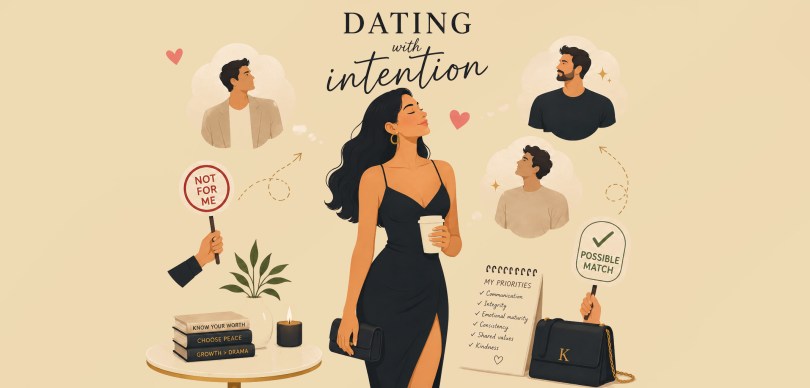
Quite the opposite, I just know I’m dating with intention. There’s a huge difference, I’m getting to know people, Having conversations. Seeing whether there’s compatibility.

Allowing people the opportunity to show me who they are before emotionally investing everything into one person.

And honestly?

It’s been refreshing, but wow hard work. I’m struggling to chat, but know I have to, and it’s not going too bad.  I’ve realised how much emotional pressure I’d unknowingly placed on previous situations. When you only have one person in your mind, every message matters.

Every delay matters.

Every cancelled plan matters.

Everything feels amplified.

Now?

I’m simply enjoying getting to know people.

There’s far less pressure.

Far less overthinking, Far more curiosity.

Learning From My Last Situation

I’d spent around eight weeks chatting to someone recently. We never actually met. Looking back, there was a clear imbalance. Not necessarily because either of us were bad people. Simply because our communication styles were completely different.

Would we have been compatible in person?

I’ll never know, and that’s okay. Sometimes people aren’t chapters.

They’re lessons.

Rather than feeling disappointed, I found myself naturally friend zoning that situation before deciding to start dating properly, I tried to hold off and felt I gave it my all and showed the full me, understanding, patience, kindness and a part of me that I only show those super close, however I realise, maybe I shouldn’t have shown up like that, when you’ve never met someone they can’t ever know or see the real you.

Moving on wasn’t about replacing anyone.

It was about recognising that if something isn’t moving forwards, it’s okay to keep living your life, and coincidently the night I was going on a date, was the night our communication ceased.

Dating With Intention Isn’t The Same As Dating Casually

I think this is where people sometimes get confused. Dating multiple people doesn’t automatically mean sleeping with multiple people.

Those are two completely different things. For me, dating simply means meeting people.

Having conversations, on the phone (Yep the last situation weirdly spent 8 weeks texting and not one call – Yes I should of read the signs).

Going for Walks, Laughing, Learning. Seeing whether there’s compatibility.

I’m actually clearer now than I’ve ever been.

I don’t want casual sex, I have never felt the need for casual sex, because a few hours of madness, can leave you feeling awful the next few days..

Perosnally for me, I don’t need validation. I’m not looking for excitement for the sake of excitement. 

I’m looking for my person.

The next person I’m intimate with will be someone with whom I’m building something meaningful.

That’s my choice and it feels incredibly peaceful.

A Little Excitement

Last night I caught up with an old flame, We’ve both already agreed it’s not a date, and as he picked me up, he’d brought me a coffee for the journey, laughing at the fact he knows I hate coffee dates. 

It’s simply two people catching up. I felt super comfortable, no pressure, no expectations.

Just two people seeing whether they enjoy each other’s company.

And honestly? I loved wearing a pretty dress, linking arms and walking around the Docks was so pretty, Being myself, with someone who knew me, and although it was essentially just friends catching up, we flirted and it felt nice.

For the first time in a very long time right now, dating doesn’t feel scary.

It feels exciting, its crazy to think I’ve only had half a dozen dates the last few years, but right now, I feel comfy at just the chatting stage and maybe there maybe one or two more dates to pencil, but hey no rush. 

Maybe This Is What Healthy Dating Actually Looks Like

Perhaps I’ve finally realised something important. Dating isn’t about desperately hoping every person becomes “the one.”

It’s about allowing enough space for the right person to reveal themselves, to meet in person, and not judge too early. It’s about curiosity instead of pressure.

Connection instead of obsession.

Intentionality instead of urgency.

I’m still dating for a relationship.

That hasn’t changed.

But I’m no longer dating from scarcity. I’m dating from abundance.

There’s a huge difference.

So yes…

I’ve finally popped my dating cherry.

Not because I’ve suddenly become someone who dates endlessly, I can’t suddenly just change who I am, but because, for the first time, I’m allowing myself to enjoy the process rather than trying to rush towards the destination.

Wish me luck.

I have a feeling this chapter might be a good one… and I thought I would add in a few interesting Dating facts..

• Surveys consistently find that many users of dating apps talk to multiple people at once before becoming exclusive. This isn’t necessarily because they’re less serious, but because it helps them avoid becoming emotionally invested before compatibility has been established.

• As Relationship therapists, we often recommend delaying heavy emotional investment until you’ve spent time together in person. Messaging can create a false sense of intimacy because our brains naturally fill in the gaps with assumptions.

• Studies on modern dating suggest that clear, consistent communication is one of the strongest predictors of relationship satisfaction. It’s often less about saying the “right” things and more about reliability, honesty and emotional availability.

• People who date with intention typically report focusing on shared values, emotional maturity and consistency over initial chemistry alone. While attraction matters, long-term compatibility is built through communication, trust and aligned life goals rather than butterflies alone.

Why Are Some Men Intimidated by Sexually Confident Women?

Through My Own Lens

Relationships, intimacy and confidence are deeply personal, and no two people experience them in exactly the same way. As I’ve grown older, I’ve found myself reflecting on how my own relationship with sex, confidence and femininity has evolved. Along the way, I’ve noticed certain patterns through my own experiences and through conversations with therapy clients. This isn’t about speaking for all men or all women. It’s simply an honest reflection of what I’ve observed, what I’ve lived, and the questions I’ve found myself asking.

Perhaps you’ll recognise some of it. Perhaps your experiences have been completely different. Either way, I hope it encourages a conversation about intimacy, confidence and the way we connect with one another.

For years I saw myself as quite submissive.

I like being feminine. I enjoy looking after myself, my child and my home. In a relationship I naturally fall into a softer role, and in the bedroom I always assumed I was more submissive too, it always felt natural.

But something has changed in that as I have got older.

Not because I became more dominant, god no, not because I suddenly became someone different. I think simply became more comfortable in my own skin.

The way I experience intimacy in my forties is completely different to how I experienced it in my twenties and thirties. Back then, like many women, there was always a little voice in my head.

Do I look okay?

Should I move like this?

Am I attractive enough?

Looking back, I wasn’t fully present. I think many women have sex while carrying insecurities into the room with them. Sometimes we’re performing without even realising it. We become so focused on pleasing someone else that we forget intimacy should also be something we experience for ourselves. As I’ve healed, grown, lost weight, become healthier and far more accepting of my own body, something shifted.

I don’t hide anymore, I don’t overthink, I feel completely at home in my own skin.

Ironically, that’s when I started noticing something unexpected.

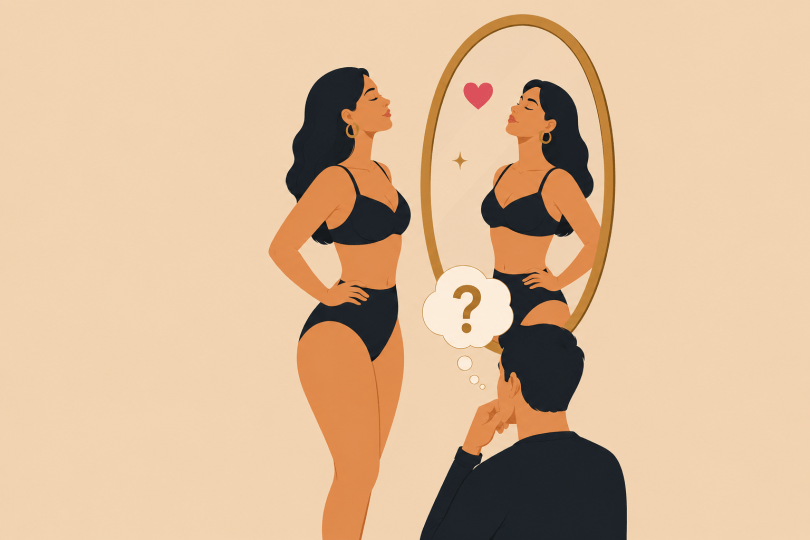
Some men seemed incredibly drawn to that confidence, Others seemed… intimidated by it.

Is Sexual Confidence Intimidating?

The answer isn’t yes or no.

It’s that confidence can expose insecurity.

Psychologists have long recognised that confidence in any area of life can sometimes trigger comparison in others. Rather than feeling inspired, some people feel inadequate. Intimacy is no different.

Sexual confidence isn’t about having countless partners.

It isn’t about being loud, outrageous or adventurous for the sake of it.

For me, it’s the opposite.

It’s about being emotionally present.

It’s about knowing what you enjoy, communicating honestly and allowing yourself to experience intimacy without shame.

Research consistently shows that women with greater body appreciation tend to report higher sexual satisfaction, greater communication with partners and lower levels of sexual anxiety. In other words, when we’re comfortable in ourselves, intimacy often becomes deeper rather than more performative.

“You’re Different”

One conversation has always stayed with me.

Last year I was in a committed relationship. Initially everything was wonderful. If I’m honest, it was probably the best sexual connection I’d ever experienced.

One evening we were lying in bed and he turned to me and said,

“You’re different to other women.”

I’ll admit, I braced myself for criticism, (he was the king of narcissism). 

Instead he said,

“I’ve been with a lot of women, but you’re different because you have sex for yourself as well as the other person. Most women don’t.”

That sentence has stayed with me ever since. At the time I didn’t fully understand what he meant. Looking back, I think he recognised something I’d never consciously thought about.

I wasn’t performing. I wasn’t worrying. I wasn’t trying to be someone.

I was simply present, Passionate, Connected.

To me, passion isn’t something reserved for the bedroom.

It’s how I approach life, I’m passionate about my work, About helping people, About healing, About relationships, About being alive.

Perhaps intimacy simply reflects that part of me. I think as with everything in life, I give it my all. 

Does Sexual Maturity Change as We Get Older?

One question I’ve found myself coming back to is whether women and men sometimes experience sexual maturity differently as they get older.

I can only speak from my own experience, but for me, confidence didn’t come from having more sex. It came from knowing myself better.

In my twenties and early thirties, I was far more aware of how I looked, whether I was “doing it right” and whether I was attractive enough. As I’ve got older, all of that has faded into the background. Today, intimacy feels less about performance and much more about presence. I know my body, I’m comfortable communicating, and I allow myself to enjoy the experience just as much as the person I’m with.

When I speak to other women, and to many of my coaching clients, I hear similar stories. Confidence often seems to grow as self-consciousness begins to fall away.

For many men, however, middle age can bring a different set of experiences. Careers become more demanding, family life becomes busier, stress increases, and for some, natural changes in sexual function can start to appear. UK research suggests that concerns about sexual health and performance become more common as men get older, even though many continue to value intimacy and want fulfilling sex lives.

I also can’t ignore something I’ve noticed through countless conversations with people over the years. I’ve spoken to middle-aged men who tell me they haven’t had sex with their partner for weeks, months or sometimes even longer. Equally, I’ve spoken to women who feel emotionally disconnected or who have simply stopped prioritising intimacy. It reminds me that this isn’t a “men’s issue” or a “women’s issue.” Long-term relationships can sometimes drift into companionship, routine and responsibility, leaving very little space for passion unless both people actively protect it.

That makes me wonder whether some couples can find themselves moving in opposite directions. Just as many women are becoming more accepting of themselves and more confident sexually, some men may be carrying pressures they’ve never had before. Not because they’ve become less masculine or less desirable, but because life changes us all.

Perhaps that’s why confidence can sometimes feel confronting.

Not because confident women are “too much”, but because genuine intimacy asks both people to be vulnerable.

I also find myself wondering whether this plays a small part in why some middle-aged men are drawn to younger women. Not because younger women are somehow better, and certainly not because all men seek younger partners, but because relationships where both people are still discovering themselves may sometimes feel less exposing than being with someone who already knows exactly who she is.

It’s simply a thought rather than a conclusion, but I think it’s an interesting question to ask.

Can Confidence Trigger Insecurity?

I’ve worked with enough people now to know I’m not alone in noticing this. Many women I’ve spoken to have shared similar experiences. Sometimes a sexually confident woman challenges expectations.

Some men have become used to being the one who leads, reassures or teaches. When they meet a woman who already knows herself and is comfortable expressing what she enjoys, it can shift the dynamic.

That doesn’t make those men weak. It simply means confidence requires confidence in return. Secure men often welcome openness because it creates honesty and better communication.

Less secure men may start questioning themselves.

Am I good enough? Has she experienced better? Can I satisfy her?

Those thoughts don’t always get spoken aloud, but they can quietly change the atmosphere within a relationship.

Sex Gets Better With Emotional Safety

One thing I’ve realised is that great sex isn’t really about technique. Anybody can have sex, come on you know how true that is… 

But genuine intimacy is different.

The best experiences happen when two people feel emotionally safe enough to stop performing altogether.

When there’s trust, laughter, curiosity, communication, acceptance, and when two people show the fuck up for each other.. they show each other, “I’m here, I’m yours, and I’m not going to fuck this up by playing games”!

That’s where connection lives.

Why I Don’t Date Casually

People are often surprised when I tell them that since the end of my long term relationship with my sons Dad,  I’ve only been sexually intimate in my personal life, with a couple of people over the last four years. Yes I have dated a few, but I have a way with men, where I don’t feel the need to show them who I am through sex. My personal world I guess can be so different, from perhaps any alter ego, I can play or come across as. 

For me, confidence hasn’t led to sleeping with more people. It’s actually had the opposite effect. I’ve become far more selective.

I don’t feel the need to give my body away simply because dating apps make casual intimacy feel normal, I mean what do I gain from that? Apart from making myself feel shit! Where is the reward for me? What a visit to the clinic, because men don’t want to wear protection? No THANKS!

I’ve reached a point where I value connection far more than attention.

Maybe that’s age, Maybe it’s healing, Maybe it’s simply knowing my own worth.

Either way, I no longer believe sex should be something we do because we’re lonely, bored or afraid someone else might come along. I’d rather wait for someone who genuinely values intimacy than collect experiences that leave me feeling empty.

It gives me such insight into the world, having this view, I know porn stars who have sex for money, but the sex they have on film, is not the sex they have with a partner. Many of them are choosing celibacy in their own life,  and you may sit there, not understanding that, but porn stars and sex workers, often become two people, and separate work and private life completely. The person they portray can be a million miles from the person they truly are. 

Are We Really Having Better Sex?

Dating apps have changed modern relationships. They’ve created endless choice, endless comparison and often a conveyor belt approach to dating.

But one question keeps coming back to me.

Are people actually having better sex because they have more opportunities? Or are they simply having more of it?

When I speak to people in long term relationships, it’s surprisingly common to hear things like, “We haven’t had sex for weeks”. Others describe intimacy that feels routine rather than exciting.

The statistics reflect this. Large surveys suggest that sexual frequency tends to decline in many long term relationships over time, and satisfaction depends far more on communication, emotional closeness and relationship quality than on how often couples have sex.

Perhaps the real issue isn’t how much sex we’re having.

It’s how connected we are while we’re having it.

Confidence Isn’t the Enemy

A sexually confident woman isn’t trying to compete.

She isn’t trying to dominate.

She isn’t trying to prove anything.

She’s simply comfortable enough to experience intimacy without apology.

The right man won’t feel threatened by that.

He’ll feel invited into something honest.

Because confidence isn’t about perfection.

It’s about authenticity.

And perhaps that’s the most attractive quality of all.

The Missing Ingredient: Are We So Busy Living That We’ve Forgotten to Love?

I feel like, in today’s day and age, we’re forgetting our age.

We’re forgetting how quickly time passes us by.

We’re spending so many years trying to cling on to our youth. Desperate to be seen. Desperate to be validated. Desperate to keep our options open. Desperate to have variety when it comes to sex. Desperate not to settle down too soon, commit too quickly, or somehow miss out on something better that might be waiting around the corner.

But in doing all of that, I wonder if we’re actually missing one of the most crucial ingredients of a genuinely happy life.

Love.

Meaningless hookups don’t make a happy life.

Yes, they might leave you feeling happy for a night. Maybe even for 24 hours. There’s excitement. There’s attraction. There’s validation. There’s that temporary high of being wanted.

But then what? 

Who do you call when something incredible happens?

Who hugs you when you’ve achieved something you’ve worked years for?

Who knows the tiny details of your life that wouldn’t mean anything to anybody else?

Who do you turn to and say, “Fuck it. Should we just go on holiday?”

Who do you build the memories with?

I seldom talk about myself personally in my blogs. As a coach and trainee therapist, I’m conscious of boundaries and how much of myself I bring into the work that I do, but on this occasion, I thought, why not… because recently I’ve started to realise something that actually brings me a great deal of sadness.

Some of the best years of my life, I’m spending alone.

We all look towards the future and think, I don’t want to grow old and be lonely.

But what if we’re looking too far ahead?

What if some of us are spending the best years of our lives alone right now?I’m in my 40s. I feel good in myself. I’ve done an enormous amount of healing, I’ve worked on myself, body and mind, I’ve built a life. I’m raising my child, I’m studying, I’m working,I’m travelling. I’m achieving things I’m proud of. Yet, sometimes, I look around at my friends who are in relationships.

They’re off to Italy. Mykonos. America. Australia.

They’re seeing the world. they’re going for date nights, they’re having weekends away. they’re building a collection of memories that belong to the two of them.

And then there’s me…. 

Going on my solo trips, Travelling with my child, waiting to see who can get childcare and plan that once a year night out…

And don’t misunderstand me, I absolutely love travelling with my child. Those memories are some of the most precious memories of my life. 

I have friends. I have family. I have a child I adore, I mean I’m not always sitting at home with nobody in my life… lol, But sometimes I sit there and think:

I’d love some romance in my life.

I’d love somebody to share all of this with.

I thought, last year, that maybe I’d found that.

It wasn’t meant to be.

If I’m completely honest, it felt like 50% of the relationship was love bombing and the final three months were spent with me acting as a personal therapist. The push pull dynamic, never knowing where you stand is Toxic, and not for my own attachment style at all..

Wrong person… Wrong relationship. 

Perhaps even the wrong relationships can teach us something about what we actually want. I remember being in Ibiza once and going on a date with a gorgeous Portuguese guy called Francisco. We had such a good date.He took me for a beautiful dinner. We went for drinks. We talked.

And at one point, he looked at me and said:

“Kerry, do you get lonely?” as we talked about what it’s like to be single..

And I said no.

Because I’m not lonely… Not in the traditional sense of the word, more so in an empty bed kind of way! As a mother, I have my child. I have friends. I have family. I have people I love and people who love me.

But there’s a particular kind of connection I miss.

I miss my person.

Recently, I completed another year of study. I got the message congratulating me on passing and in that moment, I missed having somebody there to congratulate me.

Someone to give me a hug.

Someone to ask how I felt.

Someone who understood how much work had gone into getting there.

And equally, I miss being that person for somebody else.

I miss praising someone.

I miss making somebody feel good.

I miss having someone walk through the door and being genuinely excited to hear about their day.

I miss having somebody say:

“Fuck it. Should we just go on holiday?”

Or:

“Should we go out tonight?”

I miss the spontaneity that comes from having somebody to do life with.

And recently I’ve realised something.

Life is just passing by.

We’re such slaves to work. Slaves to money. Slaves to our schedules. Slaves to this idea that we need to have everything sorted before we’re allowed to make room for love.

We tell ourselves:

I’m too busy.

I’ve got too much going on.

I haven’t got the capacity for a relationship.

Maybe when work calms down.

Maybe when the children are older.

Maybe when I’ve healed a little bit more.

Maybe when I’ve achieved this.

Maybe when I’ve sorted that.

But when exactly is life going to become completely uncomplicated?

Probably never.. and I think I’ve been guilty of this too.

Sometimes I push people away because I tell myself I’m not ready.

I tell myself I don’t have the time or capacity for a relationship because I’m so busy with work, but maybe they just haven’t been the right people.

Because there’s an important distinction here.

I don’t need anybody, but I would like somebody.

There’s a huge difference.

But I also wonder whether some of us have become a little too good at not needing anybody.

We celebrate independence. We celebrate the person who has been hurt, picked themselves back up, built their own life and learnt how to stand completely on their own two feet and rightly so.

However, psychologically, there’s something interesting that can happen when you’ve spent a long time having to rely on yourself. Independence can become more than a strength. It can become protection.

You become so accustomed to solving your own problems that asking for help feels uncomfortable. So used to carrying everything yourself that letting somebody carry something for you feels almost unnatural. So capable of regulating your own life that allowing another person into it starts to feel like a disruption rather than an addition and perhaps that’s where hyper-independence can creep in.

There’s a difference between I can do this alone and I must do this alone.

There’s a difference between choosing independence and being so afraid of depending on another human being that you never allow yourself to experience interdependence, the healthy middle ground where two capable people choose to lean on each other without losing themselves.

I think that’s something I’ve had to question within myself.

Am I genuinely too busy for a relationship?

Or have I become so accustomed to doing everything myself that I’ve convinced myself there simply isn’t room for another person?

Because maybe the goal was never to need nobody.

Maybe the goal was to know that I could survive alone, while still allowing myself to admit that life might be nicer shared.

I don’t want somebody because I can’t survive alone. I’ve already proved that I can. I don’t need someone to rescue me. I don’t need somebody to financially support me. I don’t need somebody to give me an identity.

I’ve built my own life.

But being capable of doing life alone doesn’t necessarily mean I want to do all of it alone. I want somebody who matches my energy.

I want somebody who asks me how I am in the morning.

“Good morning, baby. How did you sleep?”

Someone who checks in during the day.

“How’s your day going?”

Someone who says goodnight.

“Goodnight, darling.”

It doesn’t have to be constant communication. We’re adults. We’re busy. We have jobs. Children. Responsibilities.

However, I miss those little moments of knowing that somewhere in the world, somebody is thinking about you.

That ten-minute phone call at night:

“I just thought I’d ring you. I miss your voice.”

That’s what I miss.

That person checking in.

That person to share it all with.

Although, I have female best friends whom I’m incredibly grateful for, I miss having a best friend who is also my partner.

Someone who’s your lover, your teammate, your safe place and the person you laugh with over something nobody else would find remotely funny.

When I became single and left my child’s father, I left because I needed to find myself, I needed to find happiness, I needed to heal. I needed to grow and spread my wings like a butterfly.

I had been in an unhappy relationship, but I was also very unhealed and very unhappy within myself at the time.

So I left, I found myself, I built a different life and somewhere in the back of my mind, I think I always assumed I’d meet somebody.

When I met someone in 2025, I remember thinking:

Yeah. I’m ready for this.

Sadly, he wasn’t the right person.

I chose wrong.

However that doesn’t mean wanting the relationship was wrong.

Lately, I’ve had the strangest feeling, I can’t even properly comprehend it. I almost feel like maybe there’s a relationship around the corner. Of course I’ve chatted to people. I’ve been on a couple of dates over the past couple of years, but recently I’ve found myself looking at the people in my life and wondering:

Have I already met him?

Is it somebody I’ve never had a relationship with before?

Could it be somebody from my past?

For me, it’s rarely going to be somebody old because I don’t particularly like looking backwards, an ex is an ex for a reason….

Or is he somebody I haven’t met yet?

I genuinely don’t know.

I just have this weird gut feeling I’ve had for the last few weeks that maybe there is somebody out there for me.

Perhaps the bigger realisation is this:

Maybe I have to make myself available for him.

Not available in the sense of downloading every dating app and desperately searching for a relationship.

Emotionally available.

Making space.

Stop telling myself I’m too busy.

Stop telling myself I’ve got too much stress.

Stop telling myself I’ve got too much pressure.

Maybe if I let the right person in, some of that stress wouldn’t feel quite so heavy. Maybe life isn’t supposed to be something we carry entirely by ourselves.

So what are we doing as human beings?

Why do we push away good things because we tell ourselves we haven’t got time for them? the irony is we’re right.

We haven’t got time.

Just perhaps not in the way we think.

We haven’t got unlimited time.

We’re spending it every single day.

We’re just not always spending it on the things that will matter when we look back.

I look at my own life and think:

I’m always working.

I’m studying.

I’ve got my child.

Where exactly am I supposed to fit a relationship into all of this?

But then I think about last year, I had fewer staff, I was arguably even busier.

Yet somehow I fitted a relationship in perfectly.

It worked, It worked around childcare, It worked around work.

We gave each other time.

Sometimes it was simply a couple of nights a week being in his arms and it was nice.

Again, wrong person.

Perhaps that relationship taught me something important. When the cards are actually on the table and a relationship is genuinely on offer, I can make space for it.

Maybe I do want a relationship…. Actually, I know I do.

Because I don’t want to spend the best years of my life, in my prime, creating all these incredible memories and have nobody beside me who remembers them too.

I don’t want to meet somebody in my 50s and say:

“Do you remember when I did this?”

“Do you remember when I went there?”

And then realise: No. Of course they don’t.

Because they weren’t there.

Sometimes I look at older couples who’ve spent decades together. They’re old, they’re grey, life has slowed down, yet they have this enormous invisible library between them.

A lifetime of memories.

“Do you remember that holiday?”

“Do you remember when the children were little?”

“Do you remember that ridiculous restaurant?”

“Do you remember when we got completely lost?”

“Do you remember when we couldn’t stop laughing?”

Their bodies have aged, their lives have changed, but they have decades of remember whens. I’ve come to realise something I genuinely didn’t think I’d ever say.

I’m not just ready for love.

I’m ready for somebody to share my life with.

I’m ready to build memories with somebody.

I’m ready to grow alongside somebody.

I’m ready to create a family life together.

I’m ready for a partner.

..and believe me, I’m quite stubborn. It’s taken me a while to admit that.

Because our culture celebrates independence—and rightly so.

We tell people:

You don’t need anyone.

Learn to love yourself.

Be happy alone.

Don’t settle.

Know your worth.

And all of those things are important.

But I wonder whether somewhere along the way we’ve taken a healthy message and pushed it too far. We’ve started confusing independence with emotional isolation. We’ve started treating needing connection as weakness. We’ve become so frightened of appearing needy that sometimes we’re afraid to admit we have needs at all. We tell ourselves that the second somebody doesn’t meet every expectation, we should cut them off.

That there’s always another option.

Another swipe.

Another person.

Another date.

Another body.

We’ve created endless choice while somehow becoming increasingly disconnected and I wonder whether modern dating has inadvertently taught us to approach human beings like products.

We scroll. We swipe. We compare.

Too short.

Too tall.

Too available.

Not available enough.

Too keen.

Not keen enough.

Wrong job.

Wrong location.

Wrong shoes.

Next.

Of course, having standards is important. Boundaries are important. Compatibility matters enormously, but the paradox of having so much choice is that sometimes, instead of making us more certain, it can make us less satisfied with whatever we choose.

There’s always the lingering possibility that somebody better might be one swipe away and relationships don’t work particularly well when we’re constantly looking over somebody’s shoulder to see who else has just walked into the room.

I also wonder if we’ve created something of an avoidant dating culture.

Not because everyone is avoidantly attached, that would be far too simplistic, but because many of the behaviours modern dating normalises can look remarkably similar to emotional avoidance.

Keeping things casual, Keeping your options open, Not defining the relationship. Pulling away when things become emotionally intense. Ghosting rather than having an uncomfortable conversation.

Moving on to somebody new rather than working through vulnerability with the person standing in front of you.

We call it freedom.

Sometimes it is.

But sometimes, I wonder if what we’re actually doing is becoming incredibly skilled at avoiding attachment, because real intimacy isn’t found in endlessly meeting new people. It’s built when you stay long enough for somebody to actually know you. Not the version of you on the first date. Not your best photographs. Not your funny stories. Not the version who is effortlessly cool and definitely doesn’t care whether they text back.

You.

And perhaps that’s the uncomfortable thing about love. At some point, you have to stop browsing.

You have to choose.

And then you have to allow yourself to be chosen too.

Maybe that’s why some of us are still single.

Not because there’s nobody good enough out there, Not because we’re broken, Not because love isn’t meant for us, but because somewhere along the way, we became so good at protecting our peace that we forgot love requires us to open the door occasionally.

Of course, boundaries matter, Mine certainly do. If somebody consistently doesn’t give me attention, effort or emotional availability, I will walk away.

I don’t need to chase anybody.

There’s a difference between having boundaries and building walls. There’s a difference between recognising the wrong person and never giving the right person enough room to get close and perhaps that’s the question some of us need to ask ourselves:

Are we genuinely unavailable because life is too busy, or are we using busyness to protect ourselves from being vulnerable again?

Because love does require vulnerability. It requires making room. It requires allowing another human being to matter to you and yes, that means they could hurt you.

But they could also love you. They could also make an ordinary Tuesday feel like something worth remembering. They could be the person sitting beside you decades from now saying:

“Do you remember when…?”

So I asked myself a very simple question.

What do I actually want?

Do I want money? Not particularly.

As long as I have enough to pay my bills and live my life, I’m happy.

Do I want a healthy, happy child? More than anything in the world.

Do I want love? Yes.

Do I want happy memories? Yes.

Do I want a lifetime of togetherness? Yes.

I do.

Maybe that’s the ingredient we’re missing.

Not another achievement, Not another pay rise, Not another follower. Not another person finding us attractive. Not another meaningless hookup. Not another opportunity to prove we don’t need anybody.

Maybe it’s simply having somebody beside you who makes you feel glad you’re alive.

Someone to witness your life.

Someone whose life you get to witness too.

Someone to celebrate with.

Someone to comfort.

Someone to travel with.

Someone to laugh with.

Someone to come home to.

Someone who remembers.

Because one day, if we’re lucky, we’ll all grow old and perhaps the question isn’t only:

Who will be there when I’m old?

Maybe the question we should be asking ourselves now is:

Who do I want to build the memories with that we’ll talk about when we get there?

I don’t need somebody to complete my life.

My life is already full.

But I’ve finally realised… I’d quite like somebody to share it with.

Maybe I’ve spent long enough telling myself I’m too busy for love, because the truth is, life isn’t waiting for any of us to become less busy.

It’s happening now and I don’t want to miss it….

The Context we Meet in: Why we judge women by circumstance instead of Character

There is a scene in Pretty Woman that has stayed with me for years.

Edward, played by Richard Gere, looks at Vivian and says, “I’ve never treated you like a prostitute.”

Her response is immediate.

“You just did.”

For a long time, I watched that scene and thought it was simply about a man saying the wrong thing. As I have grown older, spent more time listening to people’s stories and worked with women from all walks of life, I have come to realise that the scene is about something much bigger than a wealthy businessman falling in love with an escort. It is about judgement. It is about the labels we place on people. Most importantly, it is about how often women are judged by the circumstances in which they are found rather than the character they possess.

What strikes me most about that exchange is that Vivian never asks the obvious question. Why is she carrying the burden of judgement when Edward was equally involved? He may have been the wealthy businessman and she may have been the escort, but both of them participated in the same encounter. Without Edward, there is no transaction. Without his choices, there is no story. Yet somehow society finds it easier to judge Vivian than it does Edward. He is seen as successful. She is seen as shameful. He is allowed complexity. She is reduced to a label, she could be incredibly successful in her own right, but it’s always the man casting judgement, without the understanding.

That scene has always felt like a reflection of something much bigger that still exists today. Women continue to be judged differently for the very same situations that men willingly participate in. The details may have changed. Dating apps have replaced chance meetings in bars. Social media has transformed how people connect. Entire industries have emerged that did not exist twenty years ago. Yet the underlying double standard remains surprisingly familiar.

A woman can meet a man on Tinder, spend an evening talking, laughing and building what she believes is a genuine connection, sleep with him, and then discover she has been quietly disqualified from relationship status because she slept with him too quickly. The irony is extraordinary. He was there too. He made the same decision. He participated in exactly the same experience. Yet somehow he walks away feeling entitled to judge her for behaviour he willingly took part in himself.

What fascinates me is that many women do not think this way. They are often looking at the bigger picture. They are wondering whether there is chemistry, whether there is potential, whether this person could become a meaningful part of their life. Of course there are exceptions. Both men and women can be manipulative. Both men and women can seek validation. Both men and women can be dishonest. This is not about pretending one gender is innocent and the other is guilty. Human beings are complicated. What interests me is the imbalance in how judgement is applied. Society still seems far more comfortable attaching shame to women than it does to men.

One of the most interesting questions in modern dating is why some men automatically assume that a woman on Hinge is more suitable for a relationship than a woman they meet in a lap dancing club or who perhaps has worked as an escort. Why? What evidence do they actually have? Have they spent time understanding her values? Do they know how she treats people? Do they know whether she is loyal, emotionally available, trustworthy or kind? Usually the answer is no. What they are really judging is not the woman herself. They are judging the story attached to her, and the crazy thing is from my day to day life, I actually hear that ‘BodyCount’ can often reign higher in the women they perceive as ‘Marriage material’.

The woman on Hinge is viewed as someone searching for love. The woman in the club is viewed as someone selling fantasy. One is placed into a socially approved category. The other is placed into a socially disapproved category. Yet neither label tells us very much. The woman in the club may have stronger boundaries than anyone the man has ever met. She may have spent years single because she refuses to settle for relationships that do not meet her standards. She may be fiercely loyal once she commits to someone. She may have had fewer sexual partners than many of the women being praised as relationship material. Meanwhile, the woman on Hinge may be dating multiple people, have no interest in commitment and be seeking validation rather than connection. Or the opposite may be true. The point is that nobody knows.

Character cannot be determined by profession. It cannot be determined by appearance. It cannot be determined by where somebody happened to meet you. Yet people continue to make assumptions every single day based on these things. They judge a book by its cover and then convince themselves they know the entire story.

What I have learned over the years is that public image and private reality are often worlds apart. We live in a culture where people carefully curate how they are perceived. Dating profiles are curated. Social media accounts are curated. Influencer brands are curated. Even ordinary people curate versions of themselves for public consumption. We look at photographs, captions and carefully selected moments and convince ourselves we know somebody. The truth is that we rarely do.

There are women with enormous social media followings who are admired by millions. There are reality television personalities, influencers and public figures who have built highly successful brands around their image. Some have found ways to monetise their beauty, fame and desirability in ways previous generations could never have imagined, and behind closed doors are being sent out on secret Whatssap groups for £10k for the night. Personally, I do not see anything wrong with that. If somebody has built an audience, worked hard to create opportunities and found a way to capitalise on their success, then fair play to them. What interests me is not what they do. What interests me is how society responds to them depending on what information is publicly available.

The same man who judges a woman working openly within the adult industry may spend years admiring, following and fantasising about a public figure whose private life he knows nothing about. The difference is not necessarily morality. The difference is visibility. One woman is judged because people know. The other escapes judgement because people do not. Yet both may be making similar choices in private. This is why assumptions are so dangerous. They are built on incomplete information and presented as certainty.

Another aspect of this conversation that deserves far more compassion is the reality that some women carry experiences most people know nothing about. Some women working within parts of the adult industry have histories of childhood sexual abuse, rape, domestic violence, coercive relationships or profound emotional neglect. Of course this is not true of everyone and it would be wrong to make assumptions. Every woman’s story is different. Yet it is important to recognise that for some women, their relationship with their body, sexuality and sense of control has been shaped by experiences that occurred long before anyone met them. I work with one lady in the industry, who was date raped, and is simply too scared to date, and maybe she’s lost her way a little, but who are we to sit and judge.

What often frustrates me is how quickly people jump to judgement without any curiosity about what might have brought someone to where they are today. We see a profession and assume we understand a person. We see a choice and assume we know the story behind it. Yet human beings are rarely that simple. For some women, stepping into a space where they choose the terms, set the boundaries and decide what access people have to them can feel very different from experiences where control was taken away. What outsiders may perceive as exploitation, another person may experience as autonomy. Whether people agree with those choices or not is almost irrelevant. The point is that we cannot understand someone’s life by reducing them to a label.

Perhaps that is another reason I find judgement so problematic. It leaves no room for complexity. It leaves no room for empathy. It leaves no room for the possibility that the person standing in front of us has survived things we cannot imagine. We do not know their history. We do not know their struggles. We do not know what they have overcome to become the person they are today. Yet society is often quick to condemn women for the choices they make while showing very little interest in understanding the experiences that shaped those choices in the first place.

As the film draws to a close, something interesting happens. Edward finally understands what he could not see at the beginning. The issue was never Vivian’s profession. It was never the circumstances in which they met. It was never the label he had attached to her. The real obstacle was his inability to look beyond those things. Only when he lets go of his assumptions is he able to see the woman standing in front of him.

If we return back to the film ‘Pretty woman’ in one of the most iconic scenes in the film, Edward arrives with flowers and climbs the fire escape despite his fear of heights. He becomes the knight in shining armour Vivian once dreamed about as a little girl. Of course, we live in a different world now. Most women are not waiting to be rescued. Women build careers, raise families, buy their own flowers and save themselves every single day. The fantasy was never really about being rescued anyway. The fantasy was about being chosen. Being valued. Being seen… finally the little girl who had led such a traumatic and sad life, was seen.

Perhaps that is what so many people are searching for beneath all the noise of modern dating. Not perfection, Not status, Not somebody who ticks every box on paper. Just somebody willing to look beyond the stereotypes, beyond the assumptions and beyond the story attached to how they met.

Because love does not arrive wrapped in social approval. It does not ask whether someone was met through friends, on a dating app, in a club, at work or during the most unexpected chapter of their life. Love only asks whether two people are willing to know each other honestly.

And perhaps that is the real lesson hidden inside Pretty Woman. The greatest relationships are not built by people who meet in the perfect circumstances…. They are built by people brave enough to see beyond them….

Maybe the real question is not where are the women worth loving. Maybe the real question is where are the men willing to put down their judgement long enough to recognise them.

Because the most beautiful love stories have never been about how two people met.

They have always been about what happened when they decided to truly see one another.

2026 – The year Choosing Me: The Moment I Stopped Waiting to Be Chosen

There’s a truth I’ve had to learn the long way round:

Sometimes you have to experience the wrong people to finally understand your worth.

Not in a cliché way and not in a “everything happens for a reason” way, but in a very real, very lived way, where each connection leaves a mark, teaches you something, and slowly pulls you back to yourself.

I’ve loved different kinds of men.

Last year I met the one who felt electric at the start, passionate, intense, everything turned up to 100. The sex was something else, I mean girls, there is good and then there is WILD! Insane until it wasn’t. Until the warmth turned into walking on eggshells. The subtle put-downs. The control disguised as care. The disappearing acts followed by apologies that reset everything… until the cycle began again and I lost myself in that, not just emotionally, but physically too. So swept up in the sex, attention, gifts and love-bombing, I suddenly realised after watch him down pink cocaine for two weeks, that this was not the kind of man who should be in mine or my Childs life.

Then came along a good man, Kind-hearted, Safe, I thought. Someone I let myself open up to in a way I hadn’t in a good few years. We built something slowly, calls, messages, shared moments across distance, it felt so familiar… And then… he shut down.

No warning. No gradual fade. Just a switch.

One minute, he was planning a weekend with me, so excited I was in his country. The next, it was “this feels like pressure, I should respect my boundary, I can’t do long distance”, That kind of emotional whiplash does something to you. It doesn’t just hurt, it changes how you see people. How you trust. How you show up. I’m so glad I didn’t have sex with him, because in all honesty seeing his insecurities at play with avoidance, makes me feel there would have been disappointment. I think it felt familiar, because it threw me back into the summer of 2023, another situation, the calls, messages, consistency, deep intimacy on all levels except sex.

and somewhere underneath all of that, there’s been another truth sitting quietly in my life:

There is someone I love… who didn’t choose me, and it was after the experience with my Californian guy, I realised, it simply reminded me of that! The heartbreak of 2023, where I wasn’t chosen, but had fallen anyway..

For a long time, I told myself it was limerence, Infatuation. Something I’d grow out of, however time has a way of clarifying things, not erasing them and the truth is some feelings don’t fade just because they’re inconvenient, they simply get avoided.

But here’s what I’ve realised:

Someone not choosing you doesn’t make them “the one.” It makes them unavailable.

The Pattern I Couldn’t Ignore

There’s something else I started to notice.

Men would leave… choose someone else… build lives with other women.

Then years later, they’d come back, Telling me I was always the one, That they see me now, That they made the wrong choice. It happened last summer. I had a call, with an ex asking to meet me, I was seeing the narcissist at the time, and I declined, but he pushed and pushed, so I agreed ten mins in a public place only. I showed up, and was met with, basically I was the one perfect for them, I was the one they loved, I was the one aligned, I was so shocked, but its not the first time this has happened.

But by then, it’s too late, Because love isn’t just about recognition, It’s about timing. It’s about courage. It’s about choosing.

And I deserve to be chosen in real time, not in hindsight.

I appreciate if things don’t work out with someone else they chose, and then try and rekindle, but I will never be the other woman, whilst you keep someone there incase I say NO, and I did say NO!

The Misunderstanding of Who I Am

I think part of my story is this:

People think they know me when they first meet me, I get judged all the time. They see confidence, Strength, Independence.
They assume I’m “a lot.”, That I’ll be hard to handle. People see the Kerry now before them, not the Kerry I was for all of my life, they see the girl with the lips, the tan, the hair, taking images and posing, and they see me in a certain way, because that’s what their ind interprets.

But the truth?

In a relationship, I’m soft, I’m calm, I’m loyal, I’m simple in what I want.

A quiet life.
A genuine connection.
A partner to build with, not perform for.

And it’s only later, when they’ve already chosen someone else, that they realise actually she’s the opposite to who she comes across as, But I’m not waiting around to be understood after the fact anymore. Judgement is on them, Darlings, not me!

What I See Clearly Now

I see the half-effort.

The “let’s plan something” followed by inconsistency.
The words that don’t match actions.
The low-level energy that expects access to me.

And I’m done with it, yep over it! You will remain in the archived, because quite frankly, I cannot be arsed seeing your face!

Because here’s the truth:

There is no attraction without consistency.
There is no connection without effort.
And there is no future where I am not fully chosen.

What I Actually Want

It’s not complicated.

I want someone grounded, Calm, Emotionally available.
Someone who values routine, health, stability. Someone who has kids already, maybe similar age to my child, so we can just enjoy watching the kids grow, rather than the stress and worry of having another! I love my life now to start all over again with a new baby. Someone who wants to build a life, not escape into one.

A home.
A partnership.
A quiet, real kind of love, that will last

Not the loud, chaotic kind that burns fast and leaves damage behind.

Just… a good man…

Here’s Where Everything Changed

At some point over the last 8-9 months, something shifted in me. In that time, I dated a narcissist, was sexually assaulted by someone I went on a date with, and then I met the ultimate avoidant. This was all meant to happen, and I don’t say that to minimise it, I say it not through bitterness or coldness, but

Clarity.

I realised I’ve spent so much time pouring into other people, trying to understand them, support them, love them, hold space for them…And not enough time choosing myself. Too much time not filling up my own cup.

So now?

I’m not chasing.
I’m not convincing.
I’m not waiting to be picked.

You either show me, consistently, clearly, and show that you choose me…
or you don’t get access to me at all.
..

There is no in-between anymore my body, my mind, my heart. No, you are not welcome!

It’s taken 42 years to reach this point, and I realise, I’m worth something, and it’s a deep routed find, and wow, my eyes are open.

For Any Woman Reading This

If you’ve ever felt like the one they come back to… but never the one they choose first…

If you’ve ever been “almost” loved properly…

If you’ve ever questioned your worth because someone couldn’t meet you where you are…

This is your reminder:

You are not too much.
You are not misunderstood.
You are not “almost.”

You are just no longer available for half-hearted love, and please hold your value high, hold it for someone who offers consistency, but offers to show up to! Not just a lunchtime meet in costa! Because the coffee dates are devaluing romance!!

However the true message stands, the moment you truly choose yourself, set your boundaries and recognise your value matters, is the moment the shift will happen!

When two different people come together and learn to love one another…. ‘The Soul Mate Connection’

One of the most beautiful things about relationships is how two completely different people can come together, two individuals with their own interests, personalities, histories, and ways of seeing the world, and slowly begin to grow alongside one another.

At the beginning, you are separate worlds. Different routines, different habits, different comforts. One might love football, the other reality television. One might wake up early and love quiet mornings, while the other thrives at night. In the early stages, these differences can feel noticeable, sometimes even amusing.

But when a connection is real, something subtle and beautiful begins to happen.

Without even realising it, your worlds start to overlap.

You might find yourself sitting beside her watching ‘Love is Blind’, even though you never thought you would Or you might find yourself asking about the football score because it matters to him, and somehow that makes it matter to you too. What once felt like their interest slowly becomes something you share.

Not because you are changing who you are, but because love naturally invites you into each other’s worlds. You start to walk together on a path, a journey of alignment.

This is where the beauty of a true bond lies. Real connection doesn’t erase individuality. Instead, it gently weaves two lives together while still allowing each person to remain fully themselves.

Over time, the shift becomes deeper than shared hobbies or interests.

Their joys begin to feel like your joys.

Their worries begin to feel like your worries.

Their dreams start to intertwine with your own.

Their desires become yours, and yours become theirs. Not in a way that feels forced or sacrificial, but in a way that feels completely natural. Almost effortless.

And this is often when couples begin to say something that sounds strange to anyone outside the relationship:

“We’re basically the same person….”There are not many people who can look at the other and say this.. and that’s when you know you’ve found your person.

Of course, no two people are truly identical. You still carry your own thoughts, experiences, and individuality, however the connection becomes so deep that your emotional rhythms start to align. You begin to understand each other without needing to explain everything. Sometimes a look is enough. A silence can speak volumes.

It begins to feel like you are moving through life with someone who understands you on a level that very few people ever will.

The Feeling of a Soulmate

A true soulmate often doesn’t feel like fireworks. It feels like recognition, it feels like an intensity that overwhelms, engulfs you and blows your mind.

Like meeting someone your soul already understands.

You may notice that your values align naturally. Conversations flow effortlessly. Time together, calls together, feel peaceful rather than draining. Even when you disagree, there is still respect, still care, still a desire to understand each other rather than win.

You start to feel a quiet certainty.

Not the anxious kind of love that leaves you questioning everything, but the calm kind that settles in your chest and says: this feels right, this is my person, we’re basically the same person.

When you meet someone like this, life begins to align in unexpected ways. Your goals start to complement each other. Your emotional worlds feel compatible. You find yourselves growing together instead of pulling in opposite directions.

And that’s when many people say something that captures the depth of that connection:

“We’re the same person.”

Not because you are identical, but because your souls move in the same direction.

When everything aligns, your values, your intentions, your willingness to grow, the connection feels natural rather than forced. Being together doesn’t feel like hard work. It feels like partnership.

Like you are walking the same path…

And when you meet that person, something inside you recognises it. The noise quietens. The confusion disappears.

You simply feel… home…

When Trauma Tries to Protect Us

But there is another side to deep connection that many people don’t talk about.

Sometimes when we meet someone who truly sees us, who truly connects with us, it can feel overwhelming, to much, the boats rocking and it can cause incredible confusion and anxiety.

Not because the connection is wrong — but because it is powerful…

For many people, past experiences, heartbreak, or emotional wounds create protective patterns. We learn ways to cope with pain: shutting down, pulling away, overthinking, creating distance, or convincing ourselves that something is wrong when things actually feel right, but our physiological states tries to overwhelm us and force the pressure on ourselves, that we start to question everything..

Trauma often teaches us to protect ourselves.

But sometimes those protections can appear right when something beautiful is forming.

If someone is used to shutting down when emotions feel intense, they might withdraw from the very connection they’ve always wanted. If someone is used to expecting abandonment, they may start searching for problems that don’t actually exist.

And before they realise it, fear begins to interfere with something that could have been incredibly special.

This is why self-awareness matters so deeply in love….

When you recognise your patterns, when you understand how your past experiences might influence your reactions, you give yourself the power to respond differently.

Instead of shutting down, you pause.

Instead of running, you communicate.

Instead of assuming the worst, you choose curiosity.

Meeting someone who truly aligns with you can feel intense, scary and stir unwanted anxiety and pressures. It can stir emotions you’re not used to feeling. It can make you vulnerable in ways that feel unfamiliar.

But vulnerability is often the doorway to real connection.

Protecting Something That Matters

When you realise you have something special with someone, it’s important to nurture it.

That doesn’t mean the relationship will be perfect. Every connection will have moments of uncertainty, overwhelm, or misunderstanding. But what makes a soulmate connection so powerfu is the willingness to work through those moments together, however apprehensive and fearful you are

Instead of letting fear take control, you choose honesty.

Instead of letting overwhelm create distance, you talk about it.

Instead of pushing someone away when things feel intense, you lean into understanding what you’re feeling and why.

Real love is not just about finding the right person, it’s also about being emotionally aware enough to protect the connection once you find it.

Sometimes that means slowing down.

Sometimes it means communicating your fears.

Sometimes it means learning new ways to handle emotions you once avoided.

But when two people are willing to grow, the connection becomes stronger rather than fragile.

When You Know

When you truly meet your person, interests aside, emotions aside, even past trauma aside… something deeper connects.

Two different people.

Two different lives.

Yet somehow, everything aligns.

Your lives begin to weave together naturally. Your worlds blend. Your hearts recognise something familiar in each other.

And in those quiet moments — when you look at them and feel peace instead of doubt — you may find yourself saying something that captures it perfectly:

“We’re the same person.”

Not because you’ve lost yourselves, but because you’ve found someone whose soul walks beside yours, a heavenly feeling of your person walking alongside you, like the Universe and God have brought you both together..

And when that happens, when everything inside you says this is my person, when love feels calm rather than confusing, when being with them feels as natural as breathing…

You realise something powerful.

You’re home…

You have your person…

What Would Happen If We Walked Away From Dating Apps in 2026?

Dating apps promised connection. Instead, they’ve left many of us anxious, disposable, and lonelier than ever.

My mum doesn’t believe me when I tell her that the only real way people meet these days is through dating apps. She’s from a different generation, one where people met through friends, work, chance encounters, or simple introductions. You met someone, you liked them, and you tried to make it work.

Today, dating feels nothing like that… it’s even hard to imagine, life was that simple, once!!

In 2026, dating apps dominate modern romance, yet, more people than ever feel emotionally burnt out, disconnected, and deeply unsure about love. So I keep asking myself the same question:

What would actually happen if we all made a conscious decision to walk away from dating apps?

Dating Apps and the Rise of Modern Dating Anxiety

There’s no denying it, dating apps have rewired how we connect.

Psychologically, they operate on the same reward systems as gambling: dopamine hits, intermittent validation, endless novelty. You swipe, you match, you wait. You check notifications. You compare. You question your worth.

Research over the last few years has consistently linked dating apps to:

  • Increased anxiety and stress
  • Lower self-esteem
  • Addictive usage patterns
  • Emotional burnout

So much so that users have attempted to sue dating apps, claiming the platforms are deliberately designed to encourage compulsive behaviour, emotional dependence, and prolonged singlehood rather than healthy relationships.

And honestly? I believe it, I have seen it with my own eyes, and my eyes are so tired of it..

Recently, I deleted Tinder and Bumble completely, I barely used Raya and have now set it to friends only. I thought everything was gone — until I realised I still had Hinge on my work phone. I hadn’t checked it in weeks.

There were 236 notifications.

And I didn’t feel excited. I didn’t feel curious.

I felt sick.

I didn’t even want to open it. I just wanted my pictures offline. I didn’t want to exist digitally anymore. That, in itself, says everything about what dating apps do to us. As soon as I clicked onto it, to delete, the universe spoke, on a dark reminder of why I want to be offline, lay before me on my screen, It was like I was being told… yes delete, delete, delete, because bad people lurk here…

The Illusion of Endless Choice

Dating apps sell the idea that more choice equals better outcomes, however psychologically, the opposite is often true.

Too much choice leads to:

  • Paralysis
  • Dissatisfaction
  • Constant comparison
  • A belief that something “better” is always out there

We find a diamond and still keep fucking digging anyway… why???

People become disposable, A face, A profile, A moment of interest, then… replaced. Not because something is wrong — but because the swipe never ends. It’s so cruel, not just to others but to ourselves..

We’ve become fickle and the apps reward it.

The Scariest Part of Online Dating: The 3–4 Week Pattern

This is the part nobody wants to admit — because once you see it, you can’t unsee it.

You meet someone, You talk every day, The connection feels consistent, Warm and Promising.

Then you hit week three or week four.

And something changes.

Replies slow down, Effort drops, the tone shifts. Suddenly they’re busy. Work is stressful. Life is overwhelming. They’ve got so much on.

The good mornings , the good nights disappear. The curiosity fades.

And you’re left asking:

Why does it always seem to end here? Why do people stop trying at the exact same point?

Dating apps encourage people to fantasise rather than commit, its all words and no action, To chase excitement without responsibility. To invest emotionally just enough, until someone else catches their eye.

Because someone always does.

A girl drops into their DMs. A new face swipes right. And before you know it, the excuses begin:

“I didn’t get a chance to reply.”

“I’ve been exhausted.”

“I’ve just been really busy.”

It’s not that they suddenly became busy.

It’s that their attention moved elsewhere… and it hurts…

When You Have a Good Heart, This Hurts More

This pattern cuts deeper when you’re someone who leads with sincerity, when your heart is pure, and you just simply hope for a glimmer of happiness in love…

When you like someone, you focus. You don’t browse. You don’t keep your options open “just in case.” Once you’ve met someone, you don’t feel the need to even look at an app.

So when things fade — again — it makes you question everything:

Who do I get close to?

Who do I trust?

When is it safe to let my barriers down?

As a woman, I sometimes wish I could be colder, more guarded, less emotionally available. Like friends of mine who can detach easily and give nothing away, and play the complete bitch, and they get treated like absolute royalty..

But I can’t help who I am.

And that softness — in a swipe culture — feels like a liability…

The Emotional Cost of Subtle Withdrawal

What makes this even harder is how quiet the withdrawal is.

If you’re intuitive, you feel it instantly. You notice the shift before it’s acknowledged. The delayed replies. The lack of effort. The energy change.

So when it happens again, it’s not just disappointment — it’s exhaustion.

It makes you not want to date at all. Not because you don’t want love, but because you’re tired of walking the same emotional loop with different faces.

Sometimes, you wish the internet didn’t exist, because people used to learn how to love. They worked through boredom. They chose each other. They didn’t disappear when novelty wore off.

Now, instead of asking “Can I grow with this person?”

People ask “Who else is out there?”

And that question alone destroys connection.

This is why celibacy is so key, because we can give part of our souls, but at least our body can remain untouched and we can hold onto some dignity. The real sadness these days, is how a lot of women, do give their bodies up too early, too freely, and the men take take take.. so you’ve given everything and feel left with nothing, and it hits you twice as hard.

Are Dating Apps Really How Most People Meet?

Despite how dominant apps feel, the data tells a different story.

While dating app usage has skyrocketed over the last decade, most long-term relationships still don’t start online. Even now, the majority of couples meet through:

  • Friends
  • Work
  • Social circles
  • Shared interests
  • Real-world environments

Apps feel unavoidable, but they aren’t the only way. They’ve just become the loudest.

What If We Walked Away From Dating Apps in 2026?

If we collectively stepped back, even temporarily, something interesting might happen.

  • Effort would return — because access wouldn’t be endless
  • Presence would matter more than performance
  • People would have to communicate instead of disappearing
  • Traditions would slowly reinstall themselves

When temptation isn’t constantly in your pocket, you’re more likely to lean into what’s in front of you.

And maybe — just maybe — if we stepped away from apps once we met someone, we’d actually try. We’d communicate. We’d work through discomfort instead of escaping it.

Choosing Depth in a World Addicted to Dopamine

As I step into 2026, I don’t have all the answers when it comes to love. I don’t know where life will take me romantically. What I do know is that I’m no longer willing to participate in something that leaves me feeling anxious, disposable, or disconnected from myself. I have hopes, I have dreams, I have affection, right now even desire, and I know where my heart points… but still trying to remain the ever optimist, and hope somewhere in this big wide world, a good man who aligns still exists.. somewhere.. maybe an ocean away… but there will be that man in the world, who brings calm, brings smiles, and brings a genuine love…

Right now, I’m single and you know what I’m okay with that… because I know my worth and what I deserve… and what’s more so If I feel the tone change, trust me, I will switch off quicker than any guy saying ‘Sorry Ive had a busy day’ – FU and FU …

So until a man asks me to be his girlfriend, his girl, until there is clarity, intention, and consistency — I choose to remain exactly where I am. Open-hearted, hopeful, but no longer available for half-effort, fantasy, or emotional breadcrumbs, darling, you we’re great for the 3 week Disney story, now I have shit to do, but yes, I use the word hopeful… you just never know, what’s around the corner!

Sadly Dating apps have trained us to believe that being alone is something to fix quickly, rather than something to sit with consciously. They’ve taught us that love is abundant but shallow, that connection is instant but disposable, and that if something feels hard, there’s always another option waiting.

But real love has never worked like that.

Love requires patience. It requires discomfort. It requires staying, even when the novelty fades and perhaps that’s why so many people feel lost now: not because love no longer exists, but because we’ve forgotten how to nurture it.

We’re living in a time where people want the feeling of connection without the responsibility of maintaining it. Where intimacy is mistaken for attention. Where consistency feels rare, and emotional safety feels almost radical.

And yet — despite all of this — I don’t believe love is gone.

I believe it’s quieter now. Slower. Less performative. I believe it exists in real conversations, in shared experiences, in moments that aren’t filtered or curated for an audience. I believe it grows when temptation isn’t constantly whispering in your pocket, telling you someone else might be better.

Maybe walking away from dating apps isn’t about rejecting modern dating entirely. Maybe it’s about reclaiming our nervous systems. Relearning how to be present. Choosing depth over dopamine.

Because when you remove endless choice, what’s left is intention.

When you remove constant comparison, what’s left is appreciation.

And when you remove distraction, what’s left is the possibility of something real.

So perhaps the question isn’t “How do we find love in 2026?”

But rather:

“How do we protect it when it shows up?”

And maybe — just maybe — the answer starts with putting the phone down, stepping back into the world, and allowing connection to unfold the way it always did… slowly, imperfectly, and humanly. Maybe the olden day love is still out there, maybe we just need to allow our eyes to glance further than our phone screens, and maybe we should just cherish the connections we do make.. making our own Hollywood ending…

You never know, maybe love is already in your life.. and you’ll find it when the distractions cease…

Crossing Into 2026: Choosing Love Over Distraction, Depth Over Drift

There is something sacred about crossing into a new year.

It isn’t just a change of numbers, it’s a psychological threshold. A pause, A moment where we are invited to ask ourselves not what happened, but what matters now.

As we step into 2026, the question isn’t simply What do I want this year? It’s not about setting resolutions that fade out in February, its about realising just how special love is, and learning to recognise how beautiful it can me.

It’s Who do I want to be and how do I want to love?

Because a new year isn’t meant to be dreaded. It’s meant to be welcomed, with intention, courage, and hope.

A New Year Is a Reset, Not a Carryover

One of the most powerful things about a new year is that it gives us permission to put the past to bed.

The disappointments, The heartbreaks, The almosts and what-ifs.

They don’t disappear, but they no longer get to drive the car.

Psychologists often talk about the “fresh start effect”, the idea that temporal landmarks (like a new year) increase motivation for meaningful change. We are more likely to recommit to our values when we feel we are beginning again. 2026 offers that doorway.

This is the year to say:

I’m not dragging old negativity into a new season.

The Question We Avoid: Are We Actually Choosing Love?

We live in a time of endless options, but shrinking commitment.

Dating apps promise abundance, yet study after study shows that choice overload leads to dissatisfaction, not fulfillment. When we believe something better, something easier, is always one swipe away, we stop tending to what’s right in front of us.

And that’s where love quietly slips through our fingers.

What if, instead of asking “Is there someone better? Something easier?”, we asked:

  • Is there potential here?
  • Does this have legs?
  • Could this grow into something meaningful if I actually stayed present?
  • What would happen if I offered consistency to this?

Love is rarely lightning every day. More often, it’s a slow burn that deepens with care, fondness and admiration.

If You’re Looking for Love in 2026

If you are single, this year doesn’t need to be about chasing love harder, it can be about meeting it differently. Do we need to stay on the swipe conveyor belt… because just one swipe can potentially change the course and direction of our whole lives… that one swipe..

Research consistently shows that long-term relationship satisfaction is less about instant chemistry and more about shared values, emotional safety, and mutual effort.

So when you meet someone:

  • Don’t rush to judge them against a fantasy.
  • Don’t treat them as disposable, they’re a human being!!
  • Don’t assume connection must feel explosive to be real, its about alignment, shared values and making each other smile.

What if this person is also looking for love, not entertainment, not validation, not distraction—but something real?

What if this meeting is a blessing? Trying doesn’t mean settling. Trying means honoring possibility.

So many of us are lost on the love journey right now, the phrase ‘I’m not ready’, has long become get out of jail free card. People run from love, and want it, however feel love is a prison, a commitment too far.. problem is, so many people will reach middle to old age, lonely, unloved and actually with more issues than they started with…

If You Already Have Love – This Is Where the Work Begins

If you’re already in a relationship, 2026 can be revolutionary, not by adding something new, but by seeing what you already have with new eyes.

Ask yourself:

  • When was the last time I truly cherished my partner?
  • When did I last remember who they were when we first fell in love?
  • Have I been loving them—or just coexisting?

Long-term studies on marriage and partnership show that relationships don’t fail from lack of love, they fail from lack of attention, consistency and communication.

So what would it look like to start again?

  • To date your partner again.
  • To speak to them with curiosity, not assumption.
  • To remember the laughter, the tenderness, the shared dreams.

Love grows where it is noticed.

The Courage of the Next Step

A new year is also a mirror.

If you’ve been together for years, ask the honest questions:

  • Why haven’t we taken the next step?
  • What fear is holding us back?
  • Are we avoiding commitment—or avoiding growth?

Commitment doesn’t trap love—it anchors it.

Moving in together.

Getting engaged.

Building a shared future.

Making a plan.

These aren’t obligations—they’re declarations:

I choose you. Not just today, but going forward the future… my life.

Becoming Better So Love Can Become Better

Healthy love requires healthy individuals.

Multiple longitudinal studies show that personal growth, emotional regulation, and self-awareness are directly linked to relationship satisfaction. Love doesn’t ask us to be perfect—but it does ask us to be responsible.

2026 is the year to:

  • Heal what you’ve been carrying.
  • Communicate instead of withdrawing.
  • Choose kindness over defensiveness.
  • Grow not just for love—but through it.

Why This Matters More Than Ever

Swipe culture trains us to consume people instead of connect with them. The data is sobering: despite more dating access than any generation before, rates of loneliness, anxiety, and relational burnout continue to rise, especially among younger adults.

A future built on disposability leads to emptiness.

A future built on intention leads to fulfillment.

A Happy 2026 Is a Chosen One

Happiness isn’t found by accident.

Love isn’t sustained by chance.

A joyful 2026 comes from deciding:

  • To stop running.
  • To stop comparing.
  • To stop assuming something better is elsewhere.

And to start believing:

What I build with care can become extraordinary.

This year isn’t about perfection.

It’s about presence.

It’s about choosing depth over distraction.

Love over fear.

Commitment over convenience.

Let 2026 be the year we stop drifting—and start developing.

Because love, when we nurture it, doesn’t just survive.

It thrives. 💫

Why Modern Dating Hurts So Much: Attachment, Rejection, and Healing in Today’s Post-COVID World

Modern dating is changing us. Not just how we meet partners, but how we relate to ourselves, our self-worth, our boundaries, our hope for connection. Something in today’s dating culture is making us forget who we are, what we deserve, and how to love ourselves first.

I’ve been watching, not just in my life, but in conversations, in friends’ stories, in what feels like the general pulse of modern love, and I’ve realised there’s something dark and quiet happening inside us. There’s something about today’s post-COVID dating world that’s not just reshaping the way we date, but the way we see ourselves. and I think it’s worth calling it out and us taking time to visit this…

Today’s post-COVID dating world is fast, unpredictable, and constantly in motion. Apps give us swipe-based access to hundreds of faces we never would have met 20 years ago. On paper, it looks like endless choice. In reality, it often produces:

  • emotional burnout
  • attachment anxiety
  • confusion and insecurity
  • fear of intimacy
  • fear of rejection

We’re wired for love – but we’re living in a culture that prioritises availability over authenticity and options over depth.

We’re wired for connection – but the environment keeps pulling us away

As human beings, our biology and psychology are designed for connection, belonging, intimacy. From the moment we were born, being seen, held, accepted mattered. Security, attachment, we evolved to crave these things because they helped us survive and thrive.

But fast forward to now, apps, social media, endless options, midnight messages, “situationships,” and ghosting. On paper, we have more “freedom” and “choice” than ever. But in practice, many of us are more isolated, more anxious, more starved for real connection.

We’ve built a dating culture that normalises disposability and emotional detachment, a culture where it’s normal to treat intimacy like a transaction, and then wonder why we feel hollow.

So when someone shows even a gesture of interest, a kind smile, a compliment,  a deep chat, even just attention, our nervous system reacts like it’s light. We crave that light. We lean into that possibility of warmth the way a plant leans toward the sun. It’s instinct, it awakens us, we WANT the light!

The biology of intimacy – why “casual” doesn’t stay casual

We tell ourselves we’re fine with casual. However our biology often thinks differently. Intimacy, emotional or physical – releases chemicals: hormones like oxytocin, bound up with bonding and trust; neurotransmitters like dopamine, tied with reward, pleasure, anticipation. Touch, warmth, closeness – they make us feel safe, seen, wanted.

Human beings aren’t built for disposability. Physically, emotionally, chemically:

  • Oxytocin (bonding + connection hormone)
  • Dopamine (reward + longing chemical)
  • Vasopressin (attachment + pair-bonding hormone)

These aren’t psychological myths — they’re biology. Intimacy signals to the brain:

Once those signals hit us, we begin to tether, Not necessarily consciously, but deep in our limbic system: “This person made me feel something real.” Maybe for a night, Maybe for a conversation. But real enough.

When that tether is formed, the weight of rejection doesn’t just feel like a lost relationship – it feels like a disruption of safety, of attachment, of self-value.

That’s why sometimes, after the “casual thing,” heartbreak doesn’t feel casual at all. It feels raw, visceral, heavy, because we attached, and tried to convince ourselves “We just wanted fun”. 

Attachment styles, vulnerability and the modern dating trap

Part of the struggle lies in our variation in attachment styles. Some of us find comfort in closeness; some recoil at it; some oscillate between the two. Roughly a third to two-fifths of adults show some kind of insecure attachment style (anxious, avoidant or disorganised). Among those, some lean toward anxious attachment – craving closeness and validation, but haunted by fear of abandonment or rejection.

In a dating environment rife with uncertainty (ghosting, mixed signals, hot-and-cold behaviour, ambiguous “situationships”), anxious people get caught in a loop:

  • They seek validation: “If I can just get this person to like me – text me, stay with me – I’ll feel safe.”
  • They become available, open, emotionally generous, seeking connection.
  • But availability sometimes gets misinterpreted as access, not value.
  • They stay, hoping for stability or love; but often meet inconsistency, indifference, or rejection.
  • Their own emotional need is dismissed, ignored, or undercut – and they’re left feeling replaceable.

That leaves a deeper wound than just being single. It chips away at self-worth. It consumes us. We try to convince ourselves we have the power, but we don’t! We don’t at all, but our conscious mind will do anything to convince us, ‘We’re ok!’ 

The paradox of “availability” vs “value” in modern dating

Here’s the painful paradox I keep seeing and not only that, what I have experienced myself:

  • If a person (often a woman) is warm, available, open to love – they are ready for connection. They offer emotional honesty, clarity, possibility.
  • Yet, sometimes the people who are genuinely looking for that kind of connection don’t recognise its value. They expect something easier: fun, convenience, less emotional labour.
  • On the other hand, a person who seems harder to get – more aloof, more “mysterious,” more reserved – can sometimes be perceived as more desirable simply because there’s a sense of challenge, of scarcity, of chase.

Sociologically and psychologically, it’s a glaring mismatch between what we need (authentic connection, emotional honesty, mutual respect) and what gets rewarded (scarcity, challenge, detachment).

It’s not about “blame” – it’s about recognising that the marketplace of modern dating values the wrong things and for those who come to it with softness, vulnerability, readiness for love –  it’s often the hardest place to find what they genuinely seek.

Rejection: more than just “loss” it’s an identity fracture

When we get rejected, when someone disappears, or treats us like we were never a priority, it doesn’t just sting. It shakes something deeper. I myself have struggled over the years with this, even trying with various therapists to understand the root cause of it all, and I know the answers now, however for most of my life, I was left feeling unwanted, unloved and rejected..

  • Validation-based self-worth: If a lot of our self-esteem depends on “being wanted,” then rejection becomes proof of inadequacy, unworthiness, or invisibility.
  • Attachment rupture: Because our nervous system may have already started to bond, rejection doesn’t feel like a story that ends , it feels like a safe place collapsing, and our whole world is crumbling
  • Internalising blame: We tend to whisper (or shout) to ourselves: “I’m too much / not enough / unlovable.” And instead of seeing that the system is what’s broken, we turn the mirror on ourselves.

In today’s environment, rejection isn’t just a breakup. It’s often felt like a personal failure.

What are we really chasing and what’s missing?

Maybe what we’re seeking is not another person. Maybe we’re seeking:

  • To be seen, to feel that someone understands us beyond the surface.
  • To be valued, to believe that who we are, what we bring, matters.
  • To be safe , emotionally, physically, mentally.
  • To belong,  to connect, to share, to build.

What so many of us discover and sometimes too late, is that these things likely begin with self. If we don’t see ourselves as worthy, safe, valuable, and whole … then no external validation can truly fill that void.

And what gets missing in that chase is often self-respect, self-compassion, self-understanding.

Healing isn’t about “not wanting love” – it’s about redefining where love starts

We can’t necessarily change the system. We can’t rename apps. We can’t make society stop valuing challenge over emotional availability. But we can start changing ourselves. We can build a different inner story. One grounded not in external validation, but internal integrity.

Here’s a rough “healing script” I’m writing for myself , maybe you, or anyone reading this, might relate too:

  1. Recognise my own worth – independent of attention. I am worthy whether someone texts me or not. I am love; I don’t need someone else to confirm it.
  2. Slow down intimacy – emotional and physical. Intimacy doesn’t have to be fast. I give my body, my heart the time to read: “Is this person safe? Do I feel respected?” before I lean in. Of course as any sexual being, of course I crave intimacy, but after my celibacy journey I realised, what I have holds value to me.
  3. Cultivate inner validation, with self-care, self-love, self-respect. I get to look in the mirror and say: “You matter. You deserve respect. You don’t need to chase love – you need to walk towards it.”
  4. Seek emotional clarity – not just physical. I value people who show up with words and actions that match. I’m not afraid to ask: “What do you want? Why are you here?”!!! Don’t be afraid to as that! Sleeping with someone will not suddenly make them fall in love with you! Trust me im pretty confident in the bedroom, but it doesn’t cast them under some love spell!
  5. Set boundaries – protect my time, energy, heart. I will not compromise my self-respect just to feel desired or accepted. I will leave what feels like convenience rather than connection.
  • Find belonging in my community and self-worth in purpose. Real love, trust, and belonging may come from friendships, passions, creativity – not just romantic pursuit.
  • Hold space for growth, patience, and self-compassion. Healing takes time. I might stumble, I might be impatient. I choose to believe that I and the people who deserve me, are worth waiting for.

Conclusion: Relearning love from the inside out

This isn’t a manifesto against dating, sex, or modern love. I still believe in love. I still believe in connection. I still believe in the power of human closeness.

What we’re really fighting against,  what we need to heal from, is the dissonance between what our hearts and bodies crave, and what this fast-moving world offers.

We’re not broken for wanting love, or for wanting closeness. We’re human. We’re wired for bonding, for care, for tenderness.

But maybe the first step is to stop chasing love as a drug. Maybe the first step is to reclaim love from within, to remind ourselves that we are already whole, already worthy, already enough. To remind ourselves its all just chemical reactions… 

Maybe then, when we do open ourselves to another person, it won’t be out of desperation, longing, or validation-hunger, but out of a surplus of self-love.

Because the love we truly deserve isn’t transactional. It’s not earned by being “easy to get” or “hard to win.” It’s simply a reflection, of how much we respect ourselves, believe in ourselves, and hold ourselves worthy of loyalty, kindness, and care.

Maybe, if enough of us do that , change the way we love ourselves first,  we begin to change the way we let others love us.