If you’ve followed me for any length of time, you’ll probably know something about me already.
I don’t really date, well I haven’t… not since splitting with my Child father.
That probably sounds ridiculous coming from someone who spends so much time talking and writing about relationships, attachment styles and modern dating, but it’s true.
Throughout my adult life I’ve tended to meet one person, spend weeks talking to them, build an emotional connection, and before I know it, we’re either in a relationship… or I’m left wondering what happened… which has happened really only the last few years, which I do attribute to the whole Dating scene in general these days.
I’ve always been an “all my eggs in one basket” kind of woman.
Until now.
This week, something changed.
Quite unexpectedly, a last minute change of plans led me to a date in Leeds this week, with someone I’d only just matched to, and it was actually really lovely.
It was lovely.
There is no long term future because he’s moving to Dubai, but that’s almost irrelevant. Sometimes people come into your life simply to remind you what healthy interaction feels like.
He was funny, Confident, Direct, No games, No mixed messages, No trying to decode whether he was interested.
No disappearing for several days only to reappear with a vague excuse.
Just… straightforward.
And do you know what surprised me most?
It made me realise what I’m actually attracted to, the kind of man I need..
It’s Not Just About Looks
Anyone who knows me well laughs that I clearly have “a type.”
In fact, my best friend joked yesterday that all my exes look like clones of one another. “Did this one look like a clone too?” she asked, and they really do.
Not quite.
But what attracted me wasn’t actually just his appearance. It was his communication. His confidence, His ability to say exactly what he meant.
It dawned on me that I don’t just find confidence attractive. I find clarity attractive. There’s something incredibly reassuring about someone whose actions match their words.
Someone who isn’t afraid to communicate.
Someone who doesn’t leave you wondering.
Someone who doesn’t make you work out whether they’re interested.
That’s attractive, that’s what creates chemistry.. uncertainty does not equal chemistry.
The Difference Between Online and Real Life
One thing I’ve also realised recently is how easy it is to create assumptions about someone online.
You can read someone’s LinkedIn posts, See polished Instagram captions, follow someones whatssap status, read articulate dating profiles, Watch their videos and naturally you begin building an impression of them, but social media isn’t conversation. The sense of humour and depth people put out to their nearest and dearest, isn’t for new people to presume or judge on, but maybe we give too much of ourselves to people who don’t deserve it, people who haven’t earned that priviledge just yet . I don’t think people do not necessarily judge on purpose, however people form a perception and fill in their own gaps, without giving the person they’ve never met a true opportunity.
Also there are so many people who communicate brilliantly online because they have time to think, edit and even use AI tools to polish what they want to say.
Then you meet them in person…
…and it’s completely different.
Sometimes the confidence disappears.
Sometimes the conversation struggles to flow.
Sometimes the emotional intelligence you imagined simply isn’t there.
It reminded me that chemistry isn’t something you can predict through a phone screen.
I’ve Always Put All My Eggs in One Basket
This has probably been my biggest dating pattern, Meet one person, Focus solely on them, Invest emotionally, Stop noticing everyone else, Build hope, Build expectations.
Wait.
And wait some more.
Looking back now, I can see why.
Psychologists often describe this as an investment strategy. Once we begin emotionally investing in someone, our brain naturally starts filtering out alternatives. People with anxious attachment tendencies, or simply those who value commitment highly, often focus deeply on one connection because exclusivity feels emotionally safer than spreading attention across multiple people.
Research has also shown that once people imagine a future with someone, they’re more likely to overlook incompatibilities and continue investing, even when the relationship isn’t progressing.
I can definitely recognise myself in that.
This Week Felt Different
For the first time, I found myself chatting to more than one person, Not because I’m playing games, Not because I’m collecting options, Not because I enjoy endless messaging.
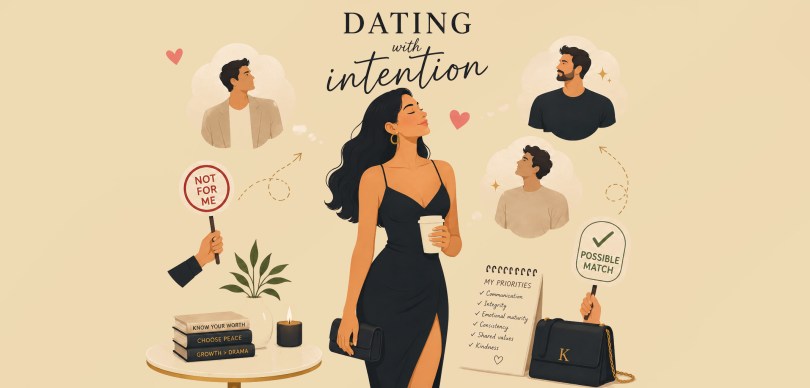
Quite the opposite, I just know I’m dating with intention. There’s a huge difference, I’m getting to know people, Having conversations. Seeing whether there’s compatibility.
Allowing people the opportunity to show me who they are before emotionally investing everything into one person.
And honestly?
It’s been refreshing, but wow hard work. I’m struggling to chat, but know I have to, and it’s not going too bad. I’ve realised how much emotional pressure I’d unknowingly placed on previous situations. When you only have one person in your mind, every message matters.
Every delay matters.
Every cancelled plan matters.
Everything feels amplified.
Now?
I’m simply enjoying getting to know people.
There’s far less pressure.
Far less overthinking, Far more curiosity.
Learning From My Last Situation
I’d spent around eight weeks chatting to someone recently. We never actually met. Looking back, there was a clear imbalance. Not necessarily because either of us were bad people. Simply because our communication styles were completely different.
Would we have been compatible in person?
I’ll never know, and that’s okay. Sometimes people aren’t chapters.
They’re lessons.
Rather than feeling disappointed, I found myself naturally friend zoning that situation before deciding to start dating properly, I tried to hold off and felt I gave it my all and showed the full me, understanding, patience, kindness and a part of me that I only show those super close, however I realise, maybe I shouldn’t have shown up like that, when you’ve never met someone they can’t ever know or see the real you.
Moving on wasn’t about replacing anyone.
It was about recognising that if something isn’t moving forwards, it’s okay to keep living your life, and coincidently the night I was going on a date, was the night our communication ceased.
Dating With Intention Isn’t The Same As Dating Casually
I think this is where people sometimes get confused. Dating multiple people doesn’t automatically mean sleeping with multiple people.
Those are two completely different things. For me, dating simply means meeting people.
Having conversations, on the phone (Yep the last situation weirdly spent 8 weeks texting and not one call – Yes I should of read the signs).
Going for Walks, Laughing, Learning. Seeing whether there’s compatibility.
I’m actually clearer now than I’ve ever been.
I don’t want casual sex, I have never felt the need for casual sex, because a few hours of madness, can leave you feeling awful the next few days..
Perosnally for me, I don’t need validation. I’m not looking for excitement for the sake of excitement.
I’m looking for my person.
The next person I’m intimate with will be someone with whom I’m building something meaningful.
That’s my choice and it feels incredibly peaceful.
A Little Excitement
Last night I caught up with an old flame, We’ve both already agreed it’s not a date, and as he picked me up, he’d brought me a coffee for the journey, laughing at the fact he knows I hate coffee dates.
It’s simply two people catching up. I felt super comfortable, no pressure, no expectations.
Just two people seeing whether they enjoy each other’s company.
And honestly? I loved wearing a pretty dress, linking arms and walking around the Docks was so pretty, Being myself, with someone who knew me, and although it was essentially just friends catching up, we flirted and it felt nice.
For the first time in a very long time right now, dating doesn’t feel scary.
It feels exciting, its crazy to think I’ve only had half a dozen dates the last few years, but right now, I feel comfy at just the chatting stage and maybe there maybe one or two more dates to pencil, but hey no rush.
Maybe This Is What Healthy Dating Actually Looks Like
Perhaps I’ve finally realised something important. Dating isn’t about desperately hoping every person becomes “the one.”
It’s about allowing enough space for the right person to reveal themselves, to meet in person, and not judge too early. It’s about curiosity instead of pressure.
Connection instead of obsession.
Intentionality instead of urgency.
I’m still dating for a relationship.
That hasn’t changed.
But I’m no longer dating from scarcity. I’m dating from abundance.
There’s a huge difference.
So yes…
I’ve finally popped my dating cherry.
Not because I’ve suddenly become someone who dates endlessly, I can’t suddenly just change who I am, but because, for the first time, I’m allowing myself to enjoy the process rather than trying to rush towards the destination.
Wish me luck.
I have a feeling this chapter might be a good one… and I thought I would add in a few interesting Dating facts..
• Surveys consistently find that many users of dating apps talk to multiple people at once before becoming exclusive. This isn’t necessarily because they’re less serious, but because it helps them avoid becoming emotionally invested before compatibility has been established.
• As Relationship therapists, we often recommend delaying heavy emotional investment until you’ve spent time together in person. Messaging can create a false sense of intimacy because our brains naturally fill in the gaps with assumptions.
• Studies on modern dating suggest that clear, consistent communication is one of the strongest predictors of relationship satisfaction. It’s often less about saying the “right” things and more about reliability, honesty and emotional availability.
• People who date with intention typically report focusing on shared values, emotional maturity and consistency over initial chemistry alone. While attraction matters, long-term compatibility is built through communication, trust and aligned life goals rather than butterflies alone.