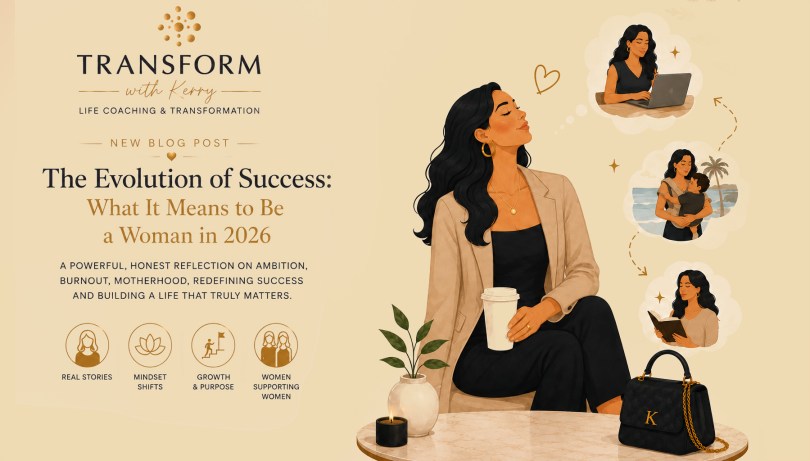
There is something incredibly powerful about walking into a room full of women who genuinely want to see one another succeed.
As I sat surrounded by other female entrepreneurs, business owners, professionals and creatives at a networking event yesterday, I found myself reflecting on just how much the world has changed. The conversations weren’t about competing with one another. They weren’t about who earned the most money, who drove the nicest car or who carried the newest designer handbag. Instead, they were about sharing ideas, opening doors, celebrating achievements and encouraging one another to take the next step.
It made me wonder whether we’ve quietly witnessed one of the biggest social shifts in modern history.
Forty years ago, the opportunities available to women looked very different. Whilst there have always been remarkable women who challenged expectations, many still grew up believing that security came from finding the right partner rather than creating opportunities for themselves. Financial independence was harder to achieve, business ownership was less common for women than it is today, and the expectation that men would be the primary breadwinner remained deeply rooted in society.
Those expectations didn’t appear overnight. For thousands of years, human societies evolved around different roles within families and communities. In many cultures, men often undertook physically demanding tasks such as hunting, protection and resource acquisition, while women played vital roles in raising children, gathering food, maintaining communities and creating the social bonds that allowed families to survive. Modern anthropology reminds us that these roles were often far more flexible than popular myths suggest, but they shaped expectations that lasted for generations.
One of the most fascinating things about psychology is that whilst our brains evolved in environments that looked very different from today’s world, they continue to adapt to the society we live in. For generations, survival often depended upon clear family roles, with security coming from stability and cooperation within small communities. Today, many women find themselves navigating entirely different expectations. We’re encouraged to build careers, raise children, nurture relationships, care for ageing parents, maintain friendships, prioritise our wellbeing and somehow succeed in every area simultaneously. It’s hardly surprising that so many women feel mentally exhausted. Modern psychology reminds us that whilst our opportunities have expanded dramatically, our brains are still learning how to navigate a world that asks us to wear so many different hats.
Fast forward to today and the picture is changing at an extraordinary pace.
Across the UK and around the world, women have been founding businesses, leading organisations, entering industries that were once dominated by men and creating financial independence on their own terms. Female entrepreneurship continues to grow, more women than ever are pursuing higher education, and increasing numbers are balancing careers, business ownership and motherhood simultaneously. Progress hasn’t removed every barrier, but it has undoubtedly expanded the possibilities available to women.
When I look around a room full of women in business at networking events, I don’t just see accountants, consultants, scientists, creatives, therapists or entrepreneurs.
I see courage.
I see women taking risks that previous generations often couldn’t.
I see women rebuilding after divorce, changing careers in their forties, launching businesses whilst raising children, studying for degrees at night and refusing to believe that one chapter of life should define the rest of it.
Perhaps that’s why these rooms feel different, they aren’t built on competition, they’re built on possibility.
I Sometimes I wonder what the women who fought for equal opportunities would think if they walked into a room like this today. A room filled with female entrepreneurs, business owners, professionals and leaders, openly sharing ideas, encouraging one another and building opportunities together. I suspect many would feel proud. Not because the journey is complete, but because each generation of women has continued to build upon the progress of those who came before them.
Before we talk about success today, it’s worth remembering how extraordinary the journey of women has been. My grandmother’s generation lived in a world with very different expectations. My mother’s generation pushed against many of those boundaries. My generation was raised believing we could have it all, Careers, Businesses, Families, Financial independence, Freedom. Yet with every new opportunity came new expectations, and perhaps that’s one of the greatest paradoxes of modern womanhood. We’ve gained choices our grandmothers could only dream of, but we’ve also inherited pressures they never experienced.
The twentieth century changed everything. Women won the right to vote, entered universities in greater numbers, broke into professions once closed to them and gradually moved into leadership positions across business, politics, science and the arts. Women such as Rosa Parks, Margaret Thatcher, Marie Curie, Maya Angelou, Oprah Winfrey, Anita Roddick and Sara Blakely each challenged expectations in different ways. Whether or not we agree with every decision they made, they demonstrated something powerful: that women could shape industries, influence societies and redefine leadership on their own terms. Every generation has built another step in the staircase the next generation climbs.
When I think about my own journey, I realise that success has worn many different faces.
At thirty years old, I thought I’d achieved everything I’d ever wanted.
I’d built my own house from the ground up, my own design and dream. I had a six figure income. There was a brand new Range Rover on the drive and I’d bought my then husband a brand new Audi. My wardrobe was filled with designer labels, from Christian Louboutin to Jimmy Choo, and from the outside looking in, life appeared exactly as I’d imagined success would look.
At that age, I was incredibly proud of what I’d achieved, and I still am. No one can ever take away the fact that I built those businesses, took those risks or created that life.
Those achievements are part of my story.
But if I’m completely honest…
I wasn’t happy.
Looking back now, I can see that I had become consumed by achievement. Every milestone simply led to another target. Every success became another expectation. I measured progress by numbers, possessions and productivity because that was the language I’d learnt success was supposed to speak.
Positive psychology has transformed the way we understand success. For many years, researchers assumed that achievement, income and status naturally led to happiness. Yet decades of research suggest something far more interesting. Once our basic financial needs are met, lasting wellbeing is influenced far more by purpose, meaningful relationships, autonomy and a sense of belonging than by accumulating more possessions. Looking back, I can clearly see that I was chasing external measures of success because I believed they would eventually make me feel fulfilled. What I didn’t realise was that fulfilment isn’t something we buy; it’s something we build through the life we create and the people we choose to become.
I was constantly chasing.
Constantly working.
Constantly thinking about the next goal.
At the time, I didn’t know any different.
Business wasn’t simply something I did; it had become who I was.
Years later, I would begin to understand something that psychology has explored for decades. Whilst financial security matters enormously, particularly when our basic needs are being met, lasting wellbeing tends to come from something much deeper than status or possessions. Research consistently shows that purpose, meaningful relationships, autonomy and a sense of belonging contribute far more to long term happiness than material success alone.
I didn’t know that at thirty, I just knew how to work and work I did.
People often asked me why I continued working for other companies whilst running several businesses of my own. The answer was simple. I wanted financial freedom. I wanted choices. I wanted to build something that nobody could ever take away from me.
As a woman, and later as a single mother, that independence mattered.
It still does.
Last year someone I dated suggested that I should give up my businesses, let go of my studies and find what he described as a “hobby job.” His view was that he would provide financially and that no wife of his would need to work. I’m sure those words were spoken from his own beliefs about relationships rather than with any intention to offend.
But they landed very differently.
For someone who had spent over two decades building businesses, taking risks, succeeding, failing, starting again and creating opportunities for herself, it wasn’t romantic.
It felt like someone was asking me to give away a part of my identity.
Not because I believe every woman should own a business.
Not because I think everyone should prioritise work.
But because every woman deserves the freedom to choose the life she wants to build.
That, to me, is what empowerment really means.
It’s not about earning more than somebody else.
It’s not about proving anything.
It’s about having choices.
Looking back now, I often describe the biggest change in my life as a shift in my energy. Some people might call it moving from a lower frequency to a higher frequency. Others might describe it as growing emotionally, becoming more secure or simply discovering what truly matters. Whatever language you choose, the change was profound. I stopped asking, “How do I look successful?” and started asking, “What kind of life actually feels meaningful?”
That single question changed everything.
If somebody had told the thirty year old version of me that one day I’d happily swap designer shoes for a pair from Primark, I’d probably have laughed. Not because there is anything wrong with either, but because my priorities were completely different.
Back then, success was something I could see. It was measured in cars, salaries, business growth and the life I had built around me. Today, success is something I feel. Somewhere along the journey, my perspective changed.
Perhaps it was becoming a mother.
Perhaps it was experiencing burnout.
Perhaps it was losing everything I once believed defined me.
Or perhaps growth simply has a way of stripping away everything that isn’t truly important.
The truth is, I no longer care about impressing anyone.
That doesn’t mean I’ve stopped being ambitious. If anything, I’m more ambitious than I’ve ever been. The difference is that my ambition now has purpose behind it. I no longer work to prove my worth. I work to create a life that aligns with my values.
For years, people would often say to me, “You’re crazy.” Looking back, they probably weren’t wrong.
There was a period when I left my childs father with nothing but a spare bed and two seater sofa, where I worked a full time job whilst running multiple businesses at the same time. I was determined to create financial security, buy my own home and build a future that nobody could take away from me. I genuinely believed that if I just worked a little harder, slept a little less and pushed myself a little further, everything would eventually fall into place.
What I didn’t understand was that there is always a price to pay when we live as though we’re machines instead of human beings. Eventually, my body made the decision that my mind refused to make. I burnt out, I had been awake at 5am every day and not going to bed till midnight, trying to juggle a corporate role and run my own businesses, and this was not just Monday to Friday, it was every day for nearly two years. My weight dropped dramatically, my health deteriorated and I fell unwell both physically and mentally, perhaps hardest of all, I realised my son wasn’t getting the best version of me. That was the wake up call I needed
Modern psychology tells us that today’s women are often carrying an invisible mental load. Beyond paid work, many continue to organise family life, manage relationships, remember birthdays, arrange appointments, plan meals and carry the emotional wellbeing of those around them. Researchers describe this as cognitive and emotional labour, and whilst it often goes unnoticed, it consumes enormous mental energy. Perhaps it’s no surprise that so many capable women find themselves exhausted. We aren’t simply doing more than previous generations; we’re often expected to be exceptional in every area of life at once.
No business, no salary and no ambition is worth sacrificing the moments you can never get back. I was missing his little life. However as any single parent knows, to afford household bills and nursery bills, you need two salaries and even then it’s not enough.
That doesn’t mean I regret those years.
Far from it.
Those years taught me resilience. They taught me discipline. They taught me how to solve problems, how to manage people, how to build businesses and how to recover when things didn’t go to plan.
Some of my businesses flourished. Others didn’t.
One of the hardest decisions I ever made was closing my e-commerce business. It wasn’t simply a business. It represented years of hard work, creativity and relationships with incredible people. I had the privilege of working alongside talented staff, models and videographers who poured their own passion into making it successful.
Closing that chapter wasn’t failure.
It was recognising that life had changed, and so had I, moving towards and over the 40 mark changed me, I finally felt grounded.
One lesson entrepreneurship teaches you very quickly is that success isn’t always about holding on. Sometimes it’s about knowing when to let go so that you can create space for something new.
That’s exactly what I chose to do.
To the frustration of my accountant, who had looked after me for many years, I made another decision that surprised people.
I chose education over income. On paper, it probably didn’t make sense to others, Why walk away from businesses that were generating money to study in your forties?
Because, for the first time in a long time, I wasn’t making decisions based purely on financial return.
I was making decisions based on purpose, on fulfilment, with my heart.
Like many people, I’d spent years trying to work out where I truly belonged. I enjoyed recruitment. I enjoyed sales. I loved building businesses. I competed against others and myself and it gave me that reward and chase that had felt at the time so satisfying, yet every role taught me something valuable. But none of them quite answered the question I’d been asking myself for years.
“What work makes me feel most alive?”
Studying relationship psychology, coaching and therapeutic approaches finally gave me that answer.
For the first time, I wasn’t simply building businesses. I was building a career that reflected who I was becoming and deep down I think I was recognising who I had always been…
That shift changed everything. It also changed the way I looked at money. When I was younger, I thought wealth was measured by what I owned.
Now, wealth looks very different.
It’s sitting on a beach in California watching my little boy laugh as the waves crash onto the shore.
It’s collecting memories instead of possessions, It’s having dinner with friends and people who inspire me. It’s being able to choose work that feels meaningful rather than simply profitable.
It’s having enough, rather than constantly chasing more.
Don’t misunderstand me, Financial independence still matters enormously to me. I’ve worked too hard to pretend otherwise.
As a single mother, I understand exactly what it means to carry responsibility. Bills don’t disappear because you’ve decided to become more spiritual. Mortgages don’t pay themselves because you’ve embraced mindfulness. Financial security creates freedom, and freedom creates choice.
That’s one of the reasons I still take on additional work when opportunities arise, not because I’m chasing status, but because responsibility matters.
People often forget that behind every business are human beings. When you employ people, you’re not simply paying wages. You’re helping someone pay their rent. You’re helping another family cover their mortgage. You’re contributing towards school uniforms, holidays, food shopping and futures.
That responsibility never leaves you.
If taking on another project means protecting somebody else’s livelihood, I’ll do it every time, and that’s a dedication I make to the women I employ, when the business dips, I feel the weight and I work my ass off to ensure I don’t have to disappoint or let people down.
I’ve realised that leadership isn’t about standing in front.
It’s about standing behind people when they need you most.
Motherhood has reinforced that lesson more than anything else.
Today, when I budget, I don’t see limitation. I see intention. I don’t feel deprived because I choose high street over designer labels.
I feel grateful that I can spend that money taking my son travelling, introducing him to different cultures and creating memories that neither of us will ever forget.
Ironically, I feel wealthier now than I did when I owned far more, because peace has become my greatest luxury and that’s something money alone could never buy.
The Women We Are Becoming
As I looked around the room at the networking event, I found myself smiling.
Not because every woman there had the same story, but because every woman there had a different one.
Some were just starting their first business. Others had built companies over decades. Some were returning to work after raising children. Others were changing careers in their forties or fifties. Some were leading teams, while others were taking the terrifying first step towards becoming self-employed.
Every journey was different.
Yet there was one thing that connected us all.
Courage.
For all the conversations about women supporting women, it was refreshing to experience it rather than simply read about it. There was no sense of competition. Nobody was trying to prove they were the most successful person in the room. Conversations flowed naturally, advice was shared generously and introductions were made without expecting anything in return.
That, to me, is what real networking should look like.
It’s not about collecting business cards.
It’s about building relationships.
Perhaps that’s why rooms full of supportive women feel so different. Psychology has consistently shown that human beings thrive when they experience connection, encouragement and psychological safety. We become more creative when we don’t fear judgement, more resilient when we feel supported and more confident when someone believes in us before we fully believe in ourselves. Maybe that’s why women supporting women is so much more than a slogan. It isn’t simply good for business; it’s good for our wellbeing, our confidence and, ultimately, for the next generation of women watching us.
Psychologists have long understood that human beings thrive through connection. We are wired to belong. Supportive relationships improve resilience, reduce stress and even encourage us to take opportunities we might never have taken alone. Behind almost every successful entrepreneur is a network of people who believed in them, challenged them or simply reminded them to keep going on the difficult days.
Perhaps that’s why these rooms feel so energising. When people celebrate one another instead of competing, something changes.
Ideas grow.
Confidence grows.
People grow.
Perhaps another fascinating shift is what we’re learning about the diversity of women’s minds. In recent years, thousands of women have received diagnoses of ADHD and autism later in life after decades of being overlooked. It raises an interesting question. Are women’s brains changing, or are we finally beginning to understand them properly? The evidence suggests the latter, but it reminds us that our understanding of women continues to evolve. Every decade seems to uncover something previous generations simply didn’t recognise.
Looking back over the last twenty one years of running businesses, I can honestly say there isn’t one perfect path to success.
I’ve made brilliant decisions, I’ve made expensive mistakes, I’ve started businesses, I’ve closed businesses, I’ve changed direction more than once.
I’ve taken risks that paid off beyond my expectations, and I’ve taken others that taught me lessons no textbook ever could.
Would I change any of it?
No, because every success and every setback has brought me to where I am today.
People sometimes describe me as a “jack of all trades.” Years ago, I wasn’t always sure whether that was meant as a compliment.
Today, I wear it with pride.
Every industry I’ve worked in has taught me something about people. Every business has taught me resilience. Every role has developed skills that I now carry into the next chapter of my life.
There is no such thing as wasted experience. Only experience we haven’t yet understood the value of.
One of the greatest lessons I’ve learnt is that success is never a straight line. Life doesn’t move neatly from one achievement to the next. Sometimes we have to step backwards before we can move forwards. Sometimes we close a business to discover a calling. Sometimes we leave a career we’ve spent years building because we’ve finally found one that feels like home. Sometimes we lose everything we thought defined us, only to realise that our greatest strength was never what we owned.
It was who we became while building it. That’s why nobody can ever take away what I achieved at thirty.
Yes, the house is gone. The cars are gone. The designer wardrobe has long since lost its importance.
But nobody can erase the determination, courage and resilience it took to build that life in the first place.
Those qualities are still mine and if I built it once, I know I can build again.
The difference is this time, I may have a smaller house, and a cheaper car, but the house is mine, and its my home, my little boys home, and I brought it.
I’m no longer chasing success because I want people to admire it. I’m building a life my son can learn from. I want him to grow up understanding that success isn’t about what somebody owns.
It’s about how they treat people.
It’s about integrity.
It’s about showing kindness when nobody is watching.
It’s about having the courage to keep going when life doesn’t unfold as planned.
He’s already beginning to understand that.
If he wants something, he earns it.
If he wants a new toy, he helps around the house.
If we travel, he understands that those experiences come from hard work, planning and sacrifice.
They’re not things to be taken for granted.
They’re things to appreciate.
More than anything, I hope he grows up seeing a mother who wasn’t afraid to start again, because that’s another lesson we don’t talk about enough.
Starting again isn’t failure.
It’s courage.
Women have spent generations proving that they belong in boardrooms, lecture theatres, laboratories, creative industries and businesses of every kind. Today, I believe the conversation is changing again.
It’s no longer simply about proving we belong, It’s about deciding how we want to lead.
Do we lead with ego or empathy?
Do we build businesses that simply generate profit, or businesses that genuinely improve people’s lives?
Do we compete with one another, or do we open doors for the women walking behind us?
For me, the answer has become incredibly simple.
Success means lifting other people as you climb.
It means celebrating another woman’s promotion without questioning your own worth.
It means recommending someone else’s business because you genuinely believe in what they do.
It means recognising that there is enough room for all of us to succeed.
Years ago, I thought life was about reaching the destination. Now I know life is about becoming the person you meet along the way. The woman I am today isn’t the woman I was at thirty.
She’s calmer, She’s kinder to herself, She’s less interested in impressing people and more interested in understanding them.
She still dreams big, She still works hard, She still believes in building businesses and creating financial independence but she also knows that the richest life isn’t measured by numbers on a bank statement. It’s measured by the conversations that change us.
The friendships that sustain us, The work that gives us purpose, The memories we create with the people we love.
Perhaps this is the real evolution of women. It isn’t simply that we can vote, own businesses or build careers, important as those milestones are. It’s that more women are beginning to define success for themselves. Success no longer has to mean following a script written by society, family or tradition. It can mean building a business, raising children, travelling the world, changing careers at forty, returning to university, or simply creating a life that feels authentic. That freedom to choose may be one of the greatest achievements of all.
As women, we’ve come further than many of our grandmothers could ever have imagined. We still have challenges to overcome, inequalities to address and barriers to break, but we’ve also created opportunities that previous generations fought hard for us to have.
That deserves celebrating.
So, here’s to the women who dare to start businesses.
To the women changing careers in their forties.
To the women rebuilding after divorce.
To the women raising children whilst studying for degrees.
To the women quietly carrying responsibilities that nobody else ever sees.
To the women taking risks.
To the women starting again.
And to every woman who has ever looked in the mirror and wondered whether she was capable of more.
You are.
You always were.
Sometimes, you simply need another woman to remind you.

